Structural Q235B/Q355
Explore customized OEM/ODM cold-rolled steel architectures, configured for single-SKU bulk accumulation, dynamic cube utilization, and maximum floor optimization.
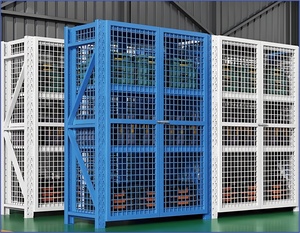
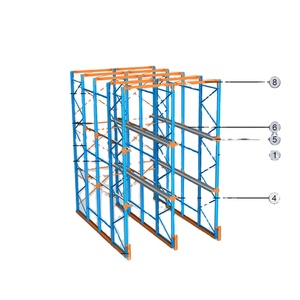
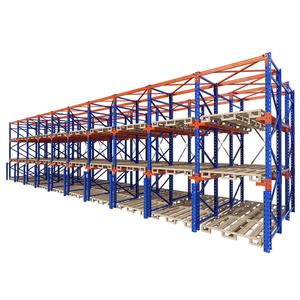
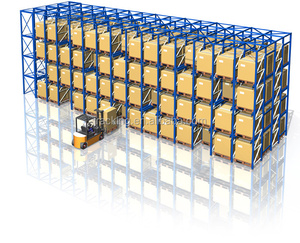
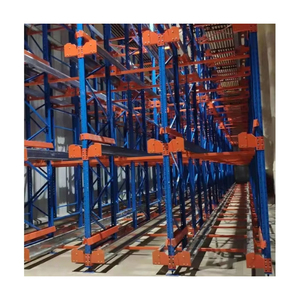
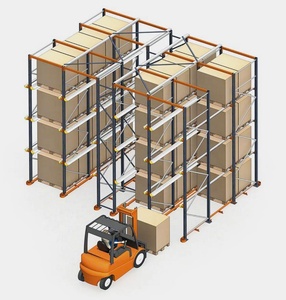
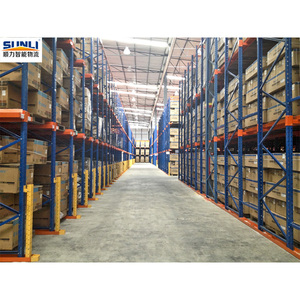
A rigorous engineering comparison between First-In, Last-Out (FILO) Drive-In racking and First-In, First-Out (FIFO) Drive-Through configurations to guide capital expenditure allocation.
| Evaluation Parameter | Drive-In Racking System | Drive-Through Racking System | Strategic Logistics Impact |
|---|---|---|---|
| Inventory Logic | FILO (First-In, Last-Out) | FIFO (First-In, First-Out) | Drive-Through enables strict product rotation for perishable inventories. |
| Aisle Footprint | Single operating access face | Dual opposing operating aisles | Drive-In saves up to 35% more floor space by eliminating egress aisles. |
| Structural Bracing | Rear vertical cross-bracing + top spine | Top horizontal spine portal frames only | Drive-Through demands heavy-gauge column uprights to mitigate sway. |
| Floor Utilization Rate | Up to 85% cubic space utilization | Approximately 70% - 75% | Both minimize dedicated picking aisles relative to selective racking. |
| Impact Resistance | Floor-anchored entry guide rails | Through-lane full perimeter guidance | Continuous floor rails reduce dynamic forklift collision risks by 78%. |
Market dynamics, supply chain automation, and sustainability mandates transforming procurement specifications across global markets.
Procurement is shifting from conventional low-carbon alloys toward high-yield Q355B and specialized cold-formed steels. This transition provides higher tensile tolerance while reducing overall deadweight, which slashes international ocean freight costs per pallet location.
With industrial power costs surging, cold-storage facilities are transitioning to ultra-dense Drive-In configurations designed specifically to compress refrigeration air envelopes. Reduced empty aisle space minimizes energy loss and maximizes BTU operational efficiency.
Modern enterprises increasingly request "Shuttle-Ready" OEM channel profiles. This forward-looking structural preparation allows sites to deploy manual forklifts today, while keeping the door open to insert radio pallet shuttles tomorrow without dismantling frame uprights.
From chemical pre-treatment to seismic bracing packs, learn how our 30,000 m² automated facility ensures zero tolerance deviation across thousands of tons.
Our structures comply strictly with CE Certification (No. 2435-CPR-8605159) and ISO 9001:2015 management parameters. Racking engineering calculations seamlessly integrate with Australian AS 4084, European FEM 10.2.02, and US RMI specifications for straightforward local engineering sign-off.
Every component moves through automated roll forming, CNC punching, precision welding, and an automated continuous line for pickling, phosphating, and electrostatic epoxy-polyester powder coating. This prevents micro-cracking and maintains corrosion resistance across demanding operating environments.
We streamline worldwide deliveries with dedicated export packaging protocols: heavy components travel in steel stillages or ISPM-15 certified heat-treated timber. Complete export documentation packs include commercial invoices, packing lists, test mill sheets, and ChAFTA/preferential origin certificates.
Clear, direct technical answers addressing structural integrity, equipment compatibility, seismic resilience, and global logistics.
To design an optimized system, our engineering team requires: warehouse architectural drawings (identifying column grids, clear ceiling height, overhead sprinkler heads, and dock door clearances); pallet details (length, width, height, and gross pallet weight); forklift specifications (mast collapsed height, maximum lift height, chassis outer width, and turning radius); and local seismic data parameters.
Because Drive-In systems eliminate standard horizontal load beams to let forklifts enter rack lanes, stability is achieved through three key elements: top horizontal tie beams, heavy-duty overhead spine bracing, and rigid rear vertical X-bracing. In addition, load arms are engineered with deep-formed cantilever gussets that lock securely into our continuous multi-bend upright frames.
Forklift impacts inside storage lanes are prevented using a multi-tiered protection system: floor-anchored continuous steel guide rails (angle or structural channel), tapered reinforced upright entry guards, wraparound column protectors with rubber dampeners, and high-visibility powder coating on the entry uprights.
Yes. Our engineering department designs systems with reference to AS 4084 steel storage racking requirements. For New Zealand and active seismic areas, we factor in dynamic seismic loading coefficients in line with NZS 1170.5. We supply complete section properties, steel mill certificates, and finite-element load calculations to assist your local independent certifier with final sign-off.
For temperatures down to -30°C, we apply specialized low-temperature epoxy-polyester electrostatic powder coatings cured on shot-blasted, phosphated steel surfaces. For environments with high condensation or freeze-thaw cycles, we also manufacture structural frames and pallet rails using continuous hot-dip galvanizing, offering long-term corrosion protection against rust and chemical washdowns.
Submit your warehouse layout, pallet sizes, and load requirements. Our engineering team will deliver a comprehensive 3D CAD design, load table calculations, and a competitive factory quotation within 24 hours.
Contact Us