Factory-Engineered Flow Racks & Dynamic Storage Solutions
From carton live storage and pallet flow tracks to ASRS-integrated steel units, review our core OEM/ODM racking assemblies manufactured with precision cold-formed Q235B structural steel.
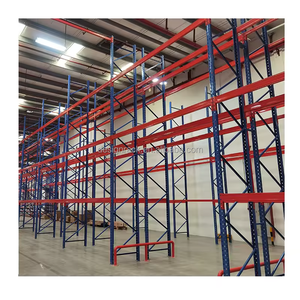
Heavy Duty Shelving Storage Easy Assemble Material Racking Unit Industrial Pallet Rack Solution
Technical Details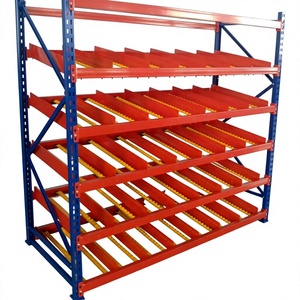
Gravity Carton Level Tilt Flow Rack FIFO Warehouse Roller Cold-rolled Steel for Order Picking
Technical Details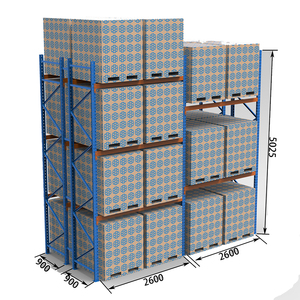
Pallet Racking Supply Certificated Factory 2 Ton Selective Double Deep Commercial Storage Rack
Technical Details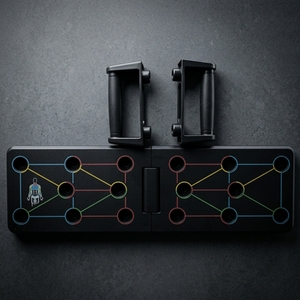
Premium Non-slip Multifunctional ABS Foldable Push Up Stand Rack for Strength Training
Technical Details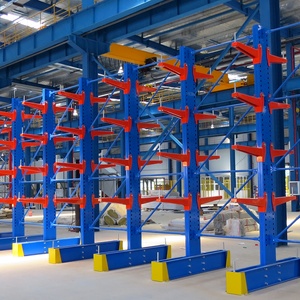
Best Seller Cantilever Rack Shelf Pallet Racking System for Industrial Warehouse Storage
Technical Details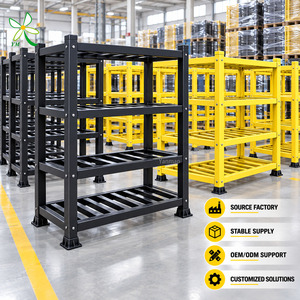
Custom Size Spare Parts Workshop MRO Storeroom Pultruded Lightweight FRP Storage Rack
Technical Details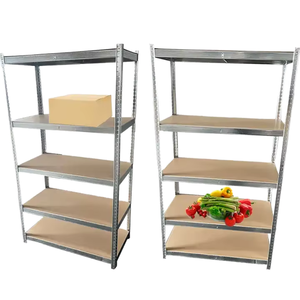
Boltless Rack Racking Storage Shelving System Heavy Duty Steel Industrial Shelves
Technical Details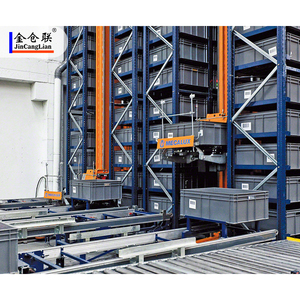
Intelligent Warehouse Steel Pipe Asrs Automated Storage Retrieval Racking System ASRS
Technical DetailsPhysics & Kinematics of Gravity Flow Racking Systems
Modern gravity flow racking systems operate on dynamic inclination mechanics where potential gravitational energy is translated into controlled kinetic motion. In heavy-duty pallet live storage (pallet flow) and lightweight carton flow environments, the engineered balance between gradient slope ($\theta$), rolling friction coefficients ($\mu_r$), and velocity retarders dictates functional throughput and warehouse safety.
For custom OEM/ODM configurations, our engineering department calculates lane performance metrics through continuous physical properties analysis. We evaluate the dynamic deformation characteristics of runner timbers or polymer skids on multi-wheel plastic roller beds versus galvanized cold-drawn steel roller assemblies:
| System Type | Typical Load Class | Calculated Gradient Angle | Roller Track Configuration | Braking & Separation Mechanism |
|---|---|---|---|---|
| Carton Flow (Light Duty) | 5 - 35 kg / tote | 3.0° – 5.0° (adjustable pitch) | High-impact ABS skate wheels / aluminum frame | Full-width drop-in entry guides; friction floor ramps |
| Standard Pallet Flow (FIFO) | 500 - 1,200 kg / pallet | 2.8° – 3.2° (nominal 3.0°) | Triple continuous steel roller tracks (Ø60mm) | Centrifugal speed controller every pallet position |
| Heavy Industrial Pallet Flow | 1,200 - 2,000 kg / pallet | 2.5° – 2.8° (steepness controlled) | Heavy-duty cylindrical steel rollers with hardened bearings | Fluid eddy-current magnetic or hydraulic brake rollers + safety pallet separator |
| Push-Back Flow (LIFO) | 500 - 1,500 kg / cart | 1.5° – 2.0° adverse slope | Nested nested cart rail channels or inclined low-friction tracks | Backstop mechanical gravity lock with guide bumpers |
Our OEM manufacturing protocols incorporate pneumatic or mechanical time-delay pallet separators mounted directly ahead of the front unloading position. This isolates the lead pallet from backline hydrostatic pressure exerted by rear accumulated pallets, allowing the forklift operator to extract loads without frictional drag or structural pinching.
Technological & Development Trends in Flow Racking Systems
How modern automation, sensor networks, cold-chain environments, and material science are revolutionizing warehouse flow rack engineering.
IoT & Optical Pick-to-Light Integration
Dynamic carton flow beds now incorporate continuous strip low-voltage busbars and digital Pick-to-Light (PTL) arrays directly into the pick face extrusion. Lane sensors detect automated tote presentation and report inventory replenishment status to enterprise WCS/WMS.
Cryogenic Deep-Freeze Formulations
With cold-chain logistics surging in pharmaceutical and fresh food sectors, flow racks must operate reliably down to -30°C. Standard rollers freeze or fracture. We deploy specialized low-viscosity synthetic fluoropolymer lubricants and cold-crack-resistant nylon rollers.
AMR & AGV Robotic Interface
Automated guided vehicles require tight positional tolerances (±2mm) at loading and discharge faces. Our ODM designs integrate robotic mechanical dock funnels, laser reflector targets, and zero-backpressure electromagnetic discharge gates for automated pallet handovers.
Modular Zero-Emission Surface Finishes
Transitioning beyond standard industrial solvent coatings, our electrostatic lines utilize epoxy-polyester hybrid powder coats cured at precise heat profiles. This ensures complete VOC elimination, maximum abrasion resistance against roller wear, and exceptional salt-spray longevity.
Procurement Trends & Sourcing Strategies (2025–2030)
Key criteria industrial buyers, 3PL distributors, and general contractors evaluate when sourcing heavy dynamic storage systems directly from Tier-1 factories.
TCO Optimization over Initial CapEx
Enterprise procurement teams no longer select flow racks based exclusively on steel price per kilogram. Lifecycle maintenance on cheap unsealed bearings or fragile plastic skate wheels rapidly outpaces capital savings. Procurement now specifies sealed ball bearings (608ZZ / 6204-2RS) and cold-formed structural channels with verified fatigue cycles exceeding 1,000,000 rotations.
Stringent Compliance & Seismic Engineering
Major international jurisdictions enforce rigorous design codes—specifically AS 4084:2023 in Australia/NZ, RMI MH16.1 in North America, and FEM 10.2.02 in Europe. Buyers demand factory-supplied section properties, finite element analysis (FEA) under seismic accelerations (NZS 1170.5), and certified steel heat batches before shipping approval.
Containerization & Biosecurity Readiness
Ocean freight economics demand precision flat-pack nesting that maximizes 40HQ container volumetric capacity without damaging pre-assembled roller channels. Furthermore, international customs protocols (such as DAFF in Australia and MPI in New Zealand) strictly penalize timber contamination, mandating ISPM-15 heat-treated or engineered all-steel stillages.
25 Years of Heavy-Duty OEM/ODM Manufacturing Authority
Guangzhou Heda Shelves Co., Ltd., founded in 2001, operates as a premier engineering and manufacturing powerhouse with a 30,000 m² modern production base and over 300 experienced technical professionals. We bridge architectural logistics consulting with heavy industrial fabrication.
From raw coil steel slitting and continuous roll-forming of high-tensile uprights to automated robotic welding of beam connector brackets and roller beds, every component is manufactured under rigid ISO 9001:2015 and CE quality assurance systems.
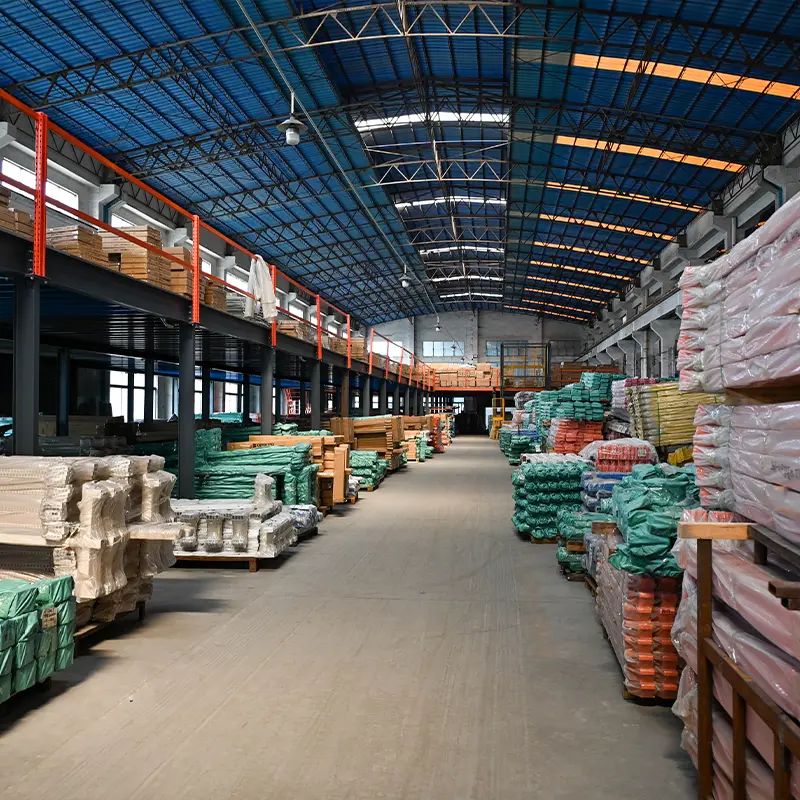
10-Stage Flow Rack Industrial Production Line
Rigorous closed-loop quality control tracking raw steel coils to tested, certified gravity roller sub-assemblies.
Frequently Asked Questions: Flow Racks Procurement
Answers to common structural, freight, design, and regulatory questions from enterprise buyers and project managers.
We require the precise clear height below obstructions (sprinklers/lighting), warehouse architectural column grid, pallet specifications (length, width, height, and maximum gross weight including bottom board orientation), forklift model, required SKU count, and FIFO turnover velocity. Our engineering team returns full 3D CAD calculations within 24 to 48 hours.
Pallet hang-up usually occurs when low-quality wooden pallets deflect between widely spaced rollers. We calculate roller pitch such that at least three rollers are continuously in contact with the bottom skids at all times. For irregular or plastic pallets, we configure full-width steel cylindrical rollers and calibrate the incline angle between 2.8° and 3.2°.
Yes. All structural cold-formed profiles are engineered with direct reference to AS 4084 (Steel Storage Racking) and FEM 10.2.02. For earthquake-prone regions such as New Zealand (NZS 1170.5) or the US West Coast, we calculate enhanced upright section thickness, heavy-duty baseplate bolting, diagonal back-bracing, and row spacers for third-party engineering sign-off.
In standard configurations carrying 500 to 1,200 kg pallets, an indirect centrifugal brake roller is positioned at every pallet location starting from the second position onwards (typically spaced at 1.2m to 1.5m intervals). For high loads exceeding 1,200 kg, dual-action fluid eddy-current retarders are deployed to maintain a consistent speed under 0.3 m/s.
Carton flow racks separate replenishment stock from the picking face. Replenishment workers feed inventory from the rear aisle while order pickers operate exclusively in the front aisle without traffic conflict. This dual-aisle FIFO separation minimizes travel distance by up to 40% to 70% and accelerates order fulfillment cycle times significantly.
Roller beds and dynamic components are pre-assembled into calibrated steel stillages or strapped onto ISPM-15 compliant heat-treated wood with certified pest-free inspection markings. Uprights and horizontal beams are bundled using shock-absorbent corrugated interlayers and non-marking plastic strapping, enabling rapid DAFF/MPI customs clearances.
Plan Your High-Density Flow Rack Facility with Tier-1 OEM Engineers
Whether you require private-label ODM distribution supply, customized carton flow picker tracks, or heavy-duty AS 4084 compliant pallet live storage arrays, our factory team delivers precision engineering directly to your specifications.