Multi-Tier System
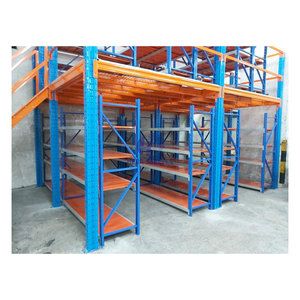
NEW Mezzanine Rack, Mezzanine Floor Storage Rack, Rack Mezzanine
- Capacity: 300 - 1,000 kg/m²
- Steel Deck & Wire Grating Options
- Maximizes Vertical Warehouse Cube
Direct factory pricing with comprehensive OEM/ODM engineering customization. Discover our standard and bespoke line-up built for logistics hubs, distribution centers, and commercial operations.
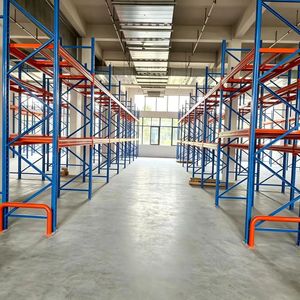
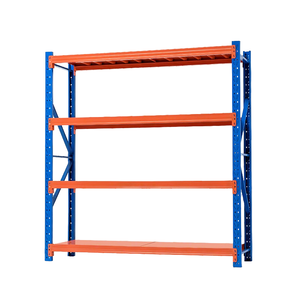
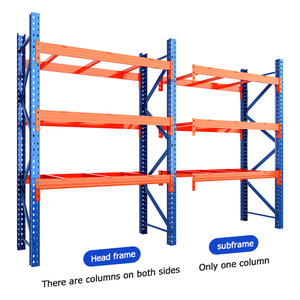
Founded in 2001, Guangzhou Heda Shelves Co., Ltd. operates a high-capacity 30,000 m² smart manufacturing plant staffed by more than 300 experienced engineers, metallurgical technicians, and logistics specialists.
Complete structural customization tailored to brand owners, industrial distributors, and intralogistics system integrators. We support custom wire gauges (2.5mm to 6.5mm), roll-formed step-beam profiles, welded connector clips, custom upright perforations (50mm/75mm/76.2mm pitch), and customized private-label brand stamping.
Our dedicated engineering department provides turnkey 3D rendering and CAD layout design within 24 hours. Every design is calculated with reference to AS 4084 (Steel Storage Racking), ANSI MH26.2 (Design and Utilization of Industrial Wire Decking), and FEM 10.2.02, giving your local certifying engineers comprehensive load tables and verification documents.
Exporting direct to Australia, New Zealand, North America, and Europe with rigorous biosecurity protocols. We utilize ISPM-15 heat-treated dunnage and heavy-duty modular steel stillages to guarantee swift DAFF (Australia) and MPI (New Zealand) customs clearance without fumigation downtime or transshipment contamination.
Spectrometric & tensile verification of Q235B & Q195 steel coils.
High-speed CNC slitting for strict dimensional width tolerances.
Automated continuous punching ensures pitch parity across lengths.
Multi-station roll forming produces flawless profile geometries.
Multi-point automated resistance welding of cross & truss wires.
Robotic MAG welding of support waterfall channels to wire deck.
Automated deburring and shot blasting to remove micro-spatter.
Multi-stage acid pickling, silane/phosphate conversion rinse.
Electrostatic coating & curing at 200°C with AkzoNobel powders.
Palletized steel stillages with barcode labels and export strapping.
A comprehensive engineering analysis of industrial wire shelving racks, wire decking structural integrity, cold chain performance, and supply chain strategies for 2025–2030.
Industrial wire shelving and heavy-duty wire mesh decking have evolved from basic accessory components into vital safety assets for modern high-bay warehouses. In contemporary high-density distribution centers, wire shelving racks serve three non-negotiable structural purposes: uniform load distribution across beam spans, fire safety sprinkler penetration compliance (NFPA 13), and prevention of misplaced pallet burn-through accidents.
Structurally, an industrial wire deck or wire shelf comprises longitudinal cold-drawn wires welded across transverse structural wires at calculated matrix intervals—typically 50 × 100 mm (2" × 4") or 50 × 50 mm (2" × 2"). Beneath the wire mesh grid, cold-formed steel support channels (typically inverted, flared, or step channels fabricated from 1.5mm to 2.0mm high-tensile carbon steel) are resistance-welded to span between the front and rear step beams or box beams. Under ANSI MH26.2 testing mandates, the design must sustain the specified Uniformly Distributed Load (UDL) while limiting central vertical deflection to less than L/240 of the clear beam span.
| Channel Configuration | Applicable Beam Profile | Standard Gauge (Wire/Channel) | Typical Rated Capacity (UDL) | Primary Industrial Use-Case |
|---|---|---|---|---|
| Flared Universal Channel | Box Beams, Structural C-Channels | 4.5mm - 5.0mm / 14 - 16 GA | 1,000 kg - 1,500 kg / Deck | Universal retrofit, heavy palletized loads, multi-rack facilities |
| Standard Step Channel | Roll-Formed Step Beams (1-5/8" step) | 4.5mm - 6.0mm / 14 GA | 1,200 kg - 2,000 kg / Deck | Dedicated selective racking, distribution centers, 3PL logistics |
| Inverted (Self-Cleaning) Channel | Step Beams & Box Beams | 5.0mm / 13 - 14 GA | 800 kg - 1,200 kg / Deck | Food processing, pharmaceutical GMP, dust-free cleanrooms |
| Flush Flat Deck (No Waterfall) | Internal L-recesses & Shelf Steps | 3.5mm - 4.5mm / 16 GA | 300 kg - 800 kg / Shelf | Hand-loaded carton picking, order fulfillment, e-commerce bins |
As enterprise procurement directors and third-party logistics (3PL) conglomerates optimize their capital expenditure (CapEx), procurement dynamics are undergoing significant technical transformations:
Enhanced frame bracing geometry, enlarged floor anchor footprints, and ductile high-strength cold-rolled steels engineered to absorb ground acceleration under NZS 1170.5 and AS 4084 regulations.
Application of silver-ion infused thermoset polyester powder coatings and electro-polished 304/316 stainless steels to inhibit bacterial and fungal propagation in refrigerated cold rooms.
Evolution toward real-time inventory auditing through digital load-cell integrations (such as the Smart Weighing Shelf Model ZSW-W01), providing autonomous replenishment alerts via Modbus/API to WMS software.
Rapid growth in boltless multi-tier racking integrating wire decking mezzanines above bulk pallet reserves, enabling fast carton split-case picking on upper levels while storing full reserve pallets below.
Over the past three decades, wire storage structures have progressed through distinct evolutionary milestones:
First Generation (Static Utility Wire Racks): Light-gauge wire shelving assembled with friction split sleeves on grooved round posts, commonly utilized in small retail backrooms, commercial restaurant kitchens, and hospital supply rooms. While offering high air permeability, these systems lacked horizontal bracing for industrial forklift impacts and had maximum bay load limits under 1,000 kg.
Second Generation (Industrial Heavy-Duty Wire Decking): Engineered cold-drawn wire decks deployed over heavy-duty selective pallet racks and drive-in systems. Featuring welded waterfall edges that overlap the beam faces, these systems prevent beam spreading and eliminate point-load failures caused by broken pallet bottom-boards.
Third Generation (Intelligent, High-Bay Automated System Interfaces): Wire decking engineered specifically for semi-automated radio shuttle lanes, high-speed AS/RS crane corridors, and sensor-dense line-side electronic assembly cells. Incorporating zinc-nickel alloy electroplating or hot-dip galvanization, these systems deliver maintenance-free operations in extreme -30°C cold store environments.
Our senior intralogistics engineering team develops full warehouse racking blueprints, complete section properties, load-deflection tables, and compliance documentation within 24 hours.
Get a QuoteSelecting the appropriate finish is critical to avoiding structural degradation, rust contamination, and costly early replacements. The table below outlines our standard finishes and their recommended operating parameters:
| Finishing Treatment | Coating Thickness | Salt Spray Test (ASTM B117) | Operating Temp Range | Ideal Storage Environments |
|---|---|---|---|---|
| Thermoset Epoxy-Polyester Powder | 60 - 90 μm | 500 Hours | -10°C to +50°C | Ambient indoor warehouses, retail 3PL distribution centers, parts stores |
| Bright Electro-Zinc Plating (CR3+) | 12 - 18 μm | 72 - 120 Hours | 0°C to +40°C | Dry indoor facilities, hardware picking, commercial storage rooms |
| Hot-Dip Galvanizing (HDG) | 65 - 85 μm | 1,200+ Hours | -35°C to +60°C | Outdoor dock areas, humid coastal Pacific regions, harsh fertilizer sheds |
| Austenitic Stainless Steel (SUS304/316) | Passivated Base Metal | 3,000+ Hours | -40°C to +200°C | Walk-in chillers/freezers, hygienic pharmaceuticals, chemical DG cleanrooms |
Clear, definitive engineering answers addressing structural integrity, load capacities, international regulatory compliance, and overseas shipping logistics.