Dynamic Picking
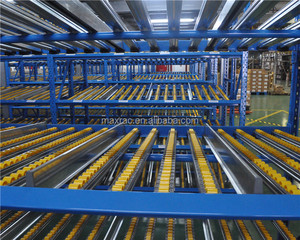
Maxrac Carton Flow Rack for Carton Box Storage
Ergonomic gravity roller track system for split-case picking, fulfillment sorting, and FIFO inventory turnover.
Engineered from premium Q235B and Q355B cold-rolled steel, calibrated for heavy pallet loads, automated shuttle carts, and complex logistics environments.
Ergonomic gravity roller track system for split-case picking, fulfillment sorting, and FIFO inventory turnover.
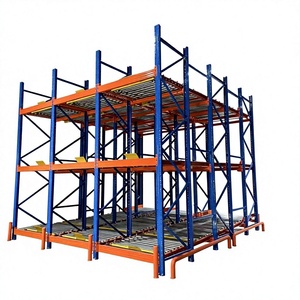
Gravity-driven speed-braking roller tracks for automated lane feed, cold storage resilience, and anti-rust durability.
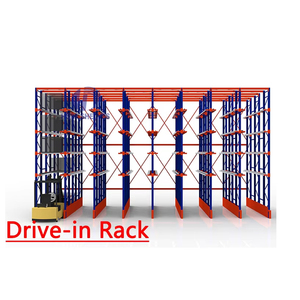
Maximizes volumetric storage density for bulk homogeneous inventory; eliminating conventional forklift access aisles.
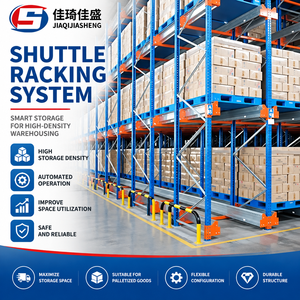
Semi-automated deep lane shuttle cart racking with PLC telemetry, wireless RF remote, and WMS integration capabilities.
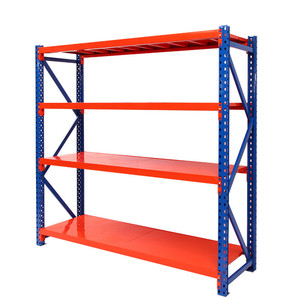
Heavy boltless adjustable shelves engineered for spare parts depots, distribution hub archives, and hand-loaded cartons.
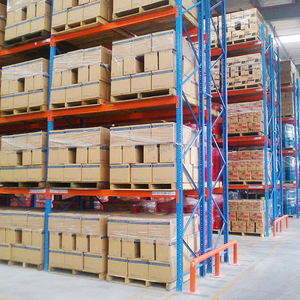
Certified 2000kg+ per beam level selective pallet racking with dual connector locking pins and high column torsional stiffness.
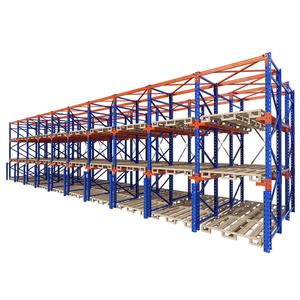
Economical dense storage structure designed to maximize pallet density in manufacturing staging and raw material warehousing.
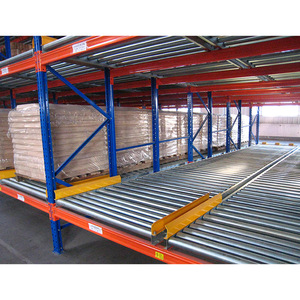
Self-regulating centrifugal brake rollers ensure controlled speed and zero pallet collision for perishable goods.
A deep metallurgical and electromechanical analysis of semi-automated deep-lane pallet shuttle engineering.
In modern industrial logistics, the Radio Shuttle Racking System represents the apex of high-density semi-automated storage. Unlike static Drive-In racking or mechanical Push-Back systems, a radio shuttle system leverages an autonomous, low-profile motorized cart (the shuttle runner) that travels on specialized structural steel guide rails inside deep storage channels. Pallets are positioned at the entrance of the channel by standard counterbalanced, reach, or VNA (Very Narrow Aisle) forklifts; the shuttle vehicle subsequently lifts the pallet dynamically, transports it across distances often exceeding 40 meters, and deposits it with millimetric precision.
As a Tier-1 OEM/ODM Radio Shuttle Racking System Supplier, our engineering protocol addresses critical structural dynamics: dynamic load transfer, horizontal braking deceleration, cyclic fatigue on rail cross-sections, and rail-to-upright connection moment capacity. Utilizing premium Q235B and cold-formed high-tensile Q355B structural steel, our custom profiles exhibit superior yield stress thresholds ($f_y \ge 355 \text{ MPa}$), resisting continuous torsional stresses imparted by accelerated cart deceleration and heavy pallet drops up to 1,500 kg per position.
Continuous roll-formed galvanized steel rails engineered with dual-lip flanges that serve as both high-load bearing surfaces for shuttle wheels and stabilizing guides for pallet bottom runners.
Industrial-grade Lithium Iron Phosphate battery packs featuring high thermal stability, 8-hour continuous shifts, 3-hour rapid recharging, and built-in BMS protection against deep discharge.
OEM custom-built configurations designed to operate continuously at temperatures as low as -30°C (-22°F), utilizing low-temperature condensation-free electronics and cryogenic lubricants.
Benchmarking volumetric efficiency, operational costs, throughput velocity, and structural safety parameters.
| Evaluation Parameter | Radio Shuttle Racking | Drive-In Pallet Racking | Gravity Pallet Flow (FIFO) | Push-Back Cart Racking |
|---|---|---|---|---|
| Volumetric Space Utilization | Optimal (Up to 85%) | High (65% - 75%) | High (70% - 80%) | Moderate (60% - 70%) |
| Throughput Velocity (Pallets/Hr) | High (35 - 50 pallets/hr) | Low (12 - 20 pallets/hr) | Very High (40 - 60) | Moderate (20 - 30) |
| Inventory Strategy | FIFO & LIFO Dual Mode | Strictly LIFO | Strictly FIFO | Strictly LIFO |
| Forklift Rack Impact Risk | Near Zero (External only) | Critical (Enters structure) | Minimal (Aisle access) | Low to Medium |
| Maximum Lane Depth | 40+ Pallet Positions | Typically max 10 Pallets | Max 20 (Slope limited) | Max 5 - 6 Pallets |
| Seismic Risk Vulnerability | Low (Braced continuous frame) | High (Unbraced entry lanes) | Medium | Medium |
| Labor & Operating OPEX | Substantially Reduced (-50%) | High Forklift Operating Hours | Low Direct Labor | Moderate Direct Labor |
Key market shifts driving global logistics investments toward flexible, modular, and green intralogistics ecosystems.
While classical 2-way linear shuttles dominate deep-lane storage, high-throughput fulfillment centers are transitioning to 4-way shuttles. By combining longitudinal lane traversal with lateral row switching via integrated lifters, 4-way systems unlock full 3D spatial agility without requiring dedicated rack cranes.
Modern procurement mandates industrial IoT edge modules within the shuttle body. Real-time telemetry monitoring wheel vibration, motor torque spikes, and thermal signatures of LiFePO4 cells enables predictive maintenance routines before mechanical downtime interrupts line output.
Enterprises under corporate ESG mandates now demand Environmental Product Declarations (EPD) for structural steel framing. Furthermore, advanced shuttle drive systems now employ regenerative deceleration, recapturing braking energy into ultracapacitors to extend shift runtime by 14%.
Warehouse safety regulators in Australasia and the Americas are strictly enforcing seismic isolation and non-linear dynamic time-history analysis. OEM manufacturers must furnish third-party certified dynamic moment frame connections and specialized floor slab anchor embedment data.
Over two decades of precision manufacturing, uncompromised structural integrity, and end-to-end export compliance.
Operating from an expansive 30,000 m² state-of-the-art manufacturing campus equipped with automated roll-forming lines, laser profiling cutters, robotic welding cells, and continuous electrostatic powder coating tunnels, our engineering organization provides seamless OEM and ODM services for global racking suppliers, material handling integrators, and industrial facility owners.
Every structural upright frame, pallet runner rail, and load beam is tracked through strict quality verification holding CE Certification No. 2435-CPR-8605159, ISO 9001:2015 Management System Certification No. 18624Q00169R0M, and full RoHS environmental conformity. We deliver verifiable load calculation packages, finite element analysis (FEA) reports, and free 3D/CAD layout blueprints designed around local regional criteria—including Australian Standard AS 4084, New Zealand NZS 1170.5 seismic regulations, and European R-BIM logistics frameworks.
Spectrometric chemical analysis and tensile yield verification of all incoming Q235B & Q355B coils.
High-precision laser trimming and automated strip slitting within ±0.2mm dimensional tolerance.
Continuous 50mm and 75mm multi-die pitch hole punching for beam connectors with micro-inch accuracy.
Multi-station cold roll-forming forming intricate multi-bend omega (Ω) upright and shuttle rail profiles.
Automatic multi-axis robotic MIG welding for beam-to-end-connector joints and structural baseplates.
Thorough mechanical shot-blasting to remove mill scale, surface rust, and oxides up to Sa 2.5 standard.
Hot alkaline degreasing, acid pickling, and zirconium-based phosphating for superior corrosion resistance.
Automated electrostatic polymer powder coating cured at 200°C for durable, scratch-proof surface finish.
Dynamic load, optical sensor precision, and continuous wireless RF cycle testing for all shuttle carts.
Custom heavy steel stillages and ISPM-15 certified timbers ensuring frictionless DAFF & MPI entry clearance.
Clear, definitive engineering answers addressing the operational real-world factors of radio shuttle system procurement.
Send our senior engineering team your warehouse DWG floor plan, pallet dimensions, clear ceiling heights, and throughput objectives. We deliver full 3D layout renderings, load stress simulations, and a comprehensive factory-direct quotation within 24 hours.