Precision Material Handling Portfolio
Factory-Direct Warehouse Storage Systems & Hardware Assemblies
Explore our precision-fabricated racking series, automated storage solutions, and accessories directly sourced from our certified 30,000 m² smart manufacturing plant.
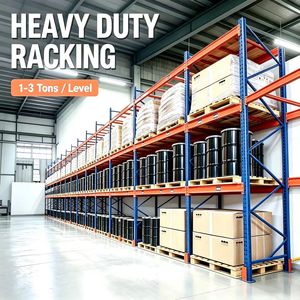
Industrial Selective Pallet Rack (Snap-in Joint)
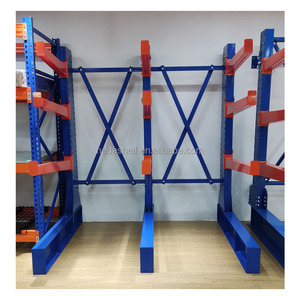
Timber & Pipe Heavy-Duty Cantilever Racking
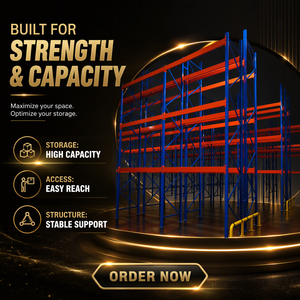
Very Narrow Aisle (VNA) High-Bay Pallet System
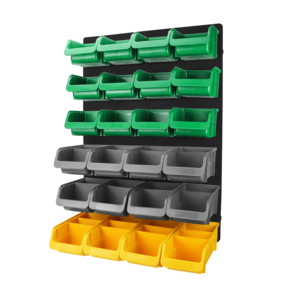
Industrial Wall-Mounted PP Tool & Part Organizers
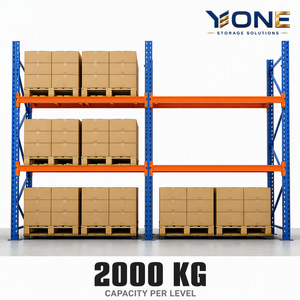
Heavy-Duty 5-Tier Boltless Pallet Storage System
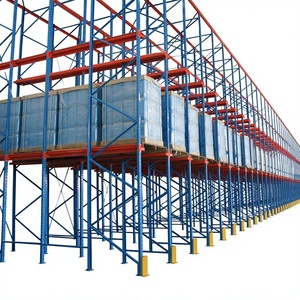
Cold-Store Through-Aisle Drive-In Racking System
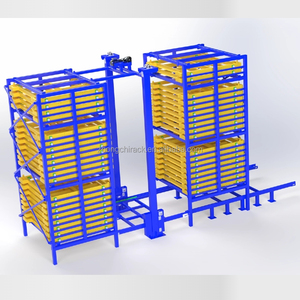
Smart Steel Sheet Vertical Drawer Storage Rack
Structural Engineering & Mechanical Integrity of Industrial Cantilever Racking
Cantilever racking systems represent the ultimate structural engineering response to the geometric limitations of traditional pallet racking. Designed without frontal upright columns, cantilever frameworks establish uninterrupted longitudinal storage envelopes, making them indispensable for timber packs, structural steel sections, PVC piping, gypsum boards, and heavy coil products. However, the elimination of front columns shifts massive torsional and flexural bending moments directly onto the central vertical uprights, arm-to-column connections, and base anchors.
Structural Design Principle: A cantilever system behaves as a vertically oriented beam fixed at its foundation. Column capacity is governed by simultaneous axial load ($P$) and bending moment ($M$) induced by arm load eccentricity ($e$). Compliance with international design codes—such as AS 4084:2023 (Australia), FEM 10.2.09 (Europe), and ANSI MH16.1 / RMI (North America)—mandates that total deflection under full operational load must never exceed the strict limit of $L/200$ to $L/250$ for cantilever arms, preventing unintentional load roll-off and destructive elastic instability.
As a direct manufacturer, Guangzhou Heda Shelves Co., Ltd. implements two primary structural topologies based on load dynamics and building constraints:
- Cold-Formed Roll-Formed Cantilever: Fabricated from high-tensile structural strip steel (Q235B to Q355B), utilizing complex profile cross-sections with multi-bend returns. Ideal for medium-duty distribution centres, retail builders’ merchants, and archive rolls handling uniformly distributed loads (UDL) up to 800 kg per arm.
- Hot-Rolled Structural H-Beam Cantilever: Utilizing heavy European-standard IPE, HEA, or Chinese standard GB hot-rolled structural steel profiles. Engineered with solid web and flange plates, this structural format withstands point loads and dynamic forklift impacts exceeding 3,000 kg per arm and upright heights up to 12 meters.
Structural Engineering Matrix: Roll-Formed vs. Hot-Rolled Cantilever Racks
| Engineering Parameter | Cold-Formed Profile Cantilever | Hot-Rolled Structural H-Beam Cantilever | Compliance Test Verification |
|---|---|---|---|
| Steel Grade Standard | Q235B / Cold-Rolled SPCC (Yield: 235 MPa) | Q355B / S355JR (Yield: 355 MPa) Structural Steel | EN 10025-2 / GB/T 1591 Mill Certified |
| Column Upright Geometry | Roll-formed C/C+ box-stitched profile | Heavy IPE 180 to IPE 400 / HEA Wide Flange | Finite Element Analysis (FEA) Verified |
| Arm Connection Design | Pinned pivot connection or hooked bracket | Grade 8.8 / 10.9 high-tensile structural bolted joint | Moment & Shear Load Destruction Test |
| Standard Load Capacity (UDL) | 250 kg – 800 kg per arm level | 800 kg – 3,500+ kg per arm level | AS 4084 / FEM 10.2.09 Dynamic Safety Factor ≥ 1.5 |
| Arm Deflection Threshold | $L/180$ Maximum allowable under static test | $L/250$ Precision structural engineering limit | Laser telemetry deflection monitoring |
| Atmospheric Protection | Thermo-cured polyester powder coat (60-80 μm) | Hot-Dip Galvanized to ISO 1461 (85-110 μm) | ASTM B117 1,000-Hour Salt Spray Testing |
Need engineered structural load calculations for your warehouse?
Inquire Now
Global Sourcing Analysis: Future Procurement Trends (2025–2030)
Industrial procurement specialists and logistics project directors face escalating land acquisition costs, stringent occupational safety mandates, and localized supply chain disruptions. In response, modern material handling operations are pivoting from static, commodity-grade racking purchases toward integrated, data-driven, and high-density long-load ecosystems. Sourcing strategies over the next five years will be defined by three structural paradigms:
1. Automated Cantilever AS/RS & AGV Integration
Conventional reach truck and counterbalance forklift operations in cantilever aisles exhibit the highest incidence of mechanical collision. Forward-thinking procurement teams are standardizing on cantilever configurations customized for 4-way multi-directional automated side-loaders and Automated Guided Vehicles (AGVs). This mandates millimeter-precision roll-forming tolerances (±0.5 mm) and laser-guided arm alignment to accommodate optical sensor arrays and automated crane extractors.
2. Mobile Base Densification (High-Density Floor Tracks)
To combat warehouse space leasing inflation in primary transit hubs (Sydney, Auckland, Los Angeles, Rotterdam), mobile cantilever racking is witnessing exponential demand. Heavy cantilever columns are mounted onto electro-mechanically driven structural bogies traversing ground-embedded steel guide tracks. This eliminates dedicated access aisles, unlocking up to 85% volumetric storage density gains for cold-storage aluminum and extrusion staging facilities.
3. Green Steel & Scope 3 Decarbonization Traceability
Multinational infrastructure builders and ESG-compliant institutional corporations now require mill test carbon accounting for heavy steel structures. Procurement contracts increasingly specify scrap-fed Electric Arc Furnace (EAF) steel with certified low embodied carbon footprints, combined with volatile organic compound (VOC)-free thermoset powder coats and fully recyclable, ISPM-15 compliant packing systems to satisfy rigorous international border standards.
Guangzhou Heda Shelves Co., Ltd.: Global Manufacturing Authority Since 2001
Founded in 2001, Guangzhou Heda Shelves Co., Ltd. has evolved into an international powerhouse in warehouse storage manufacturing. Spanning a state-of-the-art 30,000 square meter integrated industrial complex, our facility supports an exceptional throughput exceeding 30,000 metric tons per month. Backed by a dedicated technical engineering team of over 300 structural draftsmen, certified welding engineers, and quality inspectors, HEDA delivers factory-direct engineering and turn-key OEM/ODM solutions to over 130 countries worldwide.
2001
Year Established
30,000 m²
Factory Floor Area
30,000 t
Monthly Steel Output
10,000+
Global Projects Delivered
Complete 10-Stage In-House Manufacturing Workflow
Every cantilever column, arm bracket, and diagonal cross-brace undergoes strict, uncompromised automated manufacturing control within our closed-loop facility:
Stage 01
Material Ultrasonic Test
Yield tensile verification of raw steel coils and I-beams.
Stage 02
Precision CNC Cutting
High-power fiber laser profiling of beam webs and gusset plates.
Stage 03
Automated Punching
Continuous hydraulic multi-punching for 75mm/100mm pitch patterns.
Stage 04
Cold Roll-Forming
Multi-station precision roll lines creating continuous structural upright profiles.
Stage 05
Arm Taper Rolling
Graduated taper rolling ensuring equalized moment deflection distribution.
Stage 06
Surface Deburring
Rotary steel-shot surface blasting removing laser slag and scaling.
Stage 07
Robotic Cell Welding
Multi-axis OTC robotic welding of heavy arm connector brackets.
Stage 08
12-Stage Pre-Treatment
Immersion acid pickling, silane passivation, and rust phosphating.
Stage 09
Electrostatic Powder Line
Dual-cyclone Swiss Gema automated booth cured at 200°C.
Stage 10
Biosecurity Export Pack
Custom steel cradle bundling and ISPM-15 compliant container strapping.
Full OEM & ODM Private Labeling
We engineer custom hole punches, unique brand color schemes, proprietary column profiles, and embossed brand logos for regional distributors and national material handling brands worldwide.
Compliant Seismic Engineering
Full engineering calculation packs covering site-specific seismic ground accelerations ($S_s, S_1$), soil classification coefficients, and ductile frame bracing design according to NZS 1170.5 and AS 4084.
Certified Quality Verification
Verified international credentials including CE Certification (No. 2435-CPR-8605159), ISO 9001:2015 Quality Management (No. 18624Q00169R0M), and full RoHS compliance documentation.
Free 3D Layout & CAD Modeling
Our 300+ engineering team provides professional 2D floor plans, 3D parametric structural drawings, and dynamic forklift turning radius simulations within 24 hours of brief submission.
Strict Biosecurity & Customs Packaging
Engineered shipping on ISPM-15 certified heat-treated timber dunnage or 100% all-steel returnable stillages, ensuring zero delays during DAFF (Australia), MPI (New Zealand), or US CBP inspections.
Direct Port-to-Door Global Logistics
Optimized container stowage planning minimizing ocean cubic meter shipping costs, with expedited sailings from South China to Sydney, Melbourne, Brisbane, Auckland, Long Beach, and Hamburg.
Procurement Knowledge Base
Frequently Asked Engineering & Sourcing Questions (FAQ)
What load information is required to design a certified cantilever rack?
To provide certified structural calculations, our engineers require: (1) Total load weight and dimensions (Length × Depth × Height) of the cargo pack, (2) Material rigidity/flexibility (e.g., rigid structural steel bundles vs flexible PVC pipes requiring more support arms to prevent sagging), (3) Maximum storage height and building clear height below sprinklers, and (4) Forklift truck lifting capacity and mast collapsed dimensions.
How do you calculate cantilever arm deflection under AS 4084 and FEM standards?
Cantilever arm deflection is calculated using the elastic beam formula: $\delta = \frac{w L^4}{8 E I}$ for uniformly distributed loads, where $w$ is the unit load, $L$ is clear arm length, $E$ is Young's Modulus ($2.05 \times 10^5 \text{ MPa}$ for steel), and $I$ is the cross-sectional moment of inertia. Under AS 4084 and FEM 10.2.09, operational deflection must remain within $L/200$, and arms are engineered with an upward factory camber angle (typically 1.5° to 2°) to maintain a horizontal posture when fully loaded.
When should a facility choose Hot-Rolled I-Beams over Cold-Formed profiles?
Cold-formed roll-formed cantilever racks are cost-effective for indoor light-to-medium loads (under 800 kg per arm level) like molding strips, packaged furniture, or plastic conduit. Hot-rolled structural steel (IPE/HEA) is strictly necessary for heavy timber bunks, steel billets, sheet packs, outdoor storage yards exposed to wind loads, or any application subject to aggressive side-loading forklift impact where structural yield resistance is paramount.
How are New Zealand (NZS 1170.5) and West Coast US seismic loads handled?
For seismic zones, we perform dynamic modal analysis to determine spectral response accelerations. The engineering modifications include: (1) Widening column baseplates to increase concrete anchor bolt shear cones, (2) Utilizing Grade 10.9 foundation chemical anchors with certified embedment depths exceeding 180mm, and (3) Introducing heavy structural K-bracing and X-bracing bays across the back spine to eliminate longitudinal frame swaying.
What surface finishes protect outdoor cantilever installations from coastal rust?
For outdoor open-air lumber yards or coastal facilities within 5 km of saltwater, electro-powder coating is insufficient. We specify Hot-Dip Galvanization conforming to ISO 1461 / ASTM A123. The fabricated steel is fully submerged in a molten zinc bath at 450°C, establishing an 85 to 110-micron metallurgical zinc-iron alloy barrier that provides corrosion protection for over 25 years without maintenance.
How does HEDA guarantee quarantine clearance at Australian & NZ ports?
We operate fully certified packing protocols aligned with the Department of Agriculture, Fisheries and Forestry (DAFF Australia) and Ministry for Primary Industries (MPI New Zealand). All timber dunnage and pallets are heat-treated and visibly branded to ISPM-15 specifications. Furthermore, all container packing avoids dirt/organic soil contamination, and containers are sealed with phytosanitary and fumigation declarations to ensure immediate green-lane customs release.
Plan Your Warehouse Storage Layout With Certified Factory Engineers
Send us your architectural CAD floor plan, storage load requirements, and site location. Our technical department will deliver a compliant 3D layout, static engineering calculation sheet, and direct factory pricing within 24 hours.