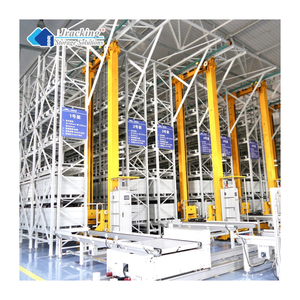
Automatic Storage Racking ASRS System for Retail Centers
Automated high-density storage and retrieval infrastructure designed to maximize vertical warehouse cube space with high-speed automated crane handling.
View Product Details →Modern industrial supply chains operate under severe land valuation pressure, surging structural build-out costs, and stringent warehouse occupational health and safety codes. In response, modern intralogistics systems have transitioned away from low-efficiency selective methods toward modular, high-density configurations. Whether retrofitting an existing regional distribution centre (DC) or constructing a high-bay automated warehouse, choosing an experienced racking system manufacturer represents one of the largest structural capital investments a company will execute.
High-density racking configurations—ranging from deep-lane Drive-In and Gravity Pallet Flow to sophisticated Radio Shuttle solutions and multi-tier mezzanine frameworks—require far greater precision engineering than conventional broad-aisle setups. Deflection tolerances under load, cold-rolled steel tensile consistency, floor anchoring dynamics, seismic energy absorption, and material biosecurity are critical criteria evaluated by Tier-1 industrial buyers. This comprehensive technical guide and manufacturer analysis evaluate engineering capabilities, direct-factory procurement economics, standard compliance factors, and automation trajectories for warehouse planners worldwide.
Factory-direct storage architectures tested and fabricated to handle rigorous load duty cycles across manufacturing, food distribution, and cold-chain facilities.
Automated high-density storage and retrieval infrastructure designed to maximize vertical warehouse cube space with high-speed automated crane handling.
View Product Details →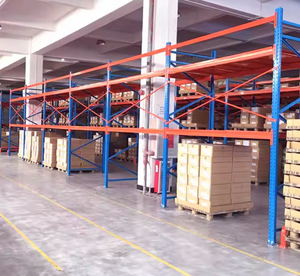
Robust heavy-duty load framework fabricated from high-grade structural steel coils, configured for high-tonnage pallet distribution hubs and industrial reserves.
View Product Details →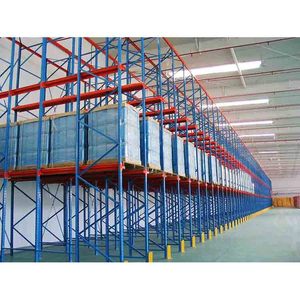
Eliminates operational forklift aisles to achieve up to 75% higher pallet density. The primary configuration for batch-shipped inventory and cold rooms.
View Product Details →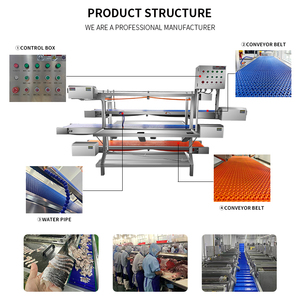
Engineered cold-environment processing line and staging system configured for food safety, sub-zero continuous thermal resistance, and hygiene protocols.
View Product Details →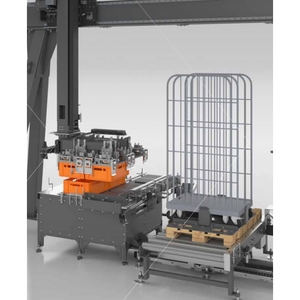
Integrated packaging, automated palletizing, and loading transition units tailored to balance high throughput rates at the racking loading face.
View Product Details →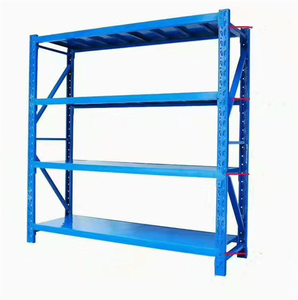
Versatile boltless and adjustable industrial shelving designed for medium-duty manual picking aisles, parts consolidation, and e-commerce picking modules.
View Product Details →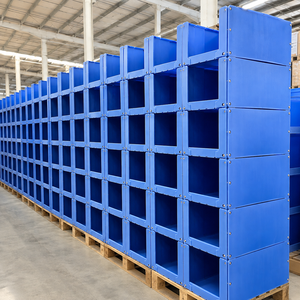
Durable PP corrugated picking bins engineered for high-density small-parts division, bin-drop locations, and seamless shelf identification.
View Product Details →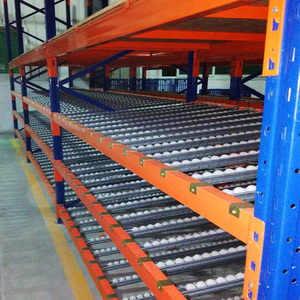
Gravity-fed dynamic roller lane storage guaranteeing First-In, First-Out (FIFO) stock rotation with integrated braking rollers for safe high-tonnage pallet transit.
View Product Details →By pairing precision in-house robotic production lines with rigorous international compliance verifications, we supply storage frameworks that perform across demanding load-bearing cycles.
Our structural design office references Australian Standard AS 4084 and NZS 1170.5 seismic criteria. Every project shipment includes full engineering data packs, frame deflection tables, and calculation reports ready for sign-off.
Before placing structural steel orders, client teams review comprehensive 3D CAD site layouts. We balance turning radii, clear height clearances, sprinkler flue spaces, and forklift operational limits to optimize total pallet positions.
Operating under CE Certification (No. 2435-CPR-8605159) and ISO 9001:2015 Quality Management (No. 18624Q00169R0M), our continuous automated roll-forming and pre-treatment lines guarantee steel structural integrity and batch trace reliability.
Cross-border imports can stall due to import quarantine infractions. We secure components on steel stillages or ISPM-15 heat-treated skids, providing clean commercial bills, packing lists, and Certificates of Origin for prompt port clearance.
The industrial warehouse equipment sector is undergoing structural transformations triggered by real estate supply constraints, e-commerce fulfillment speeds, and advancements in autonomous mobile robotics (AMRs) and shuttle automation. Buyers assessing high-density racking manufacturers must evaluate key industry shifts before locking in specifications:
1. Transition from Static Drive-In to Semi-Automated Radio Shuttle Systems: Traditional drive-in racking delivers exceptional volumetric density by packing multi-deep pallets into dedicated rail channels. However, the operational requirement for forklift trucks to physically enter structural bays increases rack upright collisions, slows cycle speeds, and heightens operator risk. Radio shuttle carts—which navigate internal guide rails at commands sent from a tablet or radio remote—allow forklifts to stay in the staging lane. This reduces equipment impacts, increases turnover speed by 40%, and allows companies to easily alternate between FIFO and LIFO logic.
2. Tight Structural Tolerances for Autonomous Warehouses (ASRS & AMRs): Automated storage and retrieval systems demand millimetric structural precision along vertical and horizontal axes. Standard manual forklift tolerances (+/- 5 mm) cause sensor trips and lockouts on automated stacker cranes. High-density factories are investing in continuous CNC cold-roll-forming mills, automated punch presses, and laser cut-off mechanisms to maintain structural alignment across 30-meter high-bay frames.
3. Advanced Surface Treatments for Cold-Chain & Coastal Hubs: Cold-storage facilities for seafood, dairy, and pharmaceuticals, along with coastal distribution sheds in regions like Australasia and Southeast Asia, experience heavy condensation and atmospheric corrosion. Standard single-coat paints deteriorate prematurely. Modern procurement focuses on multi-stage chemical pretreatment—including pickling, phosphating, and electrostatic epoxy-polyester powder coats—or hot-dip galvanization capable of withstanding corrosive environments.
4. Lifecycle Total Cost of Ownership (TCO) vs. Raw Steel Weight: Sophisticated procurement teams evaluate racking costs through a TCO lens. While cheaper light-gauge steel may offer initial savings, low impact resistance, elevated deflection, and frequent beam replacements escalate costs over a facility's lifecycle. Direct-factory sourcing with certified raw steel coil ensures consistent gauge thickness, stable yield strength, and lower long-term maintenance costs.
Every structural profile undergoes continuous quality inspections across our 10-stage fabrication line to ensure dimensional accuracy and dependable load performance.
Testing certified Q235B and Q355B coil stock for tensile strength, elongation limits, and consistent gauge thickness.
High-speed automated column punch presses stamp pitch holes at precise 50mm or 75mm intervals for versatile beam repositioning.
Multi-station cold roll-forming machines create rigid box beams and multi-flanged upright upright profiles with minimal internal stress.
Automated immersion pickling, degreasing, and phosphating followed by an electrostatic thermoset powder coat cured at 200°C.
Steel stillage bundling with edge guards, clear part labeling, and containerized bracing for international ocean voyages.
Direct technical answers addressing structural engineering, local compliance sign-offs, and global logistics execution.
Submit your warehouse floor plans, pallet weights, and operational specifications. Our structural engineering department will prepare a complimentary 3D spatial layout, load table, and direct factory price proposal within 24 hours.
Contact Us