Featured Industrial Storage & Enclosure Solutions
Precision-manufactured utilizing premium cold-rolled Q235B/SPCC steel grades, engineered to meet stringent Australian AS 4084, European CE (EN 15512), and ISO 9001:2015 load metrics.
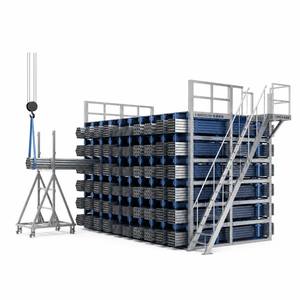
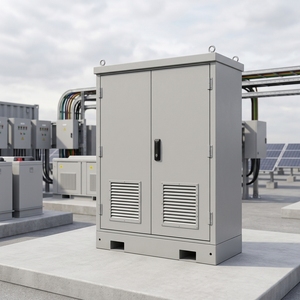
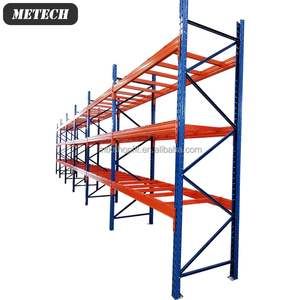
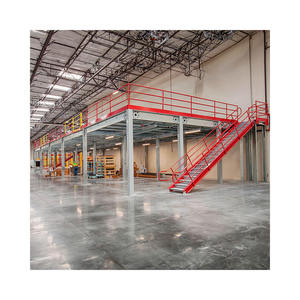
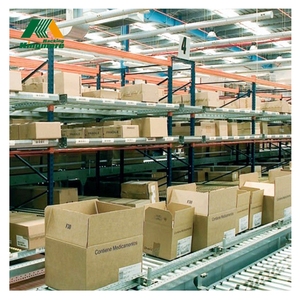
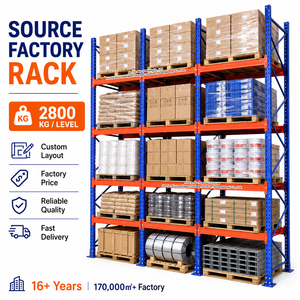
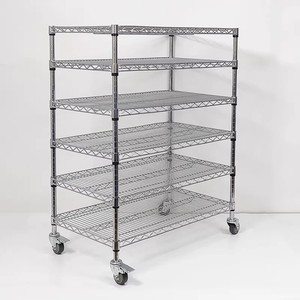
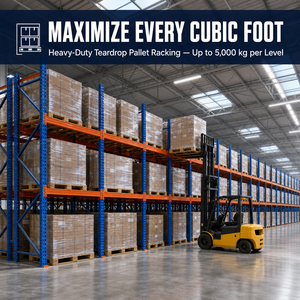
Guangzhou Heda Shelves Co., Ltd.: Engineering Standards Since 2001
Operating an integrated 30,000 m² modern manufacturing hub with automated roll-forming and finishing lines, delivering complete international structural compliance to Tier-1 logistics projects worldwide.
AS 4084 & EN 15512 Design
Every profile is calculated against cold-formed steel structural codes, delivering full engineering data packs, section properties, and load tables directly to local certifying engineers.
Seismic Resilience Engineering
Configured specifically to mitigate ductile deformation in high-risk zones (such as New Zealand NZS 1170.5), with heavy-duty baseplates, stiffened upright portals, and reinforced run spacers.
Biosecurity Certified Export
Direct compliance with DAFF (Australia) and MPI (New Zealand) customs criteria. Packed entirely on certified steel stillages or heat-treated ISPM-15 export timbers to eliminate transshipment delays.
Automated Surface Pretreatment
10-stage industrial process including chemical pickling, phosphating, and electrostatic epoxy-polyester powder coating for high humidity, marine climates, and cold storage condensation resistance.
Global Landscape: Top 10 Industrial Rack Storage Manufacturers & Suppliers
The global industrial warehouse racking and intralogistics infrastructure market has transitioned from static mechanical fabrication to advanced structural-mechatronic engineering. High-velocity supply chains, multi-channel 3PL operations, and skyrocketing industrial real estate valuations demand storage architectures with tighter tolerances, higher structural load safety factors, and rapid adaptability to automation. The following benchmark examines the top 10 international industrial rack storage manufacturers shaping the material handling ecosystem in 2026.
| Manufacturer / Supplier | Global Headquarters | Core Competencies | Structural Standards Compliance | Primary Target Market |
|---|---|---|---|---|
| Guangzhou Heda Shelves Co., Ltd. | Guangzhou, China | Customized Pallet Racking, Mezzanines, Radio Shuttle, Heavy Duty Honeycomb Racks | AS 4084, CE (EN 15512), ISO 9001:2015, NZS 1170.5 | Global Tier-1 Importers, EPC Contractors, 3PL, Oceania Logistics |
| SSI SCHAEFER | Neunkirchen, Germany | Fully Automated High-Bay Racking, ASRS, Automated Mini-Load Warehouses | FEM, EN Standards, DIN Norms | Multinational E-Commerce, Pharmaceutical, Automotive Megahubs |
| Dexion (Constructor Group) | Silverwater, Australia / UK | Selective Racking, Cantilever Systems, Dynamic Shuttles, Industrial Shelving | AS 4084, FEM, SEMA Approved | Oceania, Europe, Asia-Pacific Regional Warehouses |
| Mecalux, S.A. | Barcelona, Spain | Clad-Rack Warehouses, Automated Pallet Shuttles, Warehouse Management Software | EN 15512, RMI Standards, ISO 14001 | European & Pan-American High-Throughput Distribution Facilities |
| Jungheinrich AG | Hamburg, Germany | Integrated Forklift-Rack Infrastructure, Narrow Aisle (VNA), Mobile Racking | FEM, DIN EN, CE Directives | Cold Storage, Manufacturing Logistics, European Retail Distribution |
| Dematic (KION Group) | Atlanta, United States | Automated High-Bay Storage Structures, Unit Load AS/RS, Dynamic Buffers | RMI Certified, ANSI, AISC Standards | High-Volume Fulfillment Hubs, Aviation, Micro-Fulfillment Centers |
| Interlake Mecalux | Chicago, United States | Roll-Formed & Structural Pallet Racks, Drive-In, Push-Back Frameworks | RMI (Rack Manufacturers Institute), ANSI MH16.1 | North American Heavy Distribution, Cold Food Chain Logistics |
| Bito-Lagertechnik Bittmann GmbH | Meisenheim, Germany | Boltless Shelving Systems, Multi-Tier Mezzanine Platforms, Flow Racks | EN 15635, Eurocodes, DIN Standards | Automotive Spare Parts, Hardware Wholesalers, Light Assembly |
| Stow Group | Dottignies, Belgium | Standard Racking, Atlas 2D Shuttle Systems, Heavy Automated Silo Builds | FEM 10.2.02, EN 15512, CE Marking | Intralogistics System Integrators, FMCG Logistics Providers |
| Daifuku Co., Ltd. | Osaka, Japan | High-Density Seismic-Resistant Automated Racks, Cleanroom AS/RS Systems | JIS Standards, RMI, International Seismic Codes | Semiconductor Fabrication, High-Tech Electronics, Automated Pharmaceutical |
Technical Procurement Vectors: The Strategic Evaluation Framework
Procuring industrial racking at scale requires an audit of material chemistry, beam-to-column connector rigidity, dynamic loading resilience, and supplier supply-chain integrity. Buyers must evaluate suppliers beyond base tonnage pricing:
1. Steel Metallurgy and Structural Integrity
The primary cost driver and failure root cause in warehouse storage is steel specification. Premier manufacturers utilize Q235B or Q355B cold-rolled structural steel, or grade-matched SPCC sheet for specialized enclosures. The yield point ($f_y$) must be validated via material test certificates (MTC) to eliminate brittle fracture risks under maximum rated uniform distributed loads (UDL). High-bay installations require continuous roll-forming tolerances within ±0.5 mm deviation per 10-meter upright column length to prevent cumulative deflection under vertical axial loads.
2. Cold-Formed Section Design and Beam Connection Physics
Modern beam connectors rely on multi-claw mechanical interlocks (typically 3-claw or 4-claw configurations) engineered with integral safety lock pins. The connection creates a semi-rigid joint that governs portal frame stability. Under Australian standard AS 4084 and European EN 15512, connection rotational stiffness ($K_b$) tests dictate exact beam deflection limits (typically span/$200$ for commercial standards, or span/$300$ for sensitive automated shuttle systems).
3. Specialized High-Density Architectures: Engineering Deep-Dive
Warehouses face high floor space costs. Selecting the correct system geometry dictates long-term operating expenditures:
- Selective Pallet Racking: Yields 100% individual SKU selectivity with variable aisle widths (3.0 m to 3.5 m for counterbalanced forklifts; 1.6 m to 1.8 m for VNA turrets), yet achieves lower volumetric cube utilization (roughly 35-40%).
- Drive-In & Drive-Through Systems: Maximizes spatial density (up to 75% cube utilization) by removing aisles. Ideal for long shelf-life batches, but requires heavy upright impact buffers due to forklift entry within rack bays.
- Radio Shuttle & Dynamic Flow: Utilizes autonomous battery-driven carriers running along precision guidance rails within deep-lane channels (up to 40 pallets deep). Eliminates forklift mast intrusion into storage lanes, virtually removing upright collision damage while supporting both FIFO and LIFO dispatch.
- Structural Steel vs. Rack-Supported Mezzanines: Rack-supported mezzanines integrate standard uprights as vertical load-bearing pillars, cutting primary steel expenses by up to 35% compared to wide-span structural I-beam platforms while creating dense pick floors above bulk pallet storage.
Need an Engineered Layout and Section Calculation?
Guangzhou Heda Shelves delivers turn-key 3D CAD architectural designs, structural load analysis, and container-optimized shipping schedules within 24 hours.
Send an InquiryFuture Procurement Trends (2026–2030): Where Storage Engineering is Heading
Autonomous Mobile Robot (AMR) Alignment
Traditional wide aisles are being re-engineered for hybrid navigation where humans, AGVs, and AMRs share transit paths. Bottom levels demand clear ground clearance, precision optical floor-guide integration, and magnetic target mounting strips.
Integration with Renewable Energy BESS
Logistics hubs increasingly house utility-scale battery energy storage systems (BESS). Racking manufacturers now fabricate IP54-rated SPCC cold-rolled power distribution and battery enclosures capable of containing thermal runaways while maintaining fire-containment isolation.
Real-Time Structural Strain Monitoring (IoT)
Uprights are evolving into smart structural nodes. Digital strain gauges and fiber-optic deflection sensors embedded into columns relay live impact load and structural fatigue alerts to warehouse management systems (WMS) before structural failure occurs.
Low-Carbon Green Steel Mandates
Multinational procurement mandates require certified life cycle analyses (LCA). Suppliers utilizing EAF (Electric Arc Furnace) recycled steel paired with zero-VOC thermoset powder coating are prioritized to meet corporate carbon reduction targets.
Technology Development Trends: Advanced Manufacturing Methodologies
Structural reliability starts on the factory floor. Leading production facilities have modernized their manufacturing lines to minimize human error and material fatigue:
- Continuous CNC Roll-Forming Lines: Eliminates internal residual stress concentrations via cold roll shaping, ensuring 100% uniformity across 12-meter upright lengths without bowing or twisting.
- Automated Fiber-Laser Profiling & Punching: CNC-guided laser-cut teardrop and diamond punching patterns guarantee connection tolerances within 0.05 mm, preventing loose tolerances that degrade seismic performance.
- Robotic Multi-Pass Welding: Robotic pulse MIG welding guarantees complete weld penetration at beam connector plates and footings, eliminating cold lap defects and micro-cracking common in manual hand-welding.
- Automated Chemical Phosphating: Total-immersion pickling removes all surface mill-scale, creating a micro-etched zinc phosphate base layer that prevents sub-surface rust creep in cold stores or humid coastal conditions.
Industrial Storage Procurement: Technical FAQ
Direct answers to the regulatory, mechanical, and logistical questions raised by warehouse engineers, operations directors, and international procurement teams.
Optimize Your Warehouse Storage Density & Safety
Connect with our technical design team to review your floor plans, verify structural capacity, and receive an itemized factory-direct quote backed by 25 years of global manufacturing experience.
Send an Inquiry