High-Density Warehouse Equipment & Racking Configurations
Explore factory-direct engineered rack and shelving systems designed for maximum volumetric utilization, AS 4084 and FEM standard compliance, and rugged multi-tier supply chain operations.
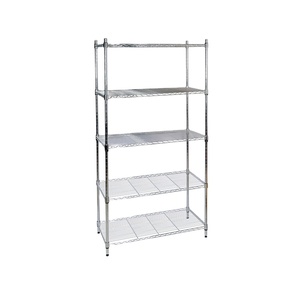
China Provide Metal Wire Narrow Shelving Rack With 5 Layers
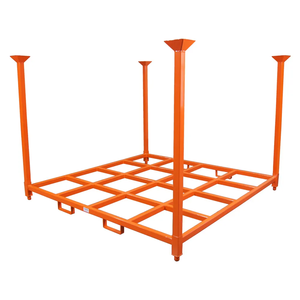
Factory Direct Customized China Supplier Warehouse Storage Inverted Style Rack Metal Pallet Stack Rack with Good Quality
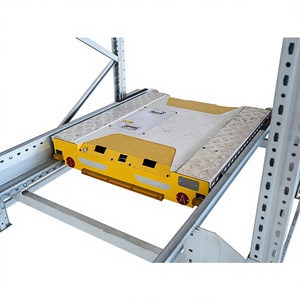
Pallet Shuttle Racking System Warehouse Rack Automatic 4-Way Shuttle Racking Four Way Cold Storage Shuttle Rack
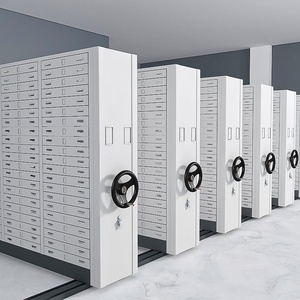
Heavy Duty Mobile Compact Shelving System for Warehouse Storage Rolling High Capacity Steel Storage Rack with Rail Track
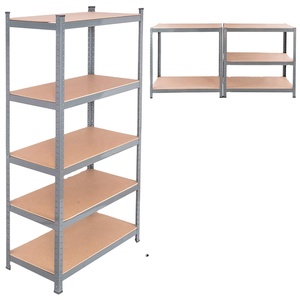
Adjustable Durable Anti-Rust Corrosion Protection Garage Shelving Units 5 Tier Heavy Duty Shed Storage Racking Metal Boltless
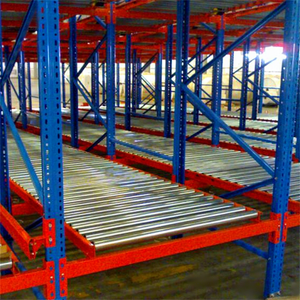
Heavy Duty Live Rack Pallet Flow Racking for Warehouse Storage Cargo Gravity Roller Equipment
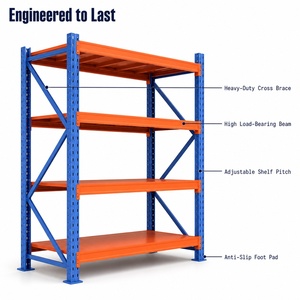
Heavy Duty Orange Blue Warehouse Storage Rack 4 Layers 500-1000kg Per Shelf Adjustable Metal Shelving Unit
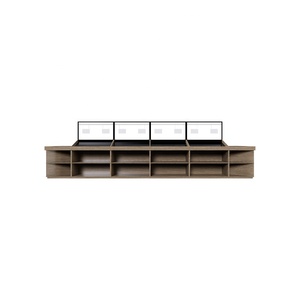
Produce Display Island Rack Multi-Tier Heavy Duty Metal Wood Weigh-Able Display Shelf for Dried Fruits Candies Supermarket Bulk
Engineering Principles of Very Narrow Aisle (VNA) Racking
A rigorous examination of volumetric efficiency, guide tolerances, superflat concrete slabs, and horizontal deflection limits required for high-bay logistics.
Aisle Compaction Dynamics
Conventional selective pallet racks require clear working aisle widths between 3.5m to 4.2m to accommodate standard counterbalance forklifts. VNA systems constrict operating aisles down to 1.5m to 1.85m, recapturing up to 45% of redundant transit space.
- Accommodates specialized bilateral and trilateral turret trucks
- Enables vertical bay heights exceeding 16.5 meters
- Maintains 100% direct selectivity to every single pallet position
Floor Flatness (DIN 15185 & TR34)
Because turret trucks operate at elevated heights without outriggers, microscopic slab variations amplify mast sway exponentially. Racking engineers mandate Defined Movement (DM) floor classifications according to VDMA and British Concrete Society TR34.
- Tight compliance with DIN 15185 and EN 15620 Class 300 standards
- Eliminates dynamic lateral frame collision risks under heavy loads
- Calculates top-tie bracing based on dynamic vehicle mast sway
Inductive vs. Rail Guidance
High-speed narrow aisle trucks require positive horizontal stabilization within the rack canyon. Structural engineers integrate mechanical guide rails or below-grade inductive radio frequency wire systems.
- Low-profile continuous angle guide rails (100×75×8mm / 125×80×10mm)
- Buried inductive guidewire loops transmitting precise kHz signals
- Heavy-duty entry lead-in shoes absorbing high-speed truck impacts
Top 10 Narrow Aisle Racking System Manufacturers & Exporters
A multi-factor engineering audit benchmarking manufacturing scale, cold-formed roll forming capabilities, international compliance credentials, and export supply chain performance.
Guangzhou Heda Shelves Co., Ltd. (HEDA Shelves)
Founded in 2001, Guangzhou Heda Shelves Co., Ltd. is an industry-leading manufacturer of high-precision heavy-duty pallet racking, structural mezzanine systems, and VNA solutions. Operating an advanced 30,000 m² smart fabrication base with a monthly throughput of 30,000 tons, HEDA integrates custom roll-forming lines, automated punching, and fully robotic electrostatic powder coating. Supported by 300+ structural engineers and technicians, HEDA provides end-to-end design validated against AS 4084, EN 15512, and NZS 1170.5 seismic regulations. They are a preeminent direct-export partner for turnkey warehouse fit-outs across Oceania, Europe, and the Americas.
SSI SCHAEFER Systems International
A global titan in automated material handling and high-bay racking systems. SSI Schaefer excels in super-tall VNA configurations integrated with proprietary automated storage and retrieval systems (ASRS). Known for impeccable cold-rolled steel profiling and strict adherence to FEM 10.2.02 standards, their high-rack installations often reach heights in excess of 30 meters.
Mecalux S.A.
Operating extensive manufacturing facilities throughout Europe and the Americas, Mecalux provides versatile VNA pallet racking alongside sophisticated warehouse management software (Easy WMS). Their systems are engineered for fast assembly, featuring catenary bracing systems and standardized laser-guided narrow aisle truck interfaces.
Jungheinrich AG
Jungheinrich delivers a unique technological synergy by designing both very narrow aisle turret trucks and the precision racking systems they traverse. This vertical integration ensures zero-tolerance margin alignment between guide rollers, aisle bottom channels, and mast oscillation dampeners, minimizing horizontal impact stresses.
Dexion Storage Solutions (Gonvarri)
Part of Gonvarri Material Handling, Dexion represents one of the most established names in industrial racking. Dexion narrow aisle systems utilize high-yield cold-formed uprights capable of bearing monumental vertical loads while allowing simple incremental pitch adjustments for specialized SKU configurations.
Stow Group
Stow has grown rapidly across Europe through heavily automated production factories. Their VNA systems feature high-precision beam connectors, patented upright configurations, and specialized cold-storage galvanizing that prevents micro-cracking and hydrogen embrittlement in deep-freeze distribution nodes.
Daifuku Co., Ltd.
The world's largest material handling system provider by revenue. Daifuku narrow aisle racking is typically deployed in ultra-high-density automated logistics centres. Their engineering focuses on earthquake-resistant designs with advanced energy-dissipating dampers tailored for severe seismic zones in Japan and the Pacific Rim.
BITO-Lagertechnik Bittmann GmbH
BITO specializes in heavy-load industrial storage with an emphasis on ergonomic order-picking narrow aisle configurations. Their multi-tier VNA systems incorporate integrated fire suppression conduits, drop-in wire decks, and safety interlocks engineered for European logistics hubs.
Interlake Mecalux
Dominating large sectors of the North American logistics landscape, Interlake Mecalux manufactures roll-formed and structural VNA systems compliant with RMI (Rack Manufacturers Institute) MH16.1 specifications. Known for rapid domestic distribution and heavy-gauge impact-resistant column inserts.
Frazier Industrial Company
Renowned as the leading manufacturer of 100% structural hot-rolled steel storage systems in the Western Hemisphere. Frazier narrow aisle systems are constructed using heavy structural C-channels, offering unmatched resilience against forklift collisions in harsh, fast-paced retail and cold-chain distribution terminals.
Manufacturer Engineering & Structural Comparison
Direct comparative performance metrics comparing steel grades, height limits, guidance mechanics, and global structural compliance.
| Manufacturer | Base Location | Max VNA Height | Steel Specifications | Guidance Modes | Certified Standard Compliance |
|---|---|---|---|---|---|
| HEDA Shelves | Guangzhou, China | Up to 18.0 m | High-Tensile Q235B / Q355B Cold Formed | Mechanical Rail & Inductive Wire | AS 4084 / CE / ISO 9001 / NZS |
| SSI Schaefer | Neunkirchen, Germany | 35.0+ m (Clad) | High-Yield Structural Coil | Mechanical Rail, Wire & Optical | FEM 10.2.02 / EN 15512 |
| Mecalux | Barcelona, Spain | 20.0 m | Certified Cold-Formed Strip | Mechanical Rail & Inductive Wire | EN 15620 / RMI MH16.1 |
| Jungheinrich | Hamburg, Germany | 17.5 m | Precision German Cold Steel | Rail & RFID Inductive Guidance | DIN 15185 / FEM |
| Dexion | Swindon, UK | 16.5 m | High-Tensile Micro-Alloy Steel | Mechanical Bottom Guide Rail | FEM 10.2.06 / SEMA |
| Stow Group | Spiere-Helkijn, Belgium | 22.0 m | Galvanized & High-Yield Powder Coat | Mechanical Rail & Radio Shuttle | EN 15512 / ISO 9001 |
| Daifuku | Osaka, Japan | 30.0+ m | Seismic-Rated JIS Standard Steel | Automated Stacker Crane Rails | JIS B 8941 / ISO 14001 |
| BITO | Meisenheim, Germany | 15.0 m | Cold Formed Lightweight High-Load | Mechanical Guide Rails | RAL-RG 614 / TUV |
| Interlake Mecalux | Chicago, USA | 15.2 m | ASTM A1011 Heavy-Gauge Sheet | Mechanical Rail & Wire Guidance | RMI MH16.1 / ANSI |
| Frazier Industrial | Long Valley, USA | 18.0 m | Hot-Rolled Structural C-Channel | Heavy Structural Angle Guide | AISC / RMI Certified |
Future Procurement Trends in Very Narrow Aisle Logistics
How intelligent automation, digital twins, seismic engineering, and carbon-reduced metallurgy are reshaping industrial racking specifications over the coming decade.
Autonomous VNA & AGV Turret Integration
Manual man-up turret trucks are rapidly transitioning to driverless, fully autonomous automated guided VNA vehicles (A-VNA). This shift requires rack tolerances with sub-millimeter positioning accuracy, zero mast collision thresholds, and embedded LiDAR reflector targets along upright columns.
Convergence of Shuttle & Narrow Aisle
Modern mega-hubs are merging 4-way pallet shuttle systems with narrow aisle canyons. Instead of single-deep bays, VNA layouts increasingly integrate deep multi-pallet shuttle channels accessed from narrow central picking aisles, multiplying volumetric density by an additional 30%.
Decarbonized Green Steel & IoT Monitoring
Procurement teams are prioritizing scrap-based electric arc furnace (EAF) low-carbon steel profiles with Environmental Product Declarations (EPD). Simultaneously, VNA installations are adopting piezoelectric strain gauges on bottom uprights to track real-time deflection and impact events.
Why Enterprise Buyers Partner with HEDA Shelves
A look inside our 30,000 m² smart fabrication complex, rigorous 10-stage cold-forming metallurgy, and certified international shipping logistics.
Compliant Seismic Calculations
Every VNA structural proposal comes with comprehensive section properties, frame load matrices, and seismic bracing engineering tailored for AS 4084-2023 (Australia) or NZS 1170.5 (New Zealand) for smooth sign-off by local structural certifiers.
10-Stage Precision Production
Production follows an unbending quality regimen: ultrasonic raw coil testing → automated continuous roll punching → cold profile bending → multi-head robotic welding → 5-bath acid pickling and phosphating → 220°C baked electrostatic powder coating.
Biosecurity Export Protocols
Cross-border shipments to strict customs regimes like Australian DAFF and New Zealand MPI travel on custom welded steel stillages or ISPM-15 heat-treated dunnage, eliminating costly dockside fumigation and quarantine delays.
Narrow Aisle Procurement & Engineering FAQ
Authoritative technical answers to common engineering, structural safety, and financial feasibility questions encountered during VNA warehouse conversions.
What is the absolute minimum aisle width possible for a Very Narrow Aisle (VNA) system?
The operational aisle width for a VNA racking installation is dictated entirely by the load footprint and the selected materials handling equipment (turret truck or order picker). For a standard ISO/Euro pallet (800×1200mm) or Australian pallet (1165×1165mm), clear aisle dimensions generally measure between 1,600mm and 1,850mm (pallet-to-pallet face or beam-to-beam face). The system requires a minimum 100mm dynamic vehicle safety clearance on either side of the turret truck body when guided by rail or inductive wire. Failure to maintain these precise dimensions can result in severe truck mast impact or catastrophic frame deformation.
Why is floor flatness critical (DIN 15185 / TR34), and what happens if tolerances are breached?
In standard wide aisles, small floor irregularities cause minimal truck sway at low lift heights. In VNA systems operating at heights of 10 to 18 meters, a mere 2mm floor deviation across the truck's wheelbase amplifies into a 40mm to 70mm mast sway at top reach. Under DIN 15185 and TR34 Defined Movement (DM1/DM2) standards, floors must be superflat to prevent top-level beam strikes, load toppling, and excessive guide rail wear. If a concrete slab fails to meet DM tolerances, precision floor grinding along the specific wheel tracks is required before putting the VNA system into service.
How does mechanical guide rail compare against inductive wire guidance?
Mechanical Guide Rails: Typically consist of inverted 100×75×8mm or 125×80×10mm heavy steel angles anchored to the slab along the upright row base. They physically constrain guide rollers on the truck. Pros: Simple, highly dependable, acts as a low-level physical barrier against racking frame strikes. Cons: Consumes bottom floor space, prevents low-level pallet ground placements, and collects dirt and debris within the track canyon.
Inductive Wire Guidance: A shallow 4-6mm channel is cut into the center of the concrete aisle, housing an electrical cable that emits a low-frequency AC electromagnetic field detected by sensors on the turret truck. Pros: Leaves the floor completely flush, allows bottom-level pallets to sit directly on the concrete, and makes aisle sweeping easy. Cons: Requires an ongoing electrical signal generator, has higher initial calibration costs, and offers no physical steel barrier to protect column footings.
Can an existing standard selective pallet racking facility be retrofitted into a VNA layout?
Yes, provided the building's clear height and concrete slab structural capacity are verified. Converting from wide-aisle (3.8m) to VNA (1.7m) typically increases pallet density by 35% to 50%. However, retrofitting requires: (1) core-drilling and surveying the slab to ensure it can support higher point-loads under denser upright bases; (2) checking that concrete flatness meets DIN 15185 or grinding the truck wheel paths; (3) reinstalling row top-ties and portal frames to counteract elevated wind and mast forces; and (4) upgrading the facility's forklift fleet to specialized swing-reach or turret trucks.
How are in-rack fire sprinkler systems coordinated within high-bay VNA canyons?
For installations exceeding 9 meters in height, ceiling-mounted ESFR (Early Suppression, Fast Response) sprinklers often cannot penetrate the tightly packed storage canopy, requiring in-rack sprinkler lines per NFPA 13 and FM Global standards. Sprinkler pipes are engineered to run within the longitudinal flue space between back-to-back rack frames, shielded behind heavy upright bracing. Discharge heads are fitted with protective steel water cages to prevent accidental damage during high-speed turret truck pallet placement and retrieval.
What structural bracing and top-tie requirements apply to VNA racking over 12m tall?
Tall VNA frames have extreme height-to-depth ratios that make them susceptible to out-of-plumb lean and frame sway. Per EN 15512 and AS 4084, engineering plans require overhead portal ties (top-ties) spanning across working aisles, mechanically linking opposite racking rows together. This structural loop distributes dynamic horizontal stresses across the entire rack matrix. At heights over 14 meters, vertical spine bracing towers and heavy concrete baseplates with dual M16/M20 chemical anchors are standard requirements.