Heavy-Duty FIFO
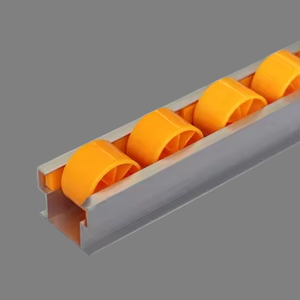
Heavy Duty Industrial Gravity Flow Racking & Roller Shelving System
Q235B High-Tensile
1,500kg / Pallet
Centrifugal Brake
Precision-formed roller configurations, centrifugal deceleration brakes, and heavy-duty structural steel profiles manufactured in-house for maximum warehouse density and rapid stock turnover.
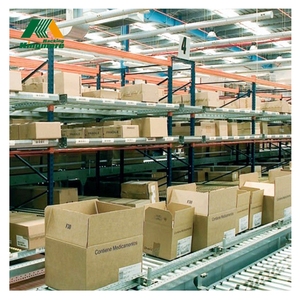
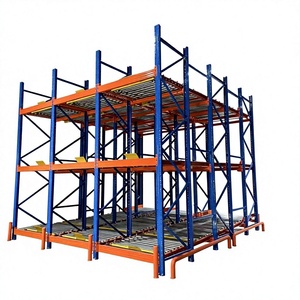
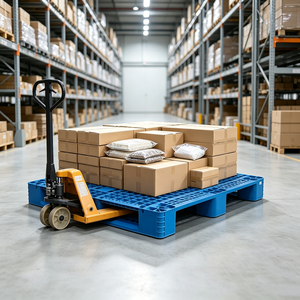
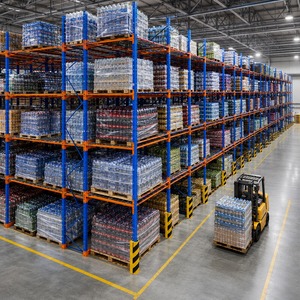
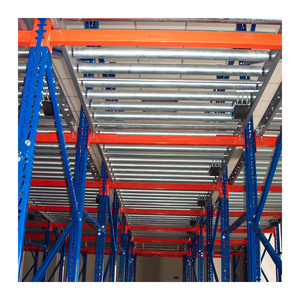
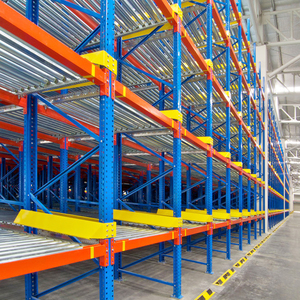
Pallet Flow Systems (also designated within intralogistics engineering as Gravity Flow Racks or FIFO Dynamic Roller Racks) represent the thermodynamic pinnacle of high-density passive material handling. By harnessing pure terrestrial gravity (g ≈ 9.81 m/s²) and converting it into controlled kinetic lateral descent across an inclined roller bed, facilities achieve autonomous First-In-First-Out stock rotation without requiring onboard battery systems, electrical track energization, or direct forklift transit down storage lanes.
While standard selective racking systems waste up to 60% of floor plates on intermediate transit aisles, a precision-engineered pallet flow array condenses storage footprint down to two dedicated interfaces: an upstream Charge/Loading Face and a downstream Discharge/Picking Face. However, the engineering complexity of dynamic flow systems exceeds that of static structures by orders of magnitude. A successful deployment demands meticulous synchronization between roller pitch angle, centrifugal brake resistance curves, pallet bottom-deck stiffness, and entry-exit mechanical pallet separators.
The standard operating pitch angle (θ) for ambient industrial pallet flow systems ranges between 2.5% and 3.5% (approximately 1.4° to 2.0°). This gradient must generate sufficient downhill vector force (Fparallel = m · g · sinθ) to overcome static rolling friction (μr) across chilled or irregular pallet timber skids, while strictly preventing uncontrolled runaway speeds via centrifugal friction brakes (Fbrake ∝ ω²).
Direct-contact or indirect geared brake rollers automatically govern descent velocities to a safe maximum of 0.25 to 0.30 m/s. Internal internal planetary brake shoes expand outward against internal drum walls proportionally to angular velocity, ensuring 1,500 kg chemical pallets roll at identical speeds to 400 kg retail loads.
Engineered latch mechanisms isolate the lead pallet at the pick face from the hydrostatic accumulation line behind it. By relieving up to 20,000 kg of combined backpressure force, the separator eliminates pallet pinching, protects forklift mast hydraulics, and ensures effortless pallet extraction.
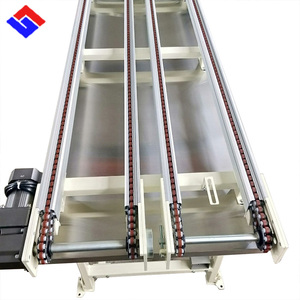
Configured with triple-track full-width cylindrical steel rollers or multi-lane split skate wheels with zinc electroplating or polyurethane sleeves. Designed with high static load capacity (up to 300 kg per roller) to prevent roller deflection and preserve flat transit geometry under harsh pallet bottom variations.
An independent engineering evaluation of the world's premier gravity flow rack fabricators, evaluating manufacturing footprint, structural steel engineering, proprietary roller mechanics, and global delivery scale.
Engineering Distinction: Operating one of Asia's most advanced heavy structural roll-forming and racking facilities, HEDA Shelves engineers and manufactures end-to-end dynamic pallet flow lines, carton flow roller beds, and integrated mezzanine superstructures. Utilizing certified Q235B and high-yield Q355 structural steel, HEDA provides complete structural calculations verified against AS 4084-2023 (Oceania), EN 15512 (Europe), and RMI MH16.1 (North America). Equipped with fully automated continuous roll-forming lines, automated robotic welding cells, and an environmental 8-stage pickling/phosphating electrostatic powder coating line, the factory achieves an industrial throughput of 30,000 tons per month with rigorous pre-shipment dimensional and dynamic roller friction testing.
Engineering Distinction: Globally renowned for its precision-engineered roller beds and proprietary Magnetic Speed Controller MSC 50. Interroll's gravity lanes feature gearless eddy-current braking technology that operates entirely contactless, preventing mechanical wear while delivering silky-smooth pallet descents from 150 kg up to 1,400 kg.
Engineering Distinction: BITO specializes in integrated live storage systems (PROflow pallet flow), emphasizing tight mechanical manufacturing tolerances. Their modular multi-lane roller tracks integrate ergonomic entry guides, staggered load-bearing rollers, and spring-loaded impact drop-zones that isolate uprights from fork impact loads.
Engineering Distinction: Recognized for monumental intra-logistics EPC projects. Schaefer’s pallet flow frameworks feature cold-rolled profiles paired with heavy-duty mechanical brake assemblies designed specifically for automated guided vehicle (AGV) interfacing and extreme sub-zero cold store conditions (-30°C).
Engineering Distinction: Mecalux delivers pallet flow solutions characterized by standard modular upright connections and multi-wheel split tracks. Their systems focus on high-throughput FMCG distribution lines, integrating seamlessly with their proprietary Easy WMS platform for slotting control.
Engineering Distinction: Stow’s pallet flow product line (stow Flow) is celebrated for its rigid structural integrity and heavy-gauge galvanized roller channels. Their lanes incorporate heavy mechanical pallet separators designed to withstand continuous 24/7 cycles in high-turnover beverage distribution hubs.
Engineering Distinction: Dematic engineers deep-lane pallet flow beds that often function as staging buffers directly adjacent to AS/RS crane corridors or truck automatic dock loading zones. Their roller beds feature high dynamic balancing and ultra-tight pitch precision.
Engineering Distinction: With historic strength across Australia, New Zealand, and Northern Europe, Dexion's pallet flow systems strictly adhere to AS 4084 and FEM standards. Their designs emphasize robust upright post-protection, safety brake rollers, and ergonomic split-roller manual picking tunnels.
Engineering Distinction: The undisputed heavy structural channel specialist in North America. Frazier’s pallet flow racks utilize hot-rolled structural steel C-channels instead of cold-rolled steel. This produces virtually indestructible upright frames impervious to extreme forklift impact collisions.
Engineering Distinction: Backed by parent company Nucor's enormous domestic steel mills, Hannibal excels in seismic-engineered dual-cantilever and pallet flow racks. Their patented TubeRack framework provides extraordinary torsional rigidity in high-seismic active zones.
Compare mechanical operating principles, space volumetric utilization rates, stock rotation enforcement, and CAPEX drivers across dynamic and static industrial storage methodologies.
| Storage System Type | Stock Rotation Rule | Volumetric Space Density | Selectivity Profile | Forklift Damage Vulnerability | Cold Room Energy Savings | Initial CAPEX Tier |
|---|---|---|---|---|---|---|
| Pallet Flow (Gravity FIFO) | Strict FIFO | 85% - 90% (Maximum) | 1 SKU per Lane | Very Low (External Only) | Superior (Minimal Cube) | Moderate to High |
| Radio Shuttle Racking | FIFO or LIFO Selectable | 85% - 92% (Maximum) | 1 SKU per Lane | Very Low (External Only) | Superior (Ultra Dense) | High (Batteries/Carts) |
| Drive-In Racking | Strict LIFO | 65% - 75% (Moderate) | 1 SKU per Bay | High (Forks Inside Racks) | Moderate | Low to Moderate |
| Push-Back Racking | Strict LIFO | 70% - 80% (2 to 6 Deep) | 1 SKU per Lane | Moderate | Moderate | Moderate |
| Selective Pallet Racking | Unrestricted Access | 35% - 45% (Low Density) | 100% Direct (Any Pallet) | Moderate to High | Poor (High Air Space) | Lowest |
Founded in 2001, Guangzhou Heda Shelves Co., Ltd. has developed over two decades from a regional precision tooling workshop into a global industrial racking export giant. Occupying a 30,000 square meter standardized production hub staffed by over 300 technical engineers and production specialists, HEDA delivers structural integrity, precision gravity flow mechanics, and full international standards compliance.
Unlike trading entities or component assemblers, HEDA exercises complete in-house metallurgy and quality control: from slit coil de-coiling and multi-axis CNC punching to roll forming, submerged arc welding, and electrostatic automated powder spraying. Every dynamic pallet flow system is custom-configured around your exact pallet geometry (1165x1165mm Australian standard, 1200x1000mm Euro/UK standard, or 40x48" GMA).
Supply your facility CAD drawing, clear heights, and forklift specifications; HEDA's structural engineering division returns complete 3D models, capacity calculations, and seismic verification packs.
Each flow track is customized with specific brake roller distribution based on test-slope trials, matching low-temperature freezer oils (-30°C) or chemical plant spark-proof requirements.
Packed on certified steel stillages or ISPM-15 treated timber to ensure seamless clearance through Australian DAFF and New Zealand MPI bio-security border inspections without quarantine hold-ups.
The convergence of extreme warehouse real estate costs, robotic fleet integration, and sub-zero cold chain demands is transforming how gravity flow systems are specified and procured.
Modern pallet flow picking faces are shifting from manual forklift operations to high-precision Autonomous Mobile Robot (AMR) docking stations. Optical sensor targets, cantilevered front-stop beams, and automated hydraulic pallet retention latches enable robotic AGV forks to reliably engage pallets without sensor disruption.
With refrigerated warehouse electricity costs surging worldwide, operators are converting open cold rooms into massive 20+ pallet deep gravity flow corridors. Eliminating warm-air convection aisles reduces chilled cubic volume by up to 45%, shrinking compressor electrical consumption while preserving strict FIFO code-date compliance for fresh proteins and pharmaceuticals.
Structural steel procurement is accelerating the shift toward ultra-high yield strength Q355 micro-alloyed steel. Achieving equivalent bending moment resistance (Wx) with thinner wall thicknesses decreases total steel deadweight by 12% to 18%, substantially lowering shipping container carbon footprints and export ocean freight rates.
Ensure critical mechanical criteria are verified by your structural engineering team prior to sign-off and container loading.
Pallet base runner deflection must not exceed L/200 or 6mm when loaded to maximum gross weight. Excessive sagging of inferior timber creates a convex center belly that rubs against roller frames, stalling pallet lines prematurely.
Ensure that a minimum of 3 to 4 load-bearing rollers continuously support the bottom pallet boards at all times. For irregular slave pallets or plastic three-runner pallets, specify staggered full-width steel rollers rather than twin-wheel tracks.
Calculate total line hydrostatic force: Fpush = N · W · sin(θ), where N is pallet lane depth and W is pallet load. On lanes deeper than 5 pallets, high-strength pneumatic or mechanical separators are mandatory to prevent crushing the extraction-face pallet.
Direct engineering insights addressing technical compliance, seismic performance, cold chain integration, and factory direct containerization.
Send our senior engineering team your architectural floor plan, storage height clear dimensions, pallet specifications, and forklift model. Within 24 hours, we will deliver an optimized 3D CAD layout, load capacity calculation sheet, and transparent factory-direct quotation.