Precision Dynamic & Static Storage Equipment
Engineered for seamless FIFO/LIFO turnover, zero-pressure accumulation, and maximum volumetric utilization across distribution centers.
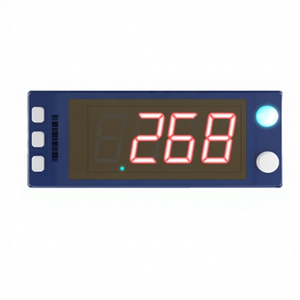
3-Digit Electronic Rack Tag RGB Indicator Light Touch Button Wired Picking System
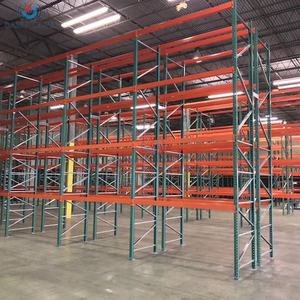
Selective Pallet Racking & Push Back Cart Dynamic Storage Systems
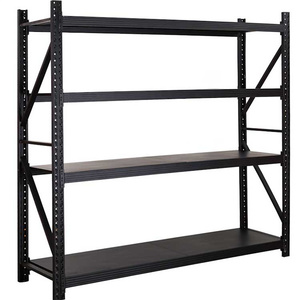
Custom Heavy Duty Industrial Warehouse Pallet Racking & Upright Frame System
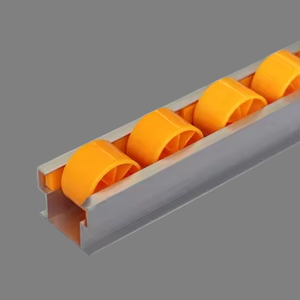
Heavy Duty Industrial Gravity Flow Racks & Pallet Flow Roller Track Shelving
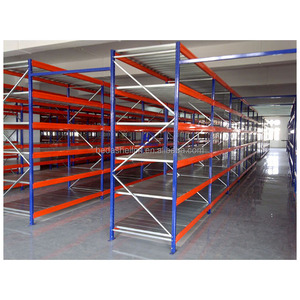
Medium Duty 4-Layer Industrial Longspan Steel Storage Shelving System
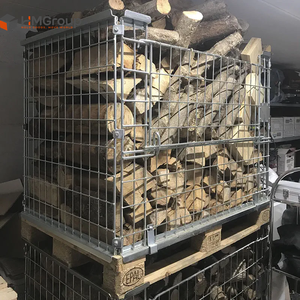
Collapsible Galvanized Wire Mesh Container & Steel Stillage for Palletized Loads
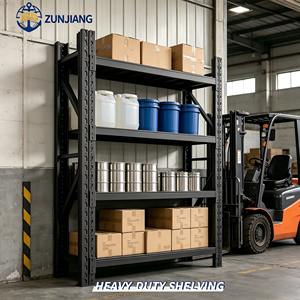
Heavy Duty Adjustable 4-Tier Industrial Metal Shelving Units for Warehouse Storage
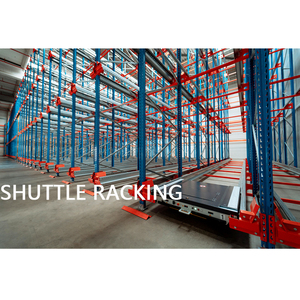
Semi-Automatic High Density ASRS 4-Way Radio Shuttle Racking System
The Kinematics and Engineering Mechanics of Gravity Roller Racking
In modern supply chain engineering, volumetric space optimization and stock rotation velocity represent the dual determinants of intralogistics profitability. Roller racking—interchangeably classified as gravity flow racking, pallet flow systems, or dynamic live storage—stands out as the premier mechanical solution for high-density, First-In, First-Out (FIFO) material staging. By exploiting gravitational potential energy, roller racking removes the necessity for internal access aisles, effectively converting up to 85% of total warehouse volume into usable storage space.
Unlike static selective systems, an industrial roller bed functions as an active dynamic conveyor. The mathematical foundation of successful gravity flow rests upon precise gradient calibration, calculated via the formula:
Kinematic Formula: Dynamic Gradient & Rolling Resistance
Slope Gradient (θ) = arctan(μr + Cdeflection) ± Safety Margin Factor (ΔS)
Where μr is the coefficient of rolling friction between the pallet runners and steel rollers (typically 0.015 to 0.025 for smooth timber), Cdeflection accounts for static pallet sag between rollers, and ΔS provides compensation for ambient environmental extremes (such as cold room humidity or powder-coat stiction). In operational practice, industrial installations require an inclination angle between 3.0% and 4.2% (1.7° to 2.4°) to ensure reliable self-starting without uncontrolled gravitational acceleration.
The engineering challenge of long-lane roller racking lies in energy dissipation. As pallets travel down lanes exceeding 10 to 30 meters, potential energy converts directly into kinetic energy: Ek = ½mv2. A 1,200 kg pallet traversing an unbraked 25-meter incline can easily reach terminal velocities capable of destroying load stops, buckling structural uprights, and shattering freight. To counteract this, modern systems integrate magnetic centrifugal speed controllers (brake rollers) placed at dedicated intervals. These devices apply resistive electromagnetic or mechanical braking directly proportional to the square of the roller's rotational velocity, governing descent speeds to a strictly controlled 0.15 to 0.30 m/s.
Top 10 Roller Racking Storage Manufacturers & Suppliers Evaluation
Selecting an industrial roller racking manufacturer requires assessing cold-formed structural integrity, proprietary roller-track kinematics, seismic resilience under AS 4084 and EN 15512, and factory-direct engineering support. Below is an engineering appraisal of the top 10 global manufacturers dominating the dynamic storage domain:
Guangzhou Heda Shelves Co., Ltd.
Founded in 2001, Heda Shelves operates a state-of-the-art 30,000 m² facility with over 300 technicians and a production volume surpassing 30,000 tons monthly. Renowned for end-to-end custom engineering, HEDA provides complete dynamic roller tracks, push-back carts, and AS 4084 / EN 15512 seismic calculations backed by third-party CE and ISO 9001 certifications.
Interroll Group
A global benchmark in material handling components, Interroll specializes in proprietary magnetic speed controllers, engineered roller modules, and dynamic carton flow lanes. Their patented Time-Delay Pallet Separators represent gold-standard safety for picking faces.
SSI Schaefer Systems
SSI Schaefer engineers turnkey live storage systems tightly coupled with AGVs and automated cranes. Their heavy-duty pallet flow beds feature robust cold-rolled sections engineered for harsh ambient and cryogenic cold-store environments down to -30°C.
Mecalux S.A.
Mecalux manufactures high-density live storage incorporating split-roller tracks designed to accommodate lower-quality or sagging wooden pallets. Their Easy-Flow braking system delivers steady acceleration control over extended lane lengths.
Dexion (Gonvarri Material Handling)
With historical prominence across the UK and Asia-Pacific, Dexion delivers structural gravity feed racking calibrated to AS 4084 parameters. Their systems feature reinforced entry guides and heavy-duty floor buffers for rough forklift loading environments.
Nedcon B.V.
Part of the Freudenberg Group, Nedcon is revered for sophisticated structural steel live storage. They specialize in multi-tier mezzanine roller rack integrations and high-seismic resistance projects across European and Pacific fault zones.
Stow Group
Stow operates substantial automated manufacturing plants across Europe, producing pallet flow racks that seamlessly interface with automated 2D shuttle systems. Their Pallet Live line features quick-snap roller cartridges for rapid maintenance.
BITO-Lagertechnik Bittmann GmbH
BITO is globally celebrated for carton flow and piece-picking roller solutions. Their light-to-medium duty flow shelves feature low-profile, ergonomic entry drop-zones and impact-resistant polymer wheels engineered for high-turnover ecommerce picking.
Jungheinrich AG
Jungheinrich pairs industrial racking structures with in-house reach trucks and AGVs. Their live storage systems feature unified sensor arrays at both infeed and outfeed stations to coordinate automated buffer replenishment.
AR Racking (Grupo Arania)
AR Racking produces all upright frames from high-durability pre-galvanized steel, eliminating paint peeling risks in heavy industrial setups. Their dynamic pallet live beds are widely deployed in the agri-food, beverage, and cold chain sectors.
Engineering Parameter Comparison
Direct technical assessment of structural capabilities, roller configurations, and compliance specifications.
| Manufacturer | Primary Steel Class | Braking Mechanism | Incline Tolerance | Max Lane Depth | Regional Standards Compliance | Price / ROI Metric |
|---|---|---|---|---|---|---|
| Guangzhou Heda Shelves | Q355B Cold-Rolled Carbon | Magnetic & Centrifugal Drum | 3.0% – 4.5% Adjustable | Up to 35m (30+ Pallets) | AS 4084 / CE / ISO 9001 | Direct Factory · High ROI |
| Interroll Group | Engineered Steel + Polymers | Patented Magnetic Retarder | 3.5% – 4.0% Fixed Track | Up to 40m | EN 15512 / DIN Standards | Premium Subsystem Cost |
| SSI Schaefer | High-Yield European Alloy | Centrifugal Friction Rollers | 3.2% – 3.8% Pre-Set | Up to 30m | FEM 10.2.02 / EN 15620 | Enterprise Level CapEx |
| Mecalux | Structural Carbon Steel | Mechanical Speed Controllers | 3.5% Calibrated | Up to 25m | ISO 9001 / CE / RMI | Mid-to-High Enterprise |
| Dexion | AS/NZS Structural Steel | Direct Drum Brakers | 3.0% – 4.2% Adjustable | Up to 25m | AS 4084-2023 / NZS 1170.5 | Regional Distribution Premium |
| Nedcon B.V. | Hot-Rolled Heavy Structural | Hydraulic / Magnetic Hybrid | 3.2% – 4.0% Engineered | Up to 32m | Eurocode 3 & 8 / Seismic | Custom Heavy Industrial |
| Stow Group | Structural Steel S355 | Friction-Disc Retarders | 3.5% Typical | Up to 28m | EN 15512 / FEM Approved | High Volume Automated |
| BITO Storage | Cold-Formed Sheet + Delrin | Lightweight Roller Friction | 4.0% – 5.5% (Cartons) | Up to 15m (Cartons) | TUV / GS Mark / CE | Mid-Tier Fast Return |
| Jungheinrich | Precision Welded Carbon | Electromagnetic Retarders | 3.2% Fixed Beds | Up to 30m | CE / ISO / FEM Standard | Turnkey System Pricing |
| AR Racking | Pre-Galvanized High Elastic | Centrifugal Brake Rollers | 3.5% Constant | Up to 30m | EN 15512 / ISO 3834 | Competitive European Tier |
Future Procurement Trends & Next-Gen Developments (2026–2030)
The industrial racking sector is transitioning away from purely static steel fabrications toward sensor-instrumented, low-carbon mechanical subsystems. Buyers planning new distribution centers between 2026 and 2030 face critical paradigm shifts:
1. Direct AMR/AGV Interlocking Infeed Systems
Traditional roller racking relies upon human forklift operators to center pallets onto infeed guides. Modern procurement specifications increasingly require automated automated guided vehicle (AGV) docking collars with centering cam rollers and optical photocell interlocks. These mechanisms verify pallet squareness before gravity release, eliminating catastrophic rail jams.
2. IoT Sensorized Beds & Pick-to-Light
Mechanical gravity racks are integrating low-voltage, bus-powered digital modules directly onto the outfeed beams. Wireless 868MHz pick-to-light indicators combined with piezoelectric roller-strike counters provide WMS systems with microsecond-level visibility over inventory movement, stock run-outs, and batch expiry tracking without manual barcodes.
3. Cryogenic Cold-Chain Bearing Architecture
With refrigerated grocery and biologic pharmaceuticals expanding rapidly, conventional roller lubricants face severe failure from wax crystallization below -20°C. Sourcing trends prioritize permanently sealed polymer bearings, stainless steel roller shafts, and specialized synthetic fluorinated greases that ensure consistent torque down to -32°C.
Guangzhou Heda Shelves Co., Ltd. Manufacturing Authority
Established in 2001, Guangzhou Heda Shelves Co., Ltd. serves warehouse operators, system integrators, and racking distributors across Australia, New Zealand, North America, and Europe. We combine certified raw material metallurgy with comprehensive engineering design.
30,000 m² Modern Production Campus
Equipped with fully automated high-precision roll-forming lines, automated laser-guided punching presses, and robotic welding stations delivering unmatched dimensional tolerances.
30,000 Metric Tons Monthly Capacity
Scalable rolling mills processing ultra-high strength Q235B and Q355B coils, guaranteeing rapid lead times even for massive 10,000+ pallet position multi-tier installations.
Verified International Certifications
Independently audited CE Certification (No. 2435-CPR-8605159), ISO 9001:2015 Quality Management System (No. 18624Q00169R0M), and full compliance with RoHS hazardous material standards.
AS 4084 & NZS 1170.5 Seismic Compliance
Engineering packs include section modulus calculations, baseplate anchoring shears, and structural frame bracing designed specifically for Australian, New Zealand, and Pacific seismic codes.
DAFF & MPI Biosecurity-Ready Packaging
Certified ISPM-15 treated heat-stamped timber dunnage and heavy-duty protective steel stillages prevent port rejections and quarantine fumigation delays at Sydney, Melbourne, and Auckland docks.
Complimentary 3D CAD & Dynamic Simulations
Our 300+ engineering and technical team converts your facility floor plans, forklift clear-heights, and SKU velocity profiles into complete 3D models and layout calculations within 24 hours.
Engineering & Procurement FAQ: Roller Racking
Detailed answers addressing critical questions asked by procurement managers, structural consultants, and project engineers before commissioning dynamic roller racking:
How is roller pitch calculated to eliminate pallet stalling and runner deflection?
Pmax = Pallet Length in Flow Direction / 3
For an Australian standard 1,165 mm × 1,165 mm hardwood pallet or standard 1,200 mm Euro-pallet traveling lengthways, roller spacing must not exceed 380 mm to 400 mm center-to-center. For softer pine pallets or plastic pallets prone to flexure under heavy loads (>1,000 kg), pitch must be reduced to 200 mm to 280 mm, or a continuous full-width cylindrical roller bed must be utilized to maintain surface contact.
How do brake rollers (speed controllers) work, and where should they be located?
In typical warehouse installations, the first brake roller is placed two pallet positions from the charging (infeed) face, and subsequent controllers are installed at intervals of every one to two pallet lengths (approximately every 1.5m to 2.4m) throughout the entire lane depth.
What happens when a pallet becomes stuck mid-lane, and how is it resolved?
- Bump Charging: The forklift operator introduces a subsequent pallet into the lane, using it to push the stuck load forward until gravitational momentum restarts.
- Manual Winch / Tugger Line: Long multi-pallet lanes should incorporate integrated maintenance walkways between double rows so authorized personnel can attach a mechanical extraction pull-cable.
- Lane Clear Inspection: Under no circumstance should an operator climb onto active, sloped roller tracks without lock-out/tag-out safety chocks installed.
What is the functional difference between Pallet Flow and Push Back Racking?
- Pallet Flow (Roller Racking): True FIFO (First-In, First-Out) system. Pallets are loaded from a dedicated rear loading aisle and picked from a separate discharge aisle. Ideal for perishable goods, high-turnover SKUs, and staging for high-volume cross-docking.
- Push Back Racking: A LIFO (Last-In, First-Out) system using inclined nested carts or roller tracks served by a single aisle. The forklift pushes existing pallets back into the rack during loading. Ideal for non-perishable goods with multiple pallets per SKU where dedicated rear aisles would consume valuable footprint.
Can roller racking be certified for seismic zones in New Zealand (NZS 1170.5) and Australia (AS 4084)?
- Thicker baseplates (typically 12mm to 16mm structural steel) with chemical epoxy-anchored studs rated for severe ground accelerations.
- Reinforced horizontal and diagonal spine bracing trusses designed according to site-specific Spectral Acceleration factors (Z values under NZS 1170.5).
- Full structural calculation packs containing section modulus properties, shear values, and moment calculations ready for peer review and sign-off by a registered local Chartered Professional Engineer (CPEng).
What are the biosecurity and customs protocols when importing racking into Australia and NZ?
Need an AS 4084 / EN 15512 Engineered Layout for Your Facility?
Send our structural engineering team your warehouse DWG floor plan, clear heights, pallet metrics, and forklift parameters. We will produce a complete 3D simulation, roller track kinematics calculation, and factory-direct quote within 24 hours.