30,000+
Tons Monthly Capacity
10,000+
Global Installations
ISO/CE
Dual Certified Quality
25+
Years Engineering Pedigree
Portfolio Spectrum
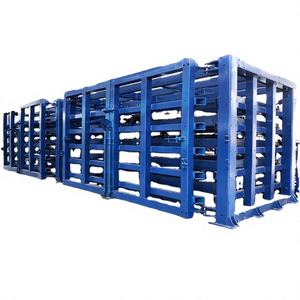
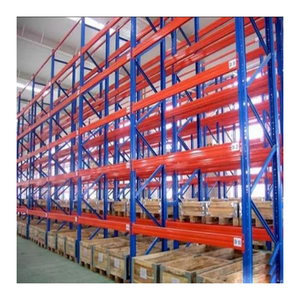
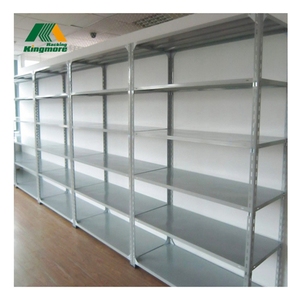
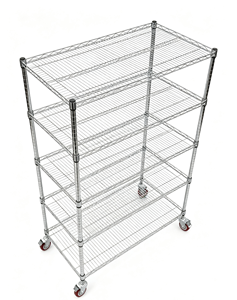
Featured Heavy-Duty & Automated Racking Architectures
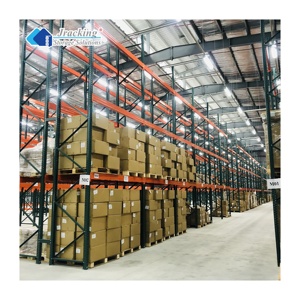
Precision-formed roll profiles engineered to optimize vertical volumetric efficiency while maintaining total seismic compliance and maximum accessibility.
Global Supply Chain Infrastructure: Assessing the Top 10 Manufacturers
Modern distribution complexes, high-throughput fulfillment hubs, and temperature-controlled cold chains require structural engineering that transcends simple steel fabrications. In today's volatile supply environment, selecting the correct manufacturer from among the world's leading tier-one suppliers—such as HEDA Shelves, Schaefer Systems International, Dexion, Mecalux, Stow Group, Daifuku, Interlake Mecalux, Jungheinrich, Frazier Industrial, and Kardex Remstar—demands a comprehensive evaluation of certified steel metallurgy, seismic elastic deflection criteria, robotic welding fidelity, and lifecycle economics.
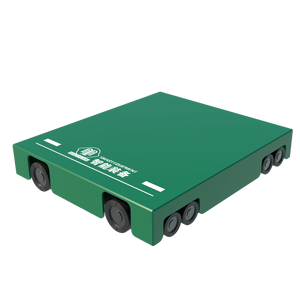
Whether configuring automated guided vehicle (AGV) interfaces or multi-tier rack-supported platforms, global logistics directors are moving away from evaluating suppliers based purely on metric ton cost. Instead, modern procurement metrics prioritize structural ductility, structural analysis under AS 4084 / FEM / RMI specifications, local permitting compliance, and integration interoperability with Warehouse Execution Systems (WES).
Key Engineering Parameters for Industrial Pallet Racking
Procuring warehouse racking requires deep validation of structural calculation packages. Uprights and horizontal load beams must not only handle ultimate static load conditions (UDL), but must also be calculated to withstand seismic acceleration forces, harmonic vibration from Material Handling Equipment (MHE), and accidental lower-frame forklift impacts.
| Racking Architecture | Selectivity (%) | Volumetric Utilization | Ideal Inventory Profile | Impact Risk Vector |
|---|---|---|---|---|
| Selective Pallet Racking | 100% | 40% - 50% | High SKU variety, fast picking turnover | Moderate (flue-space collisions) |
| Drive-In / Drive-Through | 15% - 20% | 65% - 75% | Batch processing, cold stores, low SKU count | High (forklift enters racking bays) |
| Four-Way Radio Shuttle | 30% - 70% | 80% - 88% | Automated cold store, high volume per SKU | Low (automation drives internal travel) |
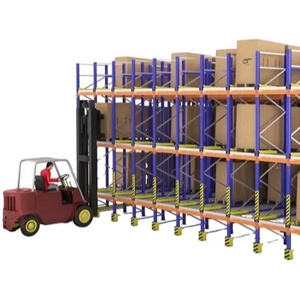
| Gravity Pallet Flow (FIFO) | 20% - 40% | 70% - 80% | Perishables, food, pharmaceutical expiry-date control | Low (guided roller channel movement) |
| Structural Multi-Tier Mezzanine | 100% | 150% - 200% Floor Area | E-commerce split-case order picking, assembly | Minimal (pedestrian picking zones) |
Future Procurement Trends: Where Racking Engineering is Headed
Procurement strategies in industrial warehousing are evolving rapidly to support automated material handling environments. Three clear trajectories dominate modern requests for quotation (RFQs):
ASRS & Shuttle-Ready Tolerances
Traditional mill tolerances are being superseded by micro-tolerance deflection requirements (< 1/1000 span) demanded by high-speed shuttles, automated cranes, and autonomous mobile robots (AMRs).
Structural Decarbonization (EPD)
Global corporations mandate verified Environmental Product Declarations (EPDs). Specifiers favor manufacturers using low-emission scrap-based electric arc furnace (EAF) coil with thin-film silane pre-treatments.
Dynamic Seismic Engineering
Rigorous, location-specific seismic design—referencing NZS 1170.5, AS 4084, and US RMI codes—involves non-linear time-history analyses, thickened base plates, and dual-axis column anchor configurations.
Factory Integration Capabilities
The HEDA Shelves Engineering Advantage
Operating a vertically integrated 30,000 m² high-capacity production center since 2001, Guangzhou Heda Shelves Co., Ltd. bridges the gap between raw manufacturing muscle and turnkey layout engineering.
In-House Metallurgical QC
From prime cold-rolled steel inspection and automated multi-station punching to pickling, phosphating, and automated electrostatic powder coating, every production phase is monitored under strict ISO 9001:2015 controls.
Full CAD / 3D Layout Simulation
Our project team provides complete 3D warehouse simulations, factoring in flue space clearance, structural building columns, overhead HVAC/sprinklers, forklift turn radiuses, and high-density throughput paths.
Turnkey Compliance Documentation
We provide full structural data packages (including section properties, moment capacities, and load rating plaques) ready for certified third-party engineer verification, local permitting, and safe facility handover.
Procurement Intelligence
Frequently Asked Questions on Racking Procurement
Direct technical answers to common queries raised by supply chain executives, logistics consultants, and project engineers during supplier evaluation.
What documentation is required to verify racking compliance with AS 4084 or FEM standards?
A compliant manufacturing pack must provide detailed mill test certificates verifying the Yield Strength ($F_y$) and Ultimate Tensile Strength ($F_u$) of the cold-formed steel coils (typically Q235B, Q355B or grade equivalent), certified stub-column test reports, upright-to-beam connection rotational stiffness test data ($C_i$), and complete engineering calculation packages detailing axial, flexural, and torsional capacity. These figures allow local chartered structural engineers to certify the racking installation.
How do four-way shuttle automated systems compare in capital expenditure to traditional drive-in racking?
While four-way shuttle solutions carry higher initial CAPEX due to autonomous robotic carriers, integrated busway charging, and vertical reciprocating lifts (VRCs), they yield a 25% to 40% reduction in long-term OPEX. They eliminate structural damage caused by forklifts entering racking aisles, lower facility energy costs in chilled and frozen environments by maximizing storage density, and significantly boost throughput compared to manual drive-in workflows.
What surface finishes should be selected for extreme cold storage or marine-coastal environments?
For standard ambient warehouses, an electrostatic polyester powder coating (60–80 microns) applied over a degreased, iron-phosphated steel substrate delivers excellent scratch and corrosion resistance. In deep-freeze cold storage facilities (-25°C or lower) subject to surface condensation, or in high-salinity island and coastal climates, structural components should receive Hot-Dip Galvanization (HDG) conforming to ISO 1461, providing a durable zinc layer (≥ 55–85 microns) for cathodic corrosion protection.
How are flue spaces and fire sprinkler clearances integrated into selective pallet layouts?
Fire safety standards (such as NFPA 13 and FM Global data sheets) require continuous longitudinal and transverse flue spaces (typically 75 mm to 150 mm) throughout the racking rack depth. This allows heat plumes to rise quickly to ceiling-level ESFR (Early Suppression, Fast Response) sprinkler heads while letting water penetrate through the lower rack levels. Layout designs integrate back-to-back row spacers and pallet back-stops to ensure pallets do not encroach into these critical flue zones.
What is the typical shipping timeline and biosecurity protocol for global ocean freight?
Production schedules typically span 15 to 30 days depending on total tonnage, beam count, and custom punch requirements. Ocean transport to major global destinations (such as Australia, Europe, North America, or Southeast Asia) takes an additional 14 to 35 days. For markets with strict border controls (such as DAFF in Australia or MPI in New Zealand), all cargo is securely bundled on specialized steel stillages or ISPM-15 heat-treated dunnage to ensure smooth quarantine clearance without biosecurity delays.
Request Your Custom Warehouse Layout & Engineering Consultation
Send our senior engineering team your warehouse architectural floor plans, ceiling clearance specifications, and pallet handling parameters. We will return an optimized CAD layout, capacity loading matrix, and factory-direct quotation within 24 hours.
Send an Inquiry