Precision Boltless Shelving & Industrial Logistics Racking
Explore our certified cold-formed boltless shelving, high-density flow systems, and automated warehouse machinery directly manufactured at our 30,000 m² Guangzhou production facility.
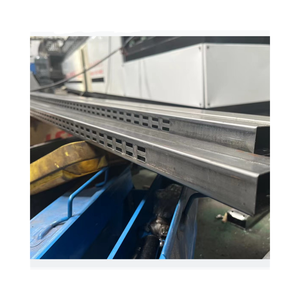
High-Density Modular Display & Industrial Storage Shelving
Optimized for high-turnover picking cells and heavy parts replenishment with integrated upright rigidity and tool-less vertical slot pitch.
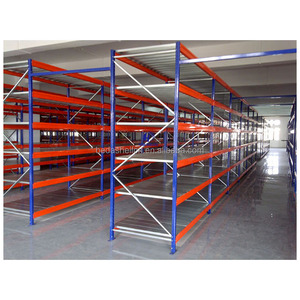
Medium-Duty Boltless Rivet Warehouse Storage Shelves
Zero-hardware interlocking keyhole connection providing instant hammer-lock installation, dynamic deflection resistance, and tiered shelf adjustments.
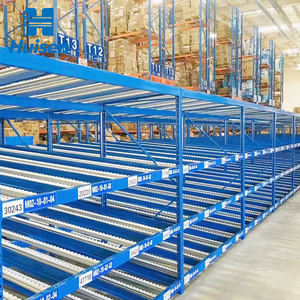
Gravity Roller Flow Rack Heavy-Duty Dynamic Shelving
Inclined structural roller beds delivering strictly controlled First-In, First-Out carton or tote movement with automatic speed brakes for split-case picking.
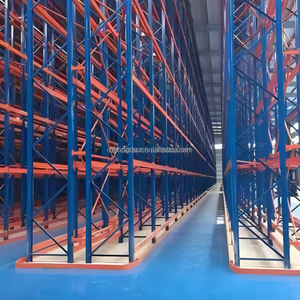
Very Narrow Aisle (VNA) Heavy Industrial Racking
Precision vertical engineering designed for wire-guided or rail-guided turret trucks, condensing aisle widths to 1,600 mm to maximize building cubic volume.
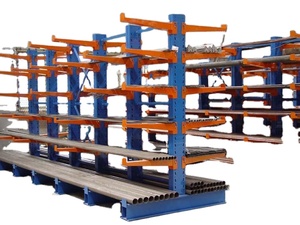
Heavy-Duty Structural Steel Cantilever Racking System
Clear-span frontage engineered specifically for timber packs, structural steel tubing, rebar bundles, and extrusion profiles without front upright interference.
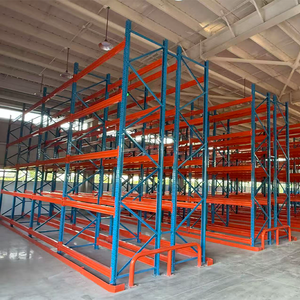
Engineered Industrial Rack With Welded Wire Mesh Decking
Integrated welded wire decking panels with contoured support channels, delivering maximum sprinkler water penetration and secondary fall protection.
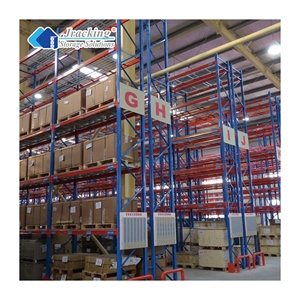
EU Standard High-Capacity Selective Pallet Racking
Manufactured in strict conformance with FEM 10.2.02 and EN 15512 codes, featuring continuous roll-formed columns and heavy 3-claw/4-claw beam connector plates.
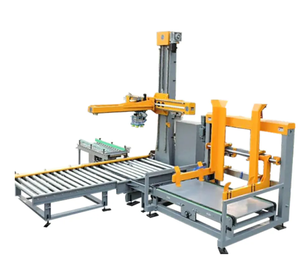
Automated Carton Gantry Palletizer & Dispenser Hub
Cartesian coordinate palletizing robotics interfacing with end-of-line shelving sorting conveyors, offering programmable layer patterns and pneumatic stacking.
Structural Metallurgy, Geometric Profiles & Mechanics of Boltless Shelving
A rigorous examination of material properties, wedge-lock beam mechanics, cold-roll profiling techniques, and deflection parameters governing modern boltless industrial racking.
Boltless industrial shelving represents one of the most mechanically elegant and economically viable evolutions in modern warehousing and intralogistics infrastructure. Historically, conventional back-of-store and light-to-medium industrial storage relied heavily on bolted angle iron frameworks. While structurally robust once tightened, bolted configurations suffer from severe operational friction: extensive installation labour overheads, susceptibility to localized torque relaxation under cyclical vibration, and near-prohibitive downtime when reconfiguring shelf vertical pitches to accommodate shifting stock-keeping unit (SKU) profiles.
In contrast, modern industrial boltless shelving—frequently referred to across global procurement channels as rivet shelving, keyhole shelving, or clip-in longspan systems—operates on mechanical friction-fit and taper-lock structural principles. By cold-forming continuous open upright profiles punched with high-precision pitch matrices (commonly 38.1 mm, 50 mm, or 75 mm centres), structural cross-beams outfitted with stamped rivets or integral interlocking connector claws slide directly into tapered keyhole or teardrop eyelets. As downward gravitational loads are applied to the shelf decks, the tapered geometry wedges the beam lug deeper into the slot throat, exponentially increasing joint stiffness and lateral moment resistance without requiring a single nut, bolt, or field weld.
Structural Mechanics Rule of Thumb: Under beam deflection criteria specified by FEM 10.2.02 and ANSI MH28.1, maximum allowable elastic deflection ($\delta$) for boltless shelf horizontal profiles loaded with a Uniformly Distributed Load (UDL) must not exceed $L/200$ (where $L$ is the clear span distance between upright faces), and $L/250$ in seismic sensitive or automated micro-fulfillment pick modules.
1. Metallurgy and Substrate Specifications: Q235B vs. Q355B vs. SPCC
The operational longevity and ultimate load threshold of any boltless industrial shelving system depend fundamentally on the metallurgical integrity of the raw steel coil. At Guangzhou Heda Shelves Co., Ltd., raw steel strips undergo rigorous tensile, elongation, and chemical analysis prior to cold roll-forming. Two primary structural carbon steel grades dominate our industrial manufacturing workflows:
Q235B Structural Carbon Steel (Yield Strength $R_e \ge 235 \text{ MPa}$): Serving as the gold standard for upright columns, stepped shelf beams, and lateral tie braces in ambient industrial warehouses. Q235B provides an optimal balance between ductile formability and yield resilience. The carbon content is rigorously managed between 0.14% and 0.22%, ensuring superior weldability for end-connector lugs while retaining exceptional fatigue performance under repeated load placement cycles.
Q355B Low-Alloy High-Strength Structural Steel (Yield Strength $R_e \ge 355 \text{ MPa}$): Utilized extensively when engineering multi-tier rack-supported mezzanine floors, raised catwalk platforms, or heavy-duty cantilever systems exceeding 1,200 kg per level. The incorporation of micro-alloying elements (such as Vanadium, Niobium, or Titanium) refines grain structures, elevating ultimate tensile strength to $470\text{–}630 \text{ MPa}$ and allowing reductions in profile wall thickness without sacrificing static safety margins (standard 1.5 to 1.65 load safety factor).
| Shelving System Type | Standard Steel Grade | Typical Upright Gauge | Standard Shelf Capacity (UDL) | Connection Mechanism | Target Industrial Application |
|---|---|---|---|---|---|
| Light Boltless Rivet Shelving | SPCC / Q195 Cold Rolled | 1.0 mm – 1.2 mm | 100 – 200 kg / Level | Double-Rivet Keyhole / Slot | E-commerce bin sorting, retail stockrooms, archival records |
| Medium-Duty Boltless Shelving | Q235B Cold Rolled | 1.5 mm – 1.8 mm | 300 – 800 kg / Level | Tapered Butterfly / 50mm Pitch Hook | Automotive spare parts, mechanical equipment, chemical drums |
| Longspan Boltless Industrial Rack | Q235B / Q355B Structural | 1.8 mm – 2.0 mm | 800 – 1,200 kg / Level | 3-Prong Stamped Connector Clip | Bulky cartons, manual order picking, raw fabric master rolls |
| Multi-Tier Boltless Catwalk Rack | Q355B High-Yield Steel | 2.0 mm – 2.5 mm | 500 kg / Level + 3.5 kPa Floor | Interlocking Post with Welded Splice | High-bay distribution centres, 3PL replenishment mezzanines |
| Selective Heavy-Duty Pallet Rack | Q235B Continuous Roll | 2.0 mm – 3.0 mm | 1,000 – 4,500 kg / Level | 4-Claw Locking Connector with Safety Pin | Full unitized palletized warehousing, cold storage logistics |
2. Cold Roll-Forming Precision and Upright Column Profiling
The manufacturing complexity of an upright column lies in the distribution of cold work hardening across its cross-sectional profile. High-precision boltless columns manufactured in our Guangzhou facilities do not rely on simple right-angle bends. Instead, our roll-forming lines execute multi-pass progressive contouring—typically incorporating between 12 and 18 progressive forming stations. This introduces compound stiffening ribs, returned lip channels, and internal re-entrant flanges. These geometry micro-features drastically elevate the section modulus ($Z_x, Z_y$) and prevent premature local torsional-flexural buckling modes under intense axial compressive stresses.
3. Industrial Surface Pre-treatment and Electrostatic Powder Polymerization
A critical metric that separates tier-1 Chinese manufacturers from unvetted workshop suppliers is surface conversion chemistry. Uncoated or poorly prepared carbon steel oxidizes rapidly, leading to micro-corrosion underneath paint films that compromises structural stability. HEDA Shelves enforces a ten-stage automated pre-treatment protocol:
High-pressure alkaline degreasing is followed by deep hydrochloric pickling to eradicate all hot-mill scale and iron oxides. A dual-stage water rinse precedes zinc phosphating (or advanced zirconium nanotechnology conversion), generating a microscopic crystalline barrier that enhances mechanical paint adhesion. Following drying ovens, robotic electrostatic spray guns apply high-performance thermoset polyester or epoxy-polyester hybrid powder coatings to a uniform film thickness of 60 to 90 microns ($\mu\text{m}$). Baking at $180^\circ\text{C}\text{–}200^\circ\text{C}$ across a 25-minute cure window polymerizes the coating, delivering impact resistance exceeding 50 kg/cm (ASTM D2794) and salt-spray durability exceeding 500 hours (ASTM B117).
Future Global Sourcing Trends in Industrial Shelving (2025–2030)
How automation, nearshoring pressures, ESG regulatory mandates, and omnichannel fulfillment architectures are transforming global procurement strategies for warehouse racking.
1. Autonomous Mobile Robot (AMR) & AGV Compatibility
Traditional static shelving layouts are rapidly transitioning into AMR-integrated pick zones. Modern boltless uprights are engineered with micro-tolerance clearances, integrated QR/fiducial floor anchor plates, and unobstructed bottom-tier clearances (0-200mm adjustable) allowing autonomous mobile robots to dock beneath bottom shelves or traverse narrow picking aisles without snag risks.
2. Total Cost of Ownership (TCO) vs. Ex-Factory Pricing
Global procurement teams in North America, Europe, and Oceania are shifting evaluations away from pure ex-factory unit costs toward lifetime landed TCO. Container cube utilization—engineered by nesting modular upright components and knock-down stepped beams—slashes international ocean freight per metric ton. Furthermore, tool-free boltless field assembly drops local installation labour costs by 60% compared to bolted structures.
3. ESG, EPD, & Green Steel Decarbonization Mandates
European and Australian buyers increasingly require Environmental Product Declarations (EPD) and Scope 1-3 carbon transparency. Forward-thinking China manufacturers are integrating electric arc furnace (EAF) steel coils recycled from scrap, deploying solvent-free VOC-free powder formulations, and utilizing solar-assisted curing lines to satisfy stringent carbon border adjustment mechanisms (CBAM).
4. Decentralized Urban Micro-Fulfillment Cells
The hyper-acceleration of 1-hour grocery and pharmaceutical delivery necessitates the conversion of high-density metropolitan retail backrooms into micro-fulfillment centres (MFCs). Medium-duty boltless systems are configured with high vertical dividers, snap-in plastic bin rails, and angled pick shelves to yield maximum SKU picking efficiency in footprints under 500 m².
5. Rigorous Structural Traceability & Testing Audits
Procurement directors are actively bypassing generalist trading intermediaries in favor of vertically integrated OEMs that provide full mill test certificates (MTC 3.1), weld inspection certifications, and independent destructive testing reports. Structural documentation must clearly calculate seismic risk zones, soil class factors, and dynamic rack-overturning moments.
6. Hybrid Decking Customization for Stringent Fire Codes
Municipal and insurance fire underwriting guidelines (such as NFPA 13 and FM Global standards) penalize solid plywood or melamine decking due to fire sprinkler suppression shadow effects. Global sourcing programs now overwhelmingly specify self-draining flanged wire mesh decking (minimum 50% open surface area) or perforated steel panels over combustible wood products.
Technological Evolution & Future Development of Boltless Racking
From single static bays to multi-tier integrated mezzanine platforms: How modern mechanical engineering is transforming boltless storage into an agile intralogistics asset.
The trajectory of industrial shelving is characterized by the continuous dismantling of the barrier between static racking and dynamic warehouse automation. Historically viewed merely as passive steel furniture for organizing manual cartons, contemporary boltless systems are engineered as foundational sub-structures capable of supporting sophisticated material handling ecosystems.
Modularity & The Expansion to Multi-Tier Raised Storage Platforms
One of the most profound developments in modern warehousing is the vertical scaling of boltless shelving into two-tier, three-tier, and four-tier catwalk mezzanine systems. In land-constrained logistics corridors where expanding building footprints is cost-prohibitive, multi-tier boltless racking capitalizes on vertical clear ceiling heights (6,000 mm to 12,000 mm). Specially engineered splice joints connect lower uprights to upper tiers, while heavy cold-formed box beams support intermediate floor decking—ranging from galvanized open steel planks and anti-slip chequered steel plates to structural high-density composite boards. By transmitting aisle floor dead loads and dynamic human/cart live loads (typically 300 to 500 kg/m² or 3.0 to 5.0 kN/m²) directly through the shelving columns down to foundation baseplates, warehouse operators double or triple pick faces without paying commercial construction costs for independent structural mezzanine framing.
Precision Engineering of Interlocking Connector Geometries
Early-generation boltless shelving utilized basic single-tab teardrop or wedge cut-outs that exhibited two major structural failure modes: connector shear under uneven impact loads, and slot widening under seismic racking sway. Contemporary R&D has solved these vulnerabilities through finite element analysis (FEA) optimization:
- Multi-Claw Interlocking Plates: Connectors stamped from heavy-gauge Q355B strip incorporate three or four precision claws that grip the column wall simultaneously, creating multiple shear planes and dissipating moment forces over a 150 mm vertical contact zone.
- Integrated Spring-Steel Safety Locks: Unlike older manual steel clips that were frequently omitted during hurried field installation, modern premium beam connectors feature integrated spring-loaded safety pins. These automatically deploy into column punchings upon beam seating, providing immediate visual lock confirmation and preventing accidental dislodgement caused by forklift impact or manual mis-picks.
- Dual-Flange Stepped Beams: Horizontal profiles feature a continuous step ledge that seats flush drop-in steel panels, wire decking, or particleboard. This recessed configuration protects shelf edges from snagging manual order totes and ensures continuous horizontal diaphragm bracing across the structural bay.
Integration with Sensor Technologies and Smart Inventory Warehousing
The forward horizon of industrial shelving incorporates Internet of Things (IoT) hardware directly into the racking profile. Advanced boltless uprights are now roll-formed with dedicated internal cable management channels and pre-punched mounting slots for optical pick-to-light (PTL) strips, infrared slot occupancy sensors, and RFID scanning gates. By eliminating loose external wiring and providing standardized modular accessory slots, boltless shelving seamlessly interfaces with Warehouse Management Systems (WMS) to drive error-free pick rates exceeding 99.8% in rapid fulfillment operations.
Guangzhou Heda Shelves Co., Ltd.: Global Engineering & Manufacturing Powerhouse
Founded in 2001, Guangzhou Heda Shelves Co., Ltd. has evolved over a quarter-century into an internationally recognized tier-1 manufacturer of pallet racking, boltless industrial shelving, cantilever structures, and complex rack-supported mezzanines.
Spanning an expansive 30,000 m² state-of-the-art manufacturing campus staffed by over 300 experienced engineers, CNC technicians, and structural fabricators, our operations combine heavy industrial throughput with Swiss-level cold-forming precision.
-
Massive 30,000 Metric Ton Monthly Output: Continuous roll-forming lines, automated punching matrices, and robotic welding cells ensure guaranteed production schedules for global large-scale distribution projects.
-
Free 3D Layout & Structural CAD Engineering: Within 24 hours of receiving site blueprints, our in-house engineering team provides complete layout simulations, pallet position optimizations, and structural load calculations.
-
Strict Export Biosecurity & Container Packing: Racking is bundled into rigid steel stillages or ISPM-15 heat-treated fumigated timbers, ensuring frictionless customs clearance across Australian DAFF, New Zealand MPI, and EU biosecurity checkpoints.
-
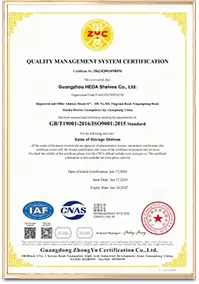
Comprehensive International Quality Certification: Independently certified under ISO 9001:2015 Quality Management Systems, CE Certificate No. 2435-CPR-8605159, and verified RoHS environmental compliance.
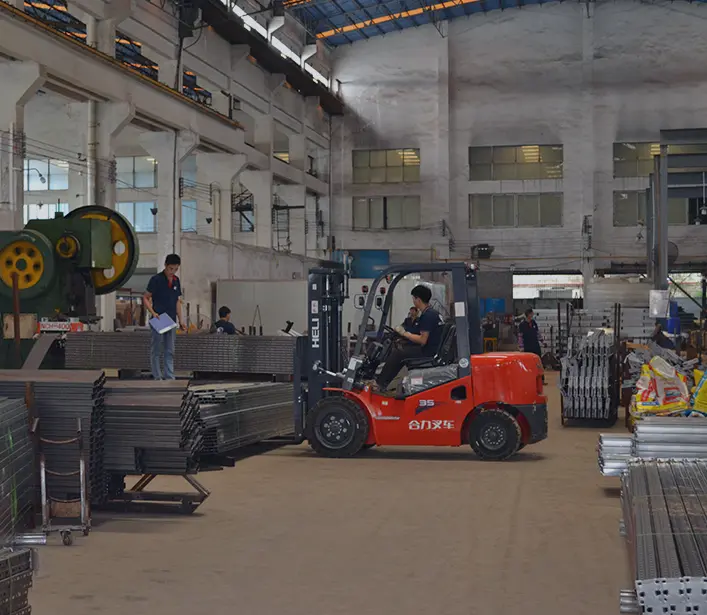

Verified International Certifications & Test Accreditations
Transparency is our benchmark. Verify our structural certifications directly with international registries before signing your procurement contracts.
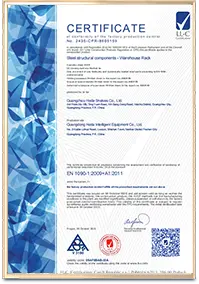 CE Certified (EN 15512)
No. 2435-CPR-8605159
 ISO 9001:2015 Certified
No. 18624Q00169R0M
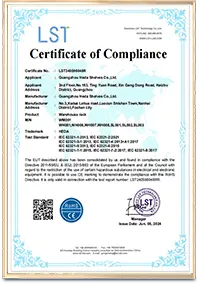 RoHS Chemical Certified
Heavy Metal & VOC Free
 Static Deflection Test
FEM 10.2.02 Compliant
Frequently Asked Questions: B2B Sourcing of Boltless Shelving
Comprehensive engineering, regulatory, and logistics answers addressing the core operational concerns of international warehouse managers and procurement directors.
Partner Directly With China's Premier Industrial Shelving Manufacturer
Eliminate middleman markups, accelerate your project deployment, and ensure uncompromising structural safety. Connect with our engineering department today for custom CAD layouts, certified load tables, and factory-direct volume pricing.