Featured Industrial Warehouse Racking & Dynamic Storage Solutions
Engineered from premium certified high-tensile structural steel (Q235B and Q355B). Designed for seamless interoperability with Australian standard pallets (1165 × 1165 mm), Euro pallets (1200 × 800 mm), and US GMA specs (48 × 40 inches).
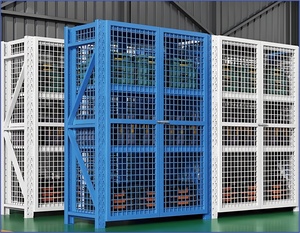
4-Layer Heavy Duty Drive-Through Pallet Rack Powder Coated Steel Adjustable
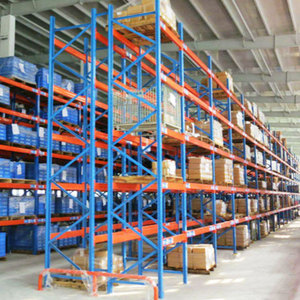
Wholesale Heavy Duty Pallet 5 Layers 3000KG Triple Support Beam Rack
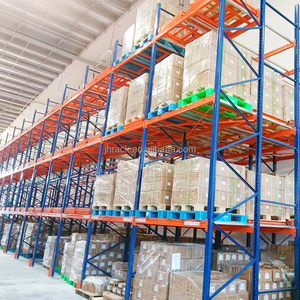
Industrial Push-Back Pallet Racks: Heavy-Duty Telescopic Cart System
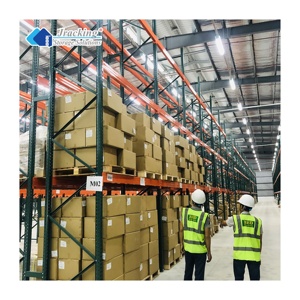
Jracking US Standard Storage Heavy Duty Teardrop Pallet Rack System
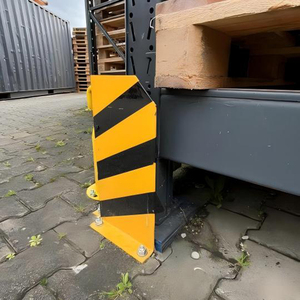
Anti-Collision Upright Protector Heavy Duty Column Corner Guard
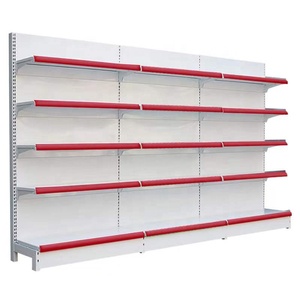
Medium Duty Racking Customizable Long Span Steel Warehouse Shelving
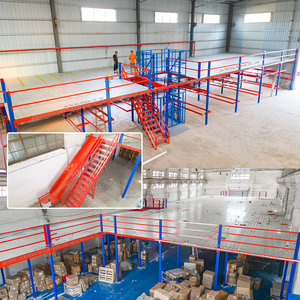
Mezzanine Steel Elevated Storage Platform Up to 500kg/sqm Organization
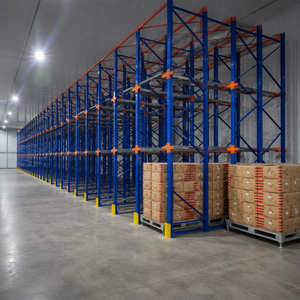
Industrial Drive-In Racking System High Density FILO Q235B Steel
1. Mechanical Architecture & Dynamics of Gravity Pallet Flow Systems
Gravity pallet flow racking represents the pinnacle of compact, self-actuating material handling engineering. Engineered primarily for operations requiring strict First-In, First-Out (FIFO) inventory logic, pallet flow systems convert potential gravitational energy into smooth kinetic transit across dedicated roller lanes. Unlike static selective pallet racking or dense drive-in structures, pallet flow systems feature continuous inclined wheel tracks or cylindrical roller beds installed at a calculated gradient ranging from 1.5° to 3.5° (a standard slope of 3% to 4%), depending strictly on pallet bottom topography, overall weight, and roller rolling resistance coefficients.
At the core of an engineered pallet flow system is the structural braking assembly. As pallet loads ranging from 500 kg to 2,000 kg roll downward along lanes that can extend up to 30 pallets deep, uncontrolled terminal velocity poses catastrophic risks to goods, frames, and warehouse personnel. To mitigate runaway momentum, Chinese precision manufacturers integrate centrifugal brake rollers or internal magnetic hysteresis brakes spaced at calculated intervals (typically every 1 to 2 pallet lengths). These braking rollers generate dynamic mechanical counter-torque proportional to the linear velocity of the passing pallet, capping speed at an OSHA- and FEM-compliant threshold of 0.25 to 0.30 meters per second.
Critical Engineering Insight: Pallet deformation under high payload induces roller deflection. In high-density flow systems, standard wooden GMA or Australian pool pallets (1165 × 1165 mm) require full-width cylindrical steel rollers or multi-track skate wheels calibrated to prevent "belly sag," which causes bottom runner snagging and lane jamming.
Equally critical is the entry and discharge engineering. The charging (loading) end incorporates heavy-duty structural entry guides to assist forklift mast alignment and protect the upright columns from high-impact docking. At the opposite discharge (picking) face, an automatic mechanical separator device halts trailing pallets until the lead pallet has been fully extracted. By isolating the front pallet from the cumulative hydrostatic hydrostatic-like line pressure of all rear pallets, the separator eliminates pallet pinching, protects forklift forks during extraction, and drastically cuts operator fatigue.
2. Kinematic & Structural Storage Systems Comparative Matrix
Selecting optimal high-density warehouse storage requires balancing footprint utilization, capital expenditure (CapEx), cycle throughput velocity, and rotation discipline. The table below illustrates the structural parameters of Pallet Flow versus alternative heavy-duty systems manufactured by top Chinese suppliers:
| Storage System | Stock Rotation Logic | Floor Area Utilization | Throughput Speed | Forklift Travel & Wear | Seismic Resistance Class |
|---|---|---|---|---|---|
| Pallet Flow (Gravity) | Strict FIFO (100% automated rotation) | Exceptional (>80% storage cube) | Ultra-High (Dedicated pick face) | Minimal (Zero lane intrusion) | High (Continuous structural tie-ins) |
| Drive-In / Drive-Through | FILO (Drive-Through allows FIFO) | High (65% – 75% cube) | Moderate to Low (Slow mast entry) | Extreme (Impact risk on uprights) | Medium (Requires heavy portal bracing) |
| Push-Back (Cart / Rollers) | LIFO (Last-In, First-Out) | High (Up to 70% cube, 2-6 deep) | High (Front face load & pick) | Low (Forklift stays in the main aisle) | High (Sturdy nested channel frames) |
| Radio Shuttle System | Flexible FIFO or LIFO | Maximum (>85% storage cube) | High (Automated carrier shuttle) | Minimal (Perimeter operations) | Superior (Rigid rail integrated profiles) |
| Standard Selective | Arbitrary (100% random access) | Low (35% – 45% cube loss to aisles) | High for single picks; low overall | High travel time across large matrix | Baseline standard compliance |
3. Manufacturing Authority & Supply Chain Reliability: Guangzhou Heda Shelves Co., Ltd.
Founded in 2001, Guangzhou Heda Shelves Co., Ltd. has grown to become a benchmark enterprise among Chinese manufacturers and global exporters of heavy-duty pallet racking and storage systems. Operating from a state-of-the-art 30,000 square meter manufacturing base in Guangdong, China, the company maintains an in-house production throughput capacity exceeding 30,000 metric tons per month. Backed by a specialized multidisciplinary workforce of more than 300 experienced engineers, structural fabricators, and certified QA/QC inspectors, Heda Shelves offers comprehensive engineering control from initial raw coil slitting to precision roll-forming and robotic welding.
Unlike intermediaries or trading companies, Guangzhou Heda Shelves owns and executes the entire 10-stage manufacturing pipeline:
- Certified Raw Material Ingot/Coil Sourcing: Direct mill-test certified Q235B and Q355B cold-rolled structural steel from top domestic producers.
- Automated CNC Continuous Punching: High-precision upright perforation profiles (50 mm and 75 mm pitch) engineered to zero-tolerance alignment.
- Continuous Roll Forming Lines: Multi-roller cold profiling creating rigid omega uprights and interlocking step/box beams.
- Robotic Multi-Axis Welding: Carbon dioxide shielded welding creating flawless joinery between beam bodies and structural 3-to-5 connector claws.
- Immersion Pickling & Phosphating: Full 7-stage pre-treatment chemical bath system eliminating mill scale and providing superior rust inhibition.
- Electrostatic Powder Coating: Heavy-duty TGIC polyester resin thermoset cured at 200°C, reaching 60-90 μm thickness for long-term abrasion resistance.
From a regulatory compliance standpoint, Guangzhou Heda Shelves Co., Ltd. strictly adheres to accredited global standards. The factory maintains formal CE Certification (Certificate No. 2435-CPR-8605159), ISO 9001:2015 Quality Management System Certification (Certificate No. 18624Q00169R0M), and verified RoHS environmental compliance. For projects across Australia, New Zealand, and Oceania, calculations are formulated with direct reference to AS 4084-2023 (Steel Storage Racking) structural limit states and seismic verification under NZS 1170.5, providing complete data packages including section properties, beam load deflections (≤ L/200), and anchor shear stress calculations for verification by certified local engineers.
4. Future Procurement Trends & Technological Evolutions (2025–2030)
Procurement managers and supply chain directors are shifting from static, low-density storage toward dynamic, space-optimized warehouse architectures. Several critical engineering shifts are defining the procurement lifecycle over the next decade:
Smart Kinetic Flow Braking
Integration of self-powered magnetic eddy-current brake rollers eliminating internal mechanical friction gears. These contactless systems virtually eliminate brake maintenance downtime while self-regulating descent speeds across fluctuating pallet loads (from 300kg to 1500kg) in high-throughput distribution hubs.
AMR & AGV Pick-Face Synergy
Modern flow racks are being co-engineered with Autonomous Mobile Robots (AMRs) and automated high-bay reach trucks. Pick-face roller lanes feature optical infrared sensors and pneumatic escapement mechanisms that interface with warehouse execution systems (WES) for automated carton and pallet discharge.
Sub-Zero Cold Chain Optimization
With real estate costs soaring for refrigerated logistics, sub-zero (-30°C) pallet flow demand is escalating. Next-generation systems employ specialty polyolefin plastic rollers, low-temperature synthetic lubricants, and hot-dip galvanizing to resist brittle fractures and thermal expansion mismatches.
Additionally, total cost of ownership (TCO) has replaced initial purchase price as the primary procurement metric. Enterprise warehouse operators recognize that investing in cold-rolled high-grade steel uprights, triple-riveted connector brackets, and pre-tested mechanical separators yields up to 40% reductions in forklift operating hours and prevents structural collision repairs over an operational horizon of 10 to 15 years.
5. Global Export Logistics, Tariffs & Biosecurity Readiness
Procuring heavy industrial steel structures from China requires sophisticated cross-border logistics management. A common vulnerability for international buyers is customs delays caused by inadequate timber packaging documentation or biosecurity non-compliance.
Guangzhou Heda Shelves Co., Ltd. eliminates these risks by utilizing custom-fabricated all-steel stillages or certified heat-treated timber that strictly complies with ISPM-15 guidelines, facilitating smooth clearance with the Australian Department of Agriculture, Fisheries and Forestry (DAFF) and New Zealand's Ministry for Primary Industries (MPI). Furthermore, with full documentation including Form A, Form E, and preferential Certificates of Origin under the China-Australia Free Trade Agreement (ChAFTA) and NZ-China FTA, import tariff burdens can be reduced to zero percent where applicable. Container stuffing is optimized using computerized 3D loading software, maximizing payload inside 40ft High Cube (HC) containers up to the maximum legal limit of 26 to 28 metric tons while avoiding marine damage.
6. Technical Procurement FAQ: Engineering, Standards & Deployment
Plan Your Warehouse Flow Racking Engineering System
Connect directly with senior structural storage engineers at Guangzhou Heda Shelves Co., Ltd. Receive comprehensive 2D CAD architectural placement drawings, 3D structural visual models, and load-limit stress calculations tailored to your exact site parameters within 24 to 48 hours.