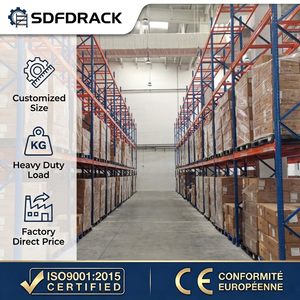
Heavy Duty Warehouse Pallet Racks Customized High Load 1000kg-5000kg Industrial Storage Selective Steel Pallet Racking System
- 1000-5000kg / Level
- Q235B/Q355B Steel
- 75mm Pitch
Precision roll-formed upright columns, high-yield beam connections, and certified cold-storage systems engineered for global supply chains and high-density distribution centers.
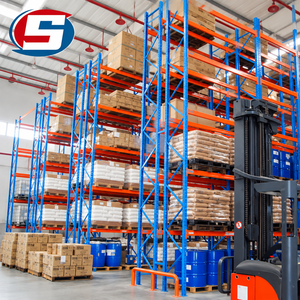
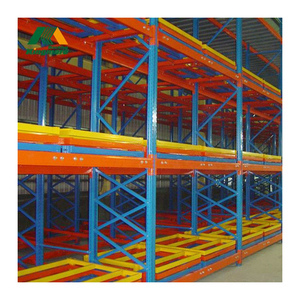
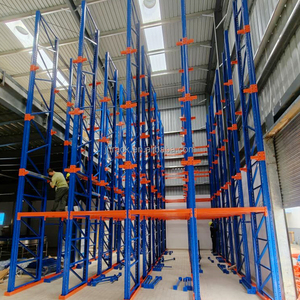
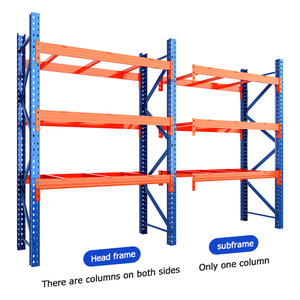
The pallet rack upright frame serves as the fundamental vertical load-bearing spine of any high-bay or industrial storage infrastructure. In modern logistics facilities, distribution hubs, and automated warehouses, upright frames absorb combined axial compression and flexural bending moments generated by multi-tier pallet loads, seismic accelerations, and accidental forklift impacts. As international supply chain developers and material handling engineers evaluate the global vendor ecosystem, China remains the world's leading industrial epicentre for precision cold-formed steel racking systems.
Over the last two decades, Chinese upright frame manufacturing has transitioned from labor-intensive rolling workshops to automated, CNC-controlled continuous roll-forming lines. Leading manufacturers integrate structural design calculations with in-house roll profiling, servo-driven high-speed perforating, automatic robotic diagonal-brace welding, and multi-stage pre-treatment powder coating plants. However, selecting a top-tier Chinese manufacturing partner requires understanding the divergence between low-cost commodity ironmongery and verified structural steel manufacturing engineered to Western building codes.
Global procurement teams operating in Australia, New Zealand, Europe, and North America must verify that Chinese fabricators comply with specific regional design standards, including AS 4084:2023 (Australia/New Zealand), RMI ANSI MH16.1 (North America), and EN 15512 / FEM 10.2.02 (European Union). Top-tier facilities utilize full-scale laboratory stub-column compression tests and frame portal tests to determine true section modulus values rather than relying strictly on nominal unperforated theoretical calculations.
Multi-bend open-web omega and omega-plus column cross sections designed to maximize radius of gyration while suppressing local flange buckling under extreme axial tonnage.
High-speed mechanical CNC presses producing teardrop, diamond, or hex-slot patterns at pitch tolerances of ±0.2mm to guarantee rigid, wedge-locking beam connector engagement.
Continuous triangulated K-type and D-type channel bracing bolted at neutral-axis points to transfer shear loads directly to floor anchors without inducing frame torsion.
The structural reliability of an upright frame begins with steel metallurgy. In Chinese industrial manufacturing, prime cold-rolled coils are procured from state-owned high-yield mills such as Baosteel, Shougang, and Ansteel. The structural steel grade directly governs the frame's yield point ($f_y$), ultimate tensile strength ($f_u$), and post-yield elongation capabilities—critical parameters in high-seismic zones and cold-storage operations.
The table below provides an engineering comparison of the primary structural carbon steel grades utilized in Chinese upright frame manufacturing versus international equivalents, detailing their mechanical behavior under load.
| Standard & Grade | Min Yield Strength ($f_y$) | Tensile Strength ($f_u$) | Elongation ($\delta_5$) | International Equivalent | Recommended Application |
|---|---|---|---|---|---|
| GB/T Q235B | ≥ 235 MPa | 370 – 500 MPa | ≥ 26% | ASTM A36 / EN S235JR | Standard selective racking, manual picking mezzanines |
| GB/T Q355B (High Yield) | ≥ 355 MPa | 470 – 630 MPa | ≥ 22% | ASTM A572 Gr 50 / EN S355JR | High-bay ASRS, seismic-rated uprights, 10m+ heavy bays |
| JIS G3141 SPCC | ≥ 205 MPa | ≥ 270 MPa | ≥ 32% | ASTM A1008 / EN DC01 | Server rack frames, light-duty commercial shelving |
| Hot-Dip Galv. Coil (SGCC) | ≥ 240 MPa | ≥ 300 MPa | ≥ 20% | ASTM A653 CS / EN DX51D+Z | Corrosive environments, outdoor racks, wash-down docks |
Top China pallet rack manufacturers perform strict Spectrographic Chemical Analysis on incoming raw steel coils. Silicon and carbon contents are tightly managed to prevent weld embrittlement on baseplates and beam end-connectors. Moreover, for upright frames operating in cold-chain deep freeze facilities down to -30°C, impact energy testing (Charpy V-Notch) is mandated to prevent brittle transgranular fracture under dynamic forklift placement.
How automation, advanced metallurgy, digital twin simulations, and green carbon standards are transforming the production and specification of upright frames worldwide.
Adoption of niobium-vanadium micro-alloyed hot-rolled strips (yield strengths >420 MPa) permitting 15-20% thinner gauges without reducing axial buckling thresholds, saving substantial freight weight.
Automated Storage and Retrieval Systems (ASRS) demanding upright column verticality tolerances under 1:1000 over 30-meter heights, forcing factories to adopt 24-station continuous roll-forming lines.
Embedding micro-strain sensor arrays and impact monitoring nodes into baseplates and upright cavities to detect catastrophic forklift collisions and bay overloads in real time.
Global procurement demanding Environmental Product Declarations (EPD) and CBAM-compliant verified low-carbon steel melt accounting across Chinese rolling mills.
Unlike standard hot-rolled I-beams or structural hollow sections, pallet rack uprights are thin-walled cold-formed open sections with repetitive perforations along the front and side faces. In accordance with the Direct Strength Method (DSM) and Effective Width Method codified in cold-formed steel engineering codes, upright frames are susceptible to three distinct, interactive failure modes:
1. Local Buckling: Characterized by short-wavelength ripples along the unbraced flange lips between perforations. This occurs when compressive stress exceeds the elastic critical local buckling stress of the thin profile walls ($t = 1.5\text{mm} – 2.5\text{mm}$).
2. Distortional Buckling: Involves intermediate-wavelength cross-sectional deformation where the lip stiffeners rotate outward or inward, opening or closing the upright's open slot. This is particularly prevalent in tall, unbraced bay configurations.
3. Flexural-Torsional Global Buckling: A long-wavelength failure where the entire column simultaneously bends perpendicular to the aisle and twists along its longitudinal shear center axis. The horizontal and diagonal frame bracing network is specifically engineered to restrain this global instability.
Quality Chinese manufacturers utilize finite element analysis (FEA) software (such as ANSYS and ABAQUS) alongside proprietary roll-forming CAD suites to optimize bend radii, stiffening ribs, and flange geometry. By introducing localized return stiffeners along the profile lips, torsional rigidity is enhanced by up to 34% compared to generic open C-channel sections.
Operating from Guangzhou, China since 2001, Guangzhou Heda Shelves Co., Ltd. provides engineering-led manufacturing, custom cold-forming profiles, and turn-key warehouse solutions worldwide.
Certified under CE (No. 2435-CPR-8605159), ISO 9001:2015 (No. 18624Q00169R0M), and RoHS directives, ensuring legal compliance and structural safety.
Our in-house design team provides comprehensive 3D layout renderings, structural static calculation sheets, and frame moment capacity tables prior to raw steel procurement.
Custom heavy-duty baseplates, upgraded high-tensile anchor bolts, and reinforced diagonal K-bracing specifically engineered to meet strict seismic parameters (NZS 1170.5, IBC, Eurocode 8).
Equipped with multi-station CNC roll-forming lines, automated punching units, and continuous electrostatic powder-coating tunnels yielding 30,000 metric tons per month.
Steel stillages, heavy-duty banding, and ISPM-15 heat-treated timber packing engineered to clear Australian DAFF, New Zealand MPI, and US CBP inspections smoothly.
Over 10,000 successful projects delivered across Oceania, North America, Southeast Asia, and Europe with custom branding, punched logos, and private label support.
Critical technical, engineering, and contractual answers for warehouse directors, structural engineers, and logistics procurement executives.
GB/T Q235B has a minimum yield strength of 235 MPa and is chemically and mechanically equivalent to European EN 10025 S235JR and American ASTM A36. GB/T Q355B offers a minimum yield strength of 355 MPa, directly matching European S355JR and ASTM A572 Grade 50. For heavy rack frames exceeding 8 meters or supporting loads over 3,000 kg per level, Q355B is strongly recommended to resist combined axial and seismic loads.
AS 4084:2023 mandates specific testing procedures for cold-formed steel racking components, including stub-column compression tests, connection shear tests, and upright baseplate looseness testing. Top Chinese manufacturers supply certified section modulus properties, effective cross-sectional areas ($A_{eff}$), and frame moment-rotation curves so your locally chartered structural engineer (RPEQ/CPEng) can certify the project layout with local certifiers.
Standard inland warehouses utilize thermoset electrostatic polyester powder coating (60-90 microns thick) with multi-stage acid pickling and phosphating pre-treatments. For sub-zero cold rooms (-30°C) where condensation cycles occur, or coastal/outdoor installations, hot-dip galvanizing per ISO 1461 / ASTM A123 (minimum 65-85 microns zinc thickness) provides decades of protection against under-film corrosion creep.
In tier-1 Chinese roll-forming facilities, standard tolerances adhere to EN 15512 and FEM 10.2.02. Upright straightness deviation must remain under 1:1000 of column height. Profile width and depth tolerances are maintained within ±0.5 mm, perforation pitch deviation within ±0.2 mm over a 1,000 mm span, and overall twist under 0.5 degrees per meter. These tolerances are vital for seamless robotic beam clipping.
Seismic engineering requires calculating site-specific spectral acceleration factors ($S_s, S_1$). Under high seismic demands (e.g., New Zealand, California, Chile, Japan), frame engineering shifts: upright wall thickness increases from 1.8mm to 2.3mm or 2.5mm, enlarged structural baseplates with dual post-installed chemical anchors are deployed, and heavy-duty tubular diagonal bracing replaces light hat-channel profiles to absorb cyclical shear forces.
A comprehensive Quality Dossier must accompany every industrial export: Mill Test Certificates (MTC) conforming to EN 10204 3.1 verifying chemical analysis and yield tests; pre-treatment and dry film thickness (DFT) paint reports; cross-hatch paint adhesion test records (ISO 2409); certified weld inspection reports; and packing lists showing container weight distribution and ISPM-15 dunnage certification.
Upright frames are vulnerable to flange crushing if nested improperly. Top Chinese factories bundle upright columns in rigid nested steel stillages with high-density polyurethane spacers separating painted components. Bundles are secured with heavy polyester straps rather than raw steel wire. Open 40ft High Cube container packing plans ensure frames are supported evenly along the floor without overhangs that cause permanent sagging.
Yes. Leading manufacturers provide OEM/ODM tooling services. If you require compatibility with legacy European 50mm pitch patterns, American teardrop 2-inch pitch, or Australian 76.2mm (3-inch) pitch systems, factory CNC toolrooms can produce custom punching dies and roll sets within 20-30 days, backed by trial fitment checks against genuine OEM beam end-connectors.
Send our senior engineering team your warehouse dimensions, clear eaves height, pallet specifications, and forklift load requirements. We will deliver complete static structural calculations, 3D renderings, and factory-direct pricing within 24 hours.