Featured Industrial Upright & Racking Configurations
Direct from Chinese Tier-1 manufacturing lines: high-yield cold-rolled steel upright frames, engineered punching geometry, and heavy-duty configurations verified across international logistics hubs.
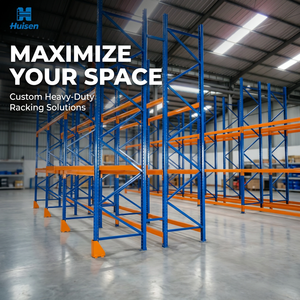
5-Layer Teardrop Upright Industrial Beam Shelving
- Omega profile 2-inch pitch adjustability
- Anti-rust electro-deposited finish
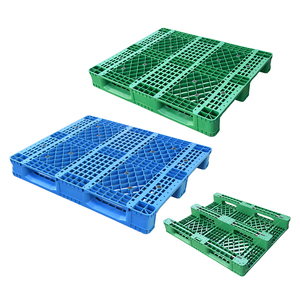
Heavy Duty Multilevel Storage Upright System
- High torsion bolted frame bracing
- Max 4,500kg frame capacity rating
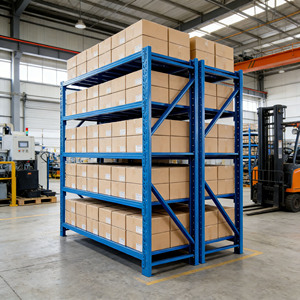
Boltless Long Span Powder-Coated Upright Shelf
- Keyhole slot connection without bolts
- Electrostatic thermoset coating
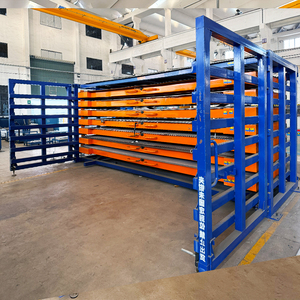
Roll-Out Sheet Storage Reinforced Structural Rack
- Reinforced box column section
- 100% full-extension slide channels
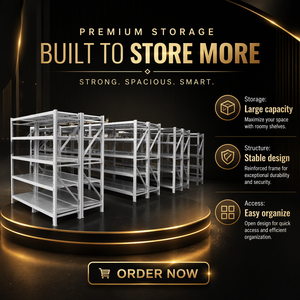
Butterfly-Hole Welded Upright Retail Warehouse Rack
- Precision robotic welded base foot
- Rectangular continuous diagonal struts
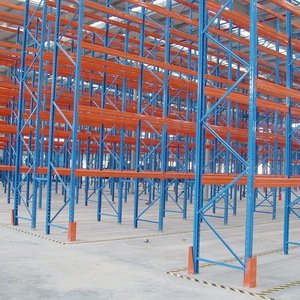
Heavy Duty 5-Tier Bolt-Free Pallet Upright Rack
- Roll-formed 90x70 / 100x70 uprights
- Corrosion-proof passivated coating
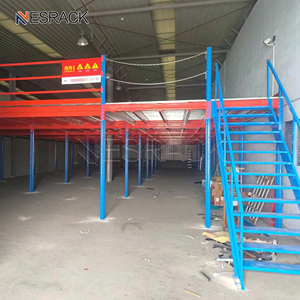
Upright-Supported Structural Mezzanine System
- Floor rating up to 1,000 kg/m²
- Engineered column splices & stringers
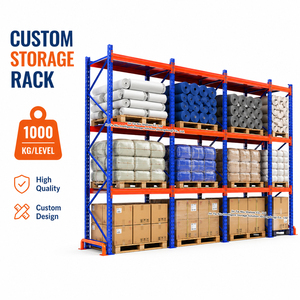
Adjustable 1000KG-4000KG Pallet Racking Frame
- Omega open-back high moment section
- Pre-punched baseplate anchor sets
Pallet Rack Upright Column Engineering: Beyond Steel Gauge
The pallet rack upright frame serves as the vertical backbone of entire logistics ecosystems. For international procurement managers, global distributors, and warehouse project developers, selecting a qualified upright manufacturer in China requires understanding the cold-formed thin-walled structural mechanics governed by AS 4084-2023 (Australia), EN 15512:2020 (Europe), and ANSI/RMI MH16.1-2021 (North America).
Unlike standard structural I-beams, rack uprights are manufactured from thin-walled cold-formed steel coils subjected to complex perforations (teardrop, omega, diamond, or butterfly slots) along their full length. These perforations allow beam bracket hooks to nest securely, but they also reduce the effective cross-sectional area ($A_{eff}$) and alter the shear center, making the column susceptible to three simultaneous failure modes: local buckling, distortional buckling, and flexural-torsional global buckling.
| Structural Steel Grade | Yield Strength $R_{eH}$ (MPa) | Tensile Strength $R_m$ (MPa) | Elongation $A_5$ (%) | International Equivalents | Primary Application Spectrum |
|---|---|---|---|---|---|
| Q235B (GB/T 700) | ≥ 235 | 370 – 500 | ≥ 26% | ASTM A36 / S235JR / AS 3678-250 | Standard selective racking (≤ 7.5m clear height, static pallet loads ≤ 1,000kg) |
| Q355B (GB/T 1591) | ≥ 355 | 470 – 630 | ≥ 22% | ASTM A572 Gr 50 / S355JR / AS 3678-350 | High-bay ASRS, seismic zones, heavy drive-in & radio shuttle channels |
| Q460D (GB/T 1591) | ≥ 460 | 550 – 720 | ≥ 17% | ASTM A656 Gr 60 / S460ML | Cold store high-density racking, multi-tier mezzanine columns (> 12m unsupported runs) |
Top-tier Chinese manufacturers do not rely solely on nominal steel thickness; they utilize calibrated FEA (Finite Element Analysis) alongside stub column compression testing (EN 15512 Clause 9.7.2) to determine the exact shift in the neutral axis and the non-linear stiffness of the upright-to-beam connection. Choosing Q355B allows a reduction in steel gauge from 2.5mm down to 2.0mm while delivering equivalent axial load margins—drastically mitigating international sea-freight tonnage costs.
Guangzhou Heda Shelves Co., Ltd.: 25-Year Industry Benchmark
Direct OEM & ODM production capabilities for Oceania, North American, and European racking contractors, wholesalers, and systems integrators.
Full Automated Production Line
Integrated manufacturing featuring high-speed automated uncoiling, continuous CNC multi-station cold roll forming (18–24 roll passes), hydraulic pre-punching with ±0.1mm slot precision, and robotic GMAW welding stations for baseplates and bracing frames.
Global Structural Compliance
Full engineering compliance covering CE Certification (No. 2435-CPR-8605159), ISO 9001:2015 (No. 18624Q00169R0M), and certified static load reports calibrated to Australian AS 4084:2023 and US RMI MH16.1 design verification methods.
Biosecurity & Export Packaging
Strict biosecurity-ready export packaging: components are bundled on customized structural steel stillages or ISPM-15 certified heat-treated timber pallets, ensuring prompt clearance through Australian DAFF, New Zealand MPI, and US CBP inspections.
10-Stage Electrostatic Powder Coating & Hot-Dip Galvanization
A major risk when importing pallet rack uprights from China is poor surface preparation leading to micro-blistering, delamination, and corrosion creep along punch notches. HEDA Shelves runs an automated 10-stage pre-treatment system that includes hot alkali degreasing, twin water cascades, acid pickling, zinc phosphating, and deionized water rinsing before applying epoxy-polyester hybrid powder.
Upright columns pass through continuous curing ovens at 190°C–210°C, achieving an 80–110 μm dry film thickness (DFT) that withstands ASTM B117 salt spray testing exceeding 600 hours without rust bleed. For humid coastal warehouses, outdoor cantilever racks, or chemical storage facilities, we supply continuous hot-dip galvanized columns compliant with ISO 1461 / AS/NZS 4680 (minimum 85 μm zinc layer thickness).
Pallet Rack Upright Procurement Trends (2025–2030)
How high-bay automation, micro-alloy metallurgical advancements, and carbon-border tax mechanisms (CBAM) are transforming Chinese upright manufacturing.
High-Bay ASRS Clad-Rack Monoliths (>30m Continuous Roll-Forming)
Warehouses are expanding upward to offset rising industrial land costs in Sydney, Melbourne, Auckland, and coastal port hubs. Procurement is shifting from standard bolt-together 6m–9m columns to ultra-tall, single-pass roll-formed uprights exceeding 24m–32m. These require heavy-gauge roll forming lines capable of tracking punch hole pitch tolerances within ±0.05mm across the entire 30m beam run to guarantee automated stacker crane guide-rail alignment.
Micro-Alloy High-Strength Steels & Cross-Section Optimization
With escalating sea freight and carbon compliance mandates, tier-1 factories are shifting from generic Q235B toward micro-alloyed titanium/niobium-strengthened Q355B and Q460D steel. By optimizing cross-sectional geometry with return lips, multi-flange stiffeners, and reinforced omega profiles, manufacturers reduce frame mass by up to 18% while sustaining identical torsional-flexural buckling resistance ($P_{cr}$).
Seismic Ductility Engineering for High-PGA Zones (AS 4084 & NZS 1170.5)
In seismic-active zones across New Zealand, the Pacific Rim, and western North America, upright frames must endure cyclic dynamic drift without sudden brittle shear failure. Factories now offer engineered heavy-duty floor baseplates, high-ductility anchor setups, reinforced lower-tier column sleeves, and specific shear-pin connector locks certified to maintain rack structural integrity during peak ground acceleration (PGA) seismic events.
Digital Twin Layouts, BIM Files & Full Traceability Barcoding
Global procurement teams now require manufacturers to supply native Autodesk Revit / BIM models alongside 3D layout calculations before steel uncoiling begins. Leading Chinese factories laser-etch unique QR codes and mill lot heat numbers onto each individual upright frame, allowing instant digital tracking from coil unrolling to final container destuffing and annual on-site rack safety inspections.
Buyer Audit Checklist for Chinese Upright Manufacturers
Key quality assurance criteria international buyers must verify before wire transfer release.
1. Raw Material MTC Verification
Demand genuine Mill Test Certificates (MTC) conforming to EN 10204 3.1 directly from primary tier-1 Chinese steel mills (e.g., Baosteel, Shougang). Verify carbon equivalent ($CEV \le 0.45\%$), yield strength ($R_{eH} \ge 355\text{ MPa}$ for Q355B), and notch impact toughness at 0°C.
2. Roll-Forming Roll Pass Depth
Inspect the roll forming station count. Inferior workshops use 10–12 roll passes which strain steel corners, inducing internal residual stresses. Tier-1 factories run 18–24 sequential forming passes with precision side-roll calibration to preserve material grain flow along all 90° radius bends.
3. Punch Slot Pitch Tolerance
Measure column punch pitch over a 3-meter continuous length using digital calipers. Cumulative pitch error must stay within ±1.0mm. Excessive pitch error leads to uneven beam connector seating, uneven hook engagement, and localized eccentric loading across beam runs.
Frequently Asked Questions by Global Buyers
Direct technical answers resolving structural compliance, import logistics, biosecurity clearance, and custom tooling parameters.
Can Chinese-manufactured uprights meet strict Australian AS 4084:2023 and NZ seismic standards?
What is the key functional difference between Teardrop, Omega, and Butterfly punch profiles?
How are upright frames packed to avoid damage and comply with biosecurity (DAFF/MPI) clearance?
What sea freight lead times and container loading capacities can we plan for?
Can we develop custom upright column profiles and hole tooling for proprietary OEM distribution?
How do Preferential Free Trade Agreements (ChAFTA / NZ-China FTA) impact import duty?
Plan Your Warehouse Upright & Racking Layout with Certified Engineers
Share your architectural floor layout, clear roof height, forklift turning radii, and pallet weight parameters. Our Guangzhou structural engineering center will return a complete 3D layout, static calculation pack, and factory-direct quote within 24 hours.