Featured Industrial Pallet Racking & High-Density Storage Solutions
Precision roll-formed, hot-dip galvanized and electrostatic powder-coated racking configurations engineered for third-party logistics (3PL), temperature-controlled cold stores, e-commerce fulfilment hubs, and heavy industrial yards.
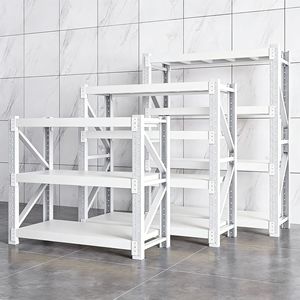
Three-tier Cold-rolled Steel Shelving Unit Warehouse Storage Organizer
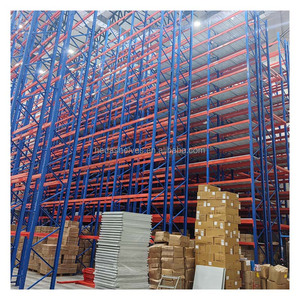
China Factory Price Selective Heavy Duty Storage Racking Industrial Pallet Racks
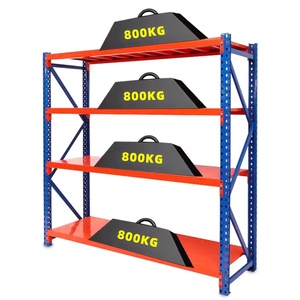
Customized Wire Decking Stacking Racks & Industrial Storage Shelves
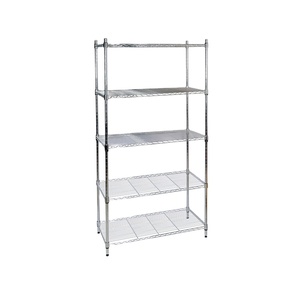
5-Layer Narrow Metal Wire Shelving Rack for High-Density Picking
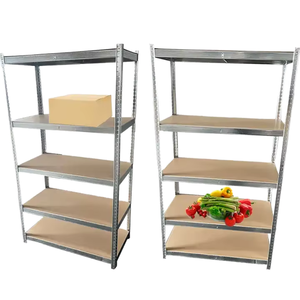
Heavy Duty Boltless Steel Storage Shelves Industrial Warehouse System
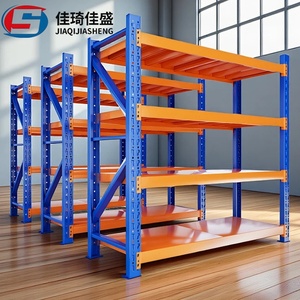
Adjustable Steel Warehouse Shelving Rack Pallet Stacking System
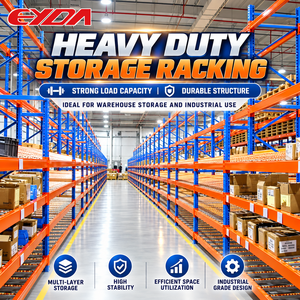
Heavy Duty Carton Flow Rack Adjustable Multi-Level FIFO Warehouse Shelving
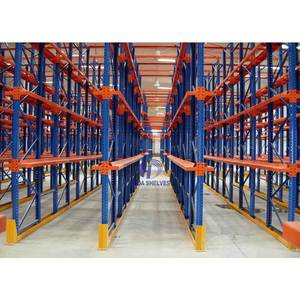
Double Deep & Drive-In Pallet Racking Heavy Duty Cold Storage Management
Navigating Chinese Pallet Racking Manufacturing: Engineering, Metallurgy & Quality Control
A technical roadmap for supply chain directors, industrial real estate developers, logistics EPC contractors, and procurement managers seeking tier-1 manufacturing capabilities in China.
The global warehousing landscape is undergoing unprecedented structural shifts. Driven by cross-border omnichannel commerce, automated material handling, and rising square-metre rental prices across primary logistics corridors (from Western Sydney and Auckland to Rotterdam, Chicago, and Dubai), enterprise warehouse operators must balance physical floor utilization with stringent life-safety structural engineering. China accounts for over 65% of global roll-formed and structural steel storage system exports. However, navigating the Chinese manufacturer ecosystem requires discerning procurement teams to distinguish between low-tier generic workshops and accredited, engineering-driven fabrication plants capable of global code compliance.
Metallurgical Traceability (Q235B / Q355B)
Tier-1 Chinese exporters source prime hot-rolled coil (HRC) directly from certified state-owned steel conglomerates (e.g., Baosteel, Shougang). Mill Test Certificates (MTC EN 10204 Type 3.1) verify carbon equivalent (CEV ≤ 0.38%), phosphorus, and sulphur concentrations to prevent brittle failures under dynamic forklift impact loads or sub-zero blast-freezer operation.
Cold-Formed Continuous Profile Forming
Structural rigidity in upright frames and box-beams depends on progressive multi-station roll-forming lines (16 to 24 roll stations). High-precision automated punching guarantees tolerance alignments within ±0.5mm across a 12-meter continuous vertical upright, mitigating residual stresses and torsional buckling under extreme axial compressive stress.
Surface Pre-Treatment & Powder Deposition
Long-term resistance against corrosion, micro-cracking, and chemical vapor degradation requires an automated multi-stage pre-treatment line: alkaline degreasing, acid pickling, zinc phosphating, and deionized water cascading rinses. Finished components undergo electrostatic deposition of high-grade polyester thermoset powder cured at 200°C (film thickness 70–90 μm).
International Structural Standards Comparison: AS 4084, RMI MH16.1 & EN 15512
Enterprise pallet racking cannot be sourced as a simple bulk commodity. It is a civil-structural assembly governed by strict safety factors, deflection ceilings ($L/200$), second-order ($P-\Delta$) global sway analysis, and seismic base connection standards.
| Design Factor / Regulatory Clause | Australia & NZ (AS 4084:2023) | United States (RMI / ANSI MH16.1) | European Union (EN 15512:2020) | China National Standard (GB/T 28576) |
|---|---|---|---|---|
| Primary Steel Grade Specification | AS/NZS 1163 / AS/NZS 3678 (equiv. G350 / G450) | ASTM A36, A572 Grade 50, A1011 HSLAS | EN 10025 (S235JR, S355JR), EN 10346 (S350GD) | GB/T 700 (Q235B), GB/T 1591 (Q355B) |
| Beam Deflection Limit Under UDL | L / 200 (maximum allowable vertical flex) | L / 180 (under maximum rated static load) | L / 200 (effective span between uprights) | L / 200 (rated uniform pallet weight) |
| Seismic Ground Motion Verification | NZS 1170.5 & AS 1170.4 site acceleration spectra | ASCE 7 / IBC mapped spectral response ($S_s, S_1$) | EN 1998-1 Eurocode 8 seismic zoning integration | GB 50011 seismic intensity micro-zonation |
| Beam-End Connector Safety Factor | Self-locking spring pins resist ≥ 5.0 kN upward shear | Locking device resists 1,000 lbs (4.45 kN) uplift | Safety lock pin withstands 5.0 kN accidental displacement | Safety latch resists ≥ 4.0 kN upward forklift strike |
| Third-Party Engineering Verification | CPEng / RPEQ structural sign-off & load plaquing | PE (Professional Engineer) calculation package & PE seal | Notified Body CE marking (EN 1090-1 / CPR 305/2011) | Manufacturer CMA / CNAS accredited lab reports |
Leading Chinese exporters do not merely offer standard warehouse racking catalogues; they operate dedicated design calculation teams equipped with finite element analysis (FEA) software. By analyzing upright perforations (drop-shape, diamond-shape, teardrop, or butterfly slots), engineers compute reduced net cross-sectional properties, shear lag, and local distortional buckling. Importers should demand rigorous structural calculations showing down-aisle and cross-aisle stability under both loaded and pattern-unloaded states before steel coil rolling commences.
Why Global Supply Chains Trust Guangzhou Heda Shelves Co., Ltd.
Established in 2001, Guangzhou Heda Shelves Co., Ltd. combines quarter-century structural steel fabrication mastery with agile OEM/ODM customization and global port delivery logistics.
Precision Fabrication Backed by Industrial Verification
Operating a modern 30,000-square-meter facility with over 300 experienced engineers, cold-roll technicians, and international shipping coordinators, Heda Shelves produces over 30,000 metric tons of certified racking monthly. We act as an end-to-end original equipment manufacturing (OEM) and joint-design (ODM) engineering partner for Fortune 500 companies, commercial distributors, third-party logistics warehouses, and national storage brands.
-
✓Global Safety AccreditationsCE Certification No. 2435-CPR-8605159, ISO 9001:2015 Quality Management System (No. 18624Q00169R0M), and full RoHS hazardous substance clearance.
-
✓Free 24-Hour 3D CAD & BIM Engineering LayoutsSubmit your architectural floor plan, clear ceiling heights, and material handling fleet specifications to receive layout drawings and structural loading tables.
-
✓Biosecurity & Strict Export PackagingEngineered steel stillages, heavy-duty shrink-banding, and ISPM-15 compliant treated timber ensure rapid DAFF (Australia), MPI (New Zealand), and CBP (USA) border clearances without quarantine delays.
-
✓Turnkey End-to-End Oceanic LogisticsDirect container loading out of South China (Guangzhou / Nansha / Shenzhen / Foshan) with customs documentation (ChAFTA, RCEP, Form E) for import tariff optimization.
The 10-Stage Heda Quality Framework
Future Procurement & Product Development Trends (2025–2035)
The convergence of automation, climate resilience, and supply chain transparency is redefining how warehouse operators design, purchase, and install pallet racking.
ASRS & Radio Shuttle Integration
Rising industrial wages and forklift operator shortages are accelerating the transition from standard selective racking to crane-served Automated Storage and Retrieval Systems (ASRS) and 4-way radio shuttle systems. Pallet racking must now adhere to tighter mechanical tolerances (±1.5mm deflection) to prevent automated shuttles and robotic mast cranes from jamming.
Cold-Chain & Blast Freezer Resilience
Global food security and biological pharmaceutical storage demand high-density drive-in, double-deep, and gravity flow systems operable at -30°C. Modern procurement mandates high-impact Charpy V-notch tested steel alloys (Q355D/E) that prevent ductile-to-brittle metallurgical transitions and specialized zinc-rich, moisture-scavenging epoxy coatings.
Decarbonized & Low-Carbon Green Steel
With European CBAM (Carbon Border Adjustment Mechanism) and global ESG disclosures entering compliance phases, major multinational 3PLs require Life Cycle Assessments (LCA) and Environmental Product Declarations (EPD). Chinese tier-1 mills are shifting to scrap-fed Electric Arc Furnaces (EAF) powered by renewables, cutting embedded carbon per pallet position by 40%.
Seismic & Geo-Climatic Adaptation
Warehouse expansions in seismically active circum-Pacific regions (e.g., New Zealand, Western Americas, Japan, Southeast Asia) demand high-ductility baseplates, oversized seismic wedge anchors, articulated spine cross-bracing, and dynamic torsional dissipation frames engineered to absorb significant ground accelerations without collapse.
Frequently Asked Questions: Sourcing Pallet Racking from China
Detailed answers to critical technical, logistics, compliance, and commercial questions asked by international supply chain directors and warehouse contractors.
1. How can overseas buyers verify the true structural steel grade (Q235B vs Q355B) used by Chinese factories?
2. How does Chinese pallet racking comply with local standards like Australian AS 4084:2023 or US RMI MH16.1?
3. What are the key strategies for maximizing container space utilization when importing heavy steel racking?
4. What surface finish should be selected for high-humidity, marine, or chemical storage environments?
5. What critical parameters are needed to request a fast, accurate 3D CAD racking layout from an engineering factory?
6. How do export packaging standards address strict biosecurity rules in Australia, New Zealand, and North America?
Ready to Engineer Your High-Density Warehouse Storage System?
Consult directly with our senior structural racking engineers. Submit your warehouse floor plan, pallet dimensions, and operational throughput targets to receive a complimentary 3D CAD layout, structural capacity report, and factory-direct price quotation within 24 hours.