Heavy-Duty Standard
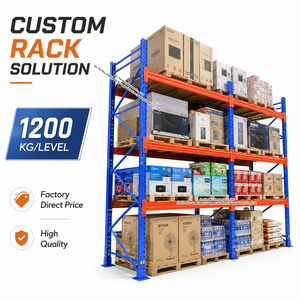
1200KG Steel Heavy Duty Rack Warehouse Pallet Storage Shelving System
- Capacity: 1,200 kg / tier (UDL)
- Steel Profile: Q235B / 50mm Pitch
- Finish: Electrostatic Powder Coated
Selective pallet racking constitutes over 75% of global high-bay warehouse operations. By offering instantaneous 100% SKU selectivity, unencumbered forklift approach vectors, and customizable beam level configurations, selective systems remain the standard against which all high-density alternatives are measured. However, navigating the Chinese manufacturing ecosystem requires deep engineering due diligence—evaluating raw steel grade chemistry, cold-forming tolerances, weld penetration, and compliance with seismic building codes.
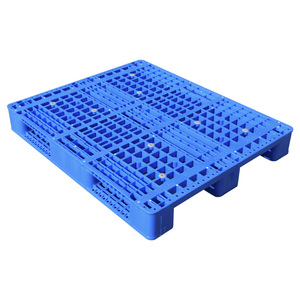
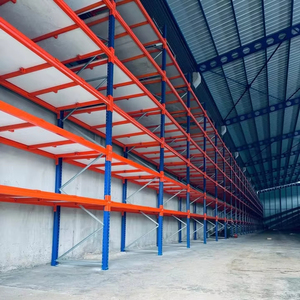
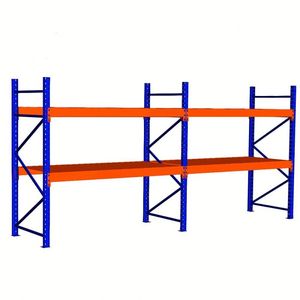
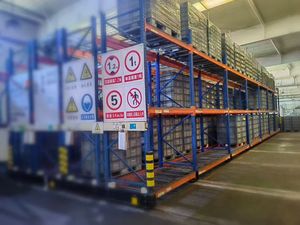
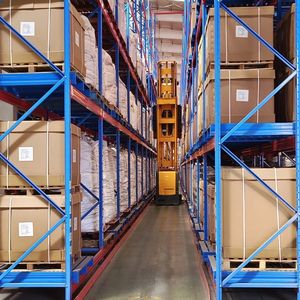
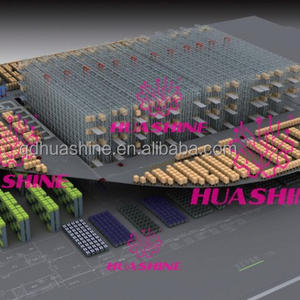
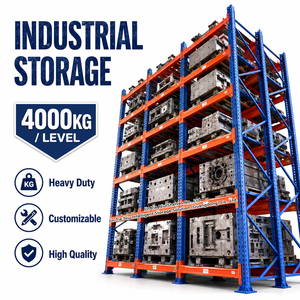
Procuring industrial storage from Chinese mills requires rigorous technical oversight. A selective racking system is a specialized, unbraced or semi-braced civil steel frame subjected to dynamic impact loads, cyclic stress, and seismic moments. Below is an engineering evaluation of structural criteria.
Upright frame performance hinges on certified carbon structural steel coils. We utilize Baosteel and Shougang hot-rolled strip steel. Q235B (yield strength $f_y \ge 235\text{ MPa}$) serves low-to-medium bay elevations, while Q355B high-strength alloy ($f_y \ge 355\text{ MPa}$, equivalent to ASTM A572 Grade 50) is roll-formed for heavy-load uprights, maintaining elongation >21% to avoid brittle fractures during cyclic seismic loading.
Upright columns feature an advanced multi-faceted Omega (Ω) cross-section engineered through a continuous 24-station cold-roll forming mill. Up to 12 bending folds shift the shear center and maximize the torsional-flexural buckling threshold. Automated punching lines maintain pitch spacing variations within ±0.15mm across an 11.8-meter single piece length.
Beams are manufactured by twin C-section interlocking automated continuous seam robotic CO2 welding. Connectors employ 3, 4, or 5-claw high-ductility cast or stamped steel designed to wrap the column, counteracting beam-end rotation. Deflection is calibrated under static proof load to strictly adhere to $L/200$ (US RMI standard) or $L/250$ (European FEM/EN criteria).
| Standard & Jurisdiction | Deflection Ratio ($L/\Delta$) | Load Factor / Safety Coeff. | Seismic Verification Method | Upright Perforation Standard |
|---|---|---|---|---|
| AS 4084:2023 Australia & New Zealand |
$L/200$ under working load | $\ge 1.5$ Ultimate Limit State | NZS 1170.5 response spectra / Site Class C/D | Tested connector moment-rotation curves |
| FEM 10.2.02 / EN 15512 European Union & UK |
$L/200$ to $L/250$ under full UDL | $\gamma_F = 1.4$ for pallet live loads | EN 16681 dynamic analysis with 2nd order $P-\Delta$ | Strict continuous tear & slip verification |
| ANSI / RMI MH16.1 United States & Americas |
$L/180$ allowable flexure limit | $\ge 1.67$ allowable stress (ASD) | ASCE 7 seismic mapping / ductile ground anchors | Standard Teardrop pin hole geometry |
| HEDA Shelves Engineering Global Factory Standard |
$L/200$ to $L/250$ verified | $\ge 1.65$ across all configurations | FEA finite element analysis & shake-table certified | Universal teardrop or custom European slot |
Founded in 2001, HEDA Shelves operates a state-of-the-art production base spanning 30,000 square meters. By integrating end-to-end automated manufacturing—from slitting and roll-forming to 9-stage pre-treatment and powder finishing—we deliver over 30,000 metric tons of steel storage annually to more than 100 countries.
Unlike trading intermediaries, HEDA provides genuine, verifiable credentials including CE Certification (No. 2435-CPR-8605159) and ISO 9001:2015 Quality Management System audit (No. 18624Q00169R0M). Every production heat is matched with Mill Test Certificates (MTC) outlining tensile, yield, and chemical composition (C, Si, Mn, P, S).
Corrosion failure starts beneath the paint. Our continuous overhead conveyor system subjects every profile to a 9-stage sequence: hot alkaline degreasing, twin water cascades, acid pickling, surface conditioning, micro-crystalline zinc phosphating, and deionized water rinsing prior to automated GEMA electrostatic powder application curing at 200°C.
We eliminate customs hold-ups at strict ports such as Melbourne, Sydney, Auckland, and Long Beach. Components are bundled onto engineered steel stillages with timber-free dunnage or certified ISPM-15 heat-treated skids. Upright profiles and beams feature nested strapping with edge protectors, cutting container offload cycles by 60%.
Shrewd procurement directors look beyond the ex-works FOB price per beam. A selective racking installation represents a 15-to-25-year structural asset. Calculating the true TCO requires analyzing slab utilization, material handling equipment (MHE) fleet compatibility, and lifecycle maintenance expenditure.
Substandard manufacturers shave costs by down-gauging steel (e.g., substituting 1.8mm coils for specified 2.0mm columns) and relying on tensile overstressing. HEDA ensures guaranteed minimum thickness tolerances (±0.05mm). Our heavy baseplates and structural column protectors reduce the primary cause of industrial racking collapse: forklift impact during high-cycle retrieval.
Selective racking footprint costs correlate directly with forklift aisle width requirements. Standard counterbalance lift trucks demand 3.5m to 4.0m aisles, yielding ~40% space efficiency. Upgrading to Reach Trucks (2.8m aisles) or Very Narrow Aisle (VNA) turret trucks (1.65m–1.8m aisles with floor guide rails) unlocks up to 55% more pallet positions within the identical facility perimeter.
We eliminate expensive engineering guesswork. Supply chain operators furnish their facility dimensions, clear eave heights, column spans, and pallet parameters (e.g., 1165x1165mm AU standard, 1200x1000mm UK/ISO, or 1200x800mm EUR). Within 24 hours, our 300-strong engineering division delivers fully optimized 3D CAD architectural and structural drawings at zero charge.
Submit your warehouse floor layout, beam elevation requirements, clear ceiling heights, and pallet load specs. Our senior structural designers will generate a comprehensive engineering proposal and bill of materials (BOM).
Driven by automated supply chains, omni-channel fulfillment, carbon reduction policies, and tighter seismic mandates, warehouse storage procurement is transforming. Forward-thinking operations are aligning their tenders with these emerging technological paradigms.
Static selective racking is rapidly integrating with Autonomous Mobile Robots (AMRs) and automated forklifts. Racking manufacturers must hold tighter floor tolerances, eliminate out-of-plumb deviations (≤ $H/500$), and integrate specialized low-bay inductive guidance brackets, QR-code positioning floor channels, and safety interlocking systems for collaborative human-robot distribution hubs.
With the European Union’s Carbon Border Adjustment Mechanism (CBAM) and corporate ESG governance extending into logistics infrastructure, global buyers require quantified carbon footprints for steel fabrication. Chinese tier-1 factories are shifting to scrap-based Electric Arc Furnace (EAF) mills, solar-powered factory facilities, and solvent-free low-VOC powder coatings with transparent Scope 1, 2, and 3 emissions tracking.
Warehouses in seismic active belts (New Zealand, Chile, Japan, US West Coast, Southeast Asia) demand advanced structural articulation. Conventional fixed baseplates are giving way to ductile hysteretic energy dissipation base shoes and sliding friction base isolators that absorb ground acceleration energy, preserving upright column elastic stability and stopping catastrophic load collapses during richter-scale tremors.
The next generation of selective racking integrates wireless strain gauge sensors and impact-detecting accelerometers within high-risk end-of-aisle frames. These IoT sensors communicate with warehouse management systems (WMS), warning facility directors instantly of unrecorded forklift strikes, beam overload deflections, or foundation shifts before micro-fractures propagate.
Essential answers addressing structural standards, customs compliance, freight planning, and material specifications for procurement managers importing Chinese storage racking.
Compliance is not simply a label; it requires rigorous structural calculation and physical material testing. At HEDA Shelves, our engineering division designs system configurations using finite element analysis (FEA) calibrated against AS 4084 (Steel Storage Racking) and EN 15512 principles.
We provide comprehensive engineering packages including section properties (second moment of area $I$, section modulus $Z$), connector moment-rotation curves derived from physical stub testing, beam deflection load tables, and load signage tailored to your local site municipality. For Australian and European clients, we collaborate directly with your appointed local chartered engineer (CPEng / RPEQ) to provide calculation proof for local certification.
Q235B features a minimum yield point of $235\text{ MPa}$ and a tensile strength of $370\text{–}500\text{ MPa}$. It represents the industrial baseline for light to medium-duty racking systems, secondary horizontal bracing, and shelf decking panels.
Q355B (equivalent to European S355JR and American ASTM A572 Grade 50) delivers a significantly higher yield strength of $\ge 355\text{ MPa}$ with high impact toughness. Utilizing Q355B allows us to engineer taller upright columns (12+ meters) with thinner profiles while achieving equivalent or superior buckling resistance, which reduces steel dead-weight, cuts ocean freight costs per pallet position, and enhances ductile performance during seismic events.
Non-compliant timber packaging can cause customs rejections, port quarantine fumigation fines, and costly logistics delays. HEDA protects clients by employing a 100% steel stillage and steel banding packing protocol for heavy-duty components.
Beams, frames, and upright components are bundled in structural steel frames specifically engineered for crane and forklift un-stuffing. When wood dunnage or skids are strictly requested by a client, all materials undergo certified heat treatment in strict accordance with ISPM-15, clearly displaying valid IPPC stamps alongside fumigation certificates, clean bill of lading manifests, and packing declarations.
Yes. HEDA manufactures an American Standard Teardrop configuration engineered to interchange seamlessly with standard North American brands. The teardrop punching pattern follows standard 2-inch increments, allowing tool-less beam adjustment and integration into existing legacy setups.
Our beams feature spring-loaded automatic locking pins that engage the teardrop hole directly, preventing dislodgement from upward forklift bumps while fulfilling RMI MH16.1 specifications (>1,000 lbs upward shear resistance).
Racking loads are transferred to the warehouse floor as concentrated point loads through baseplates. For standard selective systems with 2,000kg to 3,000kg tier capacities and upright heights of 6 to 9 meters, concrete floor slabs typically require a minimum compressive strength of 25 MPa to 30 MPa (C25/30 rating) with a reinforced thickness between 150mm and 200mm.
HEDA provides exact point load calculations (axial force $N$, shear force $V$, overturning moment $M$) so your structural engineer or slab consultant can verify punching shear and joint load capacities. Baseplates are designed with pre-punched anchor holes sized to accommodate heavy-duty mechanical expansion bolts or chemical capsule anchors.
Electrostatic thermosetting powder coating (60–80 microns thick) provides the optimal finish for dry, ambient industrial warehouses. It delivers impact resistance against pallet abrasions, is available in vibrant OSHA-standard RAL colors (such as Safety Orange RAL 2004 and Ultramarine Blue RAL 5010) for visibility, and offers excellent cost-efficiency.
For cold storage, freezer facilities (-25°C), high-humidity environments, or outdoor open-sided sheds, Hot-Dip Galvanizing (HDG according to ISO 1461, yielding 65–85 microns of sacrificial zinc-iron alloy) is recommended. HDG prevents atmospheric rust creep even if scratched by forklift tines, extending operational lifespan beyond 30 years in harsh environments.
As a licensed exporter, HEDA delivers complete customs documentation packages including: Commercial Invoice, Detailed Packing List with net and gross weights per item, Clean on Board Ocean Bill of Lading, and Certificate of Origin.
For relevant jurisdictions, we provide Form E (for ASEAN-China Free Trade Area), ChAFTA Certificate of Origin (for Australia), or NZ-China FTA certification, enabling zero-tariff or reduced preferential tariff entry. Mill Test Certificates (MTC) and factory QC inspection reports accompany every single ocean container.
Upon 3D CAD drawing and technical specification sign-off, standard factory fabrication lead time ranges from 15 to 25 days depending on project volume (1 to 20 containers). Custom colors or specialized seismic baseplate stampings may require an additional 5 days.
Transit durations vary by destination port: Southeast Asian ports typically take 5–10 days; Australian/New Zealand ports take 14–22 days; European main ports (Rotterdam, Hamburg, Felixstowe) require 28–35 days; and US West Coast ports take approximately 14–20 days. Our export logistics desk handles continuous vessel tracking and port discharge notices.
To receive an accurate 3D CAD design and engineering quotation, provide your project specifics: 1. Facility Floor Plan (columns, docks, doors, utility zones) • 2. Clear Height Under Roof & Sprinklers • 3. Pallet Dimensions (W x D x H) including overhang • 4. Maximum Gross Pallet Weight • 5. Forklift Model, Lift Height & Turning Aisle Width • 6. Facility Seismic Zone & Temperature Profile.
Our engineering team will generate a compliant, space-optimized warehouse storage schematic within 24 hours.