Engineered VNA Racking & High-Density Storage Lineup
Manufactured using premium cold-rolled steel, tailored for articulated or turret trucks, and fully compliant with global load testing protocols.
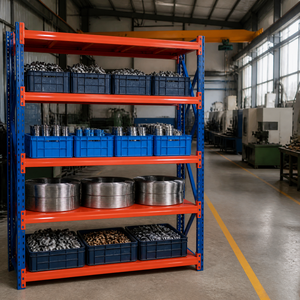
Custom Adjustable Anti-Rust Pallet Racking System VNA Racking Narrow Aisle Rack
View Specifications →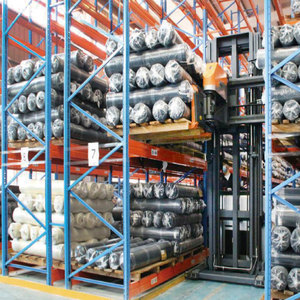
Narrow Aisle 5-Layer Heavy Duty Cold Rolled Steel Shelving Cargo Units
View Specifications →
High Density Narrow Aisle Pallet Racking Powder Coated Adjustable Beam System
View Specifications →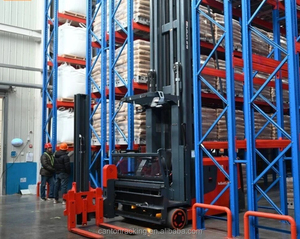
Minimized-Aisle Capacity Maximizer VNA Warehouse Heavy Duty Pallet System
View Specifications →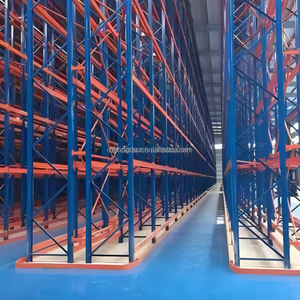
Industrial High-Rise Very Narrow Aisle Racking System VNA Steel Pallet Rack
View Specifications →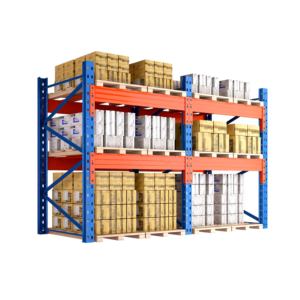
Heavy Duty 5-Tier Anti-Rust Space-Saving Boltless Narrow Aisle Structural Racking
View Specifications →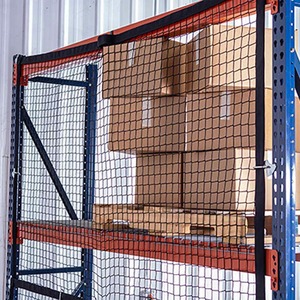
Heavy Duty Rack Fall-Protection Safety Net HDPE Nylon Pallet Netting
View Specifications →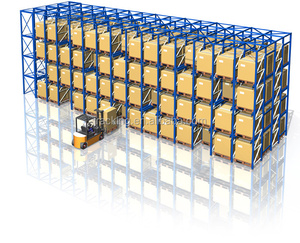
High Density Customized Drive-In Racking System for Cold Room Cargo Storage
View Specifications →Why Partner With HEDA Shelves for VNA Infrastructure?
With an operational legacy dating back to 2001, Guangzhou Heda Shelves Co., Ltd. stands as a premier Chinese original design manufacturer (ODM) and original equipment manufacturer (OEM).
Engineering Rigor & Global Operational Footprint
Operating a sprawling 30,000 square meter factory supported by over 300 experienced technicians, structural engineers, and manufacturing specialists, we process upwards of 30,000 tons of high-grade certified steel per month. VNA (Very Narrow Aisle) systems leave zero margin for deflection error. A 15-meter vertical upright operating in a 1.6-meter aisle requires absolute structural verticality, strict manufacturing tolerances, and flawless floor-anchor physics.
From automated upright column continuous roll forming, robotic bracket welding, 8-stage pre-treatment chemical phosphating, to durable electrostatic powder coating, every stage is executed in-house. Our designs seamlessly reference international structural standards—including European CE (No. 2435-CPR-8605159), ISO 9001:2015 certified quality systems, and Australia/New Zealand AS 4084 guidelines.
Complimentary 3D CAD Optimization
Before any steel coil is slit, our engineering unit creates parametric CAD structural layouts, load-distribution tables, and aisle clearance models based on your exact handling equipment and SKU footprint.
Seismic & Environmental Engineering
We tailor vertical upright gauge thickness, baseplate anchor arrays, and heavy-duty portal ties for seismic risk zones (NZS 1170.5 criteria) as well as harsh corrosive environments using specialized hot-dip galvanization.
Global Biosecurity & Export Packaging
Export logistics demand strict customs packaging compliance. We pack our VNA racking on heavy steel stillages or ISPM-15 compliant treated timber, ensuring swift clearance through strict quarantine barriers such as Australian DAFF and NZ MPI.
Future Procurement Trends in Very Narrow Aisle Racking
Key economic and architectural shifts shaping how modern distribution hubs procure high-density racking.
Skyrocketing Real Estate Pressures
With industrial land costs and commercial building lease rates rising across major logistics nodes, warehouse operators are moving away from traditional 3.5m+ counterbalanced aisles, selecting 1.5m–1.8m VNA profiles to instantly reclaim up to 45% of dormant spatial capacity.
Near-Shore Modular Staging
Enterprise procurement teams are turning to direct-from-manufacturer contracts with modular configurations. Rather than proprietary systems, buyers prefer standardized slotted uprights (50mm/75mm pitch) allowing painless post-installation tier adjustments as pallet profiles shift.
Strict Engineering Traceability
Regulatory frameworks now scrutinize imported structural steel racks. Procurement audits mandate traceable mill certificate heat numbers, EN 10204 3.1 chemical verification, and seismic calculation disclosures prior to vessel departure.
Integration of Cold-Chain VNA Systems
The global surge in pharmaceuticals and frozen food logistics has pushed VNA adoption into high-cost -28°C sub-zero facilities. Specialized cold-resistant powder formulations and pre-galvanized components prevent micro-fractures from continuous cryogenic thermal shifts.
Future Development & Engineering Directions of VNA Systems
How automation, optical guidance, and metallurgy are redefining narrow-aisle storage efficiency.
The Convergence of Very Narrow Aisle Racks and Autonomous Mobile Robots (AMRs)
Historically, VNA racking systems relied exclusively on operator-driven man-up or man-down turret trucks guided by mechanical steel floor rails or inductive floor-embedded wire frequencies. Modern engineering has rapidly accelerated toward hybrid autonomous automation. Today's top-tier manufacturers design structural racking to interface with driverless narrow-aisle AGVs and LiDAR-guided automated guided forklifts.
This technical evolution places higher physical demands on the racking infrastructure:
- Superflat Floor Tolerance Demands (DIN 18202 & VDMA 15251): High-rise VNA configurations reaching 16 to 18 meters require minimal frame tolerance variance. Vertical out-of-plumb ratios cannot exceed 1:1000 without compromising safety during automated high-speed fork extraction.
- Structural IoT Deflection Monitoring: Progressive smart warehouse facilities are embedding real-time strain-gauge load sensors within secondary and tertiary support beams. These deliver instantaneous telemetry warning of improper pallet loading or localized stress spikes.
- Ultra-High-Strength Structural Steels (Q355B & Higher): By utilizing high-tensile cold-rolled micro-alloyed steel compositions, manufacturers can preserve high mechanical yield parameters while decreasing dead-weight profiles, significantly cutting cross-border sea-freight emissions and container shipping weight barriers.
Frequently Asked Questions About VNA Racking
Comprehensive answers to complex questions frequently raised by warehouse directors and structural engineers.
How narrow can VNA racking aisles realistically be designed?
Aisle widths for VNA systems typically range from 1,500mm to 1,900mm clear aisle dimension, depending upon pallet dimensions (e.g., standard 1200x1000mm or Australian 1165x1165mm) and the specific model of turret truck or articulated forklift used. This is contrasted against traditional counterbalanced aisles which require 3,500mm to 4,000mm.
What floor specifications are required for a high-rise VNA racking installation?
Because turret trucks operate at heights up to 17 meters with clearances measured in millimeters, floors must meet stringent "Superflat" requirements such as Concrete Society TR34 (Category DM1/DM2) or DIN 18202 standards. Significant deviations cause severe mast swaying and safety shutoffs.
What is the difference between wire guidance and mechanical rail guidance?
Mechanical guidance utilizes structural steel angle or low-profile floor rails bolted along the base of the rack uprights to physically align the truck's guide rollers. Wire guidance utilizes a low-frequency radio wire cut into the concrete floor that an onboard steering sensor follows, eliminating low-level tripping and lower-beam impact hazards.
How do VNA systems compare financially with automated AS/RS facilities?
A VNA setup typically represents only 20% to 35% of the initial capital outlay of a fully automated crane-based AS/RS system while capturing 80% to 90% of the equivalent storage density. This delivers a much faster ROI for high-turnover hubs without introducing complex software maintenance overheads.
How does fire protection and suppression function in high-rise VNA racks?
Because pallets are placed closely together and can extend upward beyond 15 meters, ceiling-only ESFR sprinklers are often insufficient. NFPA 13 and EN 12845 guidelines generally require intermediate in-rack sprinkler barriers positioned at specific beam levels along longitudinal and transverse flue spaces.
What shipping methods are used to deliver VNA upright frames overseas undamaged?
VNA upright frames frequently exceed standard container dimensions (lengths exceeding 11.8 meters). We supply bolted knockdown upright frames packed flat in sequence to maximize 40-foot high-cube (40HC) container utilization. For extra-long single-piece configurations, specialized open-top (OT) containers or breakbulk shipping lines are coordinated.
Plan Your High-Density VNA Warehouse Today
Send our senior engineering team your warehouse dimensions, handling specifications, and clear height. Receive a tailored 3D CAD proposal and structural load calculation package within 24 business hours.
Inquire Now