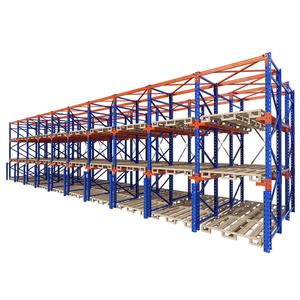
Industrial Storage Catalog
Engineered Warehouse Racking & Material Handling Equipment
Precision-manufactured dynamic and heavy-duty storage configurations designed to maximize volumetric efficiency, throughput velocity, and inventory integrity.
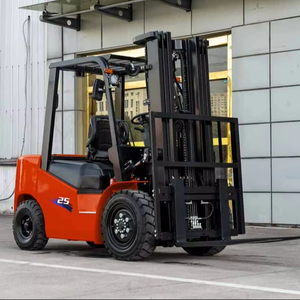
K2 Free Shipping Electric Forklift 2.5Ton CE ISO EPA Rough Terrain Sturdy Forklift Cheap Price Powerful
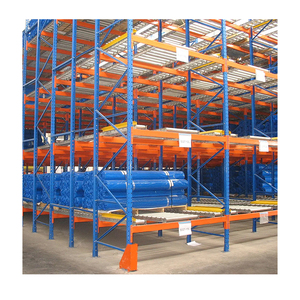
High-efficiency Auto Industrial Logistics Transportation Gravity Roller Heavy Pallet Racking
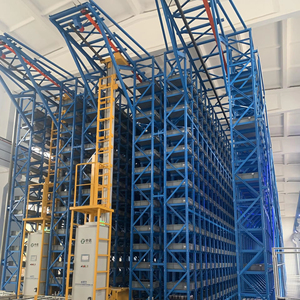
Manufacturer Supply Medium Duty Steel ASRS Warehouse Robot Storage Retrieval Picking System with Adjustable Stacking Crane
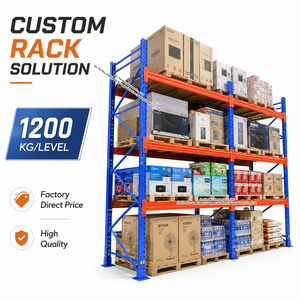
1200KG Steel Heavy Duty Rack Warehouse Pallet Storage Shelving System
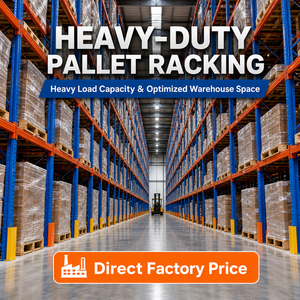
High Capacity Steel Shelving Industrial Warehouse Rack Pallet Storage Solution Rack System Pallet Racking for Warehouse Storage
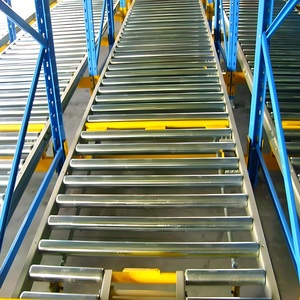
Factory Custom FIFO High Efficient Warehouse Storage Gravity Pallet Flow Racks Roller Rack/Pallet Flow Racking
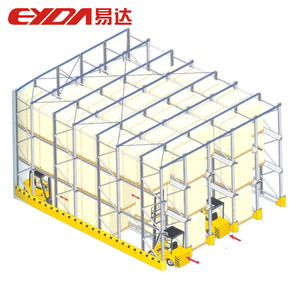
Heavy Duty 5 Layer Drive in Pallet Storage Racking System Drive-Thru Warehouse Pallet Rack LIFO FIFO Method Adjustable Shelves
2001
Year Established
30,000m²
Production Facility
300+
Engineers & Technicians
30,000T
Monthly Steel Output
Engineering Architecture & Dynamics
Technical Anatomy of Modern Carton Flow Systems
कार्टन फ्लो रैक (Carton Flow Rack) systems function as dynamic live-storage solutions operating on gravity-feed physics to facilitate strict First-In, First-Out (FIFO) split-case and full-case inventory handling.
In modern supply chain engineering, order assembly represents up to 55% of total warehousing operational expenditure. Carton flow rack systems—frequently referred to as span-track or gravity flow racks—solve picking inefficiencies by separating replenishment corridors from retrieval faces. Utilizing tilted roller tracks or dynamic skate-wheel beds integrated into structural or roll-formed steel upright frames, inventory flows smoothly downward under controlled gravitational force. The load travels along precision pitch gradients typically calibrated between 2.5% and 5%, ensuring immediate case presentation without carton runaway or hydraulic impact stalling.
Industrial rack engineers evaluate four critical mechanical parameters when engineering carton flow infrastructure: bed wheel material (high-density polyethylene vs. zinc-plated steel), axle loading capacity, track spacing tolerance, and deflection limit ratios (governed by structural design standards including AS 4084, RMI MH16.1, and FEM 10.2.02). When properly calibrated, carton flow eliminates travel time across pick aisles, accelerates picker efficiency by 30% to 50%, and minimizes picking route congestion within high-velocity eCommerce, pharmaceutical, automotive, and cold-chain distribution centers.
| Performance Parameter | Light-to-Medium Duty Polyethylene Wheels | Heavy-Duty Steel Roller Bed (Span-Track) | High-Density Dynamic Skatewheel Grid |
|---|---|---|---|
| Load Rating per Meter | 50 kg – 150 kg / linear meter | 200 kg – 500 kg / linear meter | 100 kg – 300 kg / sq. meter |
| Optimal Carton Substrate | Rigid plastic totes, virgin corrugated boxes | Irregular cardboard, heavy wooden cases, totes | Variable carton footprints, mixed e-commerce totes |
| Standard Slope / Gradient | 3.0% – 4.5% (adjustable clip-in brackets) | 2.5% – 3.8% (low roll resistance) | 3.5% – 5.0% (variable pitch dynamics) |
| Impact Resistance (Drop Zone) | Standard polyurethane buffer | Reinforced front structural impact plates | Full-width heavy gauge entry guides |
| Typical Applications | Retail piece picking, kitting lines, pharma | Automotive sub-assembly, beverage cases | Omnichannel 3PL fulfillment, fast-fashion sorting |
Manufacturing Rigor
Why Tier-1 Global Procurement Teams Partner With HEDA Shelves
With an active manufacturing presence since 2001, Guangzhou Heda Shelves Co., Ltd. couples vertical automated production with certified international engineering standards.
AS 4084, CE & ISO 9001 Compliance
Structural integrity verified against AS 4084 (Steel Storage Racking), CE Certification No. 2435-CPR-8605159, and ISO 9001:2015. Every section property, yield modulus, and weld penetration profile satisfies statutory compliance requirements across Oceania, Europe, and North America.
10-Step Controlled Fabrication
From initial raw steel coil inspection to precision roll-forming, automated CNC punching, pickling & phosphating, and automated electrostatic powder coating, components remain 100% in-house. Zero secondary subcontracting ensures uncompromising dimensional consistency.
Rapid 3D CAD & Dynamic Simulation
Our in-house design engineers model slotting strategies, SKU picking velocity, and seismic frame parameters (including NZS 1170.5 considerations) in CAD and 3D rendering packages, delivering verified technical layout drawings within 24 hours of site brief submission.
Biosecurity-Ready Global Logistics
To eliminate custom quarantine friction at destinations like Sydney, Melbourne, Auckland, and Long Beach, shipments use certified steel stillages or ISPM-15 heat-treated lumber. Clear container packing plans maximize cubing capacity and protect pre-treated roller tracks.
Tailored OEM/ODM Engineering
We supply private-label racking components, custom punch profiles (teardrop, diamond, hex, or slotted), bespoke beam connectors, and tailored color powder finishes (RAL specifications) for regional distributors, engineering consultants, and global integrators.
Demonstrated Track Record (10,000+ Projects)
Over 25 years of continuous production backing international installations across cold stores, chemical staging facilities, automotive manufacturing, and consumer logistics. High repeatability guarantees perfect beam-connector interlocking and effortless track retrofitting.
Market Foresight & Procurement Insights
Emerging Procurement Trends Shaping Carton Flow Installations
Strategic analysis of industry shifts toward hybrid automation, modular carton flow adaptability, and life-cycle resilience.
Procurement directors and warehouse infrastructure architects are no longer viewing carton flow racks as static mechanical commodities. Instead, they are integrating them into comprehensive logistics eco-systems that balance capital expenditure (CAPEX) with long-term labor efficiency. Current procurement patterns reveal three defining trends across mature logistics markets:
1. Convergence with Pick-to-Light & AMRs
Modern gravity flow lanes are engineered pre-configured with digital wiring channels and bracket mountings for Pick-to-Light (PTL) displays and sensor bars. Autonomous Mobile Robots (AMRs) interface seamlessly at the retrieval face, creating hybrid picking zones where static labor is replaced by dynamic robotic sorting.
2. Universal Wheel-Bed Overhaul (Skatewheel vs. Dedicated Track)
Due to high SKU turnover and fluctuating packaging dimensions driven by e-commerce box consolidation, procurement teams favor full-width skatewheel bed configurations over rigid single-lane tracks. This eliminates re-profiling downtime, enabling instant flexibility across changing case sizes without tool adjustment.
3. Anti-Corrosion & Cold-Chain Resilience
With grocery delivery, chilled dairy, and biopharmaceutical storage expanding rapidly, carton flow tracks face severe condensation and sub-zero stress. Modern specifications demand heavy-gauge continuous hot-dip galvanizing or high-grade electroplated zinc coatings paired with freeze-stabilized wheel bearings rated to -30°C.
Additionally, sustainability frameworks are impacting material selection. Structural buyers actively audit steel suppliers for circularity metrics, carbon-offset rolling programs, and solvent-free electrostatically applied powder paints. Long-term warranty coverage and documented scrap-reclamation cycles are now standard RFP prerequisites among Fortune 500 logistics buyers.
Future Industry Trajectory
The Future Development Direction of Carton Flow Systems
How IoT integration, advanced composites, and digital twin simulation are revolutionizing gravity-assisted picking.
Looking toward the 2026–2035 horizon, the gravity flow rack industry is undergoing substantial engineering innovation. The convergence of micro-sensor hardware with passive material handling is yielding "Smart Flow" infrastructure:
Embedded Weight & Jam-Detection Sensors
Next-generation carton flow roller lanes incorporate micro-piezoelectric sensors and low-power IoT gateways. These detect carton transit velocity, monitor static friction build-up, and alert WMS supervisors immediately when a lane stalls or drops below minimum buffer inventory thresholds, avoiding pick-face starvation.
Advanced Polyketone Self-Lubricating Bearings
Transitioning away from conventional metallic ball-bearings subject to grease degradation, next-gen roller systems employ self-lubricating engineered polyketones. These reduce rolling resistance coefficients by 40%, lower decibel levels in active picking tunnels, and extend operational lifespans beyond 15 years under heavy continuous usage.
Digital Twin Simulation & Real-Time Slotting Optimization
Facility planners leverage 3D kinematic digital twins before manufacturing steel components. By simulating SKU drop characteristics, weight variations, and carton bottom deformation under dynamic warehouse temperatures, engineers precisely calibrate pitch angles down to 0.1-degree tolerances.
Procurement Knowledge Base
Frequently Asked Questions on Carton Flow Rack Procurement
Comprehensive engineering guidance resolving practical specification, load-testing, and compliance questions.
Q1 How do I determine the precise pitch or angle required for my carton flow lanes?
Pitch angle is directly dictated by carton base rigidity, total weight, and ambient operating temperature. Generally, a slope gradient between 3% and 4.5% (approximately 35 mm to 55 mm drop per linear meter) is optimal. Soft cardboard containers or low-temperature environments require steeper angles (up to 5%), whereas smooth-bottomed polypropylene distribution totes roll freely at 2.5% to 3%. HEDA Shelves performs empirical roll-testing using your specific packaging samples prior to production sign-off.
Q2 What is the mechanical difference between skate-wheel tracks and full-width steel roller tracks?
Skate-wheel tracks distribute carton weight across multiple independent staggered wheels, providing exceptional SKU width flexibility across a continuous bed; they excel in operations with frequently shifting carton dimensions. Full-width steel roller tracks (such as Span-Track) provide unbroken surface contact across the entire width of the carton, making them indispensable for irregular cartons, heavy weights exceeding 50 kg, or cases with indented/recessed bottom profiles that would bind on skate wheels.
Q3 Can carton flow shelves be integrated into existing selective pallet racking?
Yes. Carton flow track assemblies can be retrofitted directly into existing teardrop, slotted, or structural pallet racking uprights. Flow beds mount securely using adjustable front and rear cross-hangers that clip into horizontal step beams or structural box beams. This allows warehouse managers to create an ergonomic "case-pick below, pallet-reserve above" configuration without replacing structural columns.
Q4 How does HEDA Shelves guarantee adherence to international rack design standards?
All HEDA racking frames are engineered in strict accordance with the cold-formed thin-walled steel design principles set out by AS 4084 (Australasia), RMI MH16.1 (USA), and EN 15512 (Europe). We supply comprehensive engineering calculation data sheets, finite element stress analysis reports, mill test certificates (MTC) proving steel tensile yield strength, and factory QC inspection audits covering weld penetration and coating thickness.
Q5 What steps are taken to avoid biosecurity delays during ocean container imports?
International shipments to strict inspection regions like Australia (DAFF), New Zealand (MPI), and the US (CBP) utilize heavy-gauge all-steel stillages or certified ISPM-15 compliant heat-treated wood pallets. All components are packed in sequence with detailed packing lists, container distribution blueprints, and clear bay numbering to enable swift, organized site offloading and customs inspection clearance.
Transform Your Warehouse Throughput Velocity
Consult with our senior structural storage engineers today. We will model your SKU profile, calculate precise rack loads, and provide a complimentary 3D CAD design layout within 24 hours.
Inquire Now