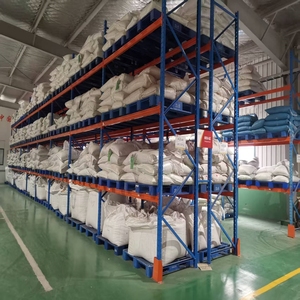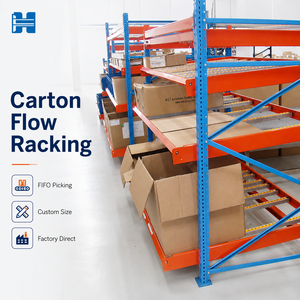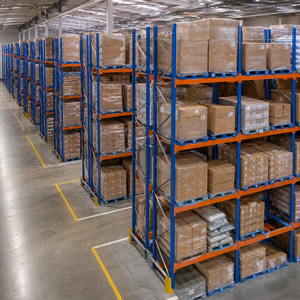
2000*500*2000mm Warehouse Racking Lightweight 100kg/layer Load Metal Assembled Storage Racking
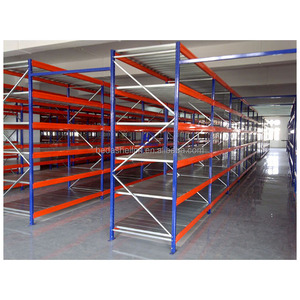
Boltless precision-formed steel structure configured for rapid multi-tier assembly, high-density light carton handling, and e-commerce picking lines.
Discover our certified range of industrial pallet racking, dynamic flow systems, and structural steel mezzanines manufactured under strict ISO 9001:2015 and CE quality standards.
Boltless precision-formed steel structure configured for rapid multi-tier assembly, high-density light carton handling, and e-commerce picking lines.
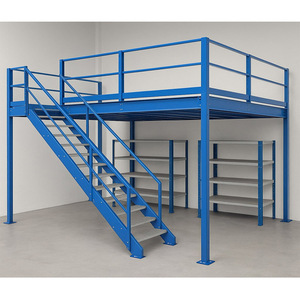
Heavy-duty structural mezzanine engineering, doubling usable cubic capacity with customized steel decking, stair towers, and integrated safety handrails.
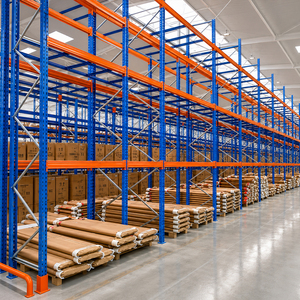
Standard 100% selective accessibility framework offering unmatched flexibility for fluctuating multi-SKU profiles, reach trucks, and counterbalance forklifts.
Heavy-duty manual picking solution built with stepped beams and steel or timber decks, ideal for automotive components, retail backrooms, and industrial parts.
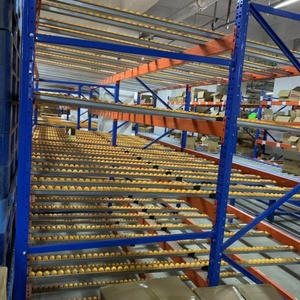
Gravity carton flow beds featuring high-density plastic rollers and aluminum tracks. Separates loading from order-fulfillment aisles for peak efficiency.
Standard North American teardrop connectivity profile designed for effortless interchangeability, extreme low-temperature cold store stability, and rapid deployment.
The gold standard in dynamic flow through pallet racking: inclined gravity roller tracks equipped with centrifugal speed controllers and load separators.
Robust structural cold-formed profiles engineered to hold heavy automotive dies, engines, stamping components, and irregularly dimensioned logistics bins.
Flow-through pallet racking, also designated as dynamic gravity flow storage, converts static warehouse volume into an automated FIFO conveyor system utilizing calibrated pitch physics rather than electricity.
The core operating principle of heavy-duty flow through pallet racking lies in controlled kinetic gravity propulsion. Steel beds set at a calibrated slope—typically between 1.5° and 2.5° (roughly a 3% to 4.5% drop)—allow standard pallets weighing between 500 kg and 1,800 kg to travel smoothly from the rear loading face to the front extraction face.
Without mechanical dampening, heavy pallets would achieve terminal velocity, triggering rack impact fractures, pallet splintering, and extreme hazard to forklift operators. Advanced flow racking avoids this through centrifugal magnetic or hydraulic brake rollers integrated directly along the track centerline.
For industrial lane depths exceeding 4 pallets (15 to 30 meters), brake rollers are positioned at intervals matching standard pallet depth (every 1 to 1.2 meters), ensuring pallet speed remains capped at an OSHA-compliant 0.25 to 0.3 meters per second.
Furthermore, an automated pallet separation mechanism (load separator) physically disengages the first pallet from subsequent pallets in the lane. This isolates back-pressure when a forklift picks up the front load, preventing the trailing pallets from binding or crushing forward prematurely.
| Structural Component | Engineering Specification | Operational Function |
|---|---|---|
| Upright Columns | Q235B / Q355B Steel (Omega profile) | Accommodates dynamic vibration & heavy vertical loads |
| Gravity Roller Tracks | Galvanized high-yield steel tube (Ø60/76mm) | Delivers smooth rollability without bearing seizure |
| Centrifugal Brake Rollers | Internal planetary gearing / Eddy current | Speed governor restricting travel to ≤0.3 m/s |
| Pallet Separators | Spring-loaded or pneumatic mechanical trip | Absorbs hydrostatic backpressure for effortless picking |
| Entry Funnels & Guides | High-visibility 5mm formed steel plates | Aligns miscentered forklift drops into track guides |
| End-Stop Dampers | Heavy elastomer / hydraulic shock buffers | Final position stop preventing lane derailment |
Eliminate power cables, automated stacker cranes, and battery-related downtimes. Gravity powers continuous First-In, First-Out throughput, ideal for perishables, dairy, pharmaceutical cold rooms, and date-sensitive fast-moving consumer goods (FMCG).
By eliminating internal access aisles, flow through pallet racking achieves space utilization rates upwards of 85%, reducing overall facility footprint and refrigeration operational overheads significantly.
Forklift replenishment activities occur exclusively at the charging aisle, while order picking is restricted to the discharge face. Zero cross-aisle traffic conflicts directly eliminate pedestrian and vehicle collision hazards.
How global supply chain volatility, regional seismic guidelines, and dark warehouse automation are transforming enterprise procurement specifications.
Modern mega-distribution hubs are phasing out manual counterbalanced forklifts in favor of Autonomous Guided Vehicles (AGVs) and Autonomous Mobile Robots (AMRs) with high-lift mast attachments. This transition places unprecedented demands on pallet flow racking manufacturers.
Legacy tolerances of ±10 mm at the picking face are no longer viable; robotic optical sensors require tight tolerances of ±2 mm for pallet positioning. Suppliers must now fabricate discharge end stops integrated with optical laser-reflector plates, ultrasonic presence sensors, and micro-switch interlocks that notify warehouse management systems (WMS) the instant a pallet completes its gravity roll.
With global cold chain logistics expanding at double-digit compound rates, demand for flow through pallet racking in sub-zero freezer environments (-25°C to -35°C) has surged. Procurement directors are actively moving away from standard electrostatic powder coatings, which can become brittle and micro-fracture under deep thermal cycling.
The emerging benchmark standard mandates continuous pre-galvanized high-tensile steel or hot-dip galvanization conforming to ISO 1461, combined with specialized synthetic polyalphaolefin (PAO) low-temperature bearing grease capable of operating smoothly down to -40°C without viscous lockup.
Historically, supply chain teams made purchasing decisions based purely on upfront steel weight and raw component FOB pricing. However, post-commissioning maintenance data from high-throughput FMCG hubs reveals that low-grade roller bearings, unhardened steel shafts, and weak roller brackets account for upwards of 45% of unexpected downtime within three operating years.
Contemporary global procurement contracts now insist on verifiable factory test reports documenting:
Suppliers capable of delivering factory-direct engineering dossiers, verified mill certificates, and finite element analysis (FEA) models command dominant authority in international tenders.
Navigating regional building codes, AS 4084 steel storage standards, NZS 1170.5 seismic regulations, and the shift toward intelligent predictive maintenance.
For installations throughout Australia, New Zealand, the Pacific Rim, and North America, seismic hazard co-efficients (Z-factor) dictate structural frame thickness, enlarged baseplate anchoring footprints, horizontal portal bracings, and seismic dynamic dampeners to prevent harmonic failure during ground motions.
Where lane depths stretch beyond 30 pallets (deep-bay buffer vaults), manufacturers are pioneering hybrid solutions: radio-controlled satellite shuttles deliver mother pallets to gravity flow lanes, combining extreme storage volume with localized FIFO order fulfillment lanes.
Next-generation pallet flow beds feature passive RFID or vibration monitoring on speed controllers. Facility managers receive automated maintenance alerts before a brake roller seizes, transitioning warehouses from reactive repairs to predictive maintenance schedules.
Guangzhou Heda Shelves Co., Ltd. combines over two decades of metallurgical precision with turn-key export engineering tailored to Oceania, Southeast Asia, the Americas, and Europe.
Established in 2001, Guangzhou Heda Shelves operates from a state-of-the-art 30,000 square meter manufacturing base staffed by over 300 technical engineers, robotic welding specialists, and logistics experts. We maintain an in-house monthly output of 30,000 metric tons of finished steel storage components.
Unlike trading intermediaries, we control every single link of the production chain: from raw high-strength Q235B steel coil slitting and automated CNC multi-station punching to cold roll-forming, automated robotic beam welding, acid pickling, phosphating, and electrostatic powder coating.
Each steel batch is traced directly to primary Chinese steel mills with certified yield and tensile test documentation.
Automated 3-claw and 4-claw connector welding ensures full penetration without cold joins or localized weld stress cracks.
Complex flow modules, speed controllers, and mezzanine components undergo complete mock trial-assembly before export crating.
Full preparation of Certificates of Origin under ChAFTA, RCEP, and New Zealand-China FTA for maximized duty savings.
Spectrographic & ultrasonic testing of hot-rolled steel coils.
High-speed slitting to exact section development widths.
Automated punch presses stamping 50mm/75mm pitch teardrop or diamond patterns.
24-stage roll-forming lines creating rigid upright omega sections.
Box beam twin-C profile roll welding for maximum torsion resistance.
Panasonic multi-axis robotic welders joining connectors to beams.
Complete 7-tank immersion pickling, degreasing, and zinc phosphating.
GEMA electrostatic automated powder line cured at 200°C for wear protection.
Calibration of internal dynamic speed governor resistance across batch test lanes.
Wrapped in protective foam, strapped to custom steel stillages for ocean container transit.
Expert answers addressing floor capacity calculations, pallet deflection tolerances, roller pitch algorithms, and deep-freeze logistics engineering.
Submit your warehouse layout parameters today. Our engineering team will deliver a fully calculated 3D CAD schematic, lane throughput analysis, and quotation within 24 business hours.