Top Trusted Industrial Warehouse Racking Systems Supplier & Exporters
Engineered Heavy-Duty Intralogistics Racks, Automated High-Density Storage Solutions, and Global Export Manufacturing Certified to CE & ISO 9001:2015 Standards
AS 4084 / FEM 10.2.02 / RMI Compliant
30,000 m² Factory Plant
30,000 Tons Monthly Capacity
Engineered Warehouse Storage Lineup
Factory-Engineered Industrial Pallet Racking & Multi-Tier Systems
From standard selective pallet aisles to multi-tier structural loft platforms and cold-chain radio shuttles, our heavy-duty steel systems deliver optimal volumetric density, uncompromised structural integrity, and tailored compatibility for global warehouse facilities.
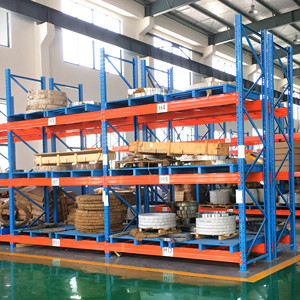
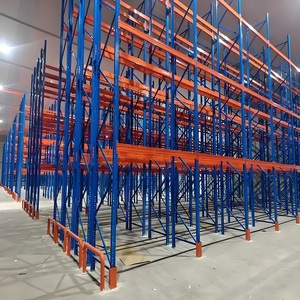
Precision-manufactured selective racking designed for standard counterbalance or Very Narrow Aisle (VNA) guide-rail setups. Offers direct 100% pallet accessibility, teardrop or 75mm/50mm pitch adjustment, and high-tensile interlocking box beams.
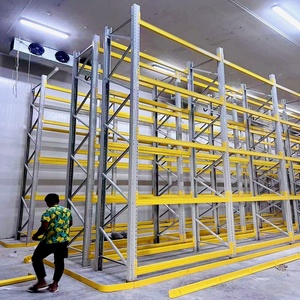
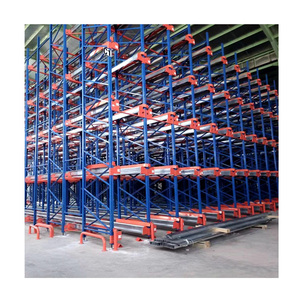
Ultra-dense deep-lane storage system powered by wireless radio shuttles running along specialized zinc-coated steel rails. Dramatically shortens forklift transit times and operates flawlessly within deep chillers and ambient distribution hubs.
Bespoke industrial racking engineered to non-standard pallet footprints, heavy industrial dies, raw materials, or specialized equipment. Custom punch profiles, special powder coat branding, and custom-welded baseplates built to exact structural schematics.
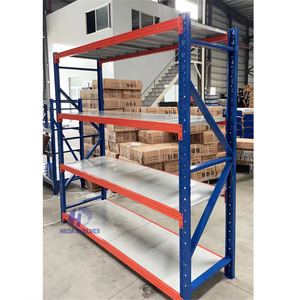
Modular boltless longspan steel shelving designed for manual parts consolidation, retail storage rooms, manufacturing plant work cells, and maintenance shops. Rapid slot-in assembly with durable cold-formed solid steel decking or wire mesh panels.
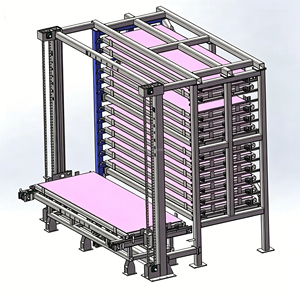
Specialized roll-out drawer storage system engineered for steel sheet packs, CNC laser cutting raw stock, heavy molds, and injection tooling. Features 100% extractable motorized or crank-operated drawers for fast, secure overhead crane access.
Cost-efficient high-density system storing pallets two deep in back-to-back configurations, eliminating 50% of the aisles needed by selective systems. Serviced by pantograph reach trucks to balance footprint utilization with SKU variety.
Floor Footprint: Eliminates every second aisle
Pallet Guides: Optional bottom floor lead-ins
Compatibility: Double-reach pantograph trucks
2001.
Year Established
30,000m²
Production Plant Floor
30,000T
Monthly Steel Output
10,000+
Global Projects Completed
Strategic Supply Chain Procurement
Industrial Racking Sourcing Trends: Total Cost of Ownership & Seismic Engineering
Modern warehouse procurement heads and supply chain direct buyers are shifting focus from base steel price-per-kilogram to lifecycle durability, structural resilience under geographic seismic codes, and modular upgrade pathways.
TCO vs. Initial CapEx Optimization
Procuring low-gauge steel racking often causes premature failure under daily forklift contact and dynamic loading cycles. Smart enterprise buyers analyze beam deflection ratios (demanding L/200 or stiffer standards), automated continuous seam welding, and high-durability electrostatic thermoset powders that resist corrosion in coastal or refrigerated zones.
Cold-Formed High TensileL/200 DeflectionCorrosion Barrier
Regional Structural Compliance Codes
International exporters must deliver calculations compatible with regional mandates: AS 4084 in Australia, NZS 1170.5 in New Zealand earthquake belts, FEM 10.2.02 in Europe, and RMI MH16.1 in North America. Rigorous static analysis accounts for ductility factors, floor anchor embedment shear, and column baseplate stress distribution under peak capacity.
AS 4084:2023 VerifiedNZS 1170.5 SeismicFEM Calculations
Direct-from-Manufacturer Engineering
Distributors and logistics operators are bypassing domestic trading middlemen. Direct factory partnerships deliver free 3D CAD modeling, custom-matched slot pitches, container-optimized loading bundles, full mill test certificates (MTC), and direct access to production engineers for swift layout revisions.
Free 3D CAD/BIMMill CertificatesDoor-to-Port Freight
Storage Architecture
Pallet Density Index
Selectivity Ratio
Forklift Compatibility
Throughput Velocity
Ideal Industry Use Case
Selective Pallet Racking
Standard (40–50%)
100% Immediate Direct Access
Standard Counterbalance / Reach
High Turnaround
3PL, FMCG, Multi-SKU Distribution
Double Deep Racking
High (60–65%)
50% Direct Access (2 Pallets Deep)
Pantograph Double-Reach Truck
Moderate Flow
Dry Goods, Staged Shipping Hubs
Drive-In / Drive-Thru
Ultra-Dense (70–80%)
Low (Last-In, First-Out Lane)
Counterbalance / Narrow Cab Reach
Batch Dispatch
Cold Storage, Agricultural Harvests
Radio Shuttle Racking
Maximum (85–90%)
High Lane Selectivity (FIFO/LIFO)
Standard Forklift (Rack-Aisle Only)
Rapid Automated
Beverage Processing, Chilled Storage
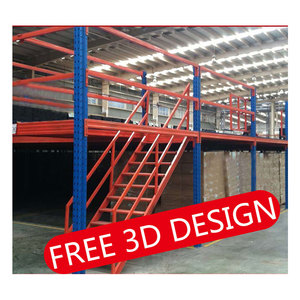
Rack-Supported Mezzanine
Vertical 200–300% Multiplier
100% Hand-Pick / Carton Pick
Order Pickers, Trolleys, Pallet Jacks
Continuous Sorting
E-commerce, Auto Spares, Apparel Hubs
Intralogistics Future Roadmap
Technological Trajectory: From Conventional Steel Racking to Hybrid AS/RS & Shuttle Systems
Industrial warehousing is undergoing an aggressive transition toward automated material handling. Discover how modern racking frames are engineered to integrate seamlessly with automated guided vehicles (AGVs), automated storage and retrieval machines, and intelligent warehouse software.
AGV & AMR Floor Integration
Modern selective and drive-in racks are now fabricated with reinforced lower upright leg wraps, magnetic floor target pathways, and raised bottom guide channels to accommodate autonomous mobile robots (AMRs) and automated forklifts without operational obstruction.
Laser Guided PathFloor Splice Protection
Sub-Zero Cold Chain Shuttle Automation
Cold storage facilities face exorbitant electrical expenses. Radio shuttle channels consolidate refrigeration cubic requirements by up to 60%, maintaining smooth battery performance down to -25°C while eradicating the high risk of mast collisions in zero-visibility conditions.
-25°C Rated Batteries60% Thermal Volume Saved
Full-Height Clad-Rack AS/RS
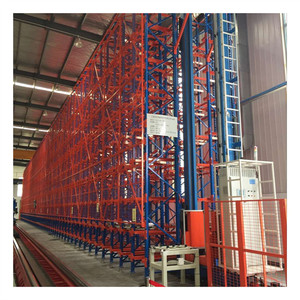
For operations exceeding 20 meters in clear roof height, clad-rack systems where the racking framework serves directly as the structural building skeleton eliminate conventional building structural columns, providing maximum footprint yield per square meter.
FEM 9.831 Clad RacksMaximum Height Density
Enterprise Advantage & Quality Control
Guangzhou Heda Shelves Co., Ltd. – Engineered Reliability Since 2001
Headquartered in Guangzhou with an advanced 30,000 square meter automated manufacturing base, HEDA Shelves deploys cutting-edge roll-forming mills, automated robotic welding, and an industry-leading 10-step metallurgical finishing pipeline ensuring all exported systems comply strictly with global engineering thresholds.
Step 01
Raw Steel Inbound QC
Certified Q235B and Q355B hot-rolled steel strip inspection with full metallurgical mill test validation.
Step 02
CNC Precision Slitting
High-tolerance coil decoiling and continuous shearing to exact strip widths under laser alignment.
Step 03
Continuous Punching
Automated punch presses stamping standardized 50mm, 75mm, or teardrop pitch patterns with 0.1mm accuracy.
Step 04
Cold Roll-Forming
Multi-stand continuous roll mills profiling high-rigidity Omega upright profiles and multi-fold box beams.
How does HEDA guarantee compliance with regional standards such as AS 4084, FEM 10.2.02, and RMI?
Our structural engineering department performs finite element modeling and static calculations matching the exact design codes of your jurisdiction. For Australian projects, beam and upright profiles are verified against AS 4084:2023 design standards, including ultimate limit state (ULS) load capacity, serviceability deflection limits (L/200), upright twist, and baseplate anchor tear-out values. We provide complete calculation packages and structural layouts so your local registered engineer (e.g., CPEng or RPEQ) can certify the installation with full confidence.
Can HEDA racking and mezzanine platforms withstand high seismic zones (e.g., New Zealand, Japan, US West Coast)?
Yes. When designing for seismically active regions, we incorporate site-specific seismic parameters (such as spectral acceleration factor, soil subsoil class, and ductility factor according to NZS 1170.5 or ASCE 7). We engineer heavy-duty diagonal back-bracing systems, heavy base plates with dual high-shear chemical anchors, stiffened beam-to-column connector claws, and reinforced row-spacer link arms to resist dynamic ground acceleration and prevent rack collapse.
What steel grades and mill certifications are provided with shipments?
We fabricate using certified prime hot-rolled and cold-formed coil steels, predominantly Q235B (yield strength ≥ 235 MPa, equivalent to ASTM A36) and Q355B (yield strength ≥ 355 MPa, equivalent to ASTM A572 Grade 50) for heavy structural columns and long-span mezzanine joists. Every export container includes original EN 10204 Type 3.1 Mill Test Certificates (MTC) documenting chemical composition, carbon equivalent, tensile strength, yield points, and elongation percentages.
How do you prevent maritime transit corrosion and pass stringent national biosecurity inspections?
All steel surfaces receive electrostatic thermoset powder coating (60–80 microns) with high scratch and salt resistance, or hot-dip galvanization for coastal environments. For ocean freight, components are bundled with waterproof stretch wrap and industrial-grade desiccant packs inside sealed shipping containers. To satisfy strict biosecurity rules (such as Australian DAFF and New Zealand MPI), we eliminate timber or strictly utilize ISPM-15 heat-treated, stamped bearers, or custom welded steel stillages that require zero chemical quarantine fumigation upon arrival.
What critical inputs are needed to generate a free 3D CAD warehouse layout and quote?
To deliver an accurate 3D CAD schematic within 24 hours, our engineering team requires: (1) Warehouse architectural floor plan (DWG/PDF) highlighting columns, doors, docks, and utility obstacles; (2) Clear internal stacking height under sprinklers or roof haunches; (3) Pallet specifications (Length × Width × Total Height including goods, e.g., Australian 1165×1165mm, Euro 1200×800mm, or US 48×40″); (4) Maximum gross weight per pallet; (5) Forklift fleet make, model, mast collapsed/lift height, and turning aisle requirement.
What are the standard lead times for manufacturing and international ocean transit?
Standard factory production lead time is typically 15 to 25 working days depending on order volume and whether specialized tooling or custom powder colors are required. Direct ocean shipping from South China ports (Guangzhou, Shenzhen, Nansha) to major global destinations typically takes: 12–18 days to Australia/New Zealand (Sydney, Melbourne, Auckland); 14–22 days to Southeast Asia & Middle East; 25–35 days to European main ports (Rotterdam, Hamburg); and 18–28 days to US West/East Coast.
Ready For Direct Factory Quotation
Request an Engineered 3D CAD Warehouse Layout & Export Cost Estimation
Connect directly with our senior intralogistics project engineers. We review your building schematics, SKU turnover profiles, and material handling fleet specifications to supply an optimized, standards-compliant layout and detailed Bill of Materials (BOM) within 24 hours.
Free 2D/3D DWG Layout Design
AS 4084 & FEM Structural Reports
Container Optimization Planning
OEM/ODM Private Label Production
Start Your Project Consultation
Our engineering support team is online 24/7 to receive your warehouse floor dimensions and specifications.