High-Performance Industrial Warehouse Shelving & Storage Systems
Explore our certified heavy-duty storage configurations designed for universal SKU handling, maximum volume utilization, and extreme static-dynamic loading stability.
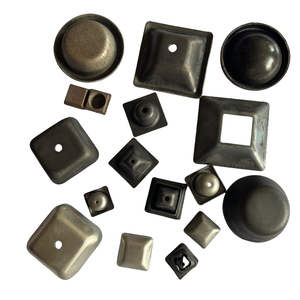
Best Quality Heavy Duty Round Stacking Steel Pallet Stillage Feet Stacking Racks Bottom Feet
- Cast & pressed Q235B high-tensile steel
- 4-way forklift interlock cup design
- Zinc galvanized / anti-corrosive finish
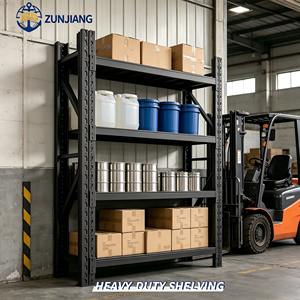
Factory Warehouse Storage Racks Adjustable 4 Tier Metal Shelving Units Heavy Duty Garage Shelves Racking
- 300kg – 800kg UDL uniform beam load
- Boltless butterfly/keyhole drop-in lock
- Cold-rolled steel deck or wire mesh panel
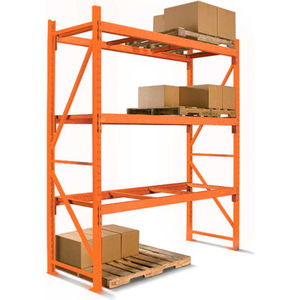
Heavy Duty Selective Pallet Rack Steel Beam Shelving Adjustable Stackable Storage System Galvanized Powder Coated
- 100% immediate selectivity for high SKUs
- Interlocking 3-4 prong connector claws
- 1,000kg – 4,500kg tier rating capacity
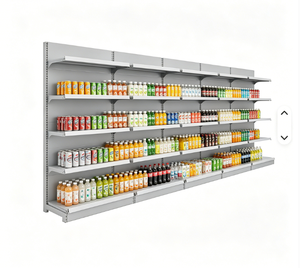
Wholesale Double-Sided Heavy Duty 4-6 Layers Metal Storage Shelf 100kg Layer OEM Supermarket Rack Modular Design China
- Dual-sided gondola retail/warehouse flow
- Electrostatic powder polymer finish
- 100kg/tier reinforced shelf brackets
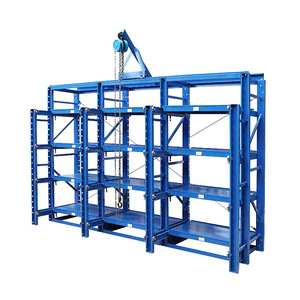
Fully Open Intelligent Mold Rack with Automatic Pull-Out System Heavy Duty Warehouse Stacking Rack for Injection Mold Storage
- Slide-out drawer units up to 2,000kg/tier
- Overhead crane / electric hoist ready
- Mechanical self-locking safety stops
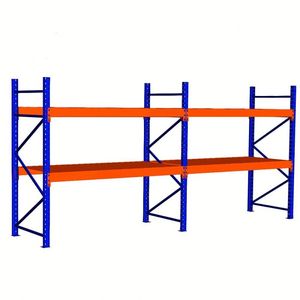
Industrial Steel Racks & Shelving System Heavy-Duty Adjustable Pallet Racking with Multi-Tier Shelves and Corrosion Protection
- Hot-dip galvanized & thermoset coating
- Seismic frame bracing per NZS/AS criteria
- Engineered for cool-rooms & coastal DCs
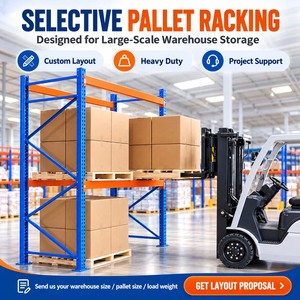
Custom Heavy Duty Pallet Racking System Industrial Steel Warehouse Storage Racks for Manufacturing Material Storage
- High-bay vertical clearance configurations
- Raw materials & bulk carton storage
- Heavy upright baseplates & M16 anchoring
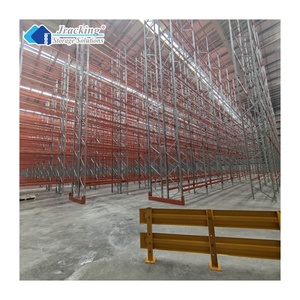
Jracking Heavy Duty Steel Warehouse Storage Rack System Customized AU Standard Pallet Racking For Factory Workshops
- Optimized for 1165 x 1165mm AU standard pallets
- Compliant with AS 4084-2023 design rules
- High-visibility powder-coated safety orange
Guangzhou Heda Shelves: World-Class Manufacturing Infrastructure
Behind every rack system is an automated, tightly monitored manufacturing ecosystem operating under strict ISO 9001:2015 and European CE structural certification.
Certified Quality Control & Traceability
Certified under CE Certification No. 2435-CPR-8605159 and ISO 9001:2015 No. 18624Q00169R0M (valid through June 2027). Every batch of hot-rolled structural steel undergoes mill test report verification (MTR), tensile testing, and chemical composition checks to ensure strict conformance with SS400, Q235B, and Q355B structural steel classifications.
Automated 10-Stage Precision Forming
From uncoiling to precision punching, our workshop integrates 10 continuous production phases: raw coil de-reeling, CNC high-speed perforating, multi-roll cold profile forming, laser cutting, automated robotic MIG welding, pre-treatment acid pickling, silane-based phosphating, electrostatic powder coating, curing tunnels, and biosecurity packaging.
Global Logistics & Biosecurity Readiness
Specialized export packaging built on heavy steel stillages or heat-treated timber compliant with ISPM-15 regulations simplifies international biosecurity inspections (including DAFF for Australia and MPI for New Zealand). Fast sea-freight routing connects our South China hub to Sydney, Melbourne, Brisbane, Auckland, Tauranga, and global gateways in 2 to 4 weeks.
HEDA Shelves eliminates procurement misalignment by delivering complete 3D warehouse layout simulations, structural aisle calculations, and pallet clearance analysis within 24 hours of receiving site blueprints. We calculate beam deflection limits at L/200, evaluate point floor loading constraints, and verify forklift turn clearances before steel hits the roll-forming lines.
Future Procurement Trends in Industrial Warehouse Shelving (2025–2030)
Procuring warehouse shelving is no longer a localized commodity purchase. Supply chain leadership must navigate dynamic automation integration, decarbonization mandates, and strict seismic engineering.
1. Shift Toward Hybrid "Automation-Ready" Racking Architecture
Modern distribution centers are rapidly transitioning away from rigid, single-purpose static shelving. Warehousing procurement directors now specify hybrid systems capable of immediate manual operation that can seamlessly convert to Autonomous Mobile Robot (AMR) navigation, automated guided vehicles (AGVs), or high-density semi-automated Radio Shuttle carts without replacing structural uprights. Beam connectors and aisle spacings are increasingly designed to standard modular depths (e.g., 1000mm, 1100mm, and 1200mm) with laser-guided track tolerances to support future material handling automation.
2. ESG Compliance, Green Steel, and Lifecycle Traceability
Institutional property owners and multinational corporations are demanding Environmental Product Declarations (EPDs) and low-carbon footprint transparency across their logistics hardware. Warehouse shelving procurement contracts increasingly stipulate electric arc furnace (EAF) steel coils, low-VOC or solvent-free electrostatic powder polymers, and closed-loop phosphating baths that treat and recycle process wastewater. Choosing a manufacturer that verifies chemical non-toxicity through RoHS standard adherence protects enterprise reputations against tightening supply-chain carbon taxation.
3. Total Cost of Ownership (TCO) Over Upfront Capital Expenditure
Procurement teams have moved beyond evaluating racking simply by "steel price per kilogram." Impact damage from heavy counterbalance and reach trucks constitutes up to 75% of ongoing racking maintenance costs. Sophisticated procurement specifications require factory-integrated column base protectors, heavy-gauge bottom upright stiffeners, wrap-around post guards, and high-impact ductile beam connection clips. Factoring in modular interchangeability and the availability of standardized replacement parts dramatically reduces 10-year life-cycle expenses.
| Storage System Type | Floor Space Utilization | Selectivity Profile | Forklift Compatibility | Ideal Application Sector | Relative Cost Index |
|---|---|---|---|---|---|
| Selective Pallet Racking | 40% – 50% Floor Density | 100% Direct Access | Universal Counterbalance / Reach | FMCG, 3PL Distribution, General Cargo | $ (Baseline Economical) |
| Drive-In Racking | 65% – 75% High Density | LIFO (Last-In, First-Out) | Narrow Counterbalance / Proportional | Cold Storage, Seasonal Harvest Batches | $$ (Moderate) |
| Radio Shuttle System | 80% – 88% Ultra Density | FIFO or LIFO Switchable | Standard Forklift (Does not enter lanes) | Beverage, Dairy, High-Volume Single SKU | $$$$ (Capital Automation) |
| Push-Back Racking | 60% – 70% High Density | LIFO (Gravity Cart Nested) | Standard Reach / Counterbalance | Bulk Pharmaceutical, High SKU Turnover | $$$ (Mechanical Dynamic) |
| Multi-Tier Mezzanine | 100% – 200% Overhead Gain | 100% Direct Manual Picking | Vertical Reciprocating Conveyor / Pallet Gate | E-Commerce Fulfillment, Auto Spare Parts | $$$ (Structural Engineered) |
Technological Evolution & Development Trends in Industrial Shelving
From passive structural steel to responsive, smart warehouse hardware—discover how metallurgical advancements and digital twin modeling are redefining racking integrity.
Finite Element Analysis (FEA) Structural Optimization
Modern cold-formed rack sections are no longer designed using static manual lookups. Advanced parametric FEA models simulate 3D torsion, second-order p-delta column deflections, seismic cyclic stress, and localized buckling under combined horizontal wind, building drift, and eccentric dynamic loads. This enables higher strength-to-weight ratios, saving substantial raw material mass while achieving superior structural safety factors.
IoT Load Monitoring & Collision Telemetry
Smart upright sensors are emerging across mission-critical high-bay logistics hubs. Thin-film piezoelectric strain gauges, integrated into lower upright channels and cross-bracing junctions, monitor localized overload conditions and record instantaneous impact shockwave signatures from forklift impacts. Wireless telemetry transmits alert triggers to warehouse management systems (WMS) prior to catastrophic structural collapse.
Advanced Anti-Corrosive Metallurgy & Nano-Polymers
In response to explosive growth in cold-chain grocery hubs (-30°C freezers) and aggressive coastal environments, manufacturers have developed continuous hot-dip galvanizing protocols paired with epoxy-polyester copolymer powders. These chemical barrier coatings resist micro-cracking during sub-zero thermal cycling, pass 1,000-hour ASTM B117 salt spray tests, and prevent moisture penetration at beam-end connector weld seams.
Structural Compliance: Engineering for AS 4084, EN 15512 & Seismic Criteria
Purchasing imported warehouse racking without verified engineering credentials exposes warehouse directors to severe legal liability, uninsurable stock damages, and failed council approvals.
Every commercial warehouse installation requires localized structural certification based on regional building codes. For operations across Australia, racking must strictly satisfy AS 4084 (Steel Storage Racking) requirements covering beam deflection limits (not exceeding length divided by 200), upright connector mechanical locking resistance, baseplate anchor design, and load application safety factors. In European jurisdictions, compliance with EN 15512 and FEM 10.2.02 governs testing protocols for beam-end connector moment-rotation curves.
For seismic regions—such as New Zealand (regulated under NZS 1170.5), the Pacific Rim, and active fault lines—racking operates structurally as an unbraced steel frame subject to severe lateral and vertical ground acceleration. Standard lightweight racking components cannot absorb seismic energy without buckling. HEDA Shelves engineers mitigate this by incorporating enlarged baseplates with heavy epoxy chemical anchors, heavy-gauge diagonal and horizontal frame bracings, reinforced box beams, and ductile portal ties that maintain rack stability during seismic excitation.
Frequently Asked Questions: Industrial Warehouse Shelving Procurement
Critical answers to technical, regulatory, logistical, and architectural questions encountered during commercial shelving acquisitions.
What critical warehouse data is required to generate an accurate 3D CAD racking layout?
To produce an optimized structural layout, our engineering team requires six architectural parameters:
1. Architectural Site Plan: DWG/CAD drawing or dimensioned PDF showing perimeter walls, column grid spacing, pedestrian egress doors, fire exits, and dock leveler locations.
2. Clear Ceiling Height: Lowest clearance point factoring in lighting fixtures, HVAC ducts, and fire sprinkler deflector heads.
3. Pallet Specification: Dimensions (Length x Width x Height including cargo overhang), type (e.g., Australian 1165 x 1165mm, Euro 1200 x 800mm, or US 48 x 40 inch), and pallet entry side.
4. Weight Load Profile: Maximum gross pallet weight and average unit load distribution (UDL).
5. Material Handling Equipment (MHE): Specific forklift make/model, mast collapsed height, maximum lift height, and minimum right-angle stacking aisle turning radius (AST).
6. Environmental Conditions: Ambient warehouse, chiller (0 to +4°C), deep freezer (-18 to -30°C), or outdoor yard application.
How does HEDA Shelves ensure compliance with Australian AS 4084 and New Zealand seismic standards?
Our engineering division designs storage racks using the cold-formed structural steel principles codified in AS 4084-2023 and AS/NZS 4600. We supply comprehensive structural engineering calculation packs, section property data (cross-sectional area, moments of inertia, and plastic modulus for upright profiles and beam boxes), and connector moment-deflection test tables. These documentation packs allow your local registered chartered professional engineer (CPEng) or certifier to verify site compliance smoothly and issue localized PS1/PS4 structural design producer statements in New Zealand.
What is the difference between standard powder coating and hot-dip galvanizing for industrial racking?
Electrostatic Powder Coating involves applying a 60–80 micron thick thermoset polyester/epoxy polymer cured in a 180°C–200°C convection oven. It provides superior surface aesthetics, impact resistance against pallet scrapes, and high visibility (e.g., Safety Orange and Ultra Marine Blue). It is ideal for internal, climate-controlled, dry warehouses.
Hot-Dip Galvanizing (HDG) involves submerging pre-cleaned steel components into a bath of molten zinc at approximately 450°C, producing a metallurgically bonded zinc-iron alloy layer (typically 70–100 microns). HDG delivers complete cathodic corrosion protection inside hollow tubes, roll-formed profile channels, and weld junctions. It is strictly specified for outdoor open-sided sheds, chemical washdown areas, fertilizer plants, and coastal facilities exposed to continuous ocean salt spray.
How are biosecurity (DAFF/MPI) clearance risks managed for sea freight exports?
Contaminated packaging or pest infestation can result in severe port fumigation delays, customs quarantines, or container re-export penalties. HEDA Shelves mitigates international biosecurity risks by packaging primary frames, beams, and pallet components directly onto custom heavy-duty steel stillages or ISPM-15 certified, heat-treated (HT) certified wooden dunnage with legible, authentic IPPC stamps. Every export shipment includes an exact bill of lading, detailed packing list with serialized piece counts, commercial invoice, and China-Australia (ChAFTA) / China-New Zealand preferential certificate of origin.
What structural safety factor and beam deflection ratios are used in production calculations?
Our engineering calculations employ a standard structural safety factor of 1.5 to 1.65 against raw steel yield failure under maximum rated static load capacity. Beam deflection limits under uniform distributed loads (UDL) are strictly engineered to not exceed L/200 (span length divided by 200) in compliance with international racking standards, preventing visual sag, pallet displacement, and weld fatigue.
Can existing warehouse racking systems be expanded or matched with HEDA components?
Yes. As an original equipment manufacturer (OEM/ODM) operating automated punch-press tooling lines, HEDA Shelves fabricates components compatible with mainstream global perforation teardrop styles, 50mm metric pitch, 75mm European pitch, and 76.2mm (3-inch) patterns. Clients can provide sample cross-sections or profile drawings to produce seamless expansion bays, replacement uprights, or supplementary beam levels.
Connect Directly with Our Racking Engineering Division
Send your warehouse floor plans or bill of quantities (BOQ). Our project engineering department will review your specifications, prepare a detailed 3D CAD configuration, calculate structural load capacities, and supply a competitive factory-direct quote.