Industrial Pallet Racking & High-Density Storage Solutions
Engineered for demanding logistic distribution centers, cold rooms, and automated material handling facilities. Each unit is precision roll-formed from premium certified structural steel.
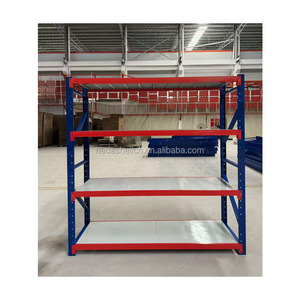
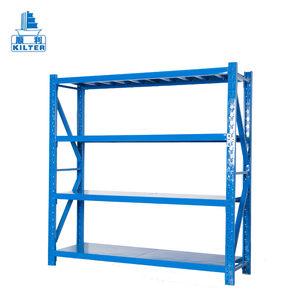
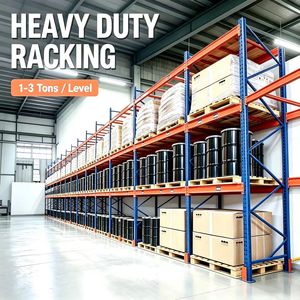
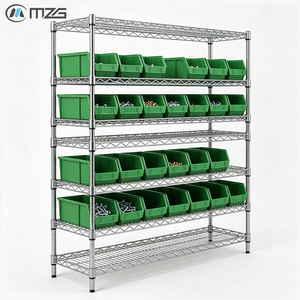
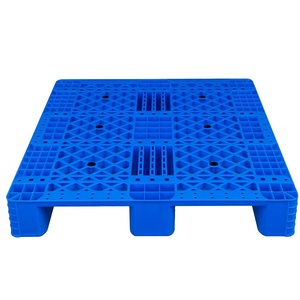
Guangzhou Heda Shelves Co., Ltd. - Global Intralogistics Manufacturing Excellence
Founded in 2001, Guangzhou Heda Shelves Co., Ltd. has grown from a specialized cold-rolled steel fabricating workshop into an internationally accredited supply-chain powerhouse. Operating out of our modern 30,000-square-meter manufacturing complex with over 300 experienced structural engineers, automated roll-forming technicians, and international project consultants, we engineer systems that maximize footprint return on investment.
Unlike trading intermediaries, Heda Shelves owns the entire quality-assurance supply loop: from coil slit testing, automated 600-ton CNC column punching, roll profiling, robotic welding of beam connector endplates, to closed-loop chemical pre-treatment (pickling and phosphating) and electrostatic automated powder-coating lines. Our manufacturing accuracy ensures that every batch matches structural load parameters certified under international safety codes.
Engineering Integrity & Risk Mitigation for Global Buyers
Offshore structural steel procurement presents real challenges in load compliance, seismic design, and port biosecurity. We engineer risk out of every stage:
Industrial Pallet Racking Architecture Comparison Matrix
Selecting an optimal warehouse racking typology requires evaluating space utilization factors, SKU rotation profiles, forklift fleet compatibility, and capital expenditure amortization.
| Racking Architecture | Space Efficiency | SKU Selectivity | Handling Speed | Inventory Protocol | Forklift Compatibility | Ideal Sector Application |
|---|---|---|---|---|---|---|
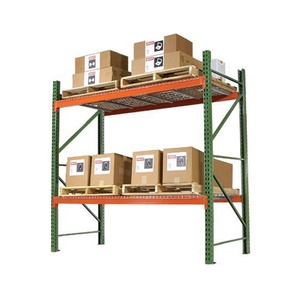
| Standard Selective | 40% - 50% | 100% Immediate | Rapid | FIFO / LIFO Flexible | Standard Counterbalance / Reach | 3PL Warehouses, FMCG, Retail Fulfillment |
| Double Deep Racking | 55% - 65% | 50% (Pair Stacked) | Moderate | LIFO | Pantograph / Deep Reach Truck | Dry Goods, High-volume Manufacturing Reserves |
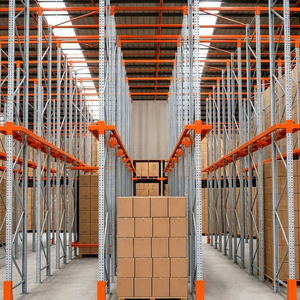
| Drive-In / Drive-Through | 70% - 85% | Low (Batch SKU) | Slow to Moderate | LIFO (Drive-In) / FIFO (Drive-Thru) | Specialized Narrow Counterbalance | Cold Storage Facilities, Beverage Bulk Distribution |
| Push-Back (Cart/Roller) | 65% - 75% | Moderate (By Lane) | High | LIFO | Standard Reach / Counterbalance | Perishable Goods with Controlled Expiration |
| Gravity Pallet Flow | 80% - 90% | Moderate (Per Lane) | Very Fast | Strict FIFO Guaranteed | Separated Loading & Picking Trucks | Food & Dairy Plants, Pharmaceutical Cold Chain |
| Radio Shuttle Automation | 85% - 92% | High Density Batch | Ultra-Rapid | Configurable FIFO / LIFO | Conventional Fleet + Semi-Auto Shuttle | Mega Cold Hubs, High-Volume E-Commerce Hubs |
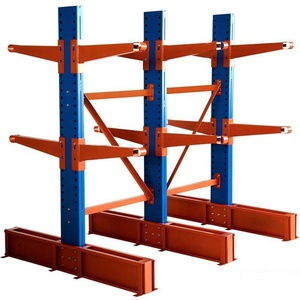
| Structural Cantilever | Variable (Linear) | 100% Unobstructed | Rapid | Direct Selective | Side-Loaders, Multi-Directional Trucks | Structural Timber, Extruded Aluminum, PVC Pipes |
Pallet Racking Global Procurement Trends: 2025–2030
As industrial land values rise and omnichannel delivery windows compress, global supply chain directors are rethinking how they specify and procure pallet rack infrastructure.
Vertical Cubic Density Optimization
Industrial real estate inflation across key hub corridors (Western Sydney, Auckland, Greater Los Angeles, Rotterdam) has made vertical expansion essential. Procurement is shifting from traditional 6-meter ceiling frames to ultra-high 12-to-16-meter VNA (Very Narrow Aisle) and multi-tier rack-supported mezzanine systems that capture overhead cubic capacity without increasing building footprint.
AMR & Automation Interoperability
Modern pallet racking is no longer static steel: it interfaces directly with Autonomous Mobile Robots (AMRs), Automated Guided Vehicles (AGVs), and stacker cranes. Procurement specifications now mandate strict beam-level deflection parameters (≤ L/200), laser-aligned plumb tolerances (±1.5mm), and specialized anti-bounce baseplates compatible with robotic optical navigation.
Extreme Corrosion Resilience
With cold-chain logistics expanding for perishable pharma and fresh foods, racking faces constant sub-zero condensation cycles. Procurement now prioritizes continuous-strip pre-galvanized uprights, hot-dip galvanized (HDG) outdoor cantilever racks, and anti-microbial epoxy polyester powder coatings that resist peeling and rust in high-humidity climates.
Turnkey Supply Chain Engineering
Global enterprise buyers are moving away from piecemeal sourcing. Procurement contracts increasingly require manufacturers to provide fully engineered kits: structural CAD stamping, verified load plaques, column impact protectors, mesh safety backstops, seismic anchors, and port-clearance biosecurity documentation under a single verified contract.
Next-Generation Technology & Manufacturing Developments
From advanced metallurgy to dynamic structural telemetry, the industrial storage manufacturing sector is experiencing rapid technological evolution.
High-Yield Cold-Formed Steel Chemistry
Through micro-alloying techniques with niobium and vanadium, modern Q355B and high-yield cold-rolled coils achieve greater yield strength without adding deadweight. This lets engineers design slimmer profile uprights (such as 90mm, 100mm, and 120mm cross-sections) that handle higher dynamic live loads under severe seismic acceleration.
- Lower dead load on concrete slabs
- Optimized sea freight container loading
IoT Structural Health Monitoring (SHM)
Next-generation rack installations feature wireless strain gauges and 3-axis accelerometer nodes embedded within critical baseplates and lower beam-to-column connections. These sensors detect forklift impacts, monitor continuous cumulative metal fatigue, and trigger maintenance alerts before micro-fissures cause upright failure.
- Real-time beam deflection warning
- Automated annual audit logging
Green Powder Coating & Circular LCA
Environmental standards now influence international supply chain contracts. Heda has upgraded its finishing line to closed-loop silane nano-film pre-treatments that replace heavy metal phosphating. This is combined with VOC-free electrostatic powder coatings that recover up to 98% of overspray, cutting the embodied carbon footprint per pallet position.
- RoHS and REACH compliant finishing
- Zero hazardous wastewater discharge
10-Stage Precision Manufacturing & Global Export Logistics
Every component produced in our Guangzhou plant undergoes rigorous quality checks before international container stuffing.
Spectrometry & Tensile Testing
Every steel coil undergoes chemical composition analysis and yield testing to verify raw material structural grades (Q235B/Q355B).
Automated CNC Roll Forming
Continuous progressive roll forming creates precision upright profiles with consistent web and flange tolerances across standard lengths up to 12m.
Robotic Connector Welding
Multi-axis automated welding cells bond beam connector claws with deep penetration welds, eliminating manual variance in structural joints.
Anti-Corrosion Surface Finishing
Multi-stage chemical pre-treatment followed by 200°C cured electrostatic thermosetting powder coating creates a resilient 60-80μm finish.
Load Deflection Verification
Batch test rigs apply hydraulic test loads to verify that beam deflection complies with the standard L/200 limit without residual deformation.
Pallet Frame Biosecurity Packing
Heavy upright frames and beams are secured in custom steel stillages or ISPM-15 heat-treated dunnage to speed up customs clearance.
Export Documentation Support
Complete documentation packages: Bill of Lading, Certificate of Origin (for ChAFTA/AANZFTA duty benefits), detailed packing lists, and mill test certificates.
Site Installation Support
Every frame assembly is delivered with 3D CAD placement blueprints, marked component tags, torque specifications, and remote engineering guidance.
Frequently Asked Questions by Industrial Sourcing Managers
Clear answers to technical, engineering, and logistics questions from warehouse operations directors and procurement teams worldwide.
How do you verify compliance with Australian AS 4084-2023 and European EN 15512?
Our engineering department designs and validates all selective and high-density racking using structural principles set out in AS 4084 (Steel Storage Racking) and EN 15512. For every project, we supply comprehensive static engineering calculations, section property data, and moment-rotation curves. This documentation gives local structural certifiers the exact load tables and deflection ratios they need to sign off on installation compliance.
Can your racking systems be engineered for high seismic activity zones?
Yes. We regularly supply racking to seismically active regions across New Zealand, the Pacific Rim, and the Americas. By analyzing site-specific spectral acceleration parameters (such as NZS 1170.5 or IBC requirements), we engineer reinforced upright column sections, heavy-gauge baseplates, enlarged M16/M20 chemical floor anchors, dual-plane back-bracing trusses, and heavy-duty row spacers that absorb cyclic dynamic forces safely.
What is the standard manufacturing lead time and ocean transit schedule?
Standard production lead time for orders of 1 to 5 forty-foot high-cube containers (40HQ) is typically 15 to 22 working days from CAD approval. Sea freight from our direct port loading berths in Guangzhou or Shenzhen to major Australian ports (Sydney, Melbourne, Brisbane) or New Zealand ports (Auckland, Tauranga) takes approximately 14 to 24 days, and roughly 18 to 28 days to the US West Coast or Southeast Asian ports.
How do you address biosecurity and timber packaging regulations (DAFF / MPI)?
To avoid container quarantines and costly onshore fumigation delays, Heda ships pallet racking on customized, reusable heavy-duty steel stillages or strictly certified ISPM-15 heat-treated and debarked timber bearers. All dunnage features IPPC heat-treatment certification stamps. Comprehensive fumigation certificates, packing declarations, and commercial documentation are submitted to your customs broker prior to vessel arrival.
What specific details are needed to generate a free 3D CAD warehouse layout?
To produce an optimized 3D layout within 24 hours, our engineering team requires: (1) An architectural warehouse CAD or PDF floor plan showing column grids, docks, and clear ceiling height; (2) Pallet specifications (standard Australian 1165x1165mm, US GMA 40x48", or Euro 800x1200mm) including maximum load overhang and height; (3) Maximum weight per pallet; and (4) Your forklift fleet's minimum aisle turning radius and maximum mast lift reach.
Do you support OEM and private-label contract manufacturing for regional distributors?
Yes. We act as an OEM and ODM production partner for racking distributors, material handling integrators, and storage installers worldwide. We can customize beam connector profiles (such as 50mm, 75mm, or 76.2mm 3-inch pitch teardrop connections), apply custom RAL brand colors, roll-form bespoke column perforations, and include private-label load capacity rating plates.
Transform Your Warehouse Cubic Capacity Today
Work directly with Heda's senior structural engineering team. Send your building floor plan to receive a complimentary 3D CAD storage density analysis, full static load calculation report, and a detailed factory-direct quotation within 24 hours.