Universal Selective
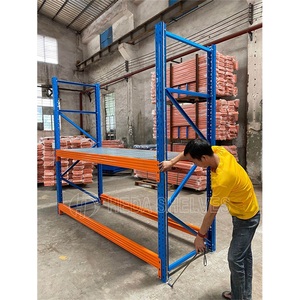
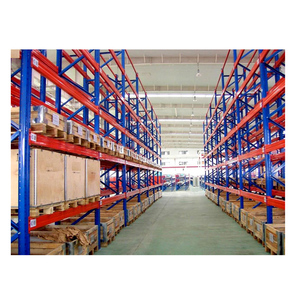
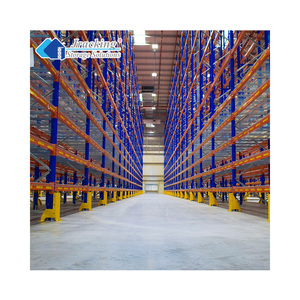
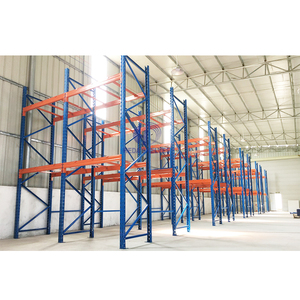
Heavy Duty Metal Pallet Storage Racking 1000kg-3000kg/Layer
- Load Capacity: 1000–3000 kg / Beam Level
- Steel Grade: High-Tensile Q235B Cold Coil
- Pitch Setting: 50mm / 75mm Adjustable
Explore our heavy-duty industrial warehouse pallet racks, fabricated with certified Q235B/Q355B structural cold-rolled steel, finite element analysis (FEA) testing, and micro-metric electrostatic powder finishes.
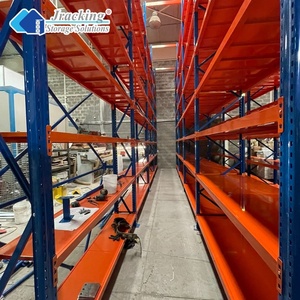

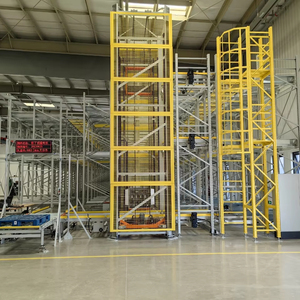
Founded in 2001, Guangzhou HEDA Shelves Co., Ltd. has grown into an international leader in structural logistics hardware, combining automated cold-roll profiling with strict structural adherence to global safety mandates.
Established & Innovating
Factory Infrastructure
Monthly Steel Processing
Specialized Engineers & Techs
Every beam section, upright column, and seismic footplate is calculated against yield stress and torsional load. We furnish comprehensive mechanical data packages, including load tables and FEA reports for engineering sign-offs worldwide.
Certified ISO 9001:2015 Quality Management System (Certificate No. 18624Q00169R0M) alongside verified Factory Production Control CE Certification (Certificate No. 2435-CPR-8605159). Fully tested for structural chemical stability and RoHS compliance.
From prime hot-rolled strip slitting and continuous multi-station cold roll-forming to automated CNC punch-pressing, robotic arm beam welding, acid pickling, phosphating pre-treatment, and automated Swiss Gema powder coating lines.
Full adherence to international phytosanitary constraints (ISPM-15 heat-treated certified timber or bespoke all-steel heavy-duty transport stillages). Our dispatch logistics prevent clearance bottlenecks with Australian DAFF, NZ MPI, and EU customs.
We configure pallet racking profiles to exact customer parameters: tailored column pitches (Dexion 76.2mm, teardrop, or metric 50mm/75mm), custom beam hook connectors, and special load spreaders for low-capacity industrial concrete slabs.
Our dedicated structural engineering team develops full warehouse layout simulations within 24 hours. We optimize working aisle dimensions (Aisle Width = Pallet Length + Forklift Turning Radius + 200mm safety clearance) for maximum cube utilization.
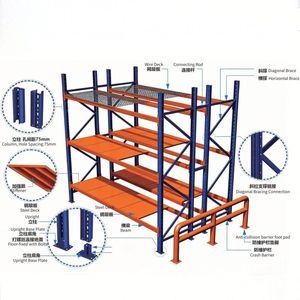
Pallet rack procurement requires evaluating raw mechanical characteristics, steel composition, deflection dynamics, and structural geometry to ensure occupational warehouse safety and long-term asset life.
| Component | Material Grade | Yield Strength ($f_y$) | Tensile Strength ($f_u$) | Dimensional Range | Standard Finish |
|---|---|---|---|---|---|
| Upright Columns | Q355B (High-Tensile) | ≥ 355 MPa | 470–630 MPa | 80×60 to 120×95 mm (1.8–3.0mm thk) | Pure Epoxy Powder (60–80μm) |
| Box Load Beams | Q235B Cold Strip | ≥ 235 MPa | 370–500 MPa | 80×50 to 160×50 mm Interlocking | Thermosetting Polyester (RAL 2004) |
| Frame Bracing (Horiz/Diag) | Q235B Roll-Formed C | ≥ 235 MPa | 370–500 MPa | C32×20 / C40×25 mm (1.2–1.5mm thk) | Galvanized or Powder Coated |
| Seismic Footplates | Structural Steel Plate | ≥ 275 MPa | 410–560 MPa | 120×100×6 mm to 200×180×12 mm | Hot-Dip Galvanized / Zinc Plate |
| Wire Mesh Decking | Cold-Drawn Steel Wire | ≥ 450 MPa | ≥ 550 MPa | Wire Ø 4.5–5.5mm; 50×100mm Pattern | Electro-Zinc Plating / Powder Coat |
Note: Deflection safety calculations follow the strict limits set by AS 4084-2023 and FEM 10.2.02. Maximum horizontal deflection is confined within δ ≤ H/500, while vertical beam load deflection is rigidly held to ≤ L/200 under maximum static load (UDL).
Corporate procurement teams are transitioning from viewing warehouse racks as static steel shelving to treating them as long-term strategic assets. These macro trends will dominate industrial racking sourcing through 2030.
Procurement directors are moving away from evaluating suppliers on initial purchase price alone. True TCO calculations now incorporate steel yield fatigue, damage replacement costs, finish durability against chipping, and floor anchorage integrity over 15 to 20 operational cycles.
Supply chain shocks have highlighted the risks of multi-tier middleman brokerages. Tier-1 enterprise 3PLs and logistics operators now prefer direct factory manufacturing contracts, securing dedicated mill roll-runs, guaranteed steel coil quality, and end-to-end trace documentation.
High-seismic zones across New Zealand (NZS 1170.5) and the US West Coast (RMI MH16.1), paired with hyper-humid tropical microclimates in coastal ports and cold stores, require region-specific configurations. The market is leaving generic 'off-the-shelf' imported steel behind.
Environmental, Social, and Governance (ESG) standards are influencing B2B warehouse tenders. Global distributors demand transparent certifications verifying zero-VOC epoxy-polyester coatings, non-toxic heavy metal pickling lines, and sustainably sourced secondary metallurgy.
Facilities are choosing manual selective systems engineered to integrate future automated technologies—such as radio shuttle carts, autonomous mobile robots (AMRs), and overhead automated guided vehicles (AGVs)—without full teardowns.
With escalating industrial wages for local staging crews, systems engineered for quick hook-engagement, pre-punched bracing sub-assemblies, and drop-in wire decks are replacing labor-intensive welded systems, trimming on-site assembly costs by up to 35%.
Modern distribution hubs require racking systems with tighter structural tolerances, greater vertical reach, and smart diagnostics. The racking industry is adapting through these four key engineering shifts.
Using advanced micro-alloyed steel coils like Q355B and specialized cold roll-forming lines, manufacturers can produce lighter upright profiles that support heavier static loads. Multi-bend profiling adds extra corners, creating stiffening ribs that resist localized buckling under vertical compression.
Next-generation installations are beginning to integrate optical fiber stress sensors and IoT strain gauges directly into critical upright columns and high-impact row ends. These sensors feed live deflection, load imbalance, and structural shock data into warehouse management platforms in real time.
Modern facilities are increasingly combining standard selective pallet racking with radio-shuttle high-density lanes. These hybrid setups allow high-turnover SKUs to clear aisles quickly while retaining selective access for slower-moving pallets elsewhere in the racking structure.
Direct technical answers to common questions about engineering validation, biosecurity clearance, international design standards, and factory customization.
Our engineers perform finite element analysis (FEA) on cold-formed profiles based on the specific load, pallet footprint, and clear height of each project. We supply complete mechanical properties, section moduli, yield certificates, and calculation packs for sign-off by your local structural engineer.
We avoid untreated timber that could cause issues with authorities like DAFF (Australia) or MPI (New Zealand). Racking components are shipped either on heavy-duty, reusable steel stillages or on ISPM-15 certified heat-treated timber bunks, complete with certified fumigation and phytosanitary documentation.
Typical factory production runs require 15 to 25 days depending on the project's tonnage and finish requirements. Transit times from our Guangzhou port facilities range from 12 to 18 days to Australia/NZ, 22 to 28 days to the US West Coast, and 28 to 35 days to European hubs.
Every component is engineered with a safety factor of 1.5 to 1.65 under uniformly distributed load (UDL), and beam deflection is capped at L/200. Mill test certificates (MTC) detailing yield, tensile strength, and elongation accompany every production batch for full steel traceability.
Yes. Our automated CNC punching machines can replicate standard 76.2mm Dexion configurations, US teardrop patterns, or European 50mm metric slots. This allows you to expand or retrofit existing racking bays without replacing uprights or beam connectors.
For standard temperature-controlled warehouses, our 60–80μm electrostatic powder coating provides strong impact and abrasion resistance. For cold storage down to -30°C, high humidity, or open coastal environments, we recommend hot-dip galvanizing per ISO 1461, providing 30+ years of rust protection.
To produce an optimized floor layout and quote, we need your building floor plan (including column grids and clear ceiling heights), pallet dimensions (W × D × H including overhang), maximum pallet weights, forklift make/model (turning radius and mast height), and target SKU totals.
For seismic zones (such as New Zealand's NZS 1170.5 or California's seismic categories), we widen the footplate footprint, increase steel gauge thickness, and anchor with high-tensile chemical or mechanical wedge bolts. Frame bracing geometry is also reinforced to handle cyclical lateral loads safely.
Send us your warehouse floor plan and pallet profiles. Our engineering team will deliver a comprehensive 3D CAD proposal, load table calculation, and competitive factory-direct quote within 24 business hours.