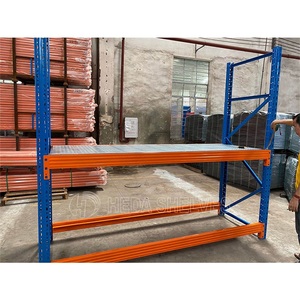
 1500kg / Tier
1500kg Per Layer Heavy Duty Shelves Storage Rack Warehouse Steel Pallet Racking System Industrial Racks
MaterialQ235B Steel
Pitch Adjustment50mm / 75mm
SurfaceEpoxy Powder
Manufactured with premium cold-rolled Q235B steel, modular beam pitches, and automated robotic welds. Explore our top 8 exported structural racking designs built for regional distribution centers, industrial workshops, and micro-fulfillment hubs.
1500kg / Tier
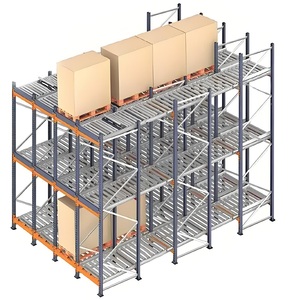 FIFO Flow
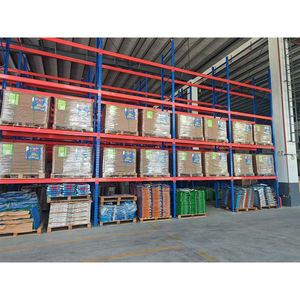 LIFO Density
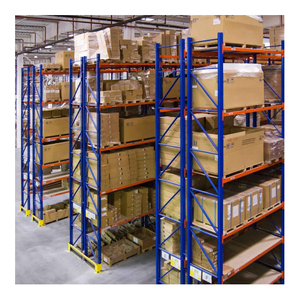 100% Access
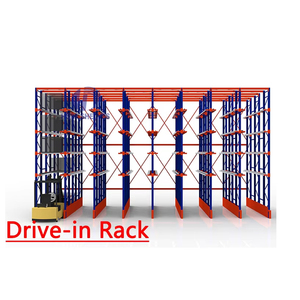 Cool Room Ready
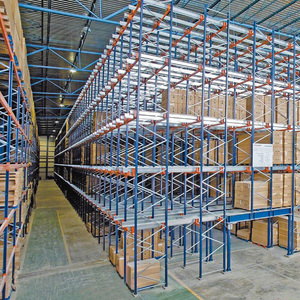 Automated Semi-AGV
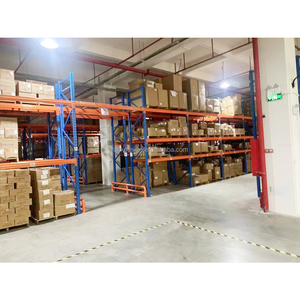 Reinforced Uprights
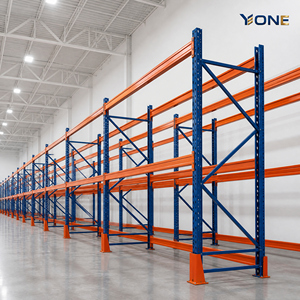 Freight Optimized
Evaluating cold-formed steel section properties, buckling mechanics, seismic design parameters, and space-utilization ratios for modern industrial micro-warehouses and urban fulfillment depots.
Small-to-medium pallet racks rely on cold-formed Omega and C-profile upright columns. Under vertical compressive loads, our engineers evaluate torsional-flexural buckling modes using finite element analyses (FEA) compliant with EN 15512 and RMI MH16.1 specifications. By introducing multi-bend stiffening ribs into the column webs and flanges, we improve cross-sectional moments of inertia ($I_x, I_y$) without inflating dead-load steel weights.
The beam-to-column connector is the critical shear-and-moment transfer interface. HEDA utilizes heavy-gauge welded claw brackets featuring 3-claw or 4-claw configurations that wedge securely into precision teardrop or diamond punching pitches. Every connection is secured with automatic spring-loaded steel locking pins rated for an upward dislodgement shear force of over 5.0 kN, eliminating accidental fork-truck tine disconnections.
For international supply across high-seismic zones—such as New Zealand (NZS 1170.5) or earthquake-prone rim zones—rack stability depends on baseplate stress distribution. We engineer oversized ductile baseplates anchored with M12–M16 high-tensile wedge anchors. Vertical uplift forces, base rotational stiffness ($K_\theta$), and horizontal shear forces are calculated to ensure the ductile deformation occurs in anchor elongation rather than catastrophic rack frame rupture.
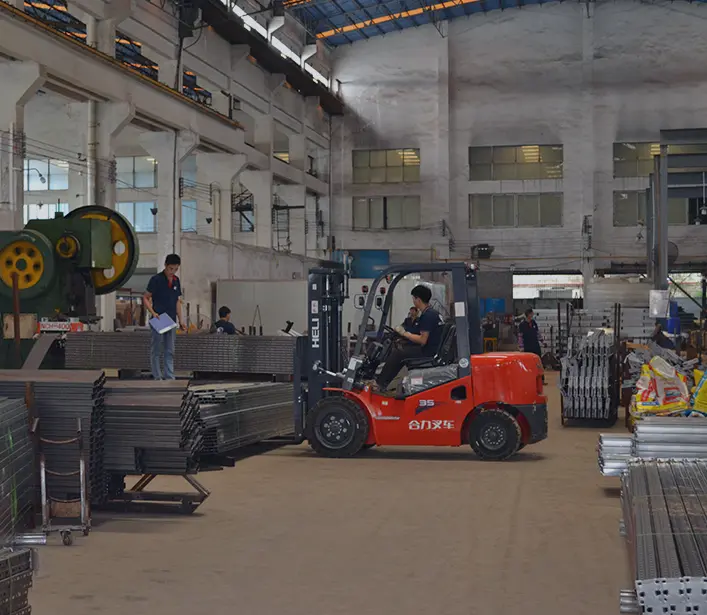
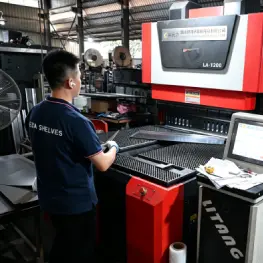
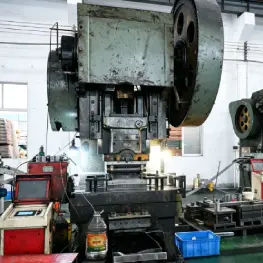
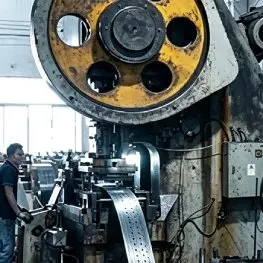
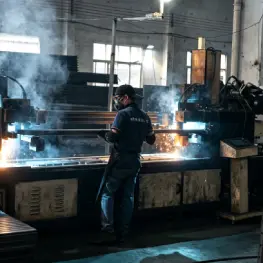
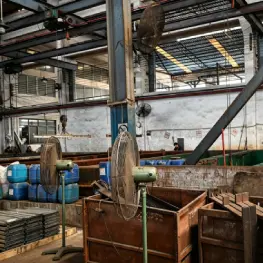
With 25 years of dedicated manufacturing expertise, Guangzhou Heda Shelves Co., Ltd. operates an integrated 30,000 m² production base staffed by over 300 experienced engineers, CNC machine operators, and international logistics specialists. We don't act as a broker; we engineer and fabricate raw steel coils directly into world-class pallet racking, longspan shelving, and structural mezzanines.
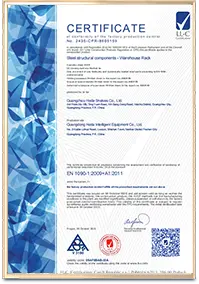
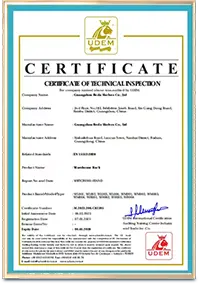
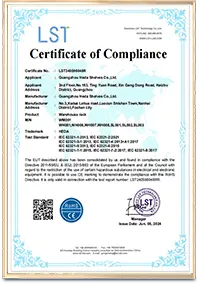
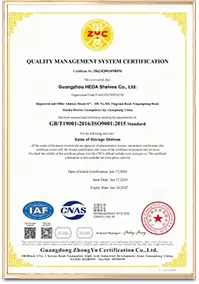
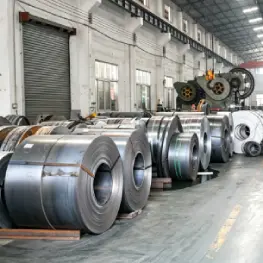
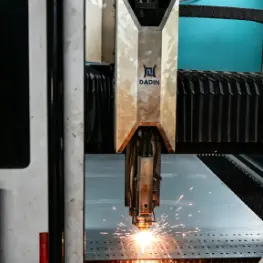
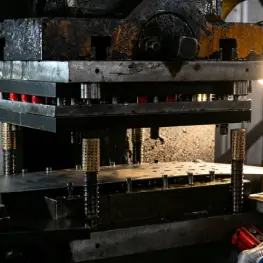
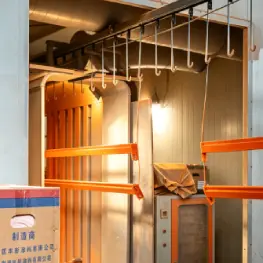
From prime Baosteel coil decoiling to 200°C thermoset powder curing, our in-house automated production line guarantees tight dimensional tolerances and zero micro-cracks in cold-rolled steel profiles.
Direct engineering comparison of spatial footprint, floor utilization efficiency, selectivity percentage, and capital expenditure across major industrial storage configurations.
| Racking Topology | Space Efficiency | Direct Selectivity | Rotation Principle | Ideal SKU Profile | Forklift Aisle Required | Automation Compatibility |
|---|---|---|---|---|---|---|
| Selective Pallet Racking | 40% – 50% Floor Use | 100% Direct Access | FIFO or LIFO | High SKU Variety, Low Volume | 2.8m – 3.5m (Counterbalance) | Manual / AGV |
| Drive-In / Drive-Through | 70% – 80% Floor Use | 20% – 30% Limited | LIFO (FIFO with Drive-Thru) | Bulk Uniform Stock, Low SKU Count | Continuous Channel Access | Standard Reach |
| Gravity Pallet Flow | 75% – 85% Floor Use | Lane Facing Only | Strict FIFO (Gravity Incline) | Perishable Goods, High Turnover | Separate Load & Pick Aisles | Conveyor / AMR |
| Radio Shuttle Automation | 80% – 90% Floor Use | Channel Selectivity | Flexible FIFO & LIFO | Cold Storage, High-Volume Batches | Single Front Access Aisle | Semi-Autonomous |
| Rack-Supported Mezzanine | 150% – 200% Usable Space | 100% Manual Hand-Pick | Batch / Multi-Tier Flow | E-commerce, Auto Parts, Spare Units | Walkway Corridors (1.0m – 1.2m) | Spiral Lift / AMR |
How micro-fulfillment economics, autonomous robotic fleets, high-strength micro-alloys, and digital twin engineering are reshaping commercial storage procurement strategies worldwide.
Surging commercial rents near metropolitan centers are forcing logistics operators to abandon sprawling distribution centers in favor of compact urban infill facilities. Small pallet racking systems equipped with vertical expansion capabilities allow operators to leverage clear ceiling heights up to 12 meters within a modest 500 to 2,000 m² footprint. The demand for modular, bolt-together selective frames that can be reconfigured or relocated with zero structural scrapping has surged by over 42% year-on-year.
Forklift operator shortages have accelerated the deployment of Autonomous Mobile Robots (AMRs) and Automated Guided Vehicles (AGVs). Modern pallet rack uprights require tighter fabrication tolerances (down to $\pm 1.0$ mm over 6-meter vertical upright runs) to ensure AGV optical scanners and laser positioning sensors maintain precise guide-path triangulation. Bottom shelf levels increasingly integrate elevated guide rails, run-in cones, and laser-reflective target apertures.
Procurement teams no longer wait weeks for static architectural drawings. Enterprise buyers expect native Autodesk Revit (.RVT) and 3D DWG BIM assets during initial feasibility reviews. HEDA Shelves provides parameter-rich 3D digital twins showing spatial clearances, fire sprinkler penetration flue spaces (NFPA 13 compliance), forklift turning radii, and exact pallet weight distribution curves within 24 hours of receiving site dimensions.
Comprehensive technical, structural, regulatory, and shipping answers compiled by our chief structural engineers for overseas warehouse operators, importers, and EPC contractors.
To design an engineered system compliant with local building codes, our engineering team requires: (1) Architectural floor plan indicating clear building height under trusses, fire sprinklers, and overhead lighting; (2) Concrete slab specification (thickness, compressive strength $f'_c$, and rebar reinforcement layout); (3) Pallet specifications including overall dimensions ($W \times D \times H$), load overhang, and maximum pallet gross weight; (4) Material handling equipment (forklift make/model, mast collapsed height, maximum lift height, and minimum right-angle stacking aisle width); (5) Project site geographical location to calculate seismic coefficients and wind/coastal corrosion allowances.
Our structural design team references AS 4084:2023 (Steel storage racking) and European standard EN 15512. We provide comprehensive structural documentation, including sectional modulus tables, steel yield strength certificates (Q235B / Q355B), moment connection test reports, and beam deflection calculations. For New Zealand installations, we perform seismic calculations referencing NZS 1170.5 based on site soil class, annual probability of exceedance, and ductility factors ($k_\mu$), specifying reinforced baseplates, heavy duty anchors, and spine cross-bracing for sign-off by locally registered Chartered Professional Engineers (CPEng).
Standard ambient warehouses use our electrostatic epoxy-polyester copolymer powder coating line cured at 180°C–200°C (dry film thickness 60–90 $\mu$m) after a 9-stage phosphate wash. For sub-zero freezers (down to -30°C), we employ specialized low-temperature polyurethane powder formulations that resist embrittlement and cracking under thermal contraction. For high-humidity coastal zones (e.g., Pacific Islands, Queensland) or outdoor canopies, we supply hot-dip galvanized uprights and beams compliant with ISO 1461, providing minimum 65–85 $\mu$m zinc coating for decades of rust resistance.
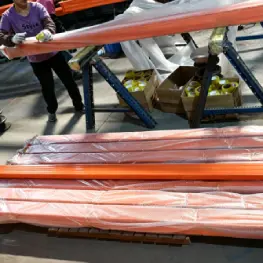
Ocean freight imposes severe vibration, container sweat, and handling stresses. Upright frames are nested with corrugated separator pads and strapped into robust heavy-gauge structural steel stillages, allowing fast forklift unloading without component scratching. Smaller parts, bolts, and baseplates are packaged in steel-banded crates using ISPM-15 heat-treated wood with clear IPPC certification markings, fully meeting the stringent biosecurity and quarantine standards of Australia's Department of Agriculture, Fisheries and Forestry (DAFF) and New Zealand's Ministry for Primary Industries (MPI).
Standard custom manufacturing runs take approximately 15 to 25 working days from approval of engineering CAD drawings. Sea freight from South China (Guangzhou/Nansha/Shenzhen ports) takes approximately 12–18 days to Australian East Coast ports (Sydney, Melbourne, Brisbane), 18–24 days to New Zealand (Auckland, Tauranga), and 20–30 days to Pacific island destinations. We handle complete documentation sets: Commercial Invoice, Packing List with piece marks, Bill of Lading, Certificate of Origin (benefiting from ChAFTA / bilateral free trade agreements), and detailed container stuffing loading diagrams.
Yes. If modular expansion is anticipated, our engineers design upright frames with sufficient cross-sectional reserve capacity and factory pre-punching for mezzanine joist connectors. When you are ready to expand, secondary steel beams, floor joists, staircases, and grating or plywood decking can be integrated directly onto the upright posts without requiring separate structural columns, effectively doubling usable storage square footage with minimal building permit overhead.
Send us your warehouse dimensions, clear height, and pallet parameters. Our engineering department will generate a high-density 3D layout, load calculation tables, and a transparent factory-direct quotation within 24 hours.