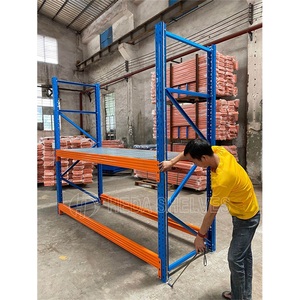
 1,000–3,000 kg/Level
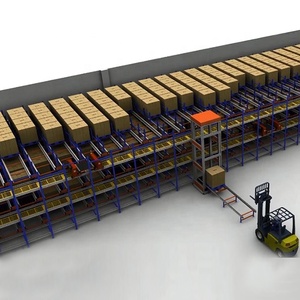 Semi-Automated
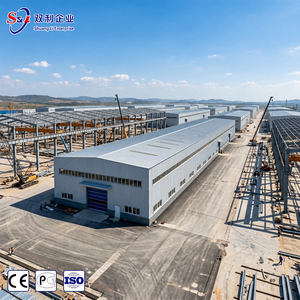 Multi-Tier Integrated
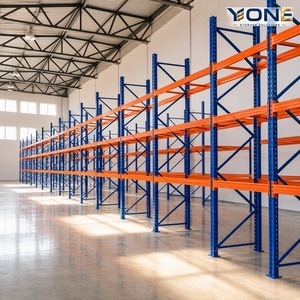 Selective 100% Access
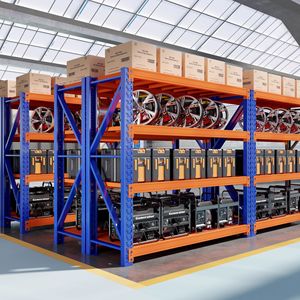 Corrosion-Resistant
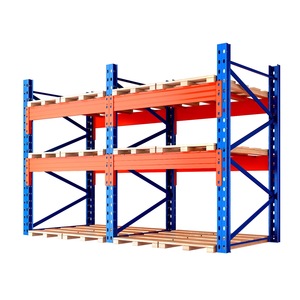 High-Density Cold Store
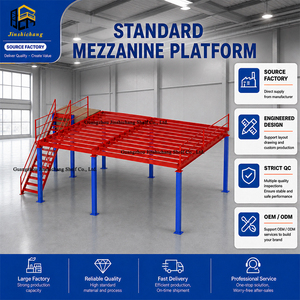 Structural Mezzanine
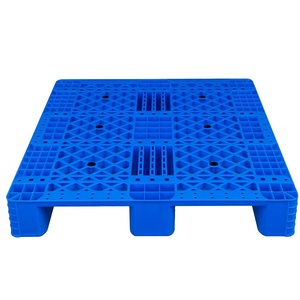 Automated AS/RS Pallet
Engineering High Bay Racking Systems: China Manufacturing & Italian Industrial Synergy
High-bay racking systems (magazzini verticali autoportanti e ad alta densità) extending beyond 20 to 45 meters in clear ceiling height represent the pinnacle of structural logistics engineering. Sourcing such high-bay infrastructure requires harmonizing world-scale cold-formed steel manufacturing with European geotechnical, kinematic, and anti-seismic standards.
Clad-Rack Autoportante vs. Building-Supported
In clad-rack (autoportante) structures, the racking frames themselves form the primary load-bearing skeleton supporting roof trusses, insulated sandwich wall cladding, wind loads, and snow loads under Eurocode 1 (EN 1991). Building-supported high bays integrate within pre-existing industrial warehouses, demanding strict deflection limitation tolerances (EN 15620 Class 100 to 300) to ensure continuous, millimeter-precise stacker crane (trasloelevatori) kinematic clearances.
- Eliminates dedicated warehouse building column networks
- Optimizes land footprint by achieving up to 88% volumetric density
- Requires structural base-plate FEA modeling anchored to concrete rafts
Seismic Design: UNI EN 16681 & Italian NTC 2018
Italy possesses one of Europe’s most complex seismic topographies, categorized under the seismic hazard classifications of the Italian Technical Building Code (NTC 2018). High-bay installations in seismically active regions such as Friuli, Emilia-Romagna, and Umbria cannot rely on standard static assumptions. Beam-to-column semi-rigid connection moment-rotation curves, P-Delta secondary effects, and ductilities must be strictly validated.
- Dynamic response spectrum modal analysis under peak ground acceleration ($a_g$)
- Over-strength design of upright column splices and floor base anchors
- High-ductility steel grades (Q355B / S355JR) engineered to absorb seismic shear
Automated Kinetic Tolerance: FEM 9.831 & EN 15620
Automated high-bay warehouses operating with unmanned stacker cranes, autonomous mobile robots (AMR), and multi-deep pallet shuttles require micro-tolerances. While conventional reach-truck selective racking allows deflection limits of $L/200$, automated high bays must comply with Class 100/200 criteria where upright plumbness and rail straightness deflections are restricted to less than $L/500$ to avoid optical sensor misalignment.
- Continuous cold-roll continuous forming without residual twisting stress
- Multi-point beam connection locks with 5-claw high-tensile safety pins
- Precision guidance top-rails for high-speed automated crane stabilization
Bridging Chinese Heavy Manufacturing with the Italian Industrial Fabric
Procuring high bay racking systems is no longer a binary choice between domestic Italian suppliers and direct Asian manufacturers. Forward-thinking logistics managers, 3PL giants, and engineering EPC contractors leverage a hybrid model: sourcing precision heavy steel structures and automated rack modules from Tier-1 Chinese manufacturing powerhouses while fulfilling local Italian engineering certification, site assembly, and third-party static testing (Collaudo Statico).
| Evaluation Parameter | Tier-1 China Manufacturer (e.g., Guangzhou Heda) | Traditional Italian Domestic Manufacturer | Hybrid Strategic Procurement Model |
|---|---|---|---|
| Manufacturing Scale & Steel Throughput | Massive automated capacity (30,000+ tons/month), direct procurement from mega-mills (Baosteel/Ansteel). | Flexible, boutique-to-medium rolling capacity (1,500–5,000 tons/month), subject to European coil price volatility. | Optimal CAPEX: Base structural components manufactured in China; specialized items sourced locally. |
| Cost per Pallet Position (Indicative) | €45 – €85 / position (Selective to High-Density Shuttle, FOB/CIF). | €110 – €220 / position (Fabricated domestically with European overheads). | 35%–48% net project cost reduction inclusive of maritime freight and duties. |
| Structural Engineering Standards | GB 50017 with full engineering adaptation to Eurocode 3, EN 15512, and CE CPR compliance. | Native familiarity with NTC 2018, UNI EN 16681, and local municipal seismic verifications. | Full Compliance: Chinese factory generates 3D CAD/FEM; Italian PE provides structural sign-off. |
| Lead Time & Supply Chain Resilience | 4–6 weeks high-volume fabrication + 28–35 days sea freight to Genoa/Trieste/La Spezia. | 12–20 weeks domestic backlog due to European energy and raw steel quotas. | Balanced rolling schedules matching civil concrete curing timetables on Italian jobsites. |
| Surface Treatment & Durability | Automated pre-treatment pickling, phosphating, continuous electrostatic epoxy powder line (70–90μm). | High-quality electrostatic powder coating; hot-dip galvanizing per ISO 1461. | Guaranteed 10-year anti-corrosion performance across industrial and refrigerated environments. |
Localized Industrial Use Cases Across Italy's Economic Corridors
From the dense logistics crossroads of Lombardy and Emilia-Romagna to the intermodal hubs along the Adriatic and Tyrrhenian coasts, storage requirements demand engineered localization tailored to specific operational sectors.
Agri-Food & Temperature-Controlled Cold Storage
Producers of Parmigiano Reggiano, cured meats, and temperature-sensitive dairy in Parma, Reggio Emilia, and Modena require high-density refrigerated racking capable of operating continuously at temperatures down to -30°C. High bay radio-shuttle and gravity flow systems maximize expensive cubic refrigeration volume while minimizing thermal loss channels.
Automotive, Machinery & Heavy Tooling Warehousing
The manufacturing hubs of Brescia, Bergamo, and Vicenza manage high concentrated loads of dies, engine blocks, and hydraulic assemblies. Selective heavy-duty pallet racks and cantilever systems configured with up to 4,500 kg per beam level ensure instant selective access for lean JIT (Just-in-Time) assembly supply lines feeding Northern Italy's precision industrial equipment builders.
Omnichannel E-Commerce & Fashion 3PL Centers
Operating as southern Europe's distribution spine, logistics centers handling luxury fashion, footwear, and consumer electronics demand multi-tier mezzanine floors integrated directly into high-bay selective racking. High picking speeds and high SKU diversity are enabled through integrated carton flow beds, anti-collapse rear security mesh, and ergonomic pick shelves.
Intermodal Freight Villages & Cross-Dock Terminals
Intermodal terminals linking trans-Alpine rail traffic with Mediterranean maritime shipping through Genoa and Trieste require heavy, ultra-durable storage capable of handling unpredictable freight rotations. Automated AS/RS clad-rack high bays and push-back cart racks maximize pallet throughput with minimal human footprint in high land-cost rail corridors.
Guangzhou Heda Shelves: 10-Step High Bay Manufacturing Pipeline
Every high-bay upright column and load-bearing beam shipped to European project sites undergoes rigorous in-house metallurgical testing, automated roll forming, and robotic surface treatment under ISO 9001:2015 and CE certification protocols.
Raw Steel Inspection
Spectrometric testing of prime structural Q235B and Q355B hot-rolled steel coils, verifying yield and elongation limits.
CNC Slitting & Cutting
High-speed slitting lines cut wide master coils into exact ribbon widths with ±0.1mm dimensional tolerance.
Automated CNC Punching
Continuous hydraulic punch presses create proprietary teardrop or 75mm diamond pitch slot configurations.
Cold Bending Forming
Multi-stage precision cold-forming dies fold steel profiles, preventing micro-fractures along profile radii.
Continuous Roll Profiling
24-station automated roll-forming line manufactures complex omega-shaped uprights up to 14 meters continuous length.
Mechanical Polishing
Automated shot-blasting and mechanical surface finishing eliminate sharp burrs, rolling scale, and micro-impurities.
Robotic Laser Welding
Panasonic multi-axis robotic welding cells attach beam connectors, ensuring uniform throat thickness and zero slag.
Pickling & Phosphating
Comprehensive 7-stage chemical pre-treatment and immersion bath sequence provides superior powder adhesion and rust resistance.
Electrostatic Coating
GEMA automatic powder spray booths apply 70–90μm thermosetting epoxy-polyester coatings, cured at 200°C.
Load Testing & Packing
Random destructive batch testing, seismic section property checks, and ISPM-15 export steel-cradled bundling.
Frequently Asked Questions by Italian Engineers & Buyers
Clear engineering and regulatory answers regarding the direct import, seismic certification, European customs, and turnkey installation of high bay racking systems in Italy.
How does Chinese-manufactured racking satisfy Italian NTC 2018 and seismic safety requirements?
Under the Italian Technical Building Code (NTC 2018 - Norme Tecniche per le Costruzioni) and UNI EN 16681, industrial storage racking is classified as an independent structural entity requiring formal seismic verification. We supply Italian project developers and structural engineers with full structural calculation packages, including certified section moduli ($W_x, W_y$), moments of inertia ($I_x, I_y$), yield strengths, and beam-to-column rotational stiffness test curves ($C_d$).
A locally registered Italian structural engineer (Ingegnere Strutturista iscritto all'Ordine) utilizes our data package to model ground acceleration values ($S_a, a_g$) specific to the facility’s geographic coordinates, verifying base plate anchors and issuing the mandatory statutory static inspection certificate (Certificato di Collaudo Statico).
Does your racking possess CE Marking under EN 1090-1 and the EU Construction Products Regulation?
Yes. Guangzhou Heda Shelves Co., Ltd. holds CE certification (Factory Production Control Certificate No. 2435-CPR-8605159) and complies with ISO 9001:2015 management standards. For clad-rack autoportante high-bay warehouses categorized as primary steel buildings, fabrication adheres to EN 1090-2 Execution Class 2 (EXC2) or Class 3 (EXC3) quality standards, providing complete traceability from raw material ladle analysis to final powder-coating cure reports.
What is the standard shipping lead time from Guangzhou to Italian deep-sea ports?
Production cycles for average high-bay systems (1,000 to 10,000 pallet positions) typically span 25 to 35 business days. Maritime container shipping from our deep-water loading berths in Nansha or Yantian directly to Italian gateway ports—such as Genoa (Genova Pra'), La Spezia, or Trieste—ranges from 28 to 35 days under normal Mediterranean routing.
Consignments are loaded into 40ft High Cube (40HC) containers secured with custom heavy steel stillages, avoiding wood packaging biosecurity hurdles and enabling direct forklift slip-sheet unloading at Italian warehouse docks.
Can your high bay systems integrate seamlessly with Italian AS/RS stacker crane suppliers?
Yes. Many high-bay projects in Europe combine our high-precision structural steel frames with automated stacker cranes (trasloelevatori) and shuttles manufactured by Italian and European intralogistics system integrators (such as System Logistics, Elettric80, Automha, or Swisslog). We produce strictly to European DIN EN 15620 Class 100/200/300 tolerance matrices, supplying mounting brackets for guide rails, bus-bar electrical tracks, and optical positioning reflectors.
How are EUR-EPAL standard pallets accommodated in high-bay beam calculations?
In Italy, the predominant logistics unit is the standard EUR-EPAL 1 (800 × 1200 mm) pallet and the EUR-EPAL 2 / industrial pallet (1000 × 1200 mm). High bay beam lengths are engineered specifically to accommodate two (1800 mm / 2300 mm clear entry) or three (2700 mm / 3600 mm clear entry) pallets per bay while adhering to EN 15620 clearance margins (75 mm lateral separation and 100 mm vertical lift clearance) to prevent automated stacker collisions.
What import documentation is required for clearance through Italian Customs (Dogana)?
We provide Italian customs brokers and freight forwarders with a comprehensive documentation portfolio: detailed Commercial Invoices, itemized Packing Lists with piece-marked container manifests, original Ocean Bills of Lading (B/L), Mill Test Certificates (EN 10204 3.1), and Certificates of Origin under TARIC code 730890 (Structures and parts of structures of iron or steel).
Request an AS/RS or High Bay Layout & Engineering Consultation
Plan your high-bay warehouse with technical confidence. Submit your building parameters, pallet load dimensions, and storage throughput targets, and our structural engineering team will deliver a comprehensive 3D CAD proposal within 24 to 48 hours.
- Complete 3D CAD & BIM Floor Layouts
- Seismic Load Tables for Italian Municipal Filing
- Comparative ROI & Pallet Density Analysis
- Delivered CIF Genoa / La Spezia / Trieste Pricing
Connect with an Engineer
Instant direct communication with our senior logistics structural specialists.
Get a Quote