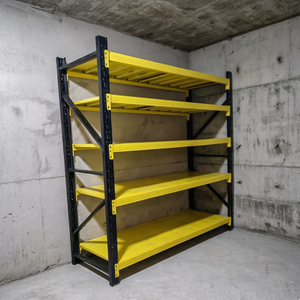
Factory-Engineered Catalog
Heavy-Duty Pallet Rack Supported Mezzanines & Industrial Systems
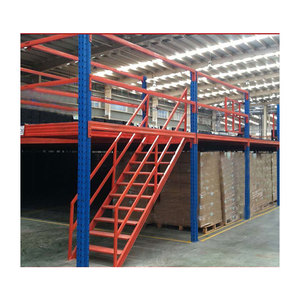
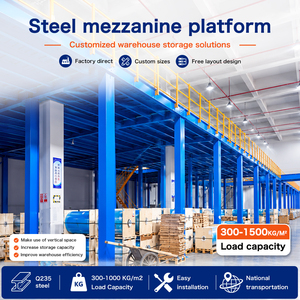
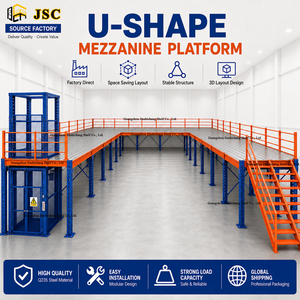
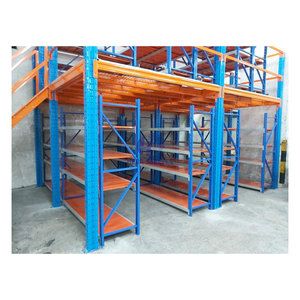
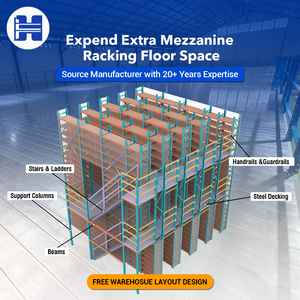
Direct-from-factory multi-tier storage platforms designed to double or triple warehouse usable space without expanding physical facility footprints in Tokyo, Kanagawa, and Chiba industrial corridors.
2001.
Established Year
30,000m²
Manufacturing Base
30,000t
Monthly Steel Output
10,000+
Global Installations
Regional Application Matrix
Localized Application Scenarios in Greater Tokyo & Kanto Logistics Hubs
The Greater Tokyo Metropolitan Area represents one of the world's most concentrated consumption hubs, where industrial land values command steep premiums. Rack-supported mezzanines eliminate structural column redundancies and optimize tight floor plates across core submarkets.
Tokyo Bay Waterfront (Koto, Shinagawa & Ota Wards)
Facilities positioned in waterfront zones like Shinagawa, Heiwajima, and Jonanjima handle urgent last-mile deliveries into Central Tokyo (Chiyoda, Minato, Chuo). Rack-supported mezzanines convert 8–10m clear-height waterfront warehouses into multi-tier parcel sortation platforms, housing rapid fulfillment on the lower tiers while reserving upper deck surfaces for slow-moving bulk reserve pallets.
Inland Distribution Hubs (Saitama, Atsugi & Chiba Ken)
Along the Ken-O Expressway, Tokyo Gaikan, and Tomei transport arteries, 3PL giants operate expansive fulfillment centers for e-commerce, automotive components, and cosmetics. Rack-supported mezzanine frameworks allow operators to integrate automated spiral conveyors, vertical reciprocating conveyors (VRCs), and carton flow racks directly into standard JIS/ISO pallet racking uprights.
Refrigerated & Cold-Chain Facilities (Kawasaki & Yokohama)
Refrigerated energy overheads inside Port of Tokyo and Yokohama terminals demand exceptional density. Utilizing heavy-duty cold-storage grade steel components, our rack-supported mezzanines double storage capacities within chilled (+4°C) and frozen (-25°C) chambers, significantly minimizing cold-envelope loss per cubic pallet position.
Tokyo Structural Compliance Note: JIS Pallet Conformity & Anti-Seismic Damping
Industrial warehousing in Japan predominantly utilizes standard T11 type pallets (1,100 mm × 1,100 mm) alongside international ISO pallets (1,200 mm × 1,000 mm). Guangzhou Heda Shelves custom-engineers cross-beam lengths (typically 2,300 mm to 2,700 mm clear spans) and installs seismic tie-bars, thick-gauge footplates (10 mm–16 mm), and chemical capsule foundation anchors designed to mitigate lateral resonance forces during seismic activity common to the Kanto Plain.
Macro Market Dynamics
Trends Reshaping Warehousing Infrastructure Across Japan
Strategic market forces are creating unprecedented structural demands on warehouse asset utilization within Tokyo and surrounding prefectures.
The "2024 Problem" & Last-Mile Buffer Hubs
Strict legislative caps on driver overtime hours (Article 36 of the Labor Standards Act) have forced Japanese supply chains to transition from single distant regional mega-DCs to intermediate urban fulfillment buffers within Tokyo's ring roads. Space inside these forward-deployed hubs is exceptionally scarce, necessitating rack-supported multi-tier platforms to stock high-velocity buffer inventory near urban delivery zones.
Land Scarcity & Record Tokyo Logistics Rents
Industrial land transactions in the Greater Tokyo area have driven lease rates to record heights. Facility directors and supply chain engineers can no longer justify single-level racking that leaves 50% to 65% of clear ceiling volume unutilized. Converting vertical air rights into operational picking floors delivers an immediate 100% to 200% volumetric capacity boost at a fraction of secondary site acquisition expenses.
Integration of Hybrid AMR & Goods-to-Person Automation
Modern Japanese intralogistics increasingly combines human operators with autonomous mobile robots (AMRs). Our rack-supported mezzanine designs integrate precision laser-level steel plate decking or high-density timber-resin panels that satisfy the strict wheel-load deflection tolerances (< L/300) and friction coefficients demanded by AMR drive wheels operating on elevated mezzanine levels.
Enterprise Strengths
Why Tokyo Importers & General Contractors Partner With HEDA Shelves
Founded in 2001, Guangzhou Heda Shelves Co., Ltd. provides complete end-to-end engineering, precision roll-forming manufacturing, and worldwide export services tailored to regional compliance frameworks.
30,000 m² Facility & 30,000t Output
Direct factory supply with high-speed automated roll-forming lines, automated punch presses, and continuous electrostatic powder coating equipment guarantees large-scale project execution and on-time shipment schedules.
Certified Quality & Verifiable Audits
Strict structural quality controls certified under ISO 9001:2015 (Certificate No. 18624Q00169R0M) and European CE Mark (No. 2435-CPR-8605159), accompanied by complete mill test certificates (MTC) for high-grade Q235B / Q355B structural steel.
Free 3D Layout & Seismic Load Data
Our engineering team delivers full 3D CAD models, structural static/dynamic calculations, and detailed foundation reaction force data within 24 hours, giving local Japanese structural designers the verified data required for municipal filings.
Efficient South China to Tokyo Logistics
Weekly ocean departures from Guangzhou and Shenzhen directly to the Port of Tokyo and Port of Yokohama, featuring ISPM-15 export-compliant timber packaging or dedicated steel stillages designed for safe container de-stuffing without crane delays.
Procurement Knowledge Base
Frequently Asked Questions for Tokyo Racking Procurement
Clear, practical answers addressing building codes, fire regulations, shipping logistics, and structural considerations for importing industrial mezzanines into Japan.
How do rack-supported mezzanines comply with the Japanese Building Standard Act (Kenchiku Kijun-hō)?
In Japan, pallet rack-supported mezzanines may be classified either as standard industrial material handling equipment (rack structures) or as an indoor building structure (Kenchikubutsu), depending on deck height, human occupancy, floor area ratio, and municipal interpretation by the local Building Official (Ken-chiku Shuji). For projects requiring formal building certification filings, Guangzhou Heda Shelves supplies certified mill test reports, comprehensive member section modulus data, deflection calculations, and detailed column anchor reaction tables so your licensed Japanese first-class registered architect (Ken-chiku-shi) can complete the technical submission.
What fire protection and sprinkler requirements apply to multi-tier mezzanines in Tokyo?
Under Japanese Fire Service Act (Shōbō-hō) regulations administered by the Tokyo Fire Department (TFD), adding a solid mezzanine deck can create an overhead barrier that obstructs existing ceiling-mounted fire sprinkler water cones and smoke detectors. To ensure full compliance without costly auxiliary piping, we engineer heavy-duty open steel grating or perforated steel decking that maintains over 50% to 70% open aperture ratio. Alternatively, if your plan incorporates solid steel decking with timber overlays, our layout drawings leave designated vertical riser cutouts and pipe penetration corridors for secondary in-rack sprinkler grids.
Can HEDA Shelves design mezzanine uprights to withstand Kanto seismic conditions?
Yes. Greater Tokyo is located within a seismically active zone requiring robust anti-earthquake design criteria. We engineer rack-supported mezzanines using heavy-duty cold-formed upright profiles up to 120 mm wide with steel thicknesses up to 2.5 mm or 3.0 mm. We utilize enhanced X-braced vertical towers, structural horizontal tie-beams between rack runs, enlarged baseplates (e.g., 200 mm × 200 mm × 12 mm), and heavy-duty M16/M20 chemical expansion anchors embedded deep into the concrete slab. We work directly with your site-specific lateral design coefficient (often target peak ground accelerations or Z-factors) to guarantee frame stability.
What is the standard transit time and customs clearance process from South China to Tokyo?
Direct ocean container vessels running from Guangzhou (Nansha) or Shenzhen (Yantian/Shekou) to the Port of Tokyo or Port of Yokohama typically require only 4 to 7 days on the water. Customs clearance via Japan Customs is smooth under standard Harmonized System (HS) classifications for steel structures (HS Code 7308.90). We provide a complete export documentation bundle including Commercial Invoice, Packing List, Bill of Lading, and Certificate of Origin (COO) to facilitate expedited import clearance with your Japanese customs broker.
What data is required to receive a complete 3D CAD design and structural quotation?
To produce an optimized structural layout, our engineering team requires: (1) An architectural warehouse floor plan showing columns, entry doors, dock levelers, and clear ceiling height; (2) Pallet specifications (e.g., JIS 1,100 mm × 1,100 mm or Euro/ISO dimensions) and maximum load weight per tier; (3) Intended utilization of the mezzanine deck (e.g., manual tote picking, light assembly, or heavy equipment placement) to establish floor live load ratings (typically 300 kg/m² to 1,000 kg/m²); and (4) Material movement preferences (staircases, pallet drop gates, or electric vertical freight lifts).
Engineering Whitepaper: Structural Mechanics of Rack-Supported Mezzanines vs. Traditional Structural Steel Platforms
When evaluating industrial expansion within land-constrained logistics submarkets such as Tokyo Bay, engineers and project directors must weigh two primary architectural approaches: Independent Structural Steel Mezzanines (hot-rolled I-beams and independent universal columns) versus Integrated Pallet Rack-Supported Mezzanine Systems. Below is a comparative structural analysis based on volumetric density, dead load distribution, and cost efficiency.
| Evaluation Vector | Integrated Rack-Supported Mezzanine | Structural Steel (I-Beam) Platform |
|---|---|---|
| Foundation Point Loads | Evenly distributed across multiple rack upright footplates; minimizes severe slab puncturing risks. | Concentrated point loads on heavy structural columns; often requires floor saw-cutting and pile footings. |
| Lower-Level Volume Efficiency | 100% optimized for palletized SKU storage and continuous racking beam levels. | Open ground space; requires secondary installation of independent racking underneath. |
| Material & Shipping Cost | Highly efficient strength-to-weight ratio via precision cold-rolled high-tensile steel sections. | Heavy dead-weight structural profiles; higher maritime container freight and handling expenses. |
| Adaptability & Relocation | 100% bolted modular assembly; can be disassembled, extended, or reconfigured as leases change. | Welded or high-torque bolted structural steel; highly labor-intensive and costly to dismantle. |
In typical Japanese 3PL leasing scenarios—where facility leases run on 5-to-10-year terms—rack-supported mezzanines represent a balanced, asset-backed investment that delivers immediate high-density storage capacity while preserving long-term structural flexibility.