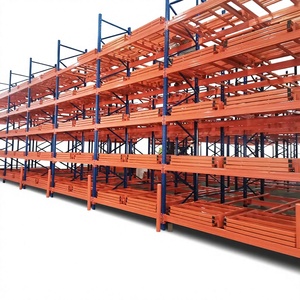
 Dynamic Storage
Featured Systems & Hardware Series
Engineered Racking Solutions & Load-Bearing Products
Factory-direct high-density storage modules, dynamic push-back carts, structural steel frames, and complementary material handling configurations.
Dynamic Storage
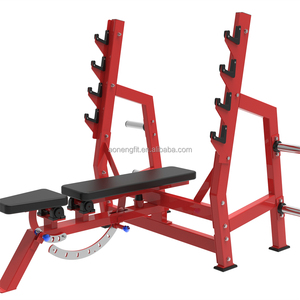 Frame Rigidity
Commercial Multi Function Safety Adjustable Push Frame Structural Rig
View Details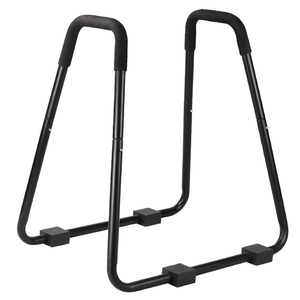 Structural Modular
Portable Multi-Function Freestanding Structural Tubular Steel Rig
View Details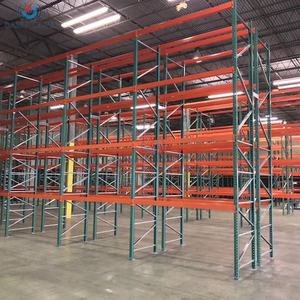 High Density
Selective and Push Back Pallet Integrated Warehouse Racking System
View Details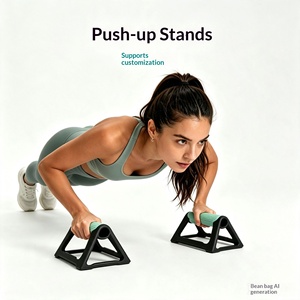 Welded Solid
H-Shaped I-Beam Heavy Stability Steel Ground Support Mount
View Details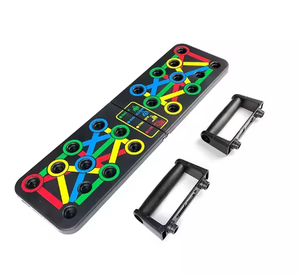 Multi-Slot System
Multifunctional Structural Guide Modular Bracket Support Apparatus
View Details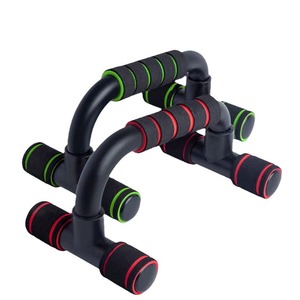 Adjustable Heavy
Adjustable Stabilizer Dual Base High Load Stanchion Frame
View Details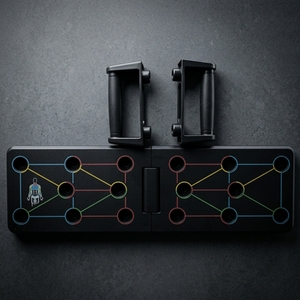 Foldable Base
Compact Foldable Base Plate Tension Heavy Duty Staging Component
View DetailsEngineering Overview: High-Density Push-Back Systems in Modern Belgian Warehousing
In the dense multimodal distribution networks spanning Flanders, Wallonia, and the Brussels-Capital Region, warehousing square-meter lease rates have climbed to historic highs. Industrial facility managers and third-party logistics (3PL) operators face intense pressure to balance storage density against SKU accessibility. Push-back pallet racking systems (typically engineered from 2-deep to 6-deep configurations) represent the optimum technical intersection between selective racking and drive-in racking, delivering dynamic Last-In, First-Out (LIFO) inventory velocity without obliging forklift operators to drive inside the racking envelope.
Manufactured using premium cold-rolled Q235B and high-yield Q355B structural steel, Guangzhou Heda Shelves Co., Ltd.'s push-back racking assemblies rely on low-profile nested carts that traverse along structural inclined steel guide channels. When loading, the forklift gently pushes the front pallet backward, revealing the next nested cart underneath. During retrieval, gravity gradually rolls forward the remaining carts at a controlled speed governed by precision engineering friction parameters and end-stop mechanical buffers. This eliminates rack frame impact risks common to drive-in racking while saving up to 40% to 55% of the floor space wasted by conventional wide-aisle selective configurations.
25+
Years Engineering (Est. 2001)
30,000m²
Modern Manufacturing Base
30,000t
Monthly Steel Output
10,000+
Global Completed Installations
From an operational standpoint in European freight corridors like the Port of Antwerp-Bruges, Genk Logistics Valley, and the Liège Airport air-freight hinterland, push-back racking provides distinct advantages for medium-rotation SKUs. Unlike gravity pallet flow racks (FIFO) which require distinct loading and unloading access aisles at opposing ends of the rack bank, push-back racking operates from a single handling face. This single-aisle operational dynamic permits deep-lane storage against warehouse perimeter walls or back-to-back configurations, freeing up critical cubic clear height up to 12 meters under roof truss spans.
Nested Telescopic Carriages
Heavy-duty, laser-aligned nested steel carts with anti-lift safety catches and zinc-plated precision guide wheels. Ensures low pushing effort for reach trucks and counterbalanced forklifts while preventing pallet de-tracking.
Inclined Structural Channel Tracks
Calibrated 2.5% to 3.0% gravitational gradient delivers smooth rolling dynamics without velocity runaway. Built-in pallet stops and shock absorbers guarantee controlled positioning at the pick face.
Sealed Heavy-Duty Bearings
Industrial ABEC-grade bearings sealed with cold-resistant synthetic lubricants, operational down to -30°C for deep-freeze storage in Belgian frozen vegetable, dairy, and cold-chain pharmaceutical facilities.
Localized Application Scenarios in the Belgian Supply Chain Landscape
Belgium’s geographic status as the logistical center of Western Europe creates unique warehouse engineering demands. The convergence of oceanic traffic at Antwerp-Bruges, major inland barge waterways along the Albert Canal, and dense highway intersections connecting France, Germany, and the Netherlands demands high-throughput dynamic storage capable of accommodating diverse pallet dimensions (specifically CEN standard 800×1200 mm Euro-pallets and 1000×1200 mm industrial pallets).
Antwerp-Ghent Ports
Chemical & Seveso Sites
Engineered push-back rows designed with integrated spill containment zones, zinc galvanization, and anti-spark cart rollers to handle petrochemical and raw polymer palletized loads with maximum safety compliance.
Wallonia Pharma Hub
Pharmaceutical Cool Chain
Operating near Liège Airport and Charleroi BioPark, these deep-lane push-back carts maximize temperature-conditioned cubic space, reducing chiller energy consumption by condensing 5-deep cold store pallet banks.
West Flanders Corridor
Frozen Agro & Food Processing
Belgium’s frozen vegetable and confectionery industry utilizes push-back racks inside -25°C blast freezers where selective aisles waste thermal efficiency and drive-in causes severe upright collision damage.
Brussels Logistics Ring
Omnichannel 3PL Buffer
Fulfillment centers along the E19/A12 axis use 2-deep and 3-deep push-back setups for fast carton replenishment, holding regional FMCG buffer stock directly above active ground-level pick tunnels.
Engineering Parameter Matrix: Push-Back vs. Alternative High-Density Systems
Selecting the optimal storage mechanism requires careful evaluation of SKU count, pallet turnaround frequency, handling equipment compatibility, and capital expenditure amortization. The technical comparison below outlines operational parameters under standard Belgian logistics conditions.
| Performance Criteria | Cart-Type Push-Back (HEDA) | Drive-In Racking System | Gravity Flow Racking (FIFO) | Radio Shuttle Racking |
|---|---|---|---|---|
| Pallet Storage Depth | 2 to 6 Pallets Deep | 2 to 10 Pallets Deep | 2 to 20+ Pallets Deep | 2 to 40+ Pallets Deep |
| Access Strategy | LIFO (Per lane access) | Strict LIFO (Entire block) | Strict FIFO (Flow-through) | LIFO & FIFO Capable |
| Aisle Space Savings | 40% to 55% reduction | Up to 65% reduction | 35% to 50% reduction | Up to 70% reduction |
| Forklift Mast Collision Risk | Zero Internal Entry | High (Mast enters bay) | Zero (External aisle only) | Zero (Shuttle moves inside) |
| Floor Incline Gradient | 2.5% – 3.0% slope | 0% (Flat rail profile) | 3.5% – 4.0% continuous | 0% (Level track run) |
| Maintenance & Downtime | Minimal (Passive mechanics) | Moderate (Column repairs) | Low-Moderate (Roller wear) | High (Sensors, batteries) |
| CAPEX Index per Pallet | Moderate (Excellent ROI) | Low Initial CAPEX | High (Roller bed cost) | Very High (Automated unit) |
Market Trends & Compliance Standards in Belgium (2026–2030)
The Belgian warehousing market is shifting toward resilient, standards-compliant automation and ultra-dense storage. When exporting and supplying racking systems into Belgium, compliance with European Committee for Standardization (CEN) regulations is non-negotiable. Industrial buyers in Brussels, Antwerp, Liège, and Ghent require structural static calculations verified against the following regulatory frameworks:
-
EN 15512:2020 Compliance: European standard for adjustable pallet racking systems. Calculates structural member buckling, beam connector rotational stiffness, and load combinations incorporating seismic and wind factors.
-
EN 15620 & EN 15635 Verification: Establishes clear operating tolerances, flue spaces, and structural safety clearances, paired with mandatory annual structural inspection protocols (*Periodieke keuring van magazijnstellingen*).
-
Codex over het welzijn op het werk: Belgian labor safety legislation mandating impact protections on upright corners, clear load display signage (*Belastingborden* in Dutch and French), and anti-collapse mesh in open pedestrian thoroughfares.
-
Cold-Chain Decarbonization Pressures: Belgian energy mandates dictate aggressive insulation and energy conservation. Push-back racking increases pallet holding capacity by up to 60% inside identical freezer footprints, dramatically slashing electrical cooling kWh per stored metric ton.
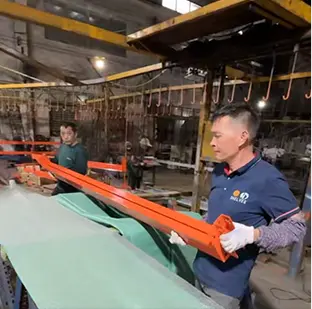
Why Belgian Importers & Contractors Source from HEDA Shelves
Founded in 2001, Guangzhou Heda Shelves Co., Ltd. is an established industrial manufacturer operating a modern 30,000 square-meter production facility with over 300 experienced engineers, cold-roll technicians, and export specialists. Operating a certified monthly output capacity of 30,000 metric tons, we provide end-to-end engineering authority, transparent material certs, and complete factory-direct pricing for Belgian distributors, warehouse integrators, and general contractors.
Verified CE & ISO Quality Credentials
We supply independently verifiable compliance documentation: CE Factory Production Control Certificate No. 2435-CPR-8605159, ISO 9001:2015 Management System Certification No. 18624Q00169R0M, and comprehensive mill test certificates for cold-rolled steel coils.
Free 3D CAD & Structural Layout Design
Our dedicated engineering department converts your building drawings into millimeter-accurate 2D CAD layouts and 3D parametric simulations, mapping out sprinkler clearances, column spacing, forklift turning radiuses, and structural baseplate anchor points.
Streamlined Export & Port of Antwerp Shipping
Direct ocean freight shipments from South China deep-water container ports to the Port of Antwerp-Bruges or Zeebrugge. Cargo is stowed on ISPM-15 heat-treated dunnage or custom high-tensile steel stillages to prevent in-transit flexing, scratching, or customs delays.
Every push-back racking component undergoes our rigorous 10-stage in-house production protocol: spectroscopic raw material coil inspection, CNC precision slitting, automatic column punching on 50mm or 75mm pitch increments, progressive continuous roll-forming, profile verification, automated robotic welding of cart frames and beam connectors, acid pickling and phosphating pre-treatment, continuous electrostatic thermosetting powder coating, dynamic cart roller track assembly, and multi-point dimensional quality checks prior to container packing.
Procurement & Engineering Consultation
Frequently Asked Questions for Belgian Procurement
Technical and logistical insights for plant managers, warehouse engineers, and equipment purchasers in Belgium.
How does HEDA Shelves ensure push-back racking complies with Belgian and European EN 15512 standards?
Our structural engineering designs strictly reference EN 15512:2020 principles for steel static storage systems. We calculate beam deflection limits (strictly L/200 under European norms), upright axial buckling capacities, and semi-rigid connector rotational stiffness. We supply complete technical calculation packages, steel grade certificates (EN 10025 S235JR/S355JR equivalents), and load signage data so your local Belgian safety coordinator (*Preventieadviseur*) or certifying body (such as Vinçotte or TÜV) can inspect and validate the installation smoothly.
Can your push-back carts accommodate both standard EPAL 1 and industrial EPAL 3 pallets?
Yes. European warehouses frequently handle both 800×1200 mm Euro-pallets (EPAL 1) and 1000×1200 mm block/industrial pallets (EPAL 3 / Chep pallets). HEDA engineers dual-purpose nested push-back carts equipped with cross-support members, pallet bottom board guide channels, and perimeter safety catches. This design ensures that regardless of whether pallets are loaded along their narrow or wide dimension, bottom skids are properly seated and cannot slip off the carriage during forward or backward translation.
What is the standard logistics timeline and customs clearance procedure for delivery into Belgium?
Standard production turnaround ranges from 20 to 30 business days depending on tonnage. Direct containerized sea transit from South China to the Port of Antwerp-Bruges takes approximately 26 to 32 days. We provide a complete export documentation dossier including Commercial Invoice, detailed Packing List with piece marks, Bill of Lading, and Certificate of Origin. Belgian importers with a registered EORI and VAT/BTW number can utilize deferred VAT mechanisms (Article 44 of the Belgian VAT Code) to optimize upfront cash flow upon entry.
What concrete slab tolerances and anchoring depths are required for push-back installations?
Push-back racking requires floor flatness conforming to DIN 18202 Table 3 (Line 3 or 4) or EN 15620 classification. The concrete floor must have a minimum compressive strength of C20/25 with an uncracked depth typically exceeding 150mm to 200mm, depending on baseplate point loads. We supply heavy-duty mechanical wedge expansion anchors or chemical capsule anchor bolts (Hilti/Fischer equivalent) engineered to resist combined shear and tensile pull-out forces generated during heavy pallet loading cycles.
Why is push-back racking preferred over drive-in systems for cold storage in Flanders and Wallonia?
In refrigerated and deep-freeze warehouses (-25°C), driver fatigue is elevated and visibility is often reduced by condensation and cold suits. In a drive-in system, lift trucks must navigate inside tight, dark channels, resulting in high rates of upright damage and costly frame repairs. Push-back systems confine forklift travel entirely to the outside access aisle. Operators simply place pallets onto the front cart from the aisle, reducing cycle times by 30% to 40% and eliminating costly structural collision risks in expensive thermal envelopes.
How does HEDA handle installation support, replacement parts, and OEM warranties in Europe?
All structural uprights, beams, carts, and tracks are marked with part tags matching detailed 3D step-by-step CAD installation manuals. We collaborate directly with local Belgian racking assembly contractors or your in-house engineering team, offering real-time video guidance and structural engineering verification. Our push-back racking frames carry comprehensive multi-year structural warranties, and modular cart bearings or safety stops are standardized for rapid express courier dispatch if replacement spares are ever required.
Plan Your High-Density Storage Project in Belgium
Send our senior engineering team your warehouse architectural floor plan, clear height under roof joists, and pallet parameters. We will produce a complete 3D layout, slotting analysis, and factory-direct quotation within 24 hours.
Get Catalog