Engineered Storage Components & System Units
Direct-from-factory modular shelving and high-load steel structures calibrated for Dutch SME warehouses, e-commerce urban fulfilment nodes, and cross-docking facilities.
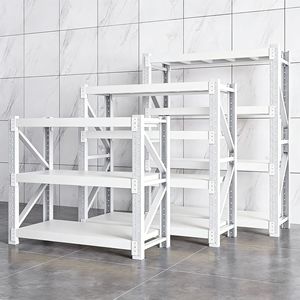
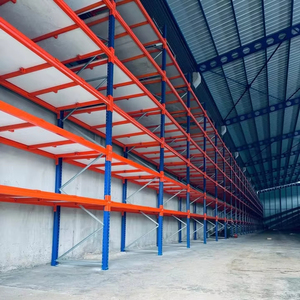
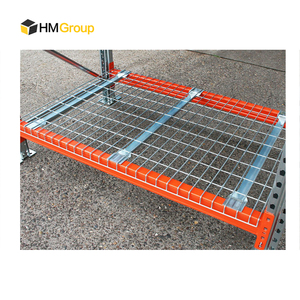
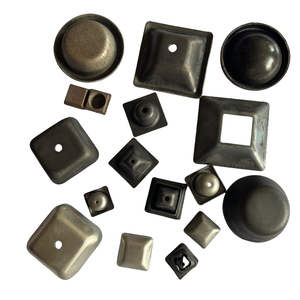
Engineering High-Density Small Warehouse Intralogistics in the Netherlands
The Netherlands occupies an unmatched position as the maritime and intermodal gateway to mainland Europe. However, logistics operations throughout the Randstad urban polygon (encompassing Amsterdam, Rotterdam, The Hague, and Utrecht), as well as key transport corridors such as Venlo, Tilburg, and Brabant, face unprecedented industrial land constraints. Commercial square metre lease valuations across Dutch logistics real estate have escalated by over 42% over the past 5 years, forcing SME business operators, third-party logistics (3PL) providers, and pharmaceutical distributors to reconsider horizontal storage expansion.
Small warehouses—typically configured within footprints spanning 200 m² to 2,500 m²—cannot accommodate expansive conventional aisle profiles without sacrificing critical SKU capacity. Achieving logistical efficiency in this context requires precise engineering interventions: converting unutilized vertical headspace through multi-tier intermediate structures, selecting modular light-to-medium longspan racking, and integrating Euro-pallet compatible beams calibrated according to stringent European structural norms.
Regulatory Engineering Directive: All racking assemblies destined for the Dutch commercial sector must satisfy NEN-EN 15512:2020 (Steel static storage systems – Adjustable pallet racking systems – Principles for structural design) and comply strictly with the safety guidelines set forth in Arbobesluit (Working Conditions Decree) Art. 7.4a regarding structural stability, load rating indications, and mandatory periodic safety audits.
1. Dutch Localized Application Scenarios
Small warehouse racking configurations cannot rely on generic, one-size-fits-all dimensions. In the Netherlands, our systems are pre-engineered to match very explicit operational topologies:
Urban E-Commerce Micro-Hubs
Installed across peripheral industrial zones near Amsterdam and Rotterdam. High-density narrow-aisle multi-tier shelving (B2C order picking) allowing fast carton throughput and integration with automated guided vehicles (AGVs) or vertical carousel systems.
Horticultural & Agri-Tech Hubs
Engineered for the Westland greenhouse horticulture and floral export hubs. Features anti-corrosion hot-dip galvanized decking and steel stillages designed to resist 85%+ relative humidity and frequent wash-downs.
GDP-Compliant MedTech Nodes
Configured for bonded pharmaceutical vaults around Schiphol Logistics Park. Anti-static, cleanable epoxy polyester finishes with open wire-mesh decking enabling unhindered laminar airflow and ESFR sprinkler suppression compliance.
2. Macro Trends Shaping Storage Engineering in the Netherlands
Dutch logistics infrastructure is migrating rapidly toward automated and sustainable vertical operations. Four dominant trends currently drive small-warehouse retrofitting and procurement decisions across the Netherlands:
A. Extreme Vertical Cubic Exploitation (Mezzanine Synthesis): Rather than acquiring adjacent units at exorbitant square-metre lease rates, Dutch enterprises rely on rack-supported multi-tier platforms. By exploiting ceiling heights ranging between 6m and 10m, operators create double or triple picking floors without altering building envelopes.
B. Fire Protection Integration with Open Wire Mesh Decking: Dutch industrial insurance underwriters (under CEA 4001 and NFPA/VdS fire guidelines) heavily penalize solid timber shelves inside high-rack installations. The transition toward electro-galvanized wire mesh decking (featuring minimum 70% open area) ensures unimpeded sprinkler penetration and smoke clearance, lowering facility risk profiles and annual insurance premiums.
C. The Transition to Narrow-Aisle Articulated Equipment: Traditional counterbalance forklifts demand 3.5m to 4m aisle spacing. Small Dutch facilities now widely adopt articulated forklifts (such as Bendi or Aisle-Master) or reach trucks running in narrow 1.8m to 2.2m corridors. This shift demands millimetre-accurate beam profiling and heavy-duty upright column guards capable of absorbing recurrent mechanical collisions.
D. Modular Circularity and Sustainable Steel Life-Cycle: With the Dutch government's legally binding target to transition to a circular economy by 2050, warehouse procurement departments actively prioritize boltless, fully reconfigurable shelving. Cold-formed profiles fabricated from 100% recyclable structural steel ensure facilities can expand, relocate, or reconfigure without cutting or hot-work permits.
3. Structural Performance & Configuration Matrix
The table below provides a side-by-side engineering appraisal of small warehouse storage topologies suited for Euro-standard pallet logistics (800 mm × 1200 mm):
| System Architecture | Typical Load Rating | Dutch Aisle Width (m) | Floor Space Utilization | Recommended Application |
|---|---|---|---|---|
| Narrow-Aisle Selective Pallet Rack | 1,000 – 3,500 kg / Level | 1.8m – 2.3m (Reach/Articulated) | Up to 65% Floor Coverage | General FMCG, High-SKU B2B Distribution |
| Multi-Tier Rack-Supported Mezzanine | 350 – 1,000 kg / m² Floor Load | 0.9m – 1.2m Manual Picking | 180% – 250% Effective Area | E-commerce Fulfilment, Small Spare Parts |
| Heavy-Duty Cantilever Racking | 500 – 1,500 kg / Arm | Variable (Dependent on Goods) | High Vertical Linear Density | Extrusions, Construction PVC, Timber Profiles |
| Modular Longspan Steel Shelving | 200 – 800 kg / Shelf | 1.0m – 1.4m Walkways | Optimal for Manual Bins | Automotive Workshops, Urban Micro-Hubs |
| Post Stacking Racks (Stillages) | 1,000 – 2,000 kg / Stillage | Zero Fixed Aisle (Bulk Block) | 85% Volume in Peak Seasons | Agricultural Seed, Seasonal Buffer Stock |
4. Enterprise Manufacturing Strengths: Guangzhou Heda Shelves Co., Ltd.
Established in 2001, Guangzhou Heda Shelves Co., Ltd. has spent over 25 years establishing itself as an international benchmark for structural industrial storage systems. Operating from our state-of-the-art 30,000 m² heavy-industrial manufacturing facility staffed by more than 300 experienced engineers, welders, and logistics technicians, our plant achieves a consistent monthly fabrication throughput of over 30,000 tons of finished structural steel racking.
Every small-warehouse configuration delivered to our Dutch and Western European partners is backed by end-to-end quality assurance and direct OEM/ODM engineering services:
NEN-EN Compliance & Certifications
Fully certified under CE Certification No. 2435-CPR-8605159, ISO 9001:2015 Management System No. 18624Q00169R0M, and international RoHS environmental directives. Static calculations and finite element analyses (FEA) provided for effortless local Dutch municipal and Arbo sign-offs.
Rapid Free 24h 3D CAD Modelling
Our dedicated engineering department turns your building drawings, slab load constraints, obstacle coordinates, and reach truck telemetry into optimized 2D CAD layouts and full-scale 3D digital renderings within 24 hours of brief submission.
Direct Port of Rotterdam Intermodal Freight
Export packaging engineered using heavy-duty steel stillages or ISPM-15 certified timbers ensuring total protection across maritime lanes. Direct container shipments from South China deep-water ports direct to Port of Rotterdam, Moerdijk, or Amsterdam terminals.
2001
Founded Year
30,000+
Monthly Metric Tons
10,000+
Global Projects Built
300+
Engineers & Technicians
5. High-Precision 10-Stage Steel Racking Production Workflow
Reliable load distribution begins in the metallurgy and forming line. We control 100% of the manufacturing value chain in-house to safeguard mechanical tolerances and corrosion resistance:
01
Material Spectrometry & Slitting
Certified prime hot-rolled Q235B and high-yield Q355B coils tested for yield strength and ductility prior to automated continuous slitting.
02
CNC High-Speed Upright Punching
Automated multi-station punch lines executing continuous 50mm and 75mm tear-drop or diamond pitches with sub-millimetre pitch repetition.
03
Roll Forming & Robotic Welding
18-pass precision continuous profile roll-forming mills followed by automated 6-axis robotic welding for rigid beam end-connectors.
04
Pre-Treatment & Powder Coating
Environmentally sealed acid pickling and multi-stage silane phosphating, topped with electrostatic thermoset powder cured at 200°C.
Frequently Asked Questions by Dutch Warehouse Buyers & Importers
Authoritative technical, compliance, and customs answers addressing the key procurement challenges facing businesses operating across the Netherlands.
Do your racking systems fully adhere to Dutch NEN-EN 15512 and European FEM 10.2.02 regulations?
Yes. All our pallet racking and static industrial storage systems are engineered in rigorous conformity with NEN-EN 15512 (Principles for structural design of adjustable pallet racking) and FEM guidelines. When supplying the Dutch market, we deliver full static structural analysis calculation reports, including section modulus figures, deflection allowances (limited to 1/200th of the span length under maximum design load), and material yield certificates. This provides the exact documentation requested by your certified local inspection bureau (such as TÜV Rheinland Nederland or independent Arbo safety inspectors) to complete legal commissioning under the Dutch Working Conditions Act (Arbowet).
How are dimensions adjusted for standard Euro-pallets (CEN 1) in compact Dutch facilities?
The European standard Euro-pallet measures precisely 1200 mm (depth) × 800 mm (width). For standard selective pallet racking in Dutch warehouses, we specify standardized beam lengths of 2700 mm (allowing three 800 mm Euro-pallets side by side with code-mandated 75 mm lateral flue clearances) or 1800 mm (for two Euro-pallets). Standard frame depths are fabricated at 1100 mm, providing an ideal 50 mm cantilever overhang on both the front and rear beam faces, ensuring safe forklift entry while preventing dislodgement without requiring auxiliary pallet support bars.
What are the transit lead times and import customs procedures when landing goods in Rotterdam?
Ocean container transport from South China major deep-water ports (Guangzhou / Shenzhen / Nansha) to the Port of Rotterdam or Port of Amsterdam averages 26 to 32 days port-to-port. We furnish full international commercial documentation: Bill of Lading (B/L), Commercial Invoice, Detailed Packing Lists with itemized crate tags, and standard Certificates of Origin. Dutch buyers or their freight forwarders handle import clearance via the Dutch Customs Administration (Douane) under standard EU Common Customs Tariff HS codes (e.g., HS 7308.90 for steel structures). Post-clearance, direct intermodal barge, rail, or flatbed trucking can deliver shipments directly to your dock in North Brabant, Limburg, South Holland, or Utrecht within 24 to 48 hours.
Can we install a rack-supported mezzanine without a municipal building permit in the Netherlands?
In the Netherlands, free-standing or rack-supported intermediate floors are generally considered demountable internal industrial equipment. Under standard Dutch Omgevingswet (Environment and Planning Act) criteria, self-supporting internal steel mezzanines frequently qualify as permit-free (vergunningsvrij) provided they remain within the enclosed volume of the warehouse, do not alter exterior structural building walls, and respect emergency escape route maximum travel distances. However, building floor slab load verification (checking that local point loads do not exceed the concrete slab capacity, typically 30 to 50 kN/m² in modern industrial parks) is always legally mandatory under the Dutch Building Decree (Bouwbesluit).
How do open wire mesh decks impact warehouse fire insurance compliance under Dutch underwriting standards?
Major Dutch industrial property insurers (governed by European insurers adhering to CEA 4001, FM Global, or NFPA 13 sprinkler installation codes) restrict solid wooden shelf panels because they create horizontal barriers that prevent overhead Early Suppression Fast Response (ESFR) sprinkler water from drenching intermediate rack levels. By outfitting your racks with our heavy-gauge galvanized drop-in wire mesh decking—which maintains greater than 70% open aperture area—water reaches fire sources instantly and smoke ventilates rapidly. This configuration is widely approved by Dutch safety assessors and directly prevents costly insurance surcharge penalties.
Optimize Your Dutch Warehouse Capacity Today
Submit your warehouse CAD outline or dimensional sketch. Our senior logistics layout team will generate a fully engineered 3D simulation, layout blueprint, and direct factory pricing within 24 hours.