Featured Industrial Storage Systems & Warehouse Infrastructure
Standard teardrop compatibility, reinforced heavy-duty structural profiles, and custom material handling components fabricated for high-density logistics.
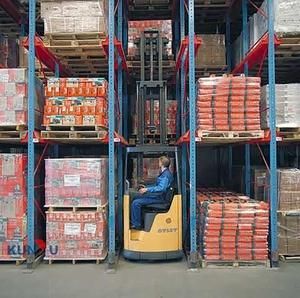
High Space Utilization Narrow Aisle Drive In Racking System Design
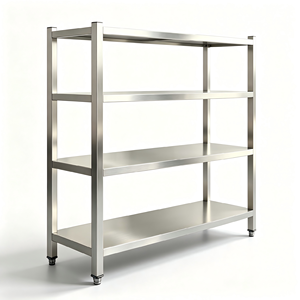
Heavy Duty 4 Tier Stainless Steel Storage Rack Adjustable Commercial Kitchen Shelving Unit For Restaurant Food Prep
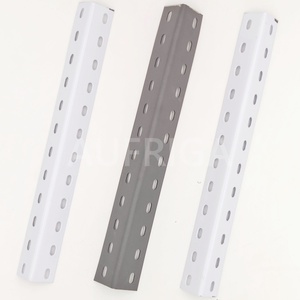
Steel Angle Bar Shelves Storage Racks Slotted Angle Light Duty Rack Uprights Adjustable Height Stable Racks
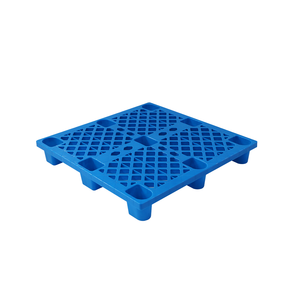
NEXARA Manufacture Racking Load 0.8t 1010 1000*1000*140mm Grid Surface Nine Runner Industrial Warehouse Plastic Pallet
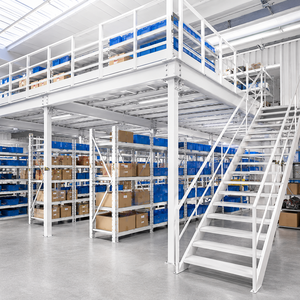
Factory Price Multi Tier Rack Customized Storage Shelf Warehouse Multi-Level Storage Platform Steel Mezzanine Racking System
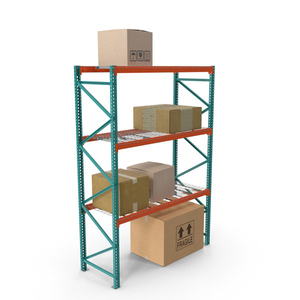
Heavy Duty Steel Beam Pallet Racking System Industrial Warehouse Storage Rack Customizable Stacking 3000kg Load
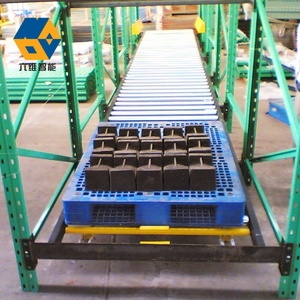
Hot Sale FIFO Gravity Flow Roller Shelf Rack System Industrial Warehouse Storage Industrial Flow Gravity Pallet Racking
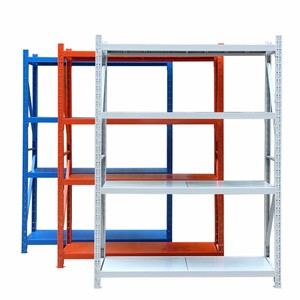
Hotter-shelf Four Layer Blue Color Warehouse Rack Numbering System
Structural Mechanics of Teardrop Racking in High-Seismic Industrial Zones
The teardrop pallet racking profile represents the ubiquitous North American standard for selective storage infrastructure. Distinguished by inverted teardrop-shaped punchings centered along the column face at 2-inch vertical increments, this geometry relies on conical-pin shear connectors that wedge under gravity into tapered slots. In the seismically active Pacific Northwest—specifically within the Puget Sound Lowland and the Cascadia Subduction Zone—the engineering demands placed on teardrop upright frames transcend mere static load ratings. Facilities operating in King County, Pierce County, and Snohomish County must deploy racking designed under rigorous RMI (Rack Manufacturers Institute) ANSI MH16.1 specifications and conform to the International Building Code (IBC 2021) as adopted by Washington State (WAC 51-50).
Unlike static storage scenarios, industrial facilities within the Seattle metropolitan footprint must withstand horizontal seismic forces characterized by short-period spectral response accelerations ($S_s$) frequently exceeding $1.25g$ and 1-second accelerations ($S_1$) surpassing $0.45g$. These site accelerations categorize Seattle warehouses under Seismic Design Category (SDC) D through E. Consequently, beam-to-column locking mechanisms must maintain structural integrity against dynamic torsional displacement, bi-axial bending, and cyclic vertical ground accelerations without pin disengagement.
Universal 2" Pitch Compatibility
Full cross-compatibility with legacy American teardrop profiles. Upright punchings precisely cold-stamped on automated CNC feedlines ensure seamless fit with existing roll-formed beams, step beams, and seismic safety lock pins.
Seismic Footing & Oversized Baseplates
Engineered baseplates measuring up to 8"x8" or 10"x10" with multi-hole anchor patterns disperse shear and moment forces across concrete slabs, complying with ACI 318-19 cracked concrete pull-out criteria.
High-Yield Cold-Rolled Q355B Alloy
Fabricated using high-strength low-alloy structural steel with minimum yield strengths exceeding 50,000 PSI (355 MPa), providing supreme ductile elasticity during harmonic earthquake events without brittle failure.
Structural Section Analysis: Roll-Formed Teardrop vs. Structural C-Channel
When configuring a Seattle distribution center, facility engineers must balance accessibility, floor density, and dynamic impact resistance. The matrix below contrasts traditional high-gauge cold-formed teardrop assemblies against heavy structural structural beam architectures designed for heavy logistics corridors like Kent Valley and the Port of Tacoma.
| Engineering Metric | Standard Roll-Formed Teardrop | Reinforced Seismic Teardrop (Heavy Duty) | Structural Steel C-Channel (Hot-Rolled) |
|---|---|---|---|
| Steel Yield Strength ($F_y$) | 36,000 PSI (Q235B equivalent) | 50,000 – 55,000 PSI (Q355B / ASTM A1011) | 36,000 – 50,000 PSI (ASTM A36 / A572 Gr 50) |
| Beam Adjustment Pitch | 2-inch continuous slot interval | 2-inch pitch with dual-shear pin engagement | 3-inch bolted hole increments |
| Seismic Category Compatibility | SDC A, B, C (Light D with close ties) | SDC D, E, and F (P.E. Stamped calculations) | SDC D, E, F (Severe heavy-industrial duty) |
| Impact Resistance (Forklift Strike) | Moderate; requires column post protectors | High; reinforced lower upright boot (up to 48") | Extreme; thick structural web absorbs collisions |
| Manufacturing Lead Time & Cost | Lowest total cost; immediate volume scalability | Balanced cost-to-performance; fast throughput | Higher material cost; slower fabrication run |
Localized Application Scenarios Across Greater Seattle
From maritime cold storage terminals on Elliott Bay to massive aerospace suppliers in Renton and logistics hubs in Kent Valley, our racking is tailored to regional micro-economies.
High-Velocity 3PL & E-Commerce Fulfillment
The Kent Valley constitutes the third-largest industrial warehousing corridor on the West Coast. High land valuation necessitates vertical volumetric optimization reaching clear heights of 32 to 40 feet.
- Optimized Configurations: Multi-tier teardrop racking combined with rack-supported mezzanine cat-walks for high-density carton pick tunnels.
- Seismic Mitigation: Heavy structural column splices and engineered row-spacers buffering dynamic harmonic motion between back-to-back rack runs.
- Throughput Maximization: Wide flanged teardrop step beams accommodating Wireway Husky or Nashville wire decking with integrated carton flow lanes.
Seafood & Cold-Chain Cold Storage Operations
Handling commercial catch from Alaska and deep-sea harvests through Terminal 91 and Fife cold storage complexes demands racking resilient to thermal shock down to -20°F.
- Anti-Corrosive Finishes: Hot-dip galvanized or high-adhesion anti-microbial epoxy powder coatings resisting condensation and salt air corrosion.
- Drive-In Racking Systems: Eliminating aisles to condense refrigerated volume, drastically cutting per-pallet kilowatt refrigeration expenses.
- Freeze-Ready Pallet Supports: Specialized pallet entry guides and stops engineered for high-density plastic hygienic pallets without cold embrittlement.
Aerospace Tooling & Heavy Stamping Storage
Supporting commercial aerospace supply networks surrounding Boeing manufacturing facilities requires specialized heavy-capacity storage for titanium sheet rolls, dies, and wing structures.
- Extra-Capacity Beam Sections: Boxed step beams designed for uniform distributed loads surpassing 8,000 lbs per beam level with zero deflection.
- Heavy Cantilever Integration: Freestanding arm racks handling raw extruded aluminum spars, tubing, and raw composite reels.
- Strict Structural Traceability: Certified mill test reports (MTRs) validating steel tensile, yield, and Charpy V-Notch impact resistance.
Navigating City of Seattle DCI Permitting & Engineering Codes
Installing high-pile storage or pallet racking systems with load-bearing tops higher than 8 feet (or 6 feet in high seismic classifications) within the municipal boundaries of the City of Seattle Department of Construction and Inspections (SDCI), or throughout unincorporated King County, necessitates a formal building permit process. Racking installations are classified as building additions or structural modifications, strictly enforced under Chapter 22 of the International Building Code.
Procurement managers cannot simply order uncertified uprights without localized documentation. A structural permit submittal package in Seattle demands:
1. P.E. Stamped Calculations
Calculations prepared by a registered Washington State Professional Structural Engineer (P.E./S.E.) demonstrating load paths, frame stability under dead, live, and earthquake loads ($E$), using ASCE 7-16/7-22 parameters.
2. Geotechnical & Slab Core Verification
Testing slab thickness, concrete compressive strength ($f'_c$ typically 3,000 to 4,000 PSI minimum), and rebar spacing to verify anchor bolt pull-out and edge distance requirements without sub-slab fracture.
3. NFPA 13 Fire Sprinkler Alignment
Precise rack flue space management (3-inch minimum transverse flues and 6-inch longitudinal flues) preventing sprinkler obstruction, paired with ESFR ceiling head integration or in-rack fire suppression nozzles.
Emerging Industrial Warehousing Trends in King & Pierce Counties
Trend 1: Multi-Story Racking and Vertical Compaction. With industrial land prices in South Seattle reaching record valuations per developable acre, developers are building up rather than out. Teardrop systems must support automated picking vehicles, turret trucks, and Wire-Guided Very Narrow Aisle (VNA) operations operating within tolerances as tight as $\pm 1/8$ inch.
Trend 2: Automation Hybridization. Traditional selective teardrop racks are increasingly retrofitted with 2D shuttle systems, automated guided vehicle (AGV) guide rails, and pick-to-light visual cues, transforming standard static frames into semi-automated fulfillment nodes.
Trend 3: Environmental Resilience & Clean Steel. Sustainable supply chains across the Pacific Northwest are pushing buyers toward steel manufacturing facilities that employ zero-VOC electrostatic thermoset powder coatings, acid recovery systems in pre-treatment pickling, and recyclable components.
Guangzhou Heda Shelves: 25 Years of Factory-Direct Engineering Authority
Founded in 2001, we deliver complete turn-key manufacturing capacity, eliminating middlemen margins while delivering structural calculations verified to worldwide industrial standards.
ISO 9001:2015 & CE Certified Quality
Our quality management systems are independently audited and certified (ISO 9001:2015 Cert No. 18624Q00169R0M, CE Marking No. 2435-CPR-8605159). Every steel heat batch undergoes chemical spectrometry and yield-stress validation.
Complimentary 3D CAD & Load Modeling
Our in-house design office of over 300 technical professionals produces detailed 3D CAD models, structural floor schematics, and load capacity plaques within 24 to 48 hours of warehouse layout submittal.
Door-to-Port Pacific Direct Logistics
Optimized maritime container packing utilizing custom steel stillages and ISPM-15 heat-treated dunnage ensures components arrive undamaged directly into the Port of Seattle or Port of Tacoma with complete customs import dossiers.
The 10-Stage Precision Heavy-Racking Manufacturing Workflow
Raw Material QC
Spectrometric testing of hot-rolled structural steel coils from prime mills for chemical composition and tensile limits.
Slitting & Cutting
Automated uncoiling, decoiling, and CNC high-speed slitting to micrometric strip tolerances across upright widths.
CNC Upright Punching
High-tonnage mechanical punching line stamps exact 2-inch teardrop profiles and side accessory slots simultaneously.
Cold Roll Forming
Multi-station progressive roll forming lines cold-profile the steel strip into 8 to 12-fold structural omega columns.
Beam Step Profiling
Continuous seam HF-welded tube forming shapes precision step beams for drop-in wire decks and pallet support bars.
Robotic End-Plate Welding
Multi-axis robotic arms weld heavy 3-pin or 4-pin teardrop end-connectors to beams with continuous solid-wire MIG welds.
Surface Shot Blasting
Thorough mechanical surface descaling and polishing remove scale, burrs, and mill oxides prior to chemical treatment.
Pickling & Phosphating
Automated multi-stage immersion wash, rust stripping, and silane/phosphate conversion layer deposition for paint bonding.
Electrostatic Powder Coat
Automatic electrostatic powder spray booths apply 60–90 micron thermoset polyester coats, cured at 200°C (392°F).
Curing & Packing
Dimensional laser inspection, random beam deflection proof-load tests, and export bundle crating on steel frames.
Frequently Asked Questions by Seattle Logistics Directors
Direct answers to the most critical structural, municipal permitting, and shipping questions when sourcing teardrop racking in King County and Washington State.
How does your teardrop design satisfy City of Seattle SDCI seismic requirements?
Our engineering division models racking assemblies based on exact project zip-code ground motions (ASCE 7-16/7-22). We compute base overturning moments and shear values to provide comprehensive calculation packages suitable for stamping by a licensed Washington State Structural Engineer (S.E.). This data satisfies SDCI requirements, including baseplate sizing, anchor bolt torque parameters, and seismic bracing configurations.
Are your teardrop components interchangeable with American brands like Interlake, Mecalux, or Speedrack?
Yes. Our upright frames and step beams utilize the industry-standard North American inverted teardrop slotting at 2-inch vertical center increments. Beam connectors incorporate standard 3-pin conical rivets with spring-loaded or slide-in safety locks that seamlessly mate into major US roll-formed teardrop upright columns.
What concrete slab thickness is needed for teardrop racking in Seattle seismic zones?
In Seismic Design Categories D through E (typical of Seattle, Kent, and Tacoma), standard post loads usually necessitate a minimum reinforced concrete slab thickness of 6 inches (3,000 PSI compressive strength $f'_c$). For tall installations exceeding 24 feet or bay capacities over 20,000 lbs, an 8-inch slab or custom footings may be mandated by the structural engineer to ensure anchor wedge bolts achieve adequate embedment without tension breakout.
What are the typical sea freight transit timelines to the Northwest Seaport Alliance (Seattle/Tacoma)?
Direct ocean vessels departing from South China to the Port of Seattle or Port of Tacoma typically require 14 to 18 days on the water. Factoring in custom clearance, ISPM-15 inspection, and drayage to regional facilities in Kent, Tukwila, or Fife, door-to-facility delivery normally settles around 3 to 4 weeks post-factory dispatch.
Can Heda Shelves supply custom finishes for Puget Sound cold storage and maritime humidity?
Yes. We provide heavy-duty pre-treatment options including zinc-rich primer undercoats, hot-dip galvanizing per ASTM A123 standards (rated for coastal exposure and outdoor docks), and high-durability electrostatic powder coats capable of withstanding constant freezing and thawing environments down to -30°C without micro-cracking.
What data is required to generate a 3D warehouse CAD design and quote?
To produce an engineered layout within 24 hours, our engineering office requires: (1) Architectural floor plan showing column grids, building clear heights, dock doors, and obstruction points; (2) Pallet dimensions (W x D x H) and maximum gross weight; (3) Forklift model, turning radius, and maximum reach height; and (4) Site zip code to determine seismic coefficients.
Engineer Your Next Seattle Warehouse Facility With Factory-Direct Pricing
Eliminate regional middleman surcharges. Consult directly with our engineering team for free 3D CAD facility design, load deflection analyses, and tailored teardrop pallet racking production runs manufactured to RMI ANSI MH16.1 seismic criteria.