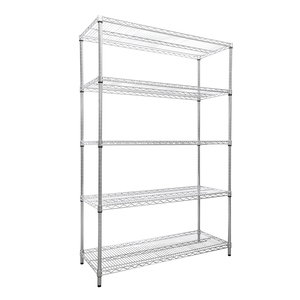
Heavy-Duty Inventory Systems
Featured Industrial Racking Beams & Engineered Pallet Systems
High-tensile Q235B and Q355B structural steel systems manufactured under strict robotic welding tolerances, configured for high-density storage operations across Colombo, Gampaha, and Kandy.
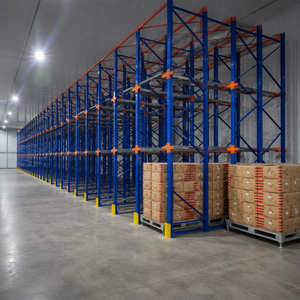
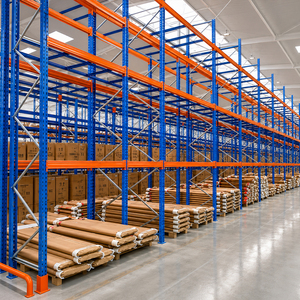
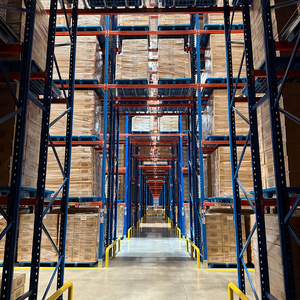

Technical Whitepaper & Structural Metallurgy
Engineering Integrity of Warehouse Racking Beams for Sri Lanka
A technical analysis of yield tensile strength, deflection tolerances (L/200), and automated continuous roll-forming processes designed to support maritime cross-docking operations.
In the high-throughput logistics landscape of Sri Lanka—accelerated by the Colombo Port expansion and trade incentives within the Board of Investment (BOI) Export Processing Zones—the structural beam is the most critical load-bearing component in vertical pallet racking. A racking beam is subject to intense combined flexural stress, torsional deformation, and shear forces at its upright connector interfaces. Sourcing from certified manufacturers guarantees that rack systems withstand dynamic warehouse environments without catastrophic metal fatigue.
At Guangzhou HEDA Shelves Co., Ltd., our engineering methodology follows rigorous international building and steel codes including EN 15512:2020, FEM 10.2.02, and ANSI/RMI MH16.1. Racking beams are roll-formed from premium certified Q235B and Q355B high-yield structural cold-rolled steel coils. By cold-rolling interlocking "box-beam" profiles from two overlapping C-sections seam-welded by automated robotic lines, the moment of inertia ($I_x$) is significantly enhanced relative to raw steel mass. This structural geometry delivers superior resistance against lateral-torsional buckling under concentrated pallet loads.
Engineering Deflection Benchmark: L/200 vs L/300 Serviceability Limit
Under standard FEM 10.2.02 guidelines, maximum allowable vertical deflection under full uniform design load (UDL) must not exceed 1/200th of the clear beam span ($L/200$). For robotic shuttle racking and fragile export tea consignments in Sri Lanka, HEDA engineers often specify a stiffer benchmark of $L/300$, eliminating beam sag that could trigger automated handling trip faults or pallet dislocation.
30,000t
Monthly Steel Output
10,000+
Global Installations
30,000m²
Factory Infrastructure
25+
Years Structural R&D
Standard Roll-Formed Box Beam Load Matrix (Clear Span 2700mm / 2-Pallet Bay)
Calculated for standard 1200 x 1000 mm ISO/Euro pallets with safety factor $\gamma = 1.4$ under uniform distributed loading.
| Profile Specification | Profile Section (H × W mm) | Steel Thickness (t) | Section Modulus ($W_x$) | Rated Capacity per Pair (UDL) | Safety Deflection Limit |
|---|---|---|---|---|---|
| HEDA-BB80 | 80 × 50 mm | 1.5 mm | 12.4 cm³ | 1,500 kg / Level | ≤ 13.5 mm (< L/200) |
| HEDA-BB100 | 100 × 50 mm | 1.5 mm | 17.8 cm³ | 2,200 kg / Level | ≤ 11.2 mm (< L/240) |
| HEDA-BB120 | 120 × 50 mm | 1.5 mm | 24.6 cm³ | 3,000 kg / Level | ≤ 9.0 mm (< L/300) |
| HEDA-BB140 | 140 × 50 mm | 1.8 mm | 35.2 cm³ | 3,800 kg / Level | ≤ 7.8 mm (< L/340) |
| HEDA-BB160-HD | 160 × 50 mm | 2.0 mm | 48.9 cm³ | 4,500 kg / Level | ≤ 6.5 mm (< L/400) |
Localized Industrial Application Scenarios
Custom Engineered Storage Across Key Sri Lankan Sectors
Adapting structural racking physics to the specialized demands of Sri Lanka's leading economic engines: export apparel, bonded tea warehousing, maritime logistics, and cold chain distribution.
Pure Ceylon Tea Bonded Warehousing
Bulk paper-sack and master-carton tea storage requires zero floor moisture transfer, continuous air circulation, and rigorous pallet load balance to preserve tea quality in humid lowland environments.
- Open-wire mesh deck inserts preventing aroma/humidity retention
- Extended beam clear spans designed for heavy multi-tiered wooden tea chests
- Non-toxic thermosetting epoxy polyester powder coating (RoHS compliant)
Apparel & Textile FTZ Manufacturing
Located inside Katunayake, Biyagama, and Mawathagama EPZs, apparel hubs store massive rolls of raw fabric alongside finished high-turnover garment cartons awaiting air and sea dispatch.
- Step beams fitted with drop-in dividers for vertical fabric roll containment
- Multi-tier picking mezzanine integrations built directly onto rack uprights
- Beam connector safety lock pins preventing accidental uplift from manual pick carts
Refrigerated Cold Chain & Seafood
Refrigerated warehouses in Peliyagoda and Negombo holding tuna, poultry, and dairy require high-density storage to minimize per-cubic-meter refrigeration costs down to -25°C.
- Drive-In and Radio Shuttle beam systems eliminating unnecessary operational aisles
- Hot-dip galvanized structural steel or cold-flexible low-temp powder coatings
- Impact protection column guards safeguarding beam connectors against icy forklift slips
Market Intelligence & Strategic Foresight
Sri Lanka Logistics Trends: Modernizing Warehousing Infrastructure
The convergence of maritime transshipment initiatives, land constraints in the Western Province, and supply chain digitalization is reshaping industrial storage requirements across the island.
Trend 01 • Transshipment Hub Dominance
Port City Colombo & Western Corridor Expansion
With the Port of Colombo ranking among the world's premier container transshipment hubs, multi-client 3PL providers are rapidly replacing low-density floor stacking with selective high-bay beam racks (up to 12 meters clear height) to maximize high cubic storage capacities near port gates.
Trend 02 • High Land Valuations
Vertical Volume Over Footprint in Kelaniya & Wattala
Surging real estate costs across the industrial fringe of Greater Colombo demand extreme vertical space optimization. Warehouse operators are shifting to Very Narrow Aisle (VNA) and Double Deep pallet racking systems, requiring tighter manufacturing tolerances on beam deflections.
Trend 03 • Tropical Microclimate Resilience
Corrosion Protection Demands in Coastal Free Zones
Sri Lanka's tropical marine environment (relative humidity exceeding 80% during monsoon periods) rapidly corrodes sub-standard steel. Importers now actively reject basic single-coat painted beams, specifying 8-stage pickling, phosphating, and electrostatic powder coatings of at least 70–90 μm thickness.
State-of-the-Art Factory Infrastructure
Guangzhou HEDA Shelves: Factory Capabilities & Engineering Rigor
Supplying precision storage solutions worldwide since 2001. A 30,000 m² automated production base delivering high-capacity racking kits ready for direct deployment in Sri Lankan distribution centers.
01
Spectrometer Assay
Verified chemical composition of Q235B/Q355B coils for yield strength.
02
Roll-Forming
16-pass continuous roll-forming lines creating flawless box-beam seams.
03
Robotic Welding
Automated CO2 shielded arc welding of 3-claw & 4-claw beam connectors.
04
Surface Pretreatment
8-stage acid pickling and zinc phosphating ensuring anti-corrosion bonding.
05
Electrostatic Coat
Thermoset powder cure at 200°C resulting in uniform, chip-resistant finish.
Complimentary 3D CAD Warehouse Modeling
Before steel cutting begins, our project engineers deliver complete 3D warehouse layouts, calculating pallet positions, required forklift turning radiuses, fire sprinkler clear lines, and beam load calculations custom-fit to your Sri Lanka building blueprint.
Full CE & ISO 9001:2015 Certification
Procure with comprehensive risk mitigation. We hold audited CE Certification (No. 2435-CPR-8605159) and ISO 9001:2015 Quality Management registration (No. 18624Q00169R0M). Every project includes structural material certificates and QA reports.
Turnkey Sri Lanka Shipping & Biosecurity Packing
Direct ocean freight from Nansha or Shekou to Port of Colombo in just 8 to 14 days. Shipments are bundled with heavy-duty steel stillages and ISPM-15 compliant packing, ensuring hassle-free clearance through Sri Lanka Customs and Quarantine authorities.
Procurement Intelligence
Frequently Asked Questions by Sri Lankan Buyers
Clear, expert guidance on customs clearance, HS code classification, environmental coatings, and structural safety when importing racking beams from our factory.
What HS Code and import documentation apply to warehouse racking beams imported into Sri Lanka? +
Industrial storage racking beams and uprights typically fall under HS Code 7308.90.90 (Structures and parts of structures of iron or steel). If your business operates under the Board of Investment of Sri Lanka (BOI) under Sections 16 or 17, racking systems imported for factory construction or logistics expansion are frequently eligible for preferential customs duty and VAT exemptions. We supply comprehensive commercial invoices, detailed packing lists, and Certificates of Origin to facilitate swift clearance through the Port of Colombo.
How do your racking beams withstand Sri Lanka's high tropical humidity without rusting? +
Unlike low-cost local fabrications that use air-dried enamel paint directly over mill-scale steel, HEDA Shelves enforces an industrial 8-stage pre-treatment line: degreasing, water rinsing, acid rust descaling, neutralizer, and zinc-phosphate bath bonding. We then electrostatically apply a 70–90 μm high-density thermoset epoxy-polyester powder coat, cured at 200°C. For outdoor lumber yards or coastal ports, we also offer complete hot-dip galvanization conforming to ASTM A123 standards.
Can your beams accommodate both ISO Standard (1200x1000mm) and Euro Pallets (1200x800mm)? +
Yes. Most FMCG and manufacturing warehouses in Sri Lanka use the 1200 × 1000 mm 4-way entry pallet, while multinational pharmaceutical companies frequently use 1200 × 800 mm Euro pallets. Our standard 2-pallet clear span beams (2300mm to 2700mm) and 3-pallet beams (3300mm to 3900mm) can be equipped with cross-pallet support bars or wire mesh decking, enabling simultaneous storage of disparate pallet footprints with complete load stability.
How do the safety locking pins secure the beam connectors under forklift impacts? +
Each beam end connector is stamped with 3 or 4 heavy-gauge steel claws that wedge into the upright teardrop/diamond slots. Once slotted, a spring-steel zinc-coated locking pin is inserted. Our locking pin design resists an upward vertical extraction force exceeding 5,000 N (5 kN), strictly preventing accidental dislodgement even if a forklift operator inadvertently bumps or lifts the beam while elevating a pallet.
What is the lead time for containerized delivery from your factory to the Port of Colombo? +
Factory production typically requires 15 to 20 working days depending on beam quantity and custom profile stamping. Direct sea freight sailing from South China ports (Nansha/Shekou) to the Port of Colombo takes approximately 8 to 14 days on direct services. Total project turnaround from approved CAD drawings to container landing in Sri Lanka is typically between 4 to 6 weeks.
Optimize Your Sri Lanka Warehouse With Factory-Direct Engineering
Send us your warehouse dimensions, ceiling height clearances, pallet sizes, and load specifications. Our certified engineering team will return a turnkey 3D layout, load-capacity calculations, and a direct factory quotation within 24 hours.
Free 3D CAD Architectural Layouts
Direct Factory Pricing (No Middlemen)
Port of Colombo CIF / FOB Support