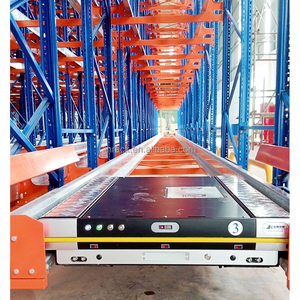
Customized High Density Storage LIFO Pallet Shuttle Racking System
Galvanized anti-corrosion finish, semi-automated deep-lane radio shuttle handling up to 1,500 kg per pallet position. Ideal for FMCG hubs.
Direct from our 30,000 m² automated production base to Tanjung Priok: modular storage configurations certified to CE, ISO 9001:2015, and SNI structural safety standards.
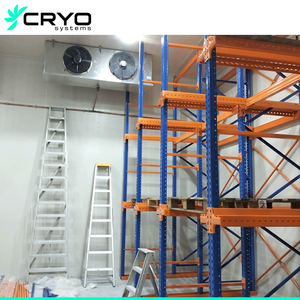
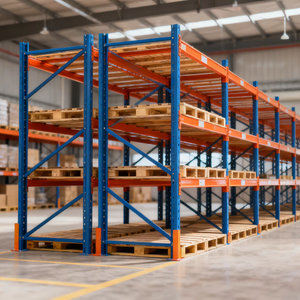
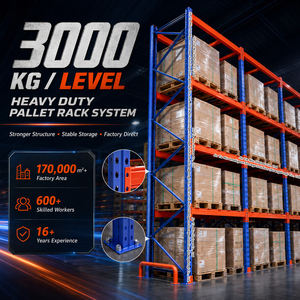
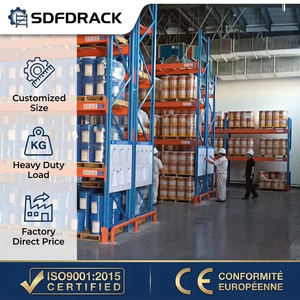
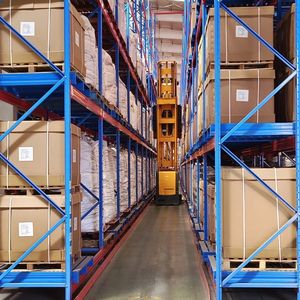
The Greater Jakarta supply chain landscape operates under unique constraints: high ground rent in Marunda, intense humidity near the Java Sea, high-throughput e-commerce demands in East Jakarta, and regional seismic compliance.
The Bekasi-Cikarang-Karawang belt represents Indonesia's manufacturing core. High-density automotive supply chains demand robust 4-tier beam-type pallet racking and structural cantilever racks capable of dynamic point-loading.
Near the port of Tanjung Priok and Marunda logistics zones, seafood exports and imported dairy run through massive cold stores facing severe humidity-induced condensation cycles and accelerated chemical oxidation.
Rapid growth in Tokopedia, Shopee, and TikTok Shop order fulfillment has driven hyper-dense consolidation warehousing around Western and Southern Greater Jakarta, requiring vertical space maximization.
Procurement teams and warehouse directors are transitioning from simple low-cost fabrication to engineered logistics assets. Key macro trends dictate how modern facilities in Indonesia are being equipped:
Skyrocketing land acquisition costs in MM2100, GIIC, and Jababeka have forced warehouse designers upward, prioritizing reach trucks and VNA (Very Narrow Aisle) turret truck configurations over horizontal sprawl.
Java’s proximity to tectonic fault lines necessitates stringent seismic structural engineering. Modern project tenders mandate finite element analysis (FEA) for baseplates, column anchor pull-out, and cross-bracing.
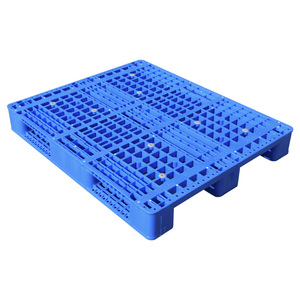
Humid tropical conditions accelerate wooden pallet rot and insect infestation. Modern automated logistics hubs are standardizing on heavy-duty rackable plastic pallets with anti-slip rubber grommets.
Escalating minimum wages in Jakarta and Bekasi are incentivizing warehouse leaders to replace standard drive-in racks with Pallet Radio Shuttle systems linked directly with SAP and Oracle WMS platforms.
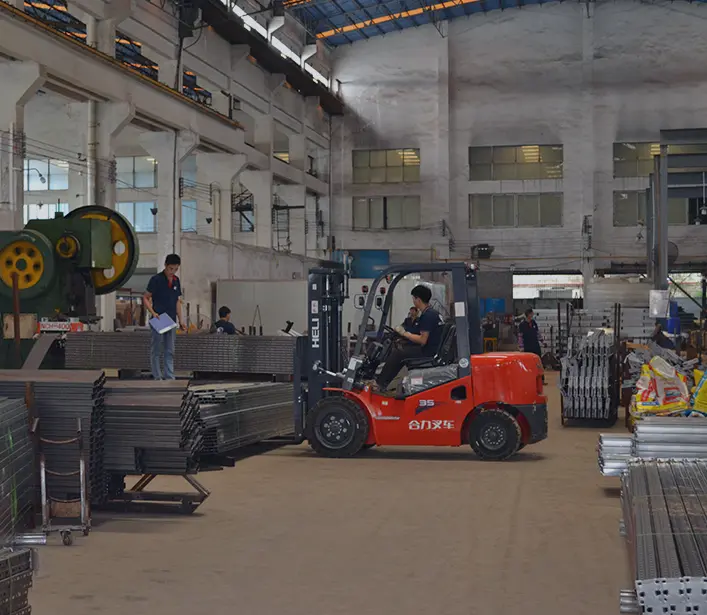
Established in 2001, Guangzhou Heda Shelves Co., Ltd. operates an advanced 30,000 m² smart manufacturing plant supported by an engineering and technical staff exceeding 300 professionals. With a monthly processing capacity of 30,000 tons of structural steel, we eliminate middleman markups, bringing direct factory pricing and technical rigor to Indonesian logistics developers.
From initial free 3D CAD layout planning to precise roll-forming, automatic column punching, and dual-layer electrostatic epoxy powder coating, our 10-step production protocol ensures structural longevity in tropical climates.
Addressing engineering specifications, customs clearance at Tanjung Priok, seismic validation, and on-site assembly across West Java.
We perform localized static and dynamic seismic calculations using FEM and RMI guidelines, aligning with Indonesian earthquake hazard maps. Upright gauge thicknesses, oversized baseplates, high-tensile anchor bolts (M12–M16), and heavy diagonal back-bracing are engineered to safely dissipate seismic acceleration forces.
Our raw steel undergoes an intensive 10-stage pre-treatment process, including hot acid pickling, phosphating, and deionized water rinsing, followed by thermosetting polyester-epoxy electrostatic powder coating baked at 200°C. For port environments like Tanjung Priok, hot-dip galvanizing is supplied for life-long oxidation resistance.
Yes. While domestic Indonesian distribution commonly operates on 1200 × 1000 mm pallets, export-oriented facilities frequently utilize 1100 × 1100 mm (Japan/Korea) or 1200 × 800 mm (Euro pallets). Our beam lengths (such as 2300 mm, 2700 mm, and 3300 mm) are precision-calculated with standard 75–100 mm safety clearance margins.
Every shipment is backed by a full trade documentation packet: Certificate of Origin (Form E for ASEAN-China preferential tariffs), certified Commercial Invoice, Packing List, Mill Test Certificates (MTC Q235B/Q355B), and Bill of Lading, ensuring fast customs inspection without unnecessary port demurrage.
Each component is color-coded, labeled, and accompanied by detailed CAD assembly schematics and bolt-torque schedules. We can provide remote engineering supervision via video link or deploy factory installation supervisors directly to your site in Cikarang, Karawang, or Tangerang.
We request your warehouse slab compressive strength (typically 25–40 MPa), reinforcement mesh data, clear under-hook height, and subsoil survey report. Our structural team calculates the exact point loads transferred through the baseplates to guarantee your concrete slab will not crack or suffer differential settling.