Featured Industrial & Automotive Heavy-Duty Racking Models
Standardized cold-rolled Q235B/Q355B structural steel storage configurations tailored for powertrain assemblies, sheet-metal stamping components, bulk palletized freight, and heavy tooling dies.
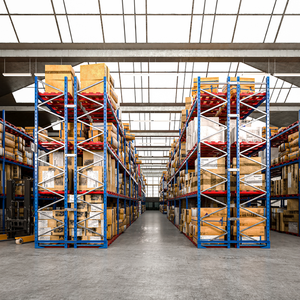
Steel Rack System Heavy Duty Pallet Racking 4000kg Warehouse Storage Rack System 5-Tier Adjustable Industrial Racks
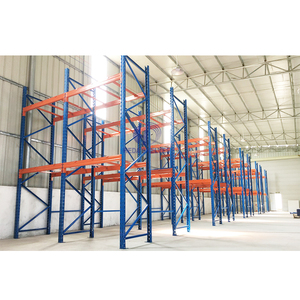
Heavy Duty Pallet Rack System with Beam Load Capacity of 1000kg-5000kg Per Level Industrial Warehouse Storage Steel Pallet Rack
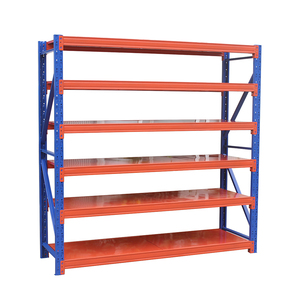
Warehouse adjustable racking heavy duty commercial selective steel industrial pallet storage widespan racking
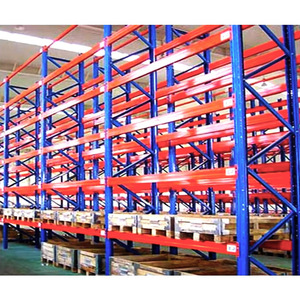
Easy Assembly Heavy Duty Pallet Racking Modular Warehouse Storage System International Standard Industrial Racks
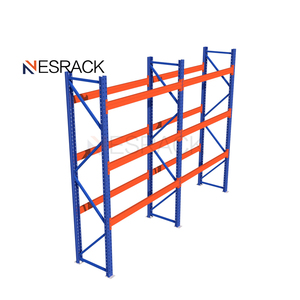
Customized Industrial Warehouse Pallet Rack Multi-Layer Adjustable Steel Shelves Units Metal Heavy Duty Selective Pallet Racking
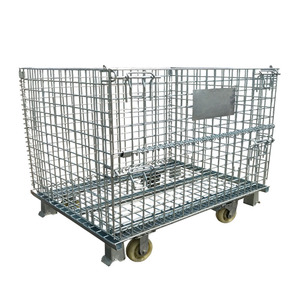
Warehouse Use Material Storage Stacking Galvanized Steel Wire Pallet Mesh With Wheel
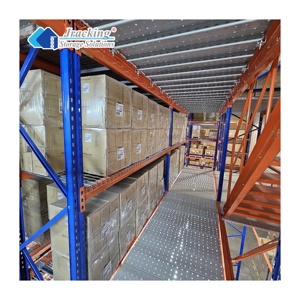
Premium Industrial Storage Stacking Shelves Racks Heavy Duty Steel EU Pallet Racking System For Logistics Warehouses
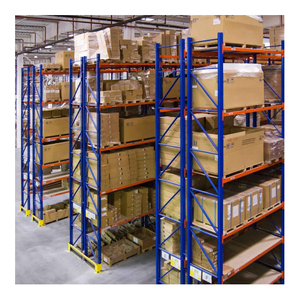
Peterack CE Certified Warehouse Storage Steel Heavy Duty Stacking Racks Shelves Selective Pallet Racking System
Engineering Architecture of Automotive Storage Systems
Automotive assembly plants and tier-level distribution hubs impose distinct structural challenges: dynamic wheel-loads from automated guided vehicles (AGVs), concentrated loads from cast-iron engine blocks, and high fire-barrier requirements for lithium EV battery packs.
High-Strength Q235B / Q355B Steel Profiles
Upright columns are cold roll-formed with up to 13-fold omega return bends. This structural profile guarantees superior polar moments of inertia ($I_x, I_y$) and high torsional rigidity under extreme asymmetrical loading from stamping tools and raw metal coils.
Deflection Limiting Criteria: Designed in compliance with FEM 10.2.02 and EN 15512 specifications, maintaining maximum longitudinal beam deflection below $L/200$ to prevent dynamic fatigue during high-cycle MHE (Material Handling Equipment) operations.
Seismic Dissipation & Dynamic Damping
Automotive central distribution warehouses require site-specific baseplate and anchoring designs. Anchors adhere to seismic class criteria under Eurocode 8 and AS 4084, utilizing chemical epoxy or heavy-duty undercut mechanical expansion anchors.
K-Braced Frame Geometry: Diagonal and horizontal C-profile cross-bracings distribute horizontal sway loads directly into the warehouse reinforced slab, maintaining stability during high-magnitude lateral accelerations.
EN 10204 3.1 Traceability & Surface Finish
Every batch of raw coil includes mechanical mill test reports validating yield point, elongation percentage, and carbon equivalent values. Parts undergo automated 7-stage surface pre-treatment (alkaline degrease, iron phosphating, passivating deionized water wash).
Thermosetting Polyester Coating: Applied via automated electrostatic powder booths at 60–80 microns thickness, providing 500+ hours of continuous salt-spray resistance against automotive synthetic lubricants, glycols, and washdown detergents.
| Structural Parameter | Selective Pallet Racking | Drive-In / Drive-Through System | Radio Shuttle High-Density | Automotive Cantilever System |
|---|---|---|---|---|
| Target Automotive Cargo | Aftermarket parts, crated radiators, alternators | Body panels, high-run bumpers, CKD packs | EV Battery packs, transmission housings | Exhaust pipes, structural chassis, bar stock |
| Load Capacity Per Unit | 1,000 kg – 5,000 kg / beam pair | 1,000 kg – 2,000 kg / pallet slot | 500 kg – 2,000 kg / pallet platform | 500 kg – 3,000 kg / cantilever arm |
| Upright Section Modulus | 80×60, 90×70, 100×70, 120×95 mm | 90×70, 100×70, 120×95 mm heavy gauge | 90×70, 100×70, 120×95, 140×100 mm | Hot-rolled H-Beams (IPE 200–IPE 400) |
| Floor Area Utilization | 40% – 45% (Direct 100% selectivity) | 65% – 75% (LIFO density) | 80% – 85% (FIFO/LIFO automated) | Continuous front without column obstruction |
| Applicable Global Standards | EN 15512, ISO 9001, AS 4084, RMI MH16.1 | EN 15512, FEM 10.2.07, AS 4084 | EN 15512, Machinery Directive 2006/42/EC | EN 1993-1-1 (Eurocode 3), ANSI MH16.3 |
Guangzhou Heda Shelves Co., Ltd. Enterprise Competencies
Founded in 2001, Guangzhou Heda Shelves Co., Ltd. is an engineering-driven industrial racking manufacturer. Operating out of an expansive 30,000 m² modern manufacturing plant, our specialized workforce of over 300 technical engineers, roll-forming operators, certified welders, and export logisticians deliver turnkey automotive storage installations worldwide.
We solve the complex storage challenges of Tier-1 and Tier-2 automotive component makers, OEM vehicle assembly logistics coordinators, and massive regional parts distribution networks. With a sustained output capacity exceeding 30,000 tons per month, we offer reliable lead times for full-container-load (FCL) export schedules across Europe, the Americas, Australia, New Zealand, and Southeast Asia.
- CE Marking: Certificate No. 2435-CPR-8605159
- ISO 9001:2015: System No. 18624Q00169R0M
- Global Deliveries: Over 10,000+ completed projects
- Free Engineering: 3D Layout & Static FEA Calculations
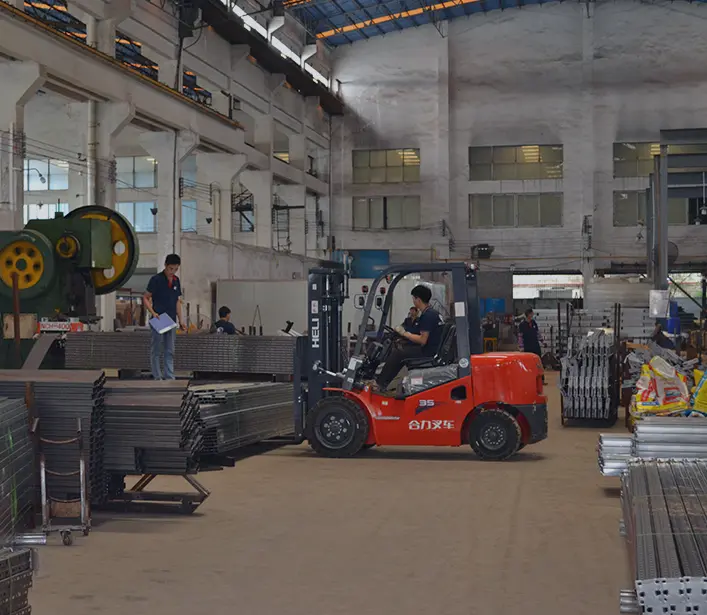
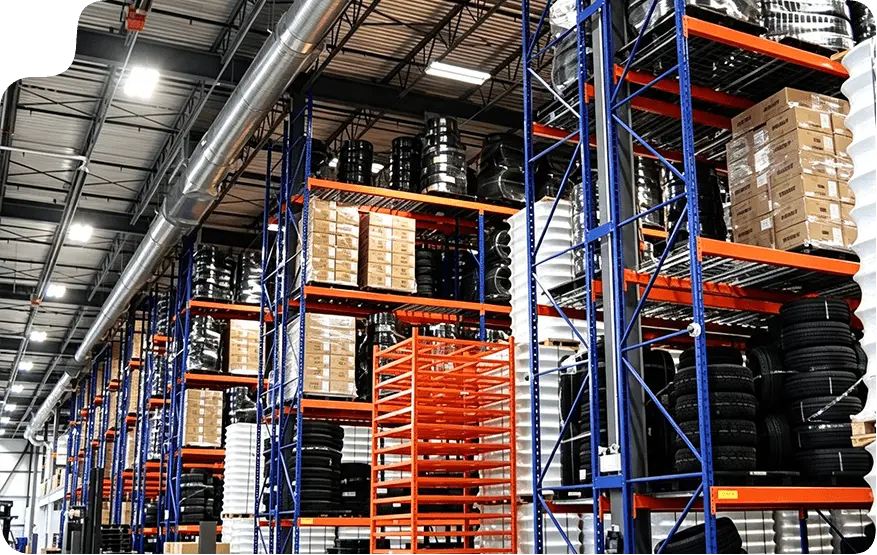
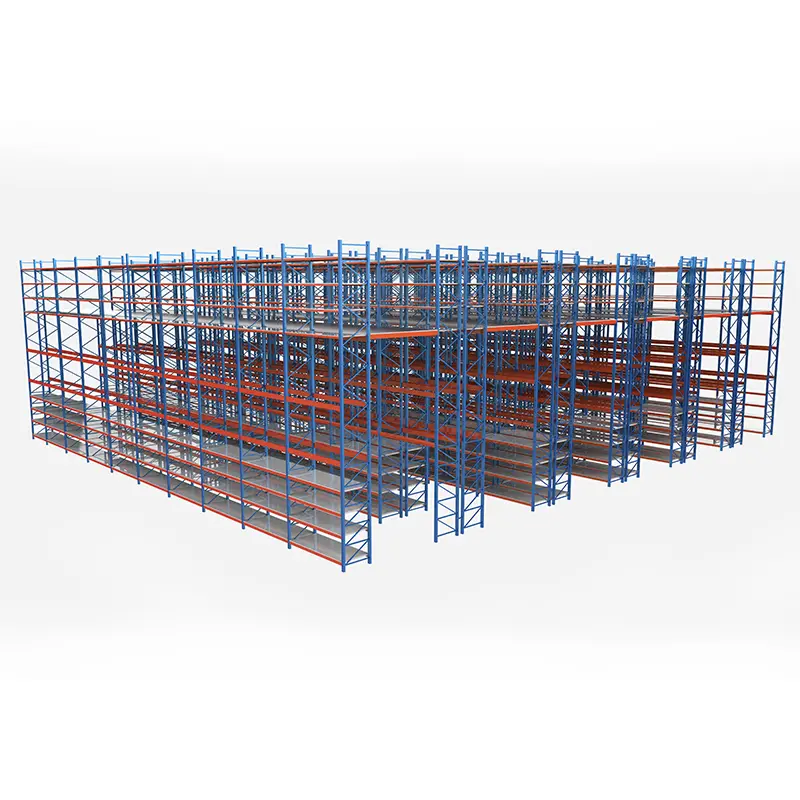
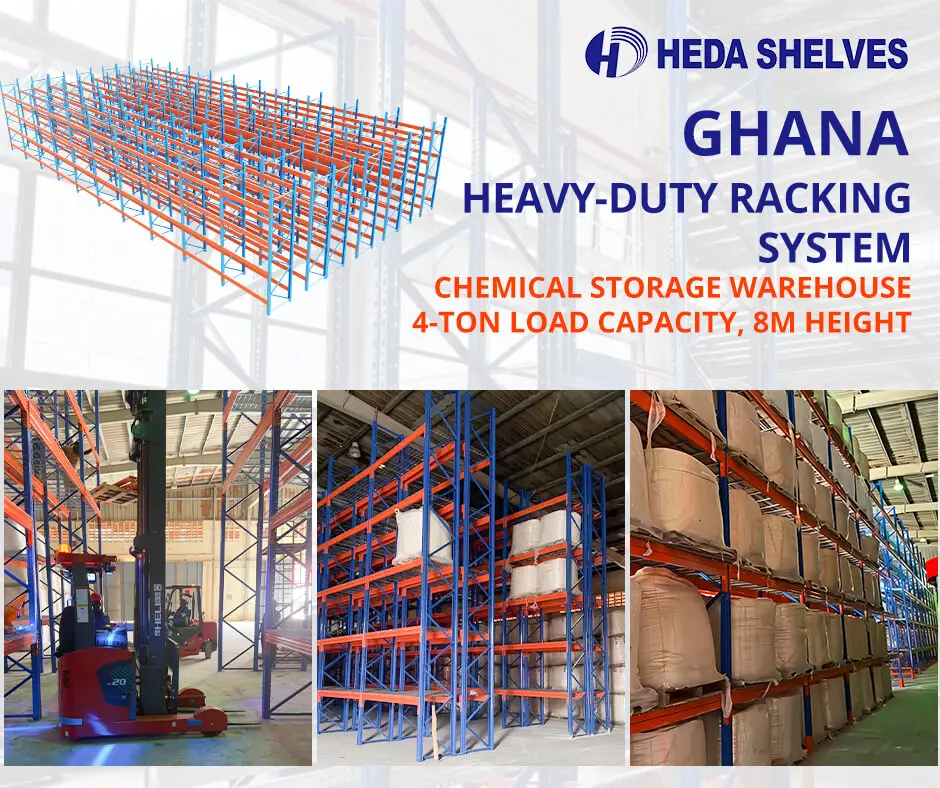
Precision Roll-Forming & Robotic Welding Cells
Future Procurement Trends in Automotive Warehousing (2025–2035)
The automotive supply chain is undergoing historic restructuring driven by electric propulsion architectures, just-in-sequence (JIS) line-feeding, autonomous warehousing robotics, and Scope-3 carbon compliance.
Thermal Runaway Mitigation & Hazard Containment Racking
The transition to commercial EV battery modules requires rack structures built with active and passive hazard suppression. Racking is evolving from static steel racks into specialized staging cells with integrated thermal deflection plates, specialized smoke-venting flue clearances (minimum 150mm transverse flue), and dedicated in-rack ESFR (Early Suppression, Fast Response) sprinkler piping channels.
Procurement contracts now mandate load-bearing integrity verification under localized high-temperature stress ($>600^\circ\text{C}$), ensuring racks do not experience progressive frame collapse if a cell experiences thermal runaway.
Sub-Millimeter Deflection Tolerances for AMR & AGV High-Bays
Traditional forklift-operated warehouses allow manual driver compensation for slight beam sag or floor settlement. In contrast, modern automated high-bay facilities utilize autonomous mobile robots (AMRs), automated storage and retrieval crane systems (AS/RS), and autonomous reach trucks.
These systems require rigorous structural tolerances per FEM 9.831 / 9.832: upright verticality deviations under $\pm 1.5\text{ mm}$ per 10 meters height, deflection ratios controlled to $L/300$, and floor-mount baseplates configured to DIN 18202 Group 3 super-flat floor requirements to prevent optical laser guidance faults.
JIS (Just-In-Sequence) Dynamic Line-Side Gravity Flow Hubs
Automotive lean manufacturing requires rapid, zero-error parts delivery to line-side workstations. Modern assembly plants are shifting bulk reserve storage away from line edges, replacing it with multi-tier carton flow and pallet dynamic gravity roller tracks configured in strict FIFO (First-In, First-Out) sequences.
Racks now feature modular bolt-free clip profiles, ergonomic pick-shelves, integrated roller beds with planetary brake rollers, and pick-to-light bracket channels that assembly engineers can re-space in hours as vehicle models change.
Low-Carbon Steel & EPD Environmental Declarations
European and North American automotive OEMs require tier-suppliers to account for complete cradle-to-gate Scope-3 embodied carbon. Procurement managers are favoring racking fabricators that provide independently verified EPDs (Environmental Product Declarations) and utilize hot-rolled coils produced in scrap-fed Electric Arc Furnaces (EAF) powered by renewable electricity.
Furthermore, powder coating formulations are shifting toward solvent-free, heavy-metal-free, low-temperature curing powders that reduce baking gas consumption by 22% while providing durable wear resistance.
Standardized Regional Buffer Hubs (Oceania & EU Hubs)
Recent maritime supply chain disruptions have spurred automotive parts distributors to expand high-cube buffer warehouses in strategic regional corridors. In Australia, New Zealand, and Pacific trade gateways, parts distributors demand heavy-duty racks designed for Australian standard 1165×1165 mm pallets that comply with AS 4084-2023 design standards.
Standardization of universal teardrop or diamond connector slots allows international distributors to interchange accessories, wire mesh decks, and row spacers across global warehouse portfolios.
Integrated IoT Impact Sensors & Condition Monitoring
To comply with occupational health regulations and avoid catastrophic warehouse collapses caused by repeated forklift impacts, automotive logistics hubs are deploying smart wireless impact telemetry.
Sensors installed on critical aisle end-frame leg protectors log lateral G-force shock events above threshold limits and transmit real-time alerts to the warehouse management system (WMS). Damaged components are flagged for immediate replacement before structural integrity is compromised.
Automotive Sub-Industry Racking Recommendation Matrix
Match specific automotive product characteristics, turnover velocities, and material handling techniques with the optimal storage configuration.
Tire & Rim Distribution
Recommended: Multi-Tier Widespan Stepped Beam Racks
Angle-mounted tubular step beams prevent tire tread deformation and flat-spotting while allowing high-density, horizontal, hand-loaded storage with 100% SKU access.
Engine & Gearbox Blocks
Recommended: Reinforced Heavy Duty Pallet Racking
Box-welded structural beams with cross-flange support bars and solid 5.0mm steel shelf pans engineered for concentrated point loads up to 5,000kg per beam level.
Windshields & Body Panels
Recommended: Vertical Divider Pigeon-Hole Racks
Custom high-density racks lined with protective polyethylene/rubber edge cladding to prevent scratching, chipping, or breakage of fragile laminated automotive glass.
CKD & SKD Export Crates
Recommended: Drive-In & Radio Shuttle Systems
High-density deep-lane storage lanes that maximize cube utilization for uniform shipping crates awaiting overseas assembly-plant dispatch.
Frequently Asked Questions by Industrial Sourcing Teams
Clear, engineering-backed answers addressing international compliance standards, seismic safety parameters, manufacturing lead times, and global shipping considerations.
What specific certifications are required for automotive storage racking in European and International markets?
In Australia and New Zealand, structural certification must reference AS 4084:2023 (Steel storage racking) along with seismic calculations per NZS 1170.5. In North America, racking must follow ANSI/RMI MH16.1. Guangzhou Heda Shelves Co., Ltd. provides certified static design calculations, material test mill certificates (EN 10204 Type 3.1), and safe work load capacity signs to ensure compliant local sign-offs.
How do you calculate safe working load (SWL) limits for concentrated automotive powertrain storage?
Our engineers perform Finite Element Analysis (FEA) modeling to analyze localized web-buckling, shear stress at the beam connector hooks, and localized flange bending. To prevent localized failure, we integrate welded top-hat fork-clearance bars, internal box-beam gussets, and minimum 4.0mm heavy-duty floor baseplates with twin anchors to manage point-load reactions.
Can your automotive racking systems be customized for automated AGV and AMR operations?
We provide precision bottom pick-and-drop (P&D) stations, specialized optical sensor targets, laser-guided vehicle floor alignment rails, and continuous rack-leg protection barriers to prevent navigation system errors and prevent robotic vehicle impacts.
How are racking export shipments packaged to prevent transit damage and satisfy biosecurity standards?
For timber dunnage, we strictly enforce ISPM-15 heat treatment regulations, marked with official certification stamps to ensure seamless customs clearance through strict biosecurity checkpoints, such as the Australian Department of Agriculture, Fisheries and Forestry (DAFF) and New Zealand's Ministry for Primary Industries (MPI).
What is the typical production lead time and factory capacity for large-scale automotive projects?
Expedited roll-forming schedules can be coordinated for critical factory expansion shutdowns, ensuring Just-In-Time site delivery.
What warranty and structural inspection services do you provide after warehouse commissioning?
Every installation package includes comprehensive installation blueprints, load-rating documentation, bolt torque specifications, and an Annual Structural Inspection Checklist aligned with EN 15635 guidelines to assist warehouse safety managers in conducting routine compliance audits.
Request a 3D CAD Warehouse Layout & Factory-Direct Quotation
Consult with our structural engineering team to optimize your automotive warehouse layout, increase storage density, and ensure full compliance with international safety standards.