Industrial Grade
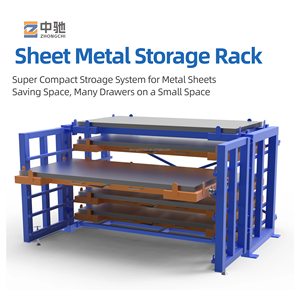
Heavy Duty Drawer-Type Industrial Mold & Tooling Storage Rack
500-2000kg/Drawer
Anti-Rust Treated
Safety Lockout
Direct-from-factory selective pallet racks, heavy-duty shelving, and specialized handling modules configured for high dynamic loading, aisle optimization, and complete architectural flue clearance compliance.
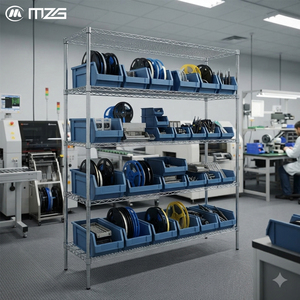
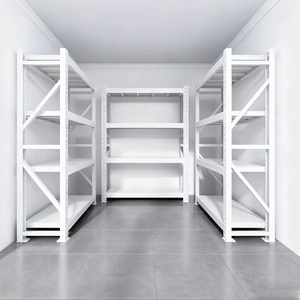

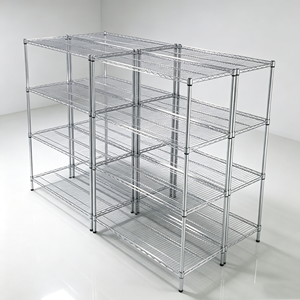
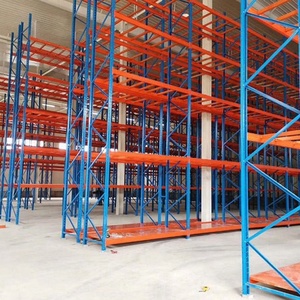
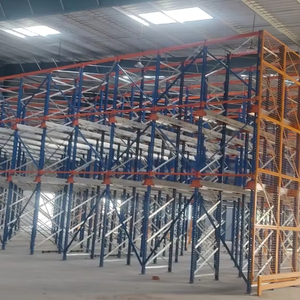
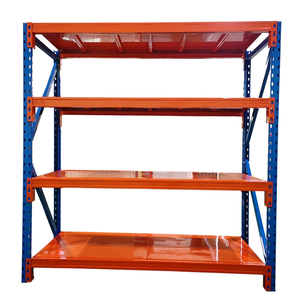
In modern high-velocity distribution centers, the Back-to-Back Pallet Racking configuration represents the international engineering benchmark for selective warehouse storage. By mechanically joining two single rows of standard selective pallet racks back-to-back using heavy-duty, bolt-locked row spacers, logistics engineers achieve a compound structural rigidity that single-row configurations cannot match. This layout fundamentally alters the buckling length calculations governed by European Standard EN 15512 and the Australian Standard AS 4084, drastically increasing the critical buckling load ($P_{cr}$) of the cold-formed upright frames.
The primary advantage of back-to-back arrays lies in the optimization of the floor-area-to-aisle ratio. Rather than dedicating an operating aisle to every single rack row, back-to-back pairings permit two storage rows to share a single handling aisle on either side, immediately reducing aisle footprint by 35% to 42% across the warehouse envelope. Crucially, 100% SKU selectivity is completely retained—a vital operational requirement for Third-Party Logistics (3PL) providers, automotive component distributors, and dynamic retail supply chains managing tens of thousands of active lines.
A defining engineering requirement in CE-compliant back-to-back racking is the strict maintenance of the longitudinal flue space (the continuous vertical aperture separating the back-to-back pallets). Under NFPA 13 and EN 12845 in-rack sprinkler standards, this clearance must measure between 75 mm and 150 mm. Factory-manufactured row spacers with integrated pallet backstops prevent pallet overhang from encroaching upon the flue space, guaranteeing unimpeded vertical thermal chimney venting to activate early-suppression fast-response (ESFR) ceiling sprinklers during a thermal event.
| Performance Parameter | Selective Back-to-Back | Double-Deep Selective | Drive-In / Drive-Through | Radio Shuttle System |
|---|---|---|---|---|
| Direct Selectivity | 100% (Instant Pick) | 50% (Requires Shifting) | < 15% (LIFO/FIFO Batch) | Batch / SKU Channel |
| Aisle Utilization Area | Moderate (3.0m - 3.4m Aisles) | Optimized (Fewer Aisles) | High Density (> 70% Floor) | Maximum (> 80% Floor) |
| Forklift Fleet Compatibility | Standard Counterbalance / Reach | Pantograph / Deep-Reach Fork | Narrow-Chassis Drive-In Truck | Standard Forklift + AGV/Shuttle |
| Deflection Limit Ratio (Beam) | L/200 (EN 15512 Spec) | L/200 | N/A (Continuous Cantilever Rails) | L/250 (Precision Tolerance) |
| Seismic Damping Stability | High (Interconnected Row Spacers) | High (Deep Footprint) | Moderate (Requires Top Portal Tie) | High (Mass Interlocked Block) |
| CAPEX per Pallet Position | Lowest Baseline ($) | Low-to-Medium ($$) | Medium ($$$) | High-Tech Capital ($$$$) |
Global supply chain volatility, land acquisition costs, and stricter safety governance have fundamentally transformed industrial racking procurement. Procurement directors in Europe, North America, and Oceania are shifting from transactional vendor bidding toward long-term strategic alignments with certified original equipment manufacturers (OEMs). Key procurement shifts dominating enterprise purchase orders include:
Enterprise buyers no longer prioritize the lowest steel ton price. They evaluate life-cycle durability, impact resilience, zinc-phosphate pre-treatment lifespans, and standardized beam connector compatibility that allows seamless future expansion without tearing down existing infrastructure.
Stringent enforcement of EU Construction Products Regulation (CPR 305/2011) mandates verifiable CE Factory Production Control (FPC) documentation. Importers reject unverifiable declarations, demanding certified lab heat-testing certificates and accredited third-party notified body audit logs.
Procurement teams are future-proofing standard back-to-back racking arrays. Upright columns and ground clearance heights are engineered with tight laser tolerances to ensure seamless retrofitting with Autonomous Mobile Robots (AMRs), Vision-Guided Forklifts (AGVs), and RFID picking transponders.
Furthermore, biosecurity mandates in trans-Pacific and Australasian shipping have created a decisive preference for tier-1 suppliers capable of delivering palletized components on engineered steel cradles or ISPM-15 heat-treated dunnage, eliminating port-of-entry quarantine penalties and fumigation delays.
The manufacturing of load-bearing warehouse racking has evolved from rudimentary sheet metal stamping into high-precision structural cold-roll forming. At Guangzhou Heda Shelves Co., Ltd., continuous investment in automated CNC tooling and metallurgical testing ensures that every rack component exceeds the static and dynamic parameters established by global standards.
Transitioning from standard hot-rolled carbon steel to high-yield Q355B and micro-alloyed structural coils. This enhances the yield-to-tensile ratio, allowing for optimized cross-sectional profiles with continuous ribbed stiffeners that maximize axial load resistance while reducing freight tare weight.
Every custom bay geometry is subjected to non-linear FEA simulation before tool-die engagement. This computational modeling verifies torsional warping resistance under asymmetric loading, second-order ($P-\Delta$) global sway instability, and seismic anchor pull-out stresses.
Traditional solvent paints have been replaced by continuous 10-stage automated surface preparation: alkaline degreasing, zinc-phosphate conversion, nano-ceramic passivating rinse, and 60–80 µm thermoset electrostatic powder curing. This delivers superior salt-spray corrosion ratings exceeding 500 hours.
In addition, upright punch patterns are held to ±0.2 mm tolerances across a 12-meter single column length using continuous rotary servo punching lines. This eliminates connector binding during installation and guarantees structural plumbness across multi-kilometer rack runs.
Founded in 2001, Guangzhou Heda Shelves Co., Ltd. has grown into an international powerhouse in structural warehouse storage systems. Operating from a modern 30,000 m² manufacturing facility equipped with advanced roll-forming mills, robotic welding cells, and automated coating lines, the company maintains a monthly output exceeding 30,000 tons of certified industrial storage equipment.
Supported by a specialized technical department of over 300 experienced structural engineers, CAD layout specialists, and certified quality-assurance technicians, Heda Shelves serves as the end-to-end engineering partner for multinational logistics brands, general contractors, and material handling distributors across Europe, Oceania, the Middle East, and the Americas.
Comprehensive answers compiled by our chief structural engineers to address critical structural, seismic, and regulatory questions encountered by industrial racking buyers and warehouse facility directors.
Connect directly with Guangzhou Heda Shelves structural engineers. Share your warehouse floor plan dimensions, clear roof heights, slab load capacities, and pallet profiles for an accurate 3D CAD proposal and factory-direct quotation within 24 hours.