High-Density Industrial Storage & Gravity Flow Systems
Explore our heavy-duty cold-formed and precision-welded racking modules engineered to eliminate wasted aisles, accelerate picking velocity, and maximize volumetric space utilization.
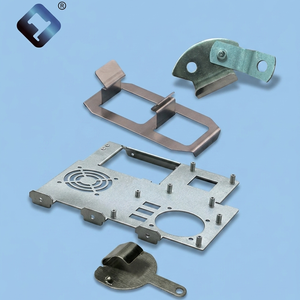
Custom Sheet Metal Enclosure, Precision Steel Server Rack & Control Box Fabrication
- SPCC Cold-Rolled & Stainless Steel OEM
- Laser CNC punch tolerances ±0.05mm
- Customized IP55/NEMA enclosure designs
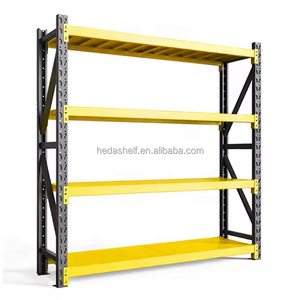
Wholesale Price Industrial Boltless Storage Rack 4 Tier Metal Shelving Units
- Rapid modular clip-in beam assembly
- 400kg–800kg uniform distributed load/tier
- Dual-slotted uprights for rapid re-pitching
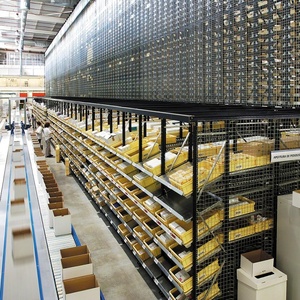
High Efficiency Durable Heavy Duty Adjustable 5-Layer Carton Gravity Flow Rack
- CE Certified smooth roller tracks
- Ergonomic pick face with integrated splitters
- First-In-First-Out (FIFO) manual case picking
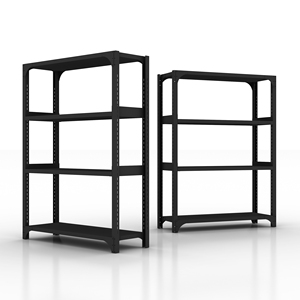
Cheap Metal Light Duty Rack, Storage Rack, Steel Pallet Racking
- Cost-optimized Q235B steel construction
- Ideal for light secondary inventory bays
- Corrosion-resistant epoxy powder coating
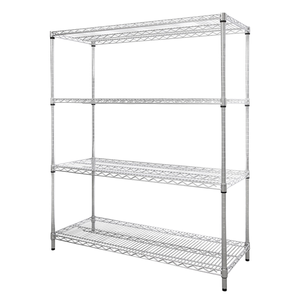
Heavy-Duty 5-Tier Industrial Warehouse Metal Rack Chrome Polishing Wire Shelving
- High airflow wire mesh decks for fire safety
- Bright chrome plating & anti-corrosive finish
- Tool-free shelf height adjustment on 25mm steps
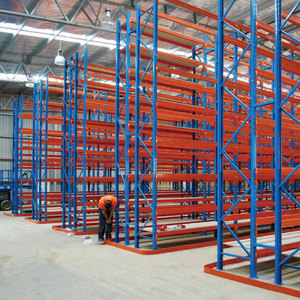
Heavy Load Cold Rolled Steel Powder Coated Narrow Aisle Racking
- Optimized for wire-guided turret trucks
- Clear operational aisle widths down to 1.6m
- Up to 15m structural vertical capability
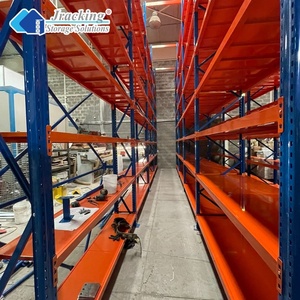
Jracking EURO Standard Warehouse Storage Racks Pallet Racking System
- Standardized for EUR-1 (800x1200) & ISO pallets
- Calculated deflection tolerance < 1/200th span
- 5-hook connector brackets with locking safety pins
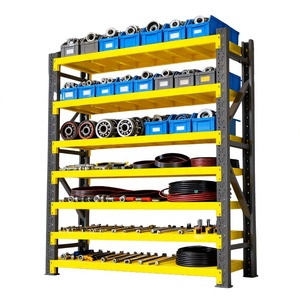
Low Price Durable 7-layer Anti Rust Heavy Duty Adjustable Metal Shelf
- High-capacity stepped beams with steel panels
- Phosphated & electrostatic treated anti-rust steel
- Ideal for multi-tier carton picking mezzanine floors
Kinematic Dynamics & Structural Architecture of Gravity Flow Racks
Gravity flow pallet racking (pallet live storage) utilizes the natural force of gravity across inclined roller beds to realize autonomous, energy-free First-In-First-Out (FIFO) material rotation. Achieving structural safety and smooth conveyance requires balancing mechanical kinematics, structural friction, and dynamic braking forces.
Slope Gradient Calibration
Standard pallet flow lanes are precision-engineered at an inclination angle ranging from 1.5° to 2.2° (approx. 2.5% to 3.8% slope). If the gradient is under-pitched, pallets with irregular bottom runners, composite skids, or deflection over 8mm will stall mid-lane. If over-pitched, kinetic energy accumulates exponentially, risking impact failure at the pick face. Our design engineers calculate slope profiles customized to pallet weight bands from 300kg to 1,800kg.
Centrifugal & Eddy-Current Braking
To constrain pallet descent velocity within the safe operating envelope of 0.15 to 0.30 m/s, speed controller brake rollers are placed at calculated pitch intervals (typically every pallet position). Internal planetary gearboxes activate centrifugal friction shoes as rotational speed increases. For cleanroom and sub-zero cold-chain operations, non-contact eddy-current magnetic retarders provide zero-wear speed suppression.
Pallet Separation Mechanics
Line pressure in deep lanes (exceeding 5 to 20 pallets deep) can exert tremendous cumulative horizontal force against the front pallet. Our factory incorporates mechanical time-delay separator locks. When the front pallet reaches the discharge stop, the rear pallets are automatically locked 300mm behind it. Once the forklift lifts the first pallet clear, the separator mechanism disengages, releasing the next queue smoothly.
Comparative Engineering Analysis: Gravity Flow vs Alternative Systems
Understanding volumetric density, cycle speed, power consumption, and capital expenditure (CAPEX) per pallet position to validate equipment return on investment (ROI).
| Storage System Type | Stock Rotation Logic | Floor Space Utilization | Forklift Travel & Fuel Impact | Power / Battery Reliance | Structural Safety (EN 15512) |
|---|---|---|---|---|---|
| CE Gravity Flow Pallet Rack | Strict FIFO | Up to 75% - 85% | Lowest (Dedicated Load/Pick Aisles) | Zero Electricity (100% Gravity) | Certified Shock Dampening / Separators |
| Drive-In / Drive-Through Rack | LIFO (FIFO requires 2 aisles) | 60% - 70% | High (Truck enters upright rack bays) | None | High upright impact vulnerability |
| Radio Shuttle System | FIFO or LIFO | 75% - 85% | Medium (Shuttle handles deep lanes) | High (Lithium-ion batteries & chargers) | Requires regular electronic maintenance |
| Selective Pallet Racking | 100% Pallet Accessibility | 35% - 45% (Aisle Intensive) | Very High (Forklifts traverse every aisle) | None | Standard column protectors required |
| Push Back Racking (Cart Type) | Strict LIFO | 65% - 75% | Low to Medium (Single aisle operation) | Zero Electricity | Mechanical cart gravity limit (2-6 deep) |
International Regulatory Standards: CE, EN 15512 & AS 4084
Industrial racking is a structural installation supporting hundreds of tons of live kinetic load. Compliance with international cold-formed steel structural codes is paramount for warehouse operator safety and legal commissioning.
CE Mark: CPR 305/2011/EU
Under European Construction Products Regulation, racking installations serving as permanent warehouse equipment require verified CE Declaration of Conformity. Our manufacturing processes hold Certificate No. 2435-CPR-8605159, certifying that our structural steel profiles, welding seams, and upright punching maintain tight metallurgical and mechanical limits.
EN 15512:2020 Structural Limit State
Our structural calculation models apply Ultimate Limit State (ULS) and Serviceability Limit State (SLS) verification based on EN 15512. Beams and upright profiles are tested for torsional buckling, beam connector rotational stiffness (sway frame analysis), and column base-plate anchorage against cyclic seismic shear forces.
AS 4084:2023 & NZS 1170.5 Ready
For Pacific and Australasian installations, engineering packs specify steel grade testing conforming to AS/NZS standards. For seismically active regions such as New Zealand and Japan, gravity flow lanes incorporate anti-jump roller retainers, strengthened base-plate anchors (chemical anchors M12-M16), and heavy diagonal K-bracing to absorb lateral ground acceleration.
Emerging Trends Shaping Gravity Flow System Procurement
How supply chain automation, carbon abatement legislation, and extreme cold-chain demands are shifting global technical specifications for dynamic pallet flow racking.
1. Automated Guided Vehicle (AGV) & AMR Handshakes
Autonomous mobile robots and counterbalanced automated forklifts demand millimeter-accurate pallet pick tolerances. Modern gravity flow tracks incorporate optical photo-eye sensor mounts and pneumatic micro-stoppers, aligning pallets within ±3mm at discharge stations to prevent robotic picking misfires.
2. Cryogenic Low-Temperature Greases (-35°C)
Global frozen protein and pharmaceutical cold-chains demand roller track mechanisms that resist bearing seizure. Contemporary procurement specifications dictate synthetic fluorinated greases and double-sealed ball bearings (6204-2RS/C3 low-temp spec) preventing condensation freezing in blast freezers.
3. Zero-Energy Carbon Scope 1 & 2 Reductions
With enterprise Scope 1 & 2 carbon audits expanding, gravity flow racking provides zero-electricity live dynamic storage, outperforming continuous powered conveyor systems. Sourcing high-strength lightweight Q355B cold-rolled profiles also reduces embedded carbon in steel mass per pallet location.
4. Modular Drop-In Retrofitting
Supply chain volatility forces distribution centers to rapidly shift between selective racking and flow lanes. Current procurement focuses on universally compatible roller cassettes that bolt directly onto standard tear-drop or diamond-slotted beam profiles without hot welding or full tear-down.
Key Technological Evolutions in Modern Roller Bed Design
From primitive gravity chutes to high-precision dynamic conveying beds: how continuous mechanical refinement has transformed reliability and load safety.
Full-Width Steel Rollers vs Split Polyurethane Skate Wheels
Early gravity systems suffered roller deformation under concentrated pallet runner loads. Modern heavy pallet lanes (800kg–1500kg) utilize Φ60mm or Φ76mm heavy-gauge galvanized steel rollers with welded steel sprocket bodies. Lightweight carton flow racks utilize impact-modified polyurethane tri-wheel tracks with low start-up inertia, ideal for order-picking totes and corrugated cases.
Self-Regulating Planetary Speed Controllers
Legacy braking rollers relied on static friction pads that wore unevenly and caused dynamic track skewing. Modern high-capacity systems feature self-regulating planetary centrifugal brake rollers that increase braking resistance proportionally to pallet speed squared: F_brake ∝ v². This physics guarantee consistent 0.2 m/s tracking regardless of whether the pallet carries 300kg or 1,500kg.
Automatic Entry Guides & Pallet Centering Skids
Operator forklift entry misalignments remain the primary cause of lane jamming. Advanced gravity beds incorporate tapered steel run-in guide channels at the loading interface. These flanged entry guides physically steer skewed pallets into centerline alignment before the pallet engages the primary roller track, ensuring straight tracking along lanes up to 30 meters deep.
Guangzhou Heda Shelves Co., Ltd. — 25 Years of Precision Manufacturing
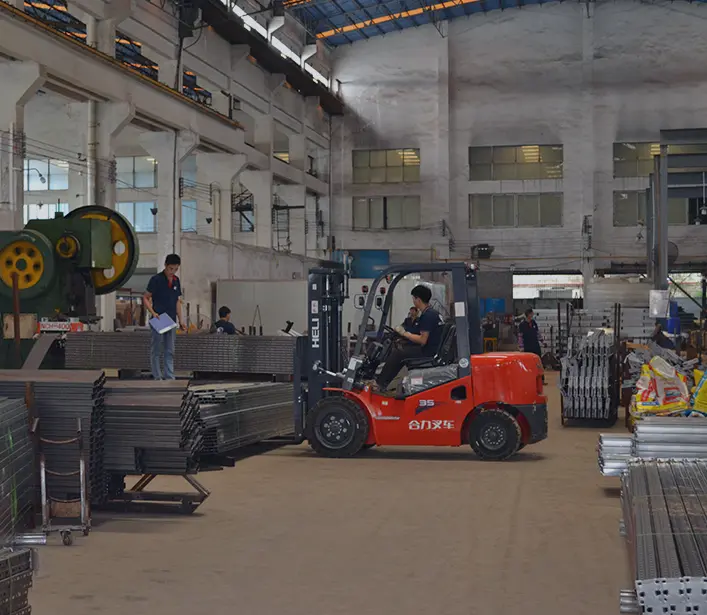
Established in 2001, Guangzhou Heda Shelves operates an expansive 30,000m² modernized manufacturing complex staffed by over 300 experienced engineers, cold-rolling specialists, and certified quality technicians. Producing over 30,000 metric tons of certified racking monthly, we provide direct OEM/ODM engineering to EPC contractors, logistics integrators, and racking distributors globally.
Our gravity flow solutions undergo 100% full-scale prototype testing: your exact pallet materials, runners, and load specifications are physically tested on our test incline rigs to confirm brake spacing, slope tolerances, and separator operations before container dispatch.
- CE Certified: CPR No. 2435-CPR-8605159
- ISO 9001:2015: System No. 18624Q00169R0M
- High Precision: CNC laser & automated roll forming
- Biosecurity Ready: ISPM-15 export stillage packaging
- Finite Element Analysis: Full 3D CAD/FEA load verification
- Global Logistics: Door-to-port clearance support worldwide
Frequently Asked Questions: Technical & Procurement Insights
Critical mechanical, structural, and logistical questions addressed directly by our senior structural engineering team.
What pallet characteristics are required for reliable gravity flow conveying?
How do you prevent pallets from coasting too fast or crushing front pallets in deep lanes?
Can gravity flow pallet racks operate effectively inside -30°C cold-chain blast freezers?
What is the typical lifespan and maintenance schedule for brake rollers and separator valves?
How does Heda Shelves calculate dynamic rack loads under regional seismic codes?
What documentation and certifications are provided with export shipments?
Request Your Free 3D CAD Warehouse Flow Engineering Layout
Accelerate your warehouse throughput and cut operational footprint by up to 50%. Provide our structural engineering team with your facility dimensions, pallet weights, and throughput targets to receive a custom 3D design and quotation within 24 hours.