Featured Warehouse Storage & Heavy-Duty Material Handling Racks
Explore our precision-engineered product line supporting heavy structural profiles, dynamic high-throughput logistics, temperature-controlled freezers, and industrial cantilever operations.
 Heavy Logistics
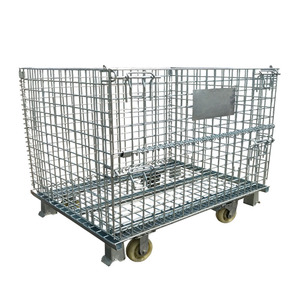
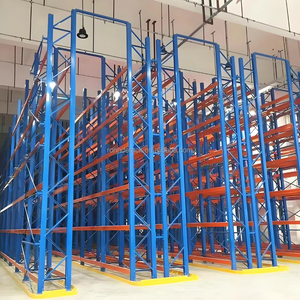
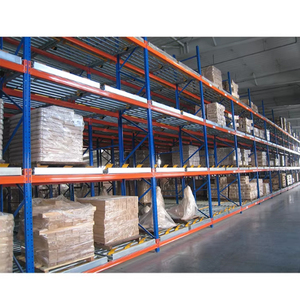
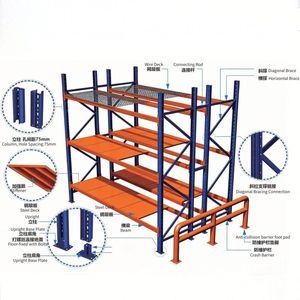
Engineering Principles of CE Certified Heavy-Duty Cantilever Racking
Unlike conventional selective pallet racking governed primarily by symmetric vertical compressive vectors, a heavy duty cantilever racking system operates under continuous, severe eccentric bending moments ($M_b$) and torsional stresses ($M_t$). Without front aisle columns to support load distribution, the structural integrity of every cantilever arm and vertical column relies entirely on the mechanical moment connection at the arm-to-column node and the rigidity of the heavy-gauge base anchorages.
As an internationally acknowledged heavy duty cantilever racking system supplier, our engineering methodologies strictly follow European harmonized standards (EN 15512, EN 15620, EN 15629, and EN 15635) under the Construction Products Regulation (CPR 305/2011), alongside AS 4084 and FEM 10.2.02 codes. By leveraging hot-rolled European standard wide flange steel beams (HEA / IPE profiles) and certified high-yield structural steel grades (Q235B, Q355B, and S355JR), our cantilever systems deliver unyielding support for raw lumber, extruded aluminum packs, steel bar stock, structural tubes, industrial coils, and bulky building supplies.
Structural Hot-Rolled IPE/HEA Profiles (Heavy to Extra Heavy)
Engineered for severe-duty industrial applications with arm capacities ranging from 1,000 kg to over 5,000 kg per arm. Solid structural steel profiles possess high torsional stiffness, superior web thickness, and remarkable ductility against dynamic forklift impacts. Unaffected by cold-work embrittlement, structural cantilever systems are optimal for heavy manufacturing, timber processing, metallurgy distribution centers, and outdoor yard operations with canopy extensions.
Cold-Formed Roll-Formed Profiles (Medium to Heavy Duty)
Fabricated using continuous CNC roll-forming lines from high-tensile steel strip coils, providing arm capacities from 300 kg to 1,000 kg per arm. These systems minimize tare structural deadweight while maximizing economic efficiency for retail hardware chains, plumbing supplies, furniture inventory, and lightweight pipe distributors. Fully compatible with modular 50mm, 75mm, or 100mm pin pitch adjustment increments.
Heavy Duty Cantilever Mechanical Properties & Load Parameters
| Structural Parameter | Medium-Duty Specification | Heavy-Duty Specification | Extra Heavy-Duty (Industrial IPE) | Compliance Reference |
|---|---|---|---|---|
| Column Section | Cold-rolled C-Channel (200×60×2.5) | Welded Box Section / IPE 240 | Hot-Rolled IPE 300 to IPE 500 | EN 10025-2 / S355JR |
| Arm Load Range (UDL) | 250 kg – 800 kg per arm | 800 kg – 2,200 kg per arm | 2,200 kg – 5,000+ kg per arm | FEM 10.2.02 / EN 15512 |
| Arm Reach Length | 600 mm – 1,000 mm | 1,000 mm – 1,800 mm | 1,500 mm – 2,500 mm | Custom Millimetres |
| Column Height (Single/Double) | 2,000 mm – 5,000 mm | 4,000 mm – 8,000 mm | 6,000 mm – 12,000 mm | Structural Calculations |
| Maximum Arm Deflection | $\delta \le L / 200$ | $\delta \le L / 250$ | $\delta \le L / 300$ (Precision Taper) | EN 15620 Serviceability |
| Safety Factor ($\gamma_M$) | $\ge 1.40$ | $\ge 1.50$ | $\ge 1.65$ | Eurocode 3 (EN 1993-1-1) |
| Surface Protection | Electrostatic Powder (60–80 μm) | Thermoset Epoxy (80–100 μm) | Hot-Dip Galvanized (>85 μm / ISO 1461) | C3 to C5 Industrial Corrosivity |
Emerging Sourcing Trends in Heavy-Duty Cantilever Storage Systems
Global supply chain directors and warehouse facility engineers are moving beyond baseline unit cost, prioritizing lifetime operational resilience, automation integration, and verified ESG compliance.
1. Shift Toward Direct-from-Manufacturer Engineering
Procurement leaders are bypassing third-party trading intermediaries in favor of factory-direct partnerships with established manufacturing plants. Direct collaboration with factories operating in-house finite element analysis (FEA) teams eliminates markup costs by 18–30% while ensuring direct factory liability for welding certifications, metallurgical trace certificates, and tailored baseplate hole positioning.
2. Mandatory Independent Structural Auditing (CPR & CE)
Due to escalating occupational safety enforcement (EU OSHA, Safe Work Australia, OSHA USA), supply chain operators mandate third-party CE certificates issued by EU Notified Bodies under EN 1090-1 execution class EXC2 or EXC3. Procurement contracts now enforce mill test certs (EN 10204 Type 3.1) and non-destructive weld testing (NDT) reports as contractual milestones before final balance payments.
3. Life Cycle Costing (LCC) Over Initial Capital Expenditure
Sophisticated procurement frameworks evaluate 20-year Total Cost of Ownership (TCO). Buyers increasingly specify hot-dip galvanization for outdoor timber and steel yards over conventional single-coat paint, eliminating recurring corrosion repainting, structural decertification risks, and downtime caused by micro-fractures in aggressive coastal or high-humidity environments.
Next-Generation Engineering Innovations in Cantilever Storage
From semi-automated stacker crane compatibility to algorithmic load monitoring, modern heavy-duty cantilever systems are transforming into precision automation infrastructure.
AS/RS Cantilever Automation
Integration of automated stacker cranes with specialized telescopic forks or 4-way multi-directional shuttle carriers. Eliminates human forklift travel errors inside aisles and maximizes vertical ceiling utilization up to 15 meters for 6-meter pipe bundles.
Seismic Dissipation Geometry
Advanced ductile arm pin connectors engineered according to NZS 1170.5 and EN 1998 standards. Controlled articulation absorbs horizontal kinetic energy during seismic ground accelerations without yielding vertical column spines.
Digital Twin & SHM Sensing
Embedded wireless strain-gauge sensors installed on cantilever root connections measure actual strain in real time. Systems automatically trigger warehouse management alerts prior to exceeding elastic deformation limits during eccentric loading.
Zero-Loss Arm Pivoting
Specially engineered vertical impact-release arm joints swing upward upon accidental impact by forklift tines. This mechanism completely prevents destructive plastic buckling of column flanges and dramatically slashes warehouse maintenance downtime.
25 Years of Factory-Direct Heavy-Duty Storage Engineering
Founded in 2001, Guangzhou Heda Shelves Co., Ltd. operates an advanced 30,000 square meter manufacturing plant backed by more than 300 experienced technical designers, robotic welding technicians, and structural engineering professionals. With an industrial production output exceeding 30,000 metric tons per month, we serve major logistics infrastructure hubs, heavy timber mills, and distribution centers across Australia, New Zealand, Europe, and the Americas.
Every cantilever system we manufacture is built from verified structural raw materials (BaoSteel / Shougang Steel) and validated against our documented CE Certification (No. 2435-CPR-8605159) and ISO 9001:2015 Quality Management Accreditation (No. 18624Q00169R0M). We deliver free comprehensive 3D CAD spatial blueprints, static load calculation dossiers, and turnkey modular shipping packages.
-
10,000+ Completed ProjectsWorldwide warehouse installations since 2001
-
Full Engineering DossierStatics, anchor shear load, and deflection tables
-
Biosecurity Export CratingISPM-15 heat-treated wood and custom steel stillages
-
OEM & ODM CapabilitiesDirect private labeling for regional racking distributors
Verified 10-Step Quality Control Protocol
01. Spectrographic Raw Steel Inspection: Chemical composition & tensile verification.
02. Precision CNC Plasma & Saw Cutting: Sub-millimeter tolerances on heavy IPE sections.
03. Multi-Axis Automated Column Punching: Exact hole alignment for modular arm pitches.
04. Robotic Submerged-Arc Welding: Penetration testing across all base-to-column junctions.
05. Ultrasonic & Magnetic Particle NDT: Structural weld integrity certification.
06. Acid Pickling & Phosphating: Multi-stage chemical surface cleaning.
07. Dual-Stage Electrostatic Powder Coating: Automated curing ovens at 200°C.
08. Cross-Hatch Adhesion & Hardness Testing: ASTM D3359 cross-cut adhesion validation.
09. Heavy-Gauge Steel Stillage Palletizing: Protection against sea-transit dynamic vibration.
10. Complete Documentation Dispatch: Test reports, mill certs, and CAD guides.
Frequently Asked Questions: Heavy-Duty Cantilever Racking
Direct answers to the structural calculations, regulatory compliance requirements, and operational parameters most frequently addressed by logistics directors and facility engineers.
What is the engineering difference between roll-formed and structural cantilever racking? +
How does CE Certification (EN 1090-1 / CPR) protect the purchasing organization? +
How is allowable cantilever arm deflection calculated according to EN 15620? +
What floor foundation specifications are required for heavy-duty cantilever columns? +
Can heavy-duty cantilever racks be installed outdoors with roof canopies? +
What surface finish is best suited for humid or coastal marine environments? +
What critical operational details are required to generate an engineering quote? +
How are international shipments packed to comply with biosecurity regulations? +
Request Your Custom Engineering Calculation & Free 3D CAD Layout
Partner directly with an accredited heavy-duty cantilever racking manufacturer. Share your warehouse floor dimensions and load parameters, and our engineering team will provide a tailored static structural analysis and layout design within 24 hours.