Heavy-Duty & High-Density Storage Solutions
From standard teardrop selective layouts to high-capacity dynamic pallet flow and multi-tier structural platforms, our precision cold-formed steel racking systems maximize volume density while maintaining compliance with international safety protocols.
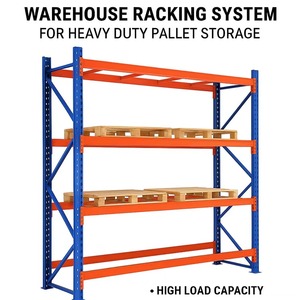
Material Handling Heavy-Duty Pallet Storage System
Engineered for extreme dynamic loading in primary distribution hubs. High-tensile upright steel frames distribute vertical compression evenly under massive pallet weights.
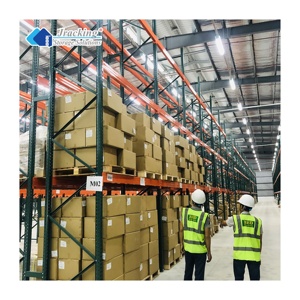
Jracking US Standard Teardrop Pallet Rack System
Universal 2-inch pitch teardrop punched uprights compatible with standard North American beam configurations. Tool-free rapid assembly with automatic safety lock pins.
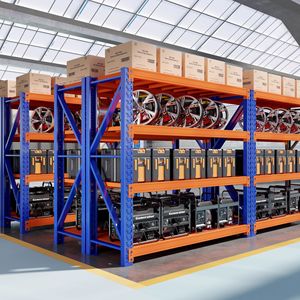
Boltless Adjustable Industrial Steel Storage Shelving
Modular multi-tier shelving designed with multi-point interlocking claw connectors. Incorporates anti-corrosive passivation pre-treatment for demanding operational settings.
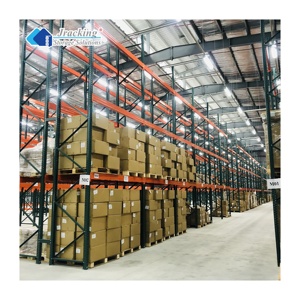
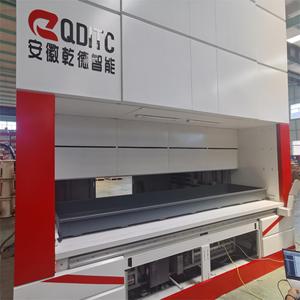
Vertical Heavy-Duty Teardrop Racking for Logistics
Engineered for high-bay fulfillment facilities. Delivers elevated torsional resistance under asymmetrical pallet loads with automated aisle-width compatibility.
Industrial Alloy Steel Heavy Dynamic Stacking Racks
High-load portable nesting and stacking racks capable of handling combined stack burdens up to 15,000kg. Eliminates static aisle footprints in flexible buffer zones.
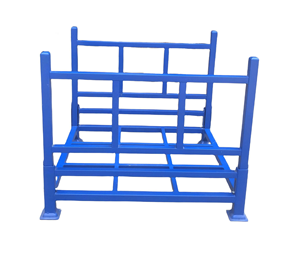
Customized Folding Anti-Corrosive Stacking Racks
Collapsible post design for space savings during reverse logistics return cycles. High-adhesion electrostatic finishing withstands heavy pallet scraping and impact.
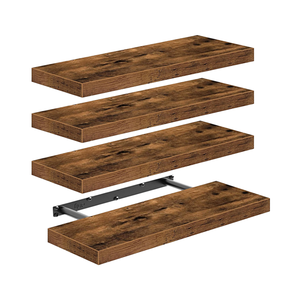
Modular Metal-Wood Engineered Commercial Shelving
Designed for front-of-house logistics depots, trade counters, and retail backrooms. Features reinforced invisible steel brackets with durable laminated composite tiers.
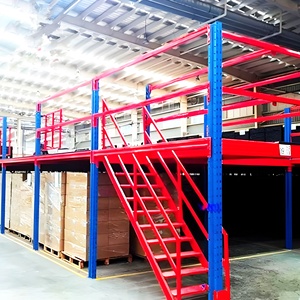
Industrial Multi-Tier Mezzanine Rack Platform HD-MR-22
Multi-level structural storage doubling operational square footage. Fully integrated with heavy-duty cold-formed uprights, safety staircases, kick plates, and slide gates.
Engineering Verification, Structural Integrity & Global Compliance
Established in 2001, Guangzhou Heda Shelves Co., Ltd. operates a 30,000 m² primary production ecosystem staffed by over 300 experienced engineers and technical fabricators. We supply verified load-bearing solutions across Australia, New Zealand, Europe, and the Americas.
High-Density Warehouse Racking Structural Typology Matrix
Selecting an optimal racking typology requires balancing cubic storage density against SKU selectivity, pallet throughput cycles, and capital expenditure. The comparative matrix below outlines structural criteria evaluated by logistics architects.
| Storage Typology | Floor Space Utilization | Cubic Volume Density | SKU Selectivity | Stock Rotation Logic | Forklift Impact Risk | Target SKU Velocity |
|---|---|---|---|---|---|---|
| Selective Pallet Racking | 35% - 40% | Moderate | 100% Direct | FIFO / LIFO | Low (External Aisles) | High Turnover / Broad SKU Variety |
| Drive-In Racking | 65% - 75% | Very High | 15% - 25% | Strict LIFO | High (Internal Entry) | Homogeneous Bulk / Cold Storage |
| Push-Back Racking (Carts) | 55% - 65% | High | Lane Specific | LIFO | Low (Front Face Only) | Medium Rotation / Multi-Lane Batches |
| Radio Shuttle Racking | 75% - 85% | Maximum | Automated Lane | FIFO or LIFO | Minimal (Robotic Cart) | High Volume / High Density Operations |
| Gravity Pallet Flow | 70% - 80% | Very High | Lane Face Direct | Strict FIFO | Low (Dedicated Faces) | Perishable Goods / Time-Critical FMCG |
| Multi-Tier Mezzanine | 100% - 200% Added | Max Vertical | 100% Manual/Bin | Any Configuration | Zero (Segregated Deck) | Split-Case Picking / Ecommerce Fulfillment |
Strategic Procurement Trends Reshaping High-Density Warehousing
Global supply chain disruptions and surging real estate lease rates have elevated industrial storage procurement from a basic facility purchase to a long-term capital efficiency asset. Modern engineering must integrate flexibility, seismic resilience, and automated mechanical handling interfaces.
1. Shuttle-Ready & AMR Integration
Warehouses are moving rapidly away from labor-heavy manual forklift operations inside dense storage lanes. Buyers are prioritizing racking structures pre-machined to house automated 4-way pallet shuttles, floor-level Autonomous Mobile Robot (AMR) tunnels, and Automated Storage and Retrieval System (AS/RS) top crane guide brackets.
- Factory-integrated sensor channel housings
- Ultra-flat roll-formed rail profiles
- Higher beam-to-column deflection tolerances
2. Dynamic Seismic Engineering Verification
Following updated seismic building codes across earthquake-prone regions such as New Zealand (NZS 1170.5) and the US West Coast, static load ratings alone are no longer sufficient. Enterprise procurement now demands dynamic finite element analysis (FEA) modeling, ductile base-plate assemblies, and enlarged anchor arrays.
- Finite Element Analysis (FEA) verification reports
- Ductile energy-dissipating seismic bracing kits
- Floor slab concrete core tension certifications
3. Decarbonized Steel & Eco-Coatings
ESG initiatives are directly influencing warehouse tender scoring criteria. Enterprise logistics providers require verified environmental product declarations (EPDs) demonstrating low embodied carbon in raw hot-rolled strip steel, zero heavy-metal formulations, and volatile organic compound (VOC) free electrostatic powder finishes.
- RoHS compliant chemical pre-treatment stages
- Thermally efficient low-bake powder cure lines
- Full traceability to certified blast furnace coils
4. Maximizing Cubic Volume (Clear Height)
With industrial land acquisition costs at historic highs, logistics developers are scaling vertical warehouse clear heights from 9 meters to 14–18+ meters. This requires column upright profiles with high section moduluses to prevent buckling across elevated unbraced vertical spans.
- Omega-profile upright sections up to 120mm width
- Heavy-duty 5-claw beam connector design
- Reduced vertical pitch increments (50mm / 75mm)
5. Direct Factory Alliances & Kitting
Tier-1 contractors are shifting away from multiple middlemen distributors in favor of direct engineering partnerships with verified manufacturers. End-to-end direct sourcing provides custom-tailored factory kitting, synchronized site container drop deliveries, and direct access to production engineering leads.
- Component-level part stamping and marking
- Zero middleman markups on customized profiles
- Direct engineering CAD consultation within 24 hours
6. Hybrid Pallet & Carton Flow Integration
Omnichannel e-commerce has forced facilities to store bulk pallets on upper beam levels while operating high-speed split-case carton flow or picking shelves on lower levels. Modern procurement requires hybrid storage systems designed to manage both without structural field welding.
- Modular clip-in roller and gravity tracks
- Interlocking safety drop gates and wire decks
- Ergonomic beam setbacks for picking efficiency
Precision Cold-Forming & Surface Passivation
High-density racking structural performance is established at the raw material cutting, roll-forming, and chemical pre-treatment stages. Inferior steel or improper post-punching creates microscopic stress fractures that reduce long-term capacity. Our Guangzhou facility utilizes continuous automated profile roll lines and rigorous chemical finishing.
Every structural beam and upright profile uses strictly certified high-tensile structural coil (Q235B / Q355B or grade equivalent). Continuous CNC multi-station punching units maintain pitch spacing within an exact tolerance of ±0.1mm, ensuring uniform load distribution when beams lock into uprights under maximum payload.
The 10-Stage Quality Protocol
Our ISO 9001:2015 certified workshop subjects every production run to continuous chemical and mechanical inspection cycles:
Frequently Asked Questions by Industrial Buyers
Clear answers to critical questions regarding engineering compliance, international standards harmonization, seismic verification, and containerized logistics.
How does your racking conform to European EN 15512 and Australian AS 4084 standards?
Our engineering design principles strictly reference EN 15512 (Steel static storage systems – Adjustable pallet racking systems – Principles for structural design) and AS 4084-2023 (Steel storage racking). Structural calculations account for member buckling, pattern load distributions, frame looseness, and baseplate flexibility.
We provide comprehensive structural data packages, including section property tables (area, moment of inertia, radius of gyration), component limit state capacities, and beam deflection calculations, allowing your local registered professional engineer (CPEng / PE) to verify and certify the site installation.
What specific parameters do you require to produce an engineered 3D CAD layout?
To deliver an accurate, build-ready layout within 24 hours, our engineering department requires six key inputs:
1. Architectural Floor Plan: Structural grid dimensions, building column locations, dock doors, fire exits, and internal offices.
2. Height Clearances: Clear height to the lowest obstruction (roof purlins, lighting conduits, HVAC ducts, sprinkler heads).
3. Unit Load Profiles: Pallet dimensions (width, depth, height including overhang) and gross weight per pallet.
4. Material Handling Equipment (MHE): Forklift model, mast collapsed and extended lift heights, and minimum operational aisle width requirements (AST).
5. Floor Slab Specifications: Slab thickness, concrete compressive strength ($f'_c$), reinforcing layout, and maximum allowable point-load capacity.
6. Site Geo-Conditions: Project city/country and local seismic acceleration coefficients ($S_s, S_1$ or $Z$ factor).
Can your high-density systems be engineered for high-risk seismic environments (e.g., New Zealand, Chile, California)?
Yes. For active seismic regions, we compute dynamic lateral and longitudinal forces based on site-specific spectral acceleration data in accordance with NZS 1170.5, ASCE 7, or Eurocode 8. Upright frames are reinforced with heavy-duty tubular bracing patterns, enlarged ductile baseplates, double anchor bolt connections per column foot, and high-strength back-to-back row spacers.
We supply the seismic base shear calculations, overturning moments, and anchor pull-out tension values required for site sign-off with municipal building consent authorities.
How do you handle biosecurity and ocean container packaging to prevent transit damage?
Racking components are bundled using custom structural steel channel stillages or certified heat-treated timber bearing the official IPPC ISPM-15 stamp. This ensures rapid customs clearance through biosecurity agencies like Australian DAFF and New Zealand MPI without costly fumigation holds.
Beams, uprights, and accessories are shrink-wrapped in protective multi-layer film with corrugated corner protectors. Bundles are systematically banded using heavy gauge steel straps and anchored inside shipping containers to prevent cargo shifting during marine transport.
What are the lead times for custom manufacturing, export shipping, and site delivery?
Standard fabrication lead time is typically 15 to 25 business days from final 3D CAD sign-off, depending on order tonnage and custom paint finishes. Marine transit times from South China ports (Nansha/Shenzhen) to primary destinations are approximately:
• Australia & New Zealand: 14 to 22 days (Sydney, Melbourne, Brisbane, Auckland, Tauranga)
• Southeast Asia: 5 to 10 days (Singapore, Port Klang, Manila, Jakarta)
• North America West Coast: 16 to 24 days (Long Beach, Oakland, Vancouver)
• Europe: 28 to 38 days (Rotterdam, Hamburg, Felixstowe)
Do you offer private label (OEM/ODM) manufacturing for regional racking suppliers and installers?
Yes. A substantial portion of our 30,000-ton monthly capacity is dedicated to private-label production for international storage distributors, system integrators, and racking contractors. We can match existing proprietary punching patterns, provide custom RAL color-matched powder coatings, roll-stamp your brand mark into steel uprights, and print branded load capacity plaques and installation manuals.
Request an Engineered Warehouse Storage Layout & Project Quote
Collaborate directly with Guangzhou Heda Shelves Co., Ltd.'s engineering division. Send your building floor plan, clear height dimensions, and pallet data to receive an optimized 3D CAD design proposal within 24 hours.