Engineered Heavy-Duty Pallet Racking & Narrow Aisle Systems
Precision-manufactured from Q235B and Q355B structural cold-rolled steel, each system integrates tight beam-to-column locking mechanisms, load capacities exceeding 4,000 kg per tier, and certified compliance for automated or guided logistics hubs.
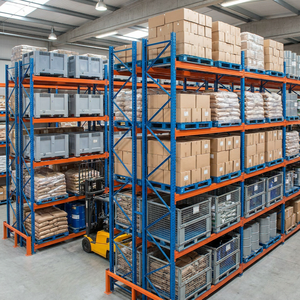
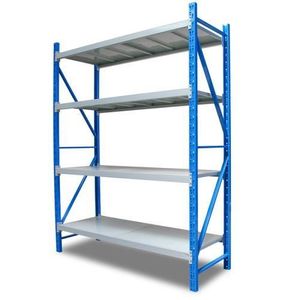
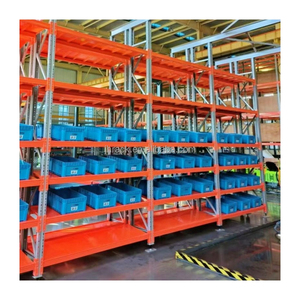
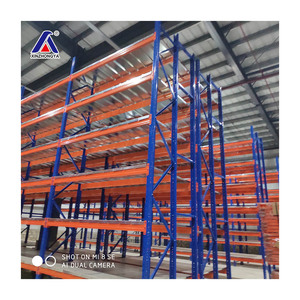
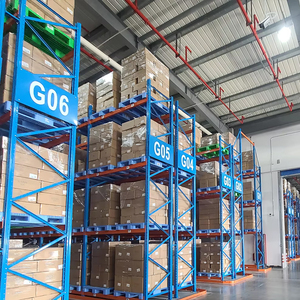
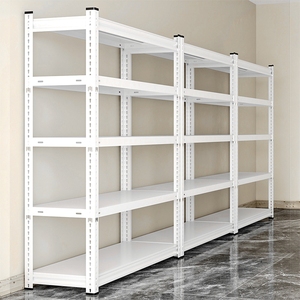
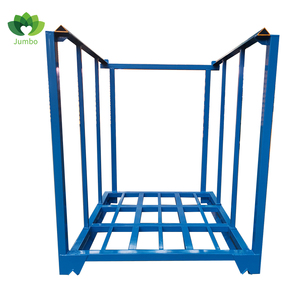
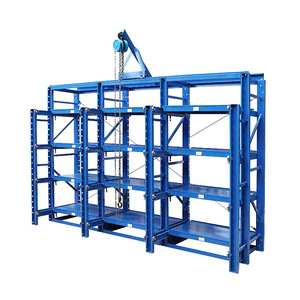
Engineering High-Density Narrow Aisle (VNA) Intralogistics
Narrow Aisle (NA) and Very Narrow Aisle (VNA) pallet racking systems represent the ultimate convergence of structural civil engineering, precision mechanical handling equipment (MHE), and volumetric optimization. By compressing operative transfer aisles from standard 3,800 mm reaches down to 1,500 mm – 1,800 mm footprints, modern DCs reclaim up to 45% of lost ground floor space.
As a premier CE certified racking exporter, HEDA Shelves engineers each cold-formed upright frame to withstand immense secondary torsional stresses, lateral sway, and cyclic impact dynamics dictated by high-reach turret trucks operating up to 17 meters above finished floor level (FFL).
VNA Mathematical Density Comparison
Under European standard EN 15620 (Steel static storage systems – Tolerances, deformations and clearances), moving from standard reach truck clearances to VNA configurations fundamentally alters the building height-to-width ratio:
- Aisle Width Reduction: 3.8m–4.2m down to 1.5m–1.8m (Reclaiming ~45% floor area)
- Vertical Height Utilization: Up to 17,000 mm top-beam elevation
- Selectivity Ratio: 100% individual pallet access without double handling
- Volumetric Efficiency: Surpasses 85% total cubic building capacity utilization
Cold-Formed High-Tensile Steel Profiles
Engineered from certified high-yield Q235B and Q355B structural steel coils. Roll-formed with continuous 50mm or 75mm multi-rib hole patterns, our uprights exhibit superior torsional rigidity and exceptional resistance to local plate buckling under extreme axial down-loads.
Dual Truck Guidance Infrastructure
Full support for both low-profile floor-anchored steel guide rails (e.g., L100×75×8 or continuous heavy C-channels) and electromagnetic inductive wire guidance systems (operating at 5.2 kHz to 10 kHz) to guarantee zero mast sway and safe high-speed travel inside the aisle.
Precision Superflat Floor Integration
Designed strictly for integration with concrete slabs laid in compliance with VDMA 15251 and DIN 18202 Table 3 standards. By matching our structural anchoring baseplates to your warehouse floor flatness class, dynamic sway and wheel bounce are structurally neutralized.
System Performance & Intralogistics Comparison
Evaluating Narrow Aisle Racking against standard warehouse storage formats to determine operational capital efficiency, space optimization, and mechanical compatibility.
| Racking Architecture | Operative Aisle Width | Pallet Selectivity | Floor Space Utilization | Max Reach Height | Equipment Dynamics |
|---|---|---|---|---|---|
| Narrow Aisle (VNA) | 1.5m – 1.8m | 100% Direct | 80% – 85% (High) | Up to 17.0 m | Guided Turret Truck / Articulated Forklift |
| Conventional Selective | 3.5m – 4.2m | 100% Direct | 40% – 50% (Standard) | Up to 11.5 m | Standard Counterbalance / Reach Truck |
| Double Deep Racking | 3.2m – 3.8m | 50% Immediate (LIFO) | 55% – 65% (Medium) | Up to 12.0 m | Pantograph Double-Reach Truck |
| Drive-In / Drive-Through | Aisle-free blocks | Low (Batched LIFO/FIFO) | 70% – 80% (Dense) | Up to 11.0 m | Standard Counterbalance Driving into Lane |
| Radio Shuttle System | Perimeter aisle only | Channel Selectivity | 85% – 90% (Ultra-Dense) | Up to 24.0 m | Automated Internal Shuttle + Host Forklift |
The Economic Equilibrium of VNA Implementation
When analyzing total cost of ownership (TCO), Very Narrow Aisle infrastructure eliminates the dilemma between raw storage density and pure pallet selectivity. Unlike Drive-In or Shuttle architectures which rely on grouped batch cycles (rendering them inefficient for diversified SKU distribution centers), VNA guarantees unconstrained, instant direct-pick access to every single pallet position.
The capital expenditure required for high-precision guided MHE (man-up or man-down turret trucks) is systematically amortized within 18 to 26 months through the avoidance of secondary warehouse real estate leases, reduced building lighting footprint, and substantial reductions in per-pallet pick cycle durations.
Emerging Trends Shaping Global Racking Procurement (2025–2030)
How progressive procurement directors, 3PL giants, and industrial asset developers are future-proofing automated distribution centers through next-generation mechanical standards.
Integration of Hybrid Autonomous AMR/AGV Forklifts
Traditional manually-steered turret trucks are rapidly yielding to laser-guided AGVs (Automated Guided Vehicles) and autonomous turret robotics. Modern VNA specifications must integrate tighter entrance-funnel geometries, micro-switch optical sensors at run-out buffers, and ultra-smooth guide rail chamfers to support 24/7 dark-warehouse cycles.
Low-Carbon Recycled "Green Steel" (Scope 3 Abatement)
International environmental mandates demand verified Environmental Product Declarations (EPDs). HEDA Shelves utilizes clean electric arc furnace (EAF) steel sourcing, high-yield micro-alloyed metallurgy (reducing mass without sacrificing flexural strength), and non-toxic powder coatings free of VOCs and heavy metals, directly supporting enterprise Scope 3 carbon reduction pledges.
IoT Structural Health Telemetry & Impact Monitoring
Modern mega-hubs are incorporating optical fiber or wireless tri-axial accelerometer strain gauges within upright bases. If a turret truck clips an upright or seismic shear forces induce beam deflection beyond the L/200 structural limit, automated alerts trigger preventative inspections before structural buckling occurs.
10-Tier Precision Manufacturing Process
From prime hot-rolled steel strip receipt to certified export shipping stillages, Guangzhou Heda Shelves Co., Ltd. controls 100% of the manufacturing value chain in-house.
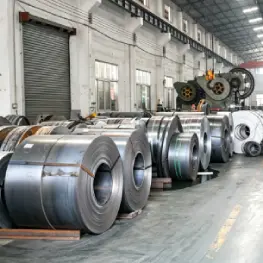
Raw Steel Inspection
Chemical composition testing & yield verification for Q235B/Q355B coils.
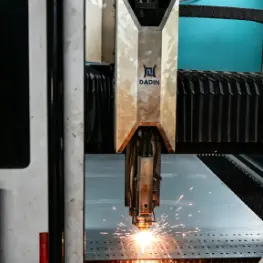
Precision Slitting
Automated uncoiling and laser-guided longitudinal strip width cutting.
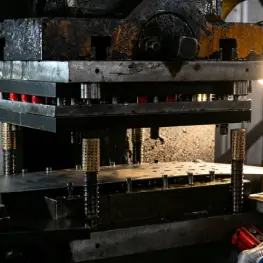
CNC Column Punching
High-speed progressive die tooling ensuring micron-accurate pitch alignment.
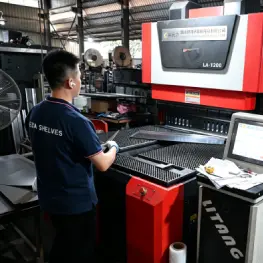
Continuous Roll Forming
Multi-stand continuous roller pass shaping 11-fold stiffened upright cross sections.
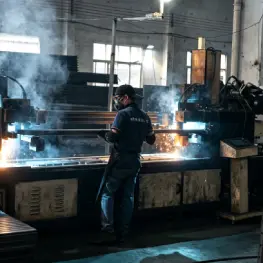
Robotic MIG Welding
Automated multi-axis robotic welding of 3-, 4-, or 5-claw beam connectors.
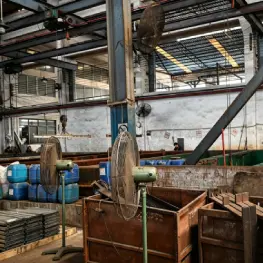
Chemical Pre-Treatment
Full-immersion pickling, degreasing, and zinc-phosphating to prevent internal rust.
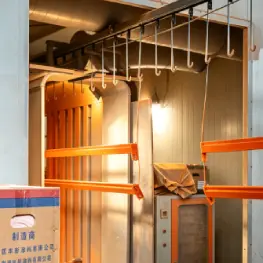
Electrostatic Coating
Automated powder spray booth baking a hard 60–80 micron polyester hybrid finish.
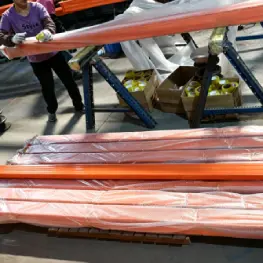
Export Pack & Dispatch
Bundled on engineered steel cradles or ISPM-15 heat-treated export stillages.
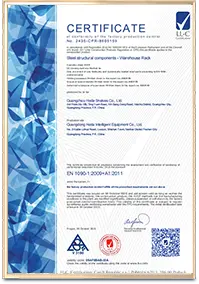
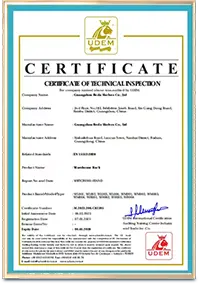
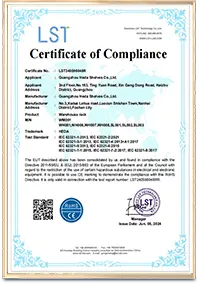
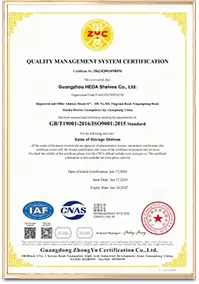
Independently Audited CE & ISO Credentials
Global tier-one general contractors and structural certifiers require documented proof of manufacturing controls. We do not hide behind generic statements—our certificates are public, valid, and verifiable through international registrars.
Certificate No. 2435-CPR-8605159. Validates compliance under EN 1090 structural steel execution standards and EN 15512 storage rack limits.
Registration No. 18624Q00169R0M. Validated through continuous annual audits across all cutting, welding, and surface finishing operations.
Calculated in alignment with AS 4084-2023 (Steel storage racking), RMI ANSI MH16.1, and NZS 1170.5 seismic zone factors for full regional engineering sign-off.
Frequently Asked Questions for Narrow Aisle Racking Projects
Detailed technical answers to help logistics engineers, supply chain directors, and warehouse general contractors evaluate structural, civil, and mechanical requirements.
What warehouse slab flatness tolerances (DIN 18202 / VDMA 15251) are mandatory for a 15-meter VNA system?
How do floor guide rails compare against inductive wire guidance in terms of TCO and civil preparation?
Inductive Wire Guidance: Involves cutting a 4mm wide by 15mm deep slot along the aisle centerline, embedding an insulated induction wire, sealing it with epoxy, and emitting a 5.2 kHz to 10 kHz frequency. The turret truck's automated sensors track the signal. Wire guidance allows clean floor housekeeping and bottom-tier ground pallet placement, but requires uninterrupted power generators and a continuous metallic backup plan. In terms of Total Cost of Ownership (TCO), guide rails are lower in initial civil risk, while wire guidance offers superior long-term picking ergonomics.
What engineering documentation does HEDA Shelves supply to guarantee CE CPR 305/2011 compliance?
How are upright sections engineered to resist secondary torsional buckling under asymmetric pallet loads?
What is the standard production lead time and export packaging protocol for international ocean shipments?
Can HEDA Narrow Aisle Racking be retrofitted for future unmanned automated AGV / turret operations?
Transform Your Warehouse Volumetric Efficiency Today
Submit your warehouse CAD floor plan, clear ceiling height, pallet dimensions, and forklift specifications. Our senior structural engineers will return a complimentary 3D layout simulation and competitive direct-factory quotation within 24 hours.