High Dynamic
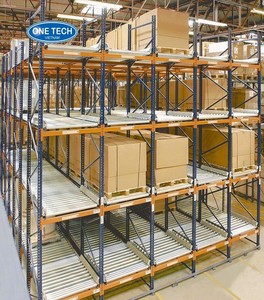
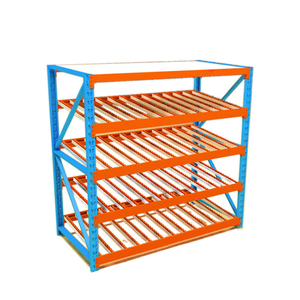
Modular Steel Carton Flow Racking System Heavy Duty Automatic Roller Track
- Gravity Rollers
- High-Density Picking
- E-Commerce
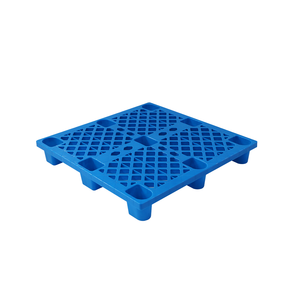
Tested to European limit-state structural codes (EN 15512) and international seismic performance baselines. Fully compatible with Australian Standard 1165×1165mm pallets and Euro 1200×800mm loads.
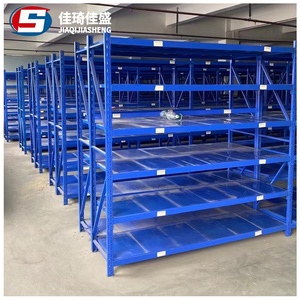
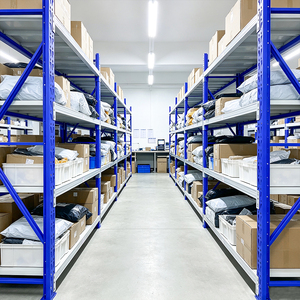
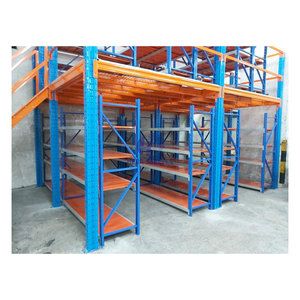
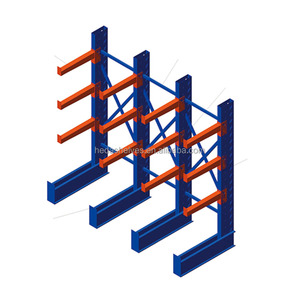
In modern supply chain logistics, an industrial pallet rack bay is fundamentally an unbraced or semi-braced, cold-formed steel moment-resisting skeletal structure. Unlike generic static shelving, an engineered storage bay functions under intense static load combinations, cyclic dynamic fatigue induced by materials handling equipment (MHE), and lateral displacement forces caused by accidental impact or seismic activity. To achieve compliance with the European Construction Products Regulation (CPR 305/2011), pallet rack bays exported to international territories must hold CE Marking certification (EN 15512:2020 and EN 1090-1 / Execution Class EXC2).
A compliant CE-marked pallet rack bay is composed of precision-engineered sub-assemblies. The vertical upright frames are roll-formed using continuous automated piercing lines with an ultra-strict tolerance of ±0.5mm on hole pitch. The omega-shaped profile ensures superior torsional and flexural rigidity against Euler buckling. Horizontal and diagonal lattice bracing bars are bolted between the twin upright columns using calibrated Class 8.8 tensile fasteners to create a rigid truss. Load beams—commonly double-C interlocking box beams or step beams—feature robotic, full-penetration robotic seam welds to 3-, 4-, or 5-claw high-ductility end connectors. Each connection is locked with automatic spring-actuated safety locking pins engineered to withstand an upward dislodgement shear force in excess of 5.0 kN.
Technical Insight from HEDA Engineering: Under EN 15512:2020 limit-state design principles, beam deflection under maximum working load must not exceed L/200 (where L is the clear span distance between uprights). For automated narrow-aisle (VNA) and automated storage and retrieval systems (ASRS), deflection must be engineered to a tighter threshold of L/300 to prevent sensor misalignment and robotic crane extraction failures.
Fabricated using prime cold-rolled micro-alloyed steel (Q235B / S235JR and Q355B / S355JR) delivering superior yield strength (up to 355 MPa) and certified impact ductility at -20°C for deep-freeze storage.
Tapered claw connectors lock under downward gravity loads. The wedge-action mechanism progressively reduces rotational slack under load, creating an exceptionally stable semi-rigid beam-to-column node.
Heavy-duty, deep-drawn baseplates distribute vertical axial loads across the warehouse concrete slab. Designed for M12/M16 chemical undercut anchors certified to ETA Option 1 cracked-concrete protocols.
Logistics directors, facility architects, and procurement heads operating across global jurisdictions face contrasting engineering doctrines. While European operations require compliance with EN 15512 / EN 15620 / EN 15635, Australia and New Zealand mandate alignment with AS 4084:2023 (Steel Storage Racking), and the United States enforces ANSI/RMI MH16.1. As a premier manufacturer and exporter, Guangzhou Heda Shelves Co., Ltd. incorporates finite-element analysis (FEA) modeling to satisfy or exceed the structural requirements of all three major paradigms simultaneously.
| Evaluation Parameter | European Norms (CE / EN 15512:2020) | Australian Standard (AS 4084:2023) | American Standard (RMI MH16.1) |
|---|---|---|---|
| Design Methodology | Limit State Design (LSD) with partial safety factors ($\gamma_M$) | Limit State Design; revised second-order inelastic analysis | Load and Resistance Factor Design (LRFD) / ASD |
| Vertical Deflection Limit | $L/200$ (ambient pallets) / $L/300$ (automated cranes) | $L/200$ span deflection under rated design capacity | $L/180$ maximum beam deflection criteria |
| Connector Safety Pin Shear | Mandatory $\ge 5.0\text{ kN}$ upward resistance test | Mechanical lockout device resistant to accidental dislodgement | Minimum $4.4\text{ kN}$ upward shear resistance |
| Seismic Considerations | Eurocode 8 (EN 1998) ductility verification | AS 1170.4 & NZS 1170.5 dynamic response spectral analysis | ASCE 7 equivalent lateral force & modal response |
| Upright Upward Impact Rule | Mandated in EN 15635 routine annual structural audits | Section 8 strict mandatory upright impact protection plates | RMI Column protector recommendations |
| Factory Audit Status | CE 2435-CPR-8605159 | Engineered to AS 4084 | ISO 9001:2015 Verified |
When purchasing racking components offshore, cross-border purchasers must ensure their supplier delivers a verifiable Declaration of Performance (DoP). This document specifies the exact steel grade mill certificates, charpy v-notch impact test values, coating thickness (standard minimum 60–80 microns via electrostatic powder deposition), and full geometric cross-sectional section modulus ($W_x, W_y$).
The global warehousing landscape is experiencing profound structural disruptions driven by automated material handling systems, skyrocketing urban land valuations, and aggressive Corporate Sustainability Directives (Scope 1, 2, and 3 emissions). Warehousing and logistics professionals procuring pallet rack bays over the next five years will navigate four dominant procurement shifts:
Traditional wide-aisle selective configurations are shifting toward hybrid bays tailored for autonomous mobile robots (AMRs) and radio shuttle carriers, eliminating forklift traffic inside storage lanes.
Tier-1 multinational enterprises now demand Environmental Product Declarations (EPD). Procuring bays fabricated using scrap-based Electric Arc Furnace (EAF) steel slashes carbon footprints by up to 60%.
Next-generation rack bays integrate fiber-optic or piezoelectric strain sensors inside high-load beam bays to stream real-time deflection telemetry and flag overload conditions instantly to the WMS.
Specifiers reject custom bespoke welded bays in favor of standardized modular pitch systems (e.g., universal 50mm or 75mm European pitch) that enable flexible reconfiguration, dismantling, and relocation.
Total Cost of Ownership (TCO) Imperative: Historical procurement models focused solely on purchase price per pallet position. Leading multinational 3PL operators evaluate pallet rack bays on a 15-year TCO baseline factoring initial steel cost, biosecurity import clearance, anti-corrosive finish longevity in non-climate-controlled hubs, and boltless reconfiguration efficiency.
The manufacturing of structural steel storage racks has evolved from manual punching and batch spray painting to fully automated, digitally synchronized production ecosystems. At the heart of this transition is cold roll-forming with computer numerical control (CNC). Roll-forming high-tensile steel coils into complex 12-fold omega upright profiles without causing micro-fissures requires progressive, multi-stage rolling cassettes that gradually fold the metal while maintaining crystal grain uniformity.
Spectrometric steel verification of Q235B/Q355B coil chemistry & yield points.
CNC slitting lines cut coil master rolls to millimeter-exact strip dimensions.
Automated multi-head die punch presses punch column slots at high velocity.
Multi-station rolling cassettes gradually form the 12-bend stiffened omega profile.
Flying hydraulic shears and fiber lasers cut columns to site-specific lengths.
Automated mechanical wheel abrading eliminates burrs and scale prior to treatment.
Multi-axis Panasonic robotic arms weld beam connectors with deep penetration.
Multi-stage immersion cleaning, acid pickling, and zirconium-nanotech rinse.
Swiss Gema powder gun lines apply 60-80μm durable epoxy-polyester finish.
Steel stillage or ISPM-15 treated timber crating for ocean transport.
Furthermore, surface chemistry has advanced significantly. Conventional zinc phosphating processes are being superseded by organo-silane and zirconium-based nanotechnology pretreatments. This creates an ultra-dense, nanoscale conversion layer on the cold-rolled steel surface that inhibits sub-film cathodic oxidation, enhances epoxy-polyester powder adhesion, and extends corrosion resistance beyond 500 hours in neutral salt spray testing (ASTM B117).
Established in 2001, Guangzhou Heda Shelves Co., Ltd. has developed over two and a half decades into a world-tier manufacturer and exporter of certified industrial warehouse storage systems. Operating from our central 30,000 square meter advanced manufacturing facility in South China, our operation deploys over 300 highly skilled mechanical engineers, production technicians, and quality assurance specialists. Our scalable production capacity regularly exceeds 30,000 metric tons per month, ensuring large-scale logistics hub rollouts remain on schedule.
Direct holder of CE Certificate No. 2435-CPR-8605159 and ISO 9001:2015 Quality Management System No. 18624Q00169R0M. Comprehensive factory test reports accompany every dispatched container.
We provide complete technical data packs including 3D CAD facility layouts, structural calculation books, steel mill certs, and localized engineering load plaque designs verified for national building compliance.
Export packaging options include heavy-duty reusable steel frames or ISPM-15 heat-treated certified timber to streamline clearance with customs authorities such as Australia DAFF, New Zealand MPI, and US CBP.
Beyond standard product supply, HEDA Shelves operates as a high-precision OEM and ODM partner for racking distributors, system integrators, and industrial shelving contractors across 130+ nations. Whether configuring high-bay drive-in lanes for sub-zero meat processing facilities, dynamic gravity carton flow beds for fast-turnaround FMCG distribution hubs, or structural multi-tiered rack-supported mezzanines, HEDA delivers factory-direct pricing backed by rigorous international quality standards.
Direct answers to the structural engineering, compliance verification, and maritime freight logistics queries evaluated by industrial procurement managers.
Connect with our senior logistics structural engineering team to receive an optimized 3D CAD facility master plan, seismic load capacity schedules, and direct factory-gate pricing.