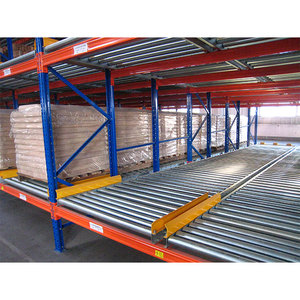
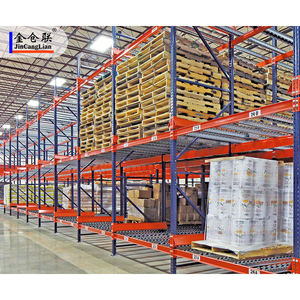
Radio Shuttle
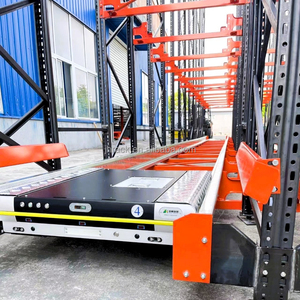
China Automatic Warehouse Shuttle Rack High Density Storage System
FIFO / LIFO
Semi-Automated
Cold Store Ready
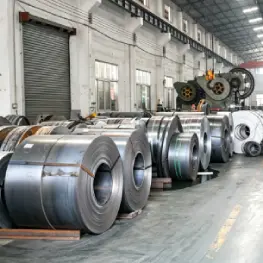
Explore our CE and ISO 9001 certified storage systems, built from high-tensile cold-rolled steel coils, custom-manufactured in our 30,000 m² facility with comprehensive engineering load tables.
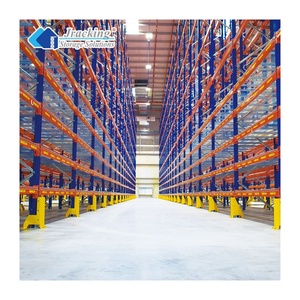
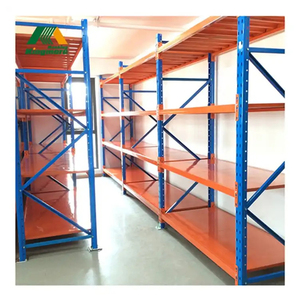
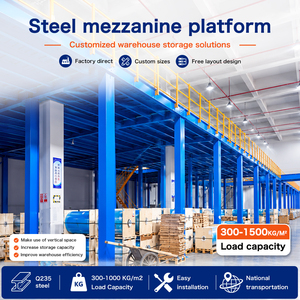
Direct factory fabrication backed by structural test data, strict quality management, and audited European regulatory accreditations.
Single deep pallet racking (frequently referred to as standard selective pallet racking) serves as the primary backbone for over 72% of modern international distribution centres. Its engineering philosophy prioritizes unrestricted 100% pallet accessibility, enabling simultaneous picking and handling across all storage bays without double-handling penalties.
For European and international project procurement, CE marking under the Construction Products Regulation (CPR 305/2011) is an uncompromising legal prerequisite. Certified single deep factories must demonstrate that every load-bearing element conforms strictly to EN 15512:2020 (Steel static storage systems – Adjustable pallet racking systems – Principles for structural design) and EN 15620 (Tolerances, deformations and clearances).
| Engineering Metric | Standard Single Deep | HEDA Certified Spec |
|---|---|---|
| Steel Grade Standard | Standard Commercial Q235 | Certified Q235B / Q355B Hot Coils |
| Design Safety Factor | 1.35 - 1.40 | ≥ 1.50 (Acc. to EN 15512) |
| Deflection Limit | L/180 Under Full Load | L/200 ~ L/250 Max Serviceability |
| Upright Web Profile | 9-fold profile | 11-to-13 cold-rolled fold geometry |
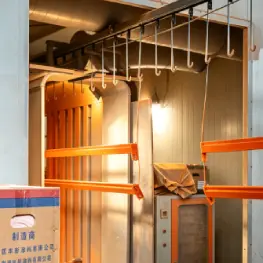
| Surface Pretreatment | Basic solvent wipe | Automated Pickling & Phosphating |
| Anti-Corrosion Finish | Single-pass paint | 60-80μm Electrostatic Powder |
Evaluating space economics, forklift aisle dynamics, and operational throughput against secondary high-density storage configurations.
Every single pallet position is immediately accessible by counterbalanced, reach, or articulated forklifts. Single deep eliminates honeycombing losses, rendering it the benchmark configuration for rapid FMCG turnover, pharmaceutical cold-rooms, and 3PL fulfillment centres managing thousands of distinct SKU codes.
Aisle widths can be adapted dynamically to operational material handling equipment: 3.5m to 3.8m for standard counterbalanced forklifts; 2.7m to 3.0m for standard reach trucks; or down to 1.6m to 1.8m when configured as a Very Narrow Aisle (VNA) system utilizing turret trucks or wire-guided reach units.
With no dynamic motorized carts, inclined gravity roller tracks, or nested shuttle rails, single deep pallet racking maintains the lowest capital expenditure (CapEx) per pallet position of any industrial storage format, delivering superior return on investment (ROI) with minimal recurring structural maintenance costs.
How automation synergies, carbon border adjustment mechanisms (CBAM), and intelligent structural monitoring are transforming pallet rack manufacturing.
As logistics facilities transition from manual forklifts to Autonomous Mobile Robots (AMRs) and Automated Guided Vehicles (AGVs), single deep racking specifications require drastically tighter tolerances. Future-proof factories now manufacture beams and baseplates with robotic weld precision to guarantee floor-to-beam deflections under ±1.5mm, ensuring automated sensor optical alignment.
International procurement teams are bound by corporate sustainability mandates and European CBAM carbon tax frameworks. Leading Chinese rack factories are shifting toward scrap-recycled Electric Arc Furnace (EAF) coil sourcing and VOC-free, lead-free polyester thermosetting powder coatings to slash embodied carbon footprints per rack ton by up to 28%.
The integration of micro-strain gauges, RFID pallet tags, and wireless accelerometer sensors directly into beam connectors is emerging rapidly. These telemetry systems alert warehouse facility managers to dangerous forklift collision shockwaves, beam overloading, and progressive floor subsidence before structural failures occur.
Over 25 years of specialized racking manufacturing backed by CE, ISO 9001:2015, and comprehensive in-house quality engineering controls.
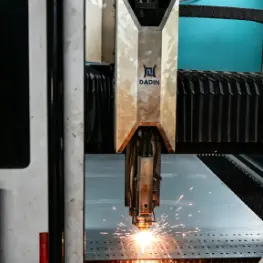
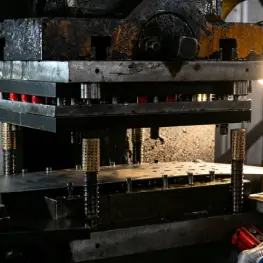
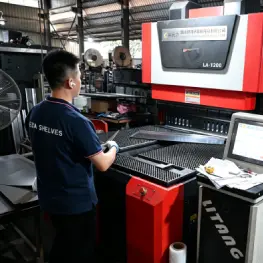
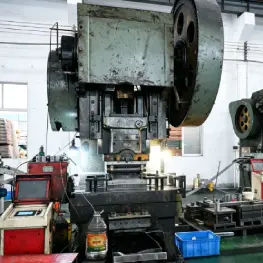
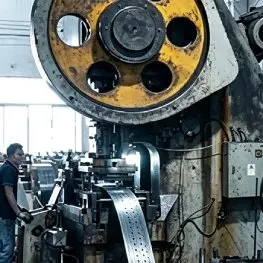
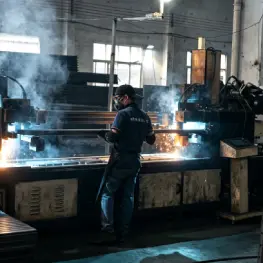
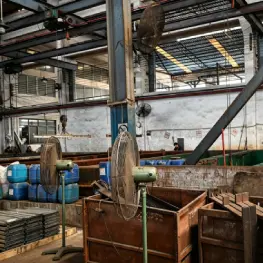
Guangzhou Heda Shelves Co., Ltd. operates a standardized 30,000 square-meter production facility, supported by over 300 experienced mechanical engineers, roll-forming specialists, and QA/QC inspectors. Producing upwards of 30,000 tons of industrial steel storage systems monthly, we ship engineered storage platforms to over 130 countries worldwide.
We supply turnkey OEM & ODM services for logistics contractors, national distributors, and end-users. All racking kits are exported with full engineering verification packages—including finite element analysis, 3D CAD layouts, column punching section properties, and bilingual load calculation plaques.


In-depth answers addressing structural engineering, international compliance standards, seismic qualifications, and port-to-door import logistics.
Under the European Union Construction Products Regulation (EU CPR 305/2011), static steel storage racking is classified as an engineered building product. Legitimate CE certification requires compliance with EN 15512:2020 (Structural Design Principles for Adjustable Pallet Racking), EN 15620 (Tolerances, Deformations and Clearances), EN 15629 (Specification of Storage Equipment), and EN 15635 (Application and Maintenance of Storage Equipment).
Furthermore, structural steel fabricators must be accredited under EN 1090-1 and EN 1090-2 (Execution of Steel Structures) with an official Factory Production Control (FPC) audit managed by a notified European body (such as HEDA’s verified Notified Body Certificate No. 2435-CPR-8605159). Simple self-declarations or low-voltage CE certificates provided for office electronics are legally invalid for load-bearing industrial racking.
Single deep pallet racking provides 100% direct selectivity to every single pallet, with warehouse floor space utilization generally ranging from 40% to 45%. It can be served by standard counterbalanced forklifts or reach trucks without specialized attachments.
Double deep pallet racking stores pallets two rows deep, reducing the number of access aisles and increasing storage density by approximately 25% to 30%. However, double deep cuts direct accessibility down to 50%, requiring a Last-In, First-Out (LIFO) inventory policy per slot, and necessitates pantograph reach trucks or deep-reach telescopic forks. For warehouses with high SKU diversity, rapid inventory cycle speeds, or temperature-controlled picking requirements, single deep remains structurally and operationally superior.
Yes. Our engineering department regularly calculates custom seismic configurations referencing EN 16681 (Seismic design for steel storage racking), NZS 1170.5 (New Zealand earthquake loading), and RMI / IBC criteria. In high seismic zones, the racking system must absorb energy without undergoing catastrophic brittle failure.
We accomplish this by: (1) Increasing upright gauge thicknesses (up to 2.5mm or 3.0mm cold-rolled profiles); (2) Enlarging ductile structural baseplates with double or quad M12/M16 chemical anchor bolt patterns; (3) Adding continuous back-to-back row spacers with vertical sway cross-bracing towers; and (4) Upgrading beam connectors with heavy 4-claw wrap-around brackets to withstand cyclic dynamic horizontal shear forces.
Beam load calculations are derived using both physical destructive bench tests and advanced Finite Element Modeling (FEA). Under EN 15512 standards, beams must hold their maximum rated Uniformly Distributed Load (UDL) while limiting vertical deflection to no more than 1/200th of the clear beam span (Span / 200).
For example, a pair of 2,700mm cross-beams designed for three 1,000kg standard pallets (3,000kg total level load) must not deflect vertically more than 13.5mm under full operational load, backed by a safety factor of at least 1.5 against yield limit. Each manufactured project includes stamped load plaques installed at the row-ends stating exact maximum compartment loads and bay weight caps.
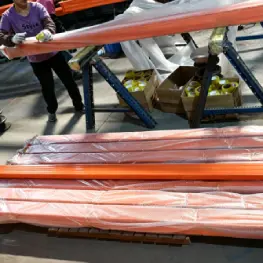
Every overseas export container leaving our factory is backed by an export documentation package: Original Bill of Lading (B/L), Commercial Invoice, Packing List with piece-level barcodes and weight tallies, and Mill Test Certificates (MTC 3.1) proving chemical composition and elongation performance of the steel coils.
To satisfy rigorous biosecurity regulations—such as the Department of Agriculture, Fisheries and Forestry (DAFF) in Australia and the Ministry for Primary Industries (MPI) in New Zealand—all structural components are bundled on galvanized steel stillages or heat-treated timber that displays certified ISPM-15 fumigation stamps. Preferential Certificates of Origin (e.g., ChAFTA, RCEP, Form A, Form E) are supplied to ensure buyers access reduced or zero customs tariff rates.
To enable our structural design department to generate an optimized warehouse CAD layout and load matrix within 24 hours, buyers simply need to provide:
Whether you are engineering a multi-acre greenfield distribution park or optimizing an existing local distribution depot, our technical engineering office will provide a compliant, certified racking layout with mill-direct pricing.
Verified CE Certified Factory • ISO 9001:2015 • Free 3D/CAD Engineering Layouts Delivered Within 24 Hours