CE Certified Storage Racking Systems
Explore our certified structural steel racking configurations engineered for dynamic logistics hubs, high-bay automated distribution facilities, and retail fulfillment centers worldwide.
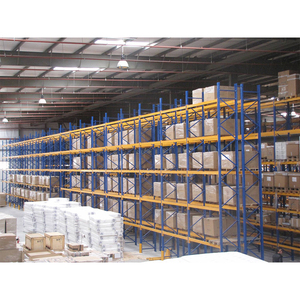
Europe Standard Industrial Steel Storage Pallet Rack
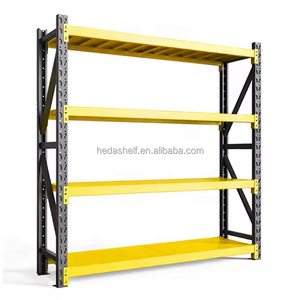
Wholesale Price Industrial Boltless Storage Rack 4 Tier Metal Shelving Units Warehouse Steel Heavy Duty Stacking Racks Shelves
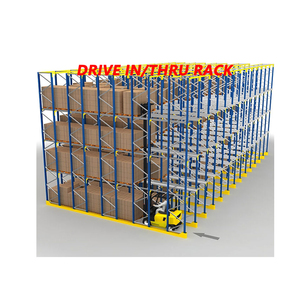
High Density Drive-In Pallet Rack Warehouse Storage System Drive in Rack Pallet Racking Double Deep Pallet Racks
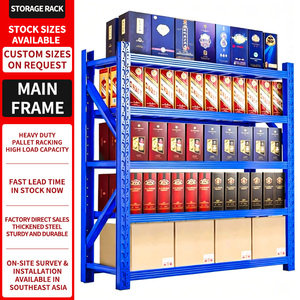
300kg Per Layer Medium Duty Warehouse Storage Shelving Racking System Industrial Steel Storage Rack Multilayer
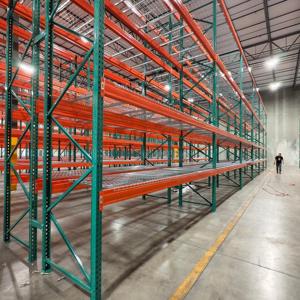
Industrial US Standard Warehouse Shelving Storage Racks Heavy Duty Pallets Racking System for Retail Distribution Center
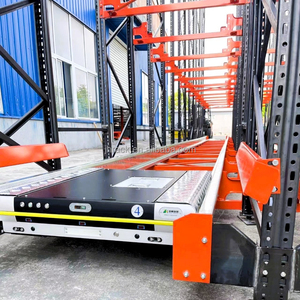
China Automatic Shuttle Rack Manufacturer Factory Warehouse Shuttle System Shelves Storage Racks for FIFO System
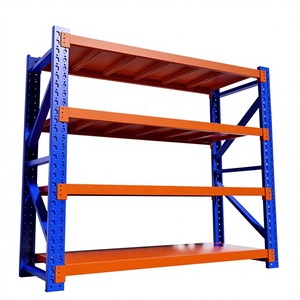
4 Tier Heavy Duty Foldable Boltless Metal Storage Rack Adjustable Industrial Warehouse Storage Shelves Commercial Steel Shelving
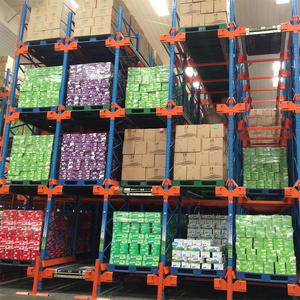
China Factory Direct Heavy Duty Steel Shelving Warehouse Automatic Two-Way Radio Shuttle Rack System Pallet Racking for Storage
Engineering Demands of CE Marked Industrial Racking
Within contemporary global supply chains, industrial pallet racking is no longer treated merely as passive storage furniture; it is classified as a critical load-bearing structural framework governed by the Construction Products Regulation (EU Regulation No 305/2011 - CPR). Guangzhou Heda Shelves Co., Ltd. builds steel racking systems that undergo thorough finite element analysis (FEA) and physical testing to guarantee unyielding safety under maximum dynamic, seismic, and gravitational forces.
Our upright sections, rolled from structural-grade high-tensile steels (Q235B, Q355B, and European equivalent S355JR), feature continuous multi-bend profiles that maximize the moment of inertia while minimizing deadweight. Cold roll-formed upright frames and box-beam connections are designed and verified in full compliance with European Standards EN 15512:2020 (Principles for structural design), EN 15620 (Tolerances, deformations and clearances), EN 15629 (Specification of storage equipment), and the Oceania regional standard AS 4084.
"Structural safety in high-density facilities is non-negotiable. A certified storage system must demonstrate quantified beam deflection limits under full uniform distributed load (UDL) not exceeding L/200, alongside tested column upright buckling resistances conforming to CE Certificate 2435-CPR-8605159."
Every batch of raw steel coils undergoes spectrometry testing, tensile yield point verification, and elongation evaluations before entering automated profile cold-rolling lines. Our state-of-the-art manufacturing guarantees complete trace-ability from coil mill certificates down to individually stamped upright frames and beam connectors.
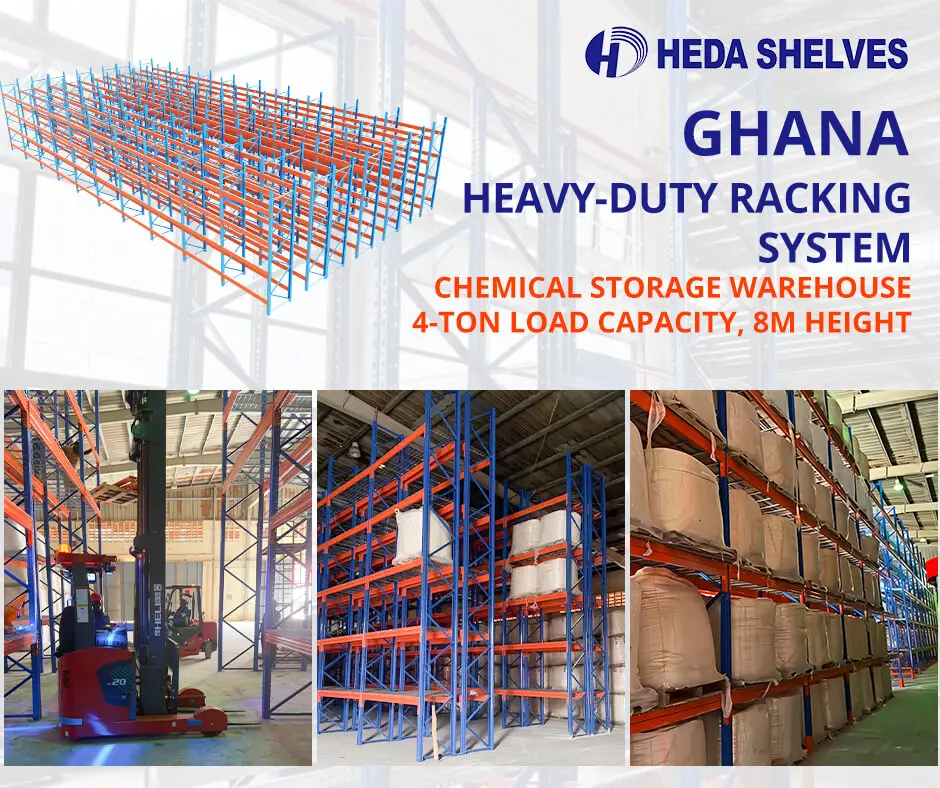
| System Architecture | Standard Load Envelope | Floor Footprint Utilization | Stock Rotation Logic | Key Regulatory Standards |
|---|---|---|---|---|
| Selective Pallet Racking | 1,000 – 4,500 kg / level | 40% – 50% (Standard Aisles) | 100% Direct Selectivity (FIFO) | EN 15512, AS 4084, ISO 9001 |
| High Density Drive-In / Drive-Thru | 800 – 2,000 kg / pallet | 65% – 75% (High Density) | LIFO (Drive-In) / FIFO (Drive-Thru) | FEM 10.2.07, EN 15620 |
| Automated Radio Shuttle Matrix | 500 – 2,500 kg / pallet | 80% – 88% (Max Dynamic Density) | Automated Software FIFO / LIFO | CE Machinery Directive, EN 15512 |
| Structural / Multi-Tier Mezzanine | 300 – 1,200 kg / m² | 200% – 300% (Vertical Multiplier) | Direct Cart / Tote Handled Flow | EN 1090-2, Eurocode 3, AS/NZS 1170 |
| Heavy Duty Cantilever Racks | 500 – 3,000 kg / arm | Continuous Linear Storage | Free Clearance Crane/Fork Access | FEM 10.2.09, AS 4084 Section 8 |
Guangzhou Heda Shelves: 25 Years of Manufacturing Rigor
Established in 2001, Guangzhou Heda Shelves Co., Ltd. operates as a world-tier manufacturer supplying bespoke warehouse racking systems to logistics directors, global distributors, and engineering contractors across 130+ nations.
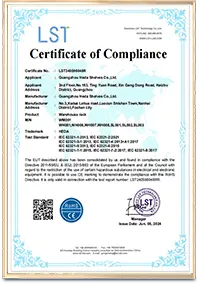
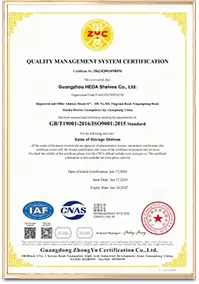
Verified CE & ISO Credentials
We manufacture under authentic, audited credentials including CE Certification No. 2435-CPR-8605159, ISO 9001:2015 Management Certification No. 18624Q00169R0M, and comprehensive European RoHS compliance for surface coatings.
30,000 m² Automated Factory
With an active output exceeding 30,000 metric tons monthly, our facility utilizes multi-station roll-forming lines, automated laser plate profiling, high-precision robotic welding cells, and automated continuous shot-blasting equipment.
Complimentary 3D CAD & BIM Layouts
Our in-house design engineering department of over 300 technical specialists generates comprehensive structural shop drawings, dynamic 3D CAD layouts, and complete engineering load calculation packs tailored to your facility's exact clear height and forklift aisle envelope.
10-Stage Surface Treatment
Durability in challenging, humid, or sub-zero logistics operations is guaranteed via our automated 10-step pre-treatment cycle, featuring high-pressure acid pickling, zinc phosphating, deionized rinsing, and electrostatic polyester powder curing at 200°C.
Export Logistics & Biosecurity
All international consignments are bundled on reinforced heavy steel frames or fumigated timber compliant with ISPM-15 standards. This guarantees effortless clearance across Australian DAFF, New Zealand MPI, EU, and North American customs authorities without detention.
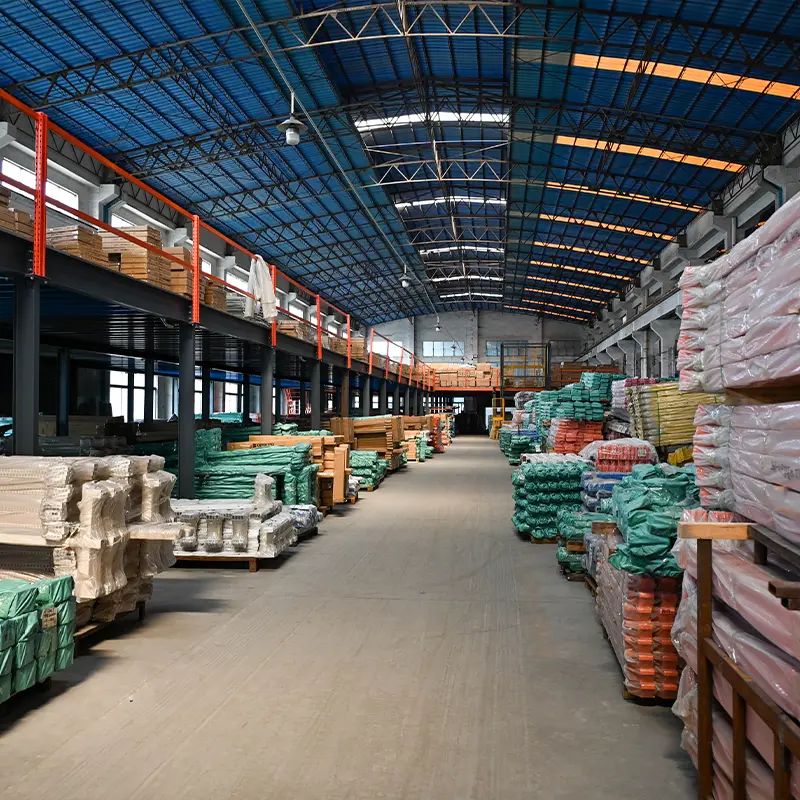
Zero-Defect Quality Control from Coil to Container
Before dispatch, all production runs undergo thorough metallurgical and dimensional checks. Upright hole punch pitch tolerances are monitored within ±0.15mm to guarantee plumb, effortless on-site assembly by your installation crews. Ultrasonic weld inspection verifies joint penetrations between box beams and connector claws, eliminating structural micro-fissuring.
Whether you require standard Australian 1165x1165mm pallet dimensions, standard Euro EPAL 1200x800mm formats, or oversized heavy industrial skids up to 3,000kg, Heda Shelves manufactures components custom-sized to avoid wasted building volume.
Published International Accreditations
Verified documentation available for your municipal building permits and third-party engineering approvals.
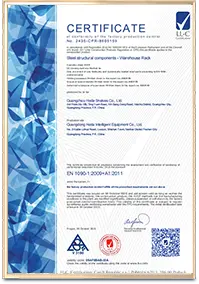 CE Structural Certificate
No. 2435-CPR-8605159
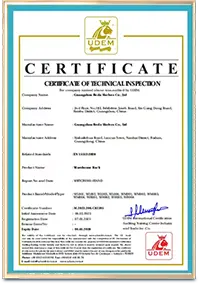 ISO 9001:2015 Quality
No. 18624Q00169R0M
 RoHS Environmental
Hazardous Substance Safe
 Physical Load Test
Independent Lab Verified





Future Industrial Storage Procurement Trends (2025–2035)
How forward-thinking supply chain directors, third-party logistics (3PL) conglomerates, and automated fulfillment planners are pivoting their global racking procurement strategies.
1. Transition to Eco-Decarbonized Structural Steels
Global procurement teams operating within ESG frameworks are increasingly specifying steel racking manufactured with recycled scrap in electric arc furnaces (EAF). Low-embodied-carbon steel certifications and zero-VOC heavy thermosetting powder resins are evolving from optional marketing benefits into statutory bid prerequisites across Western Europe, North America, and Australasia.
2. Shift from Pure Selective to Automated Hybrid Systems
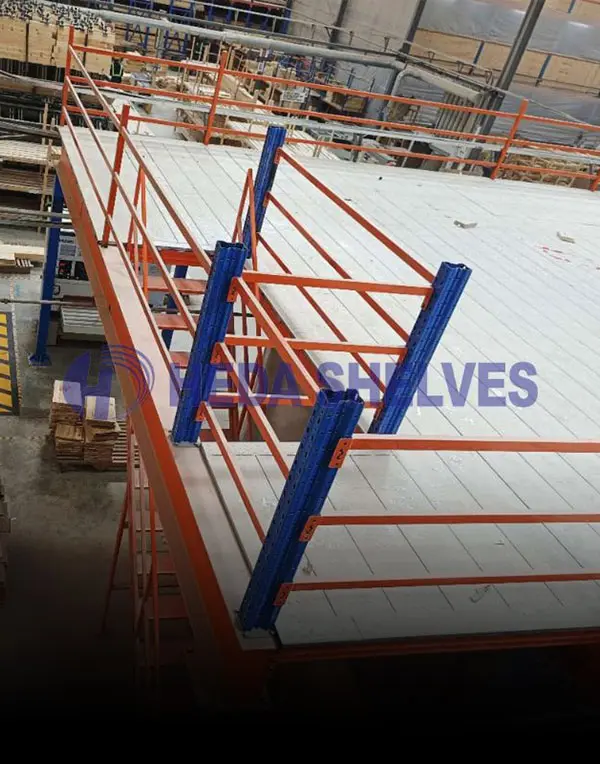
Skyrocketing land valuations and urban warehouse lease rates have caused pure selective racking procurement to drop from 72% of new volume to under 54%. Logistics operators are moving budgets into semi-automated 2-way and 4-way Radio Shuttle Racking, high-bay Narrow Aisle (VNA) designs, and rack-supported structures that double pallet counts without purchasing additional real estate.
3. Stringent Seismic Zone Compliance & Local Verification
Procurement teams have moved away from uncertified generic commodities toward suppliers who supply complete finite-element analytical datasets upfront. In seismic zones (such as New Zealand's NZS 1170.5 criteria, US West Coast IBC/RMI, and Southern Europe), suppliers must engineer extra-thick base plates, enlarged expansion anchoring arrays, and specialized spine-bracing patterns to secure municipal sign-offs.
4. Turnkey Factory-Direct Integration (OEM/ODM Partnerships)
Mid-tier racking installers and warehouse equipment dealers are increasingly bypassing regional intermediaries to establish direct OEM/ODM partnerships with certified manufacturing powerhouses like Heda Shelves. This direct pipeline reduces capital expenditures by 25%–40%, secures proprietary customized roll-form tooling, and shortens procurement lead times from design to delivery.
Modern Storage Racking Technology Evolutions
The logistics equipment sector is undergoing rapid technological disruption driven by automated material handling systems (AMHS), autonomous mobile robots (AMRs), and Internet-of-Things (IoT) structural health monitoring.
1. Structural Integration with AMRs & AGVs: Traditional pallet racks were built solely for human-operated counterbalanced forklifts. Modern configurations require tighter floor clearance tolerances, laser-guided bottom guide rails, and specialized floor-level run-out plates designed for automated guided vehicles and automated pallet jacks.
2. Sensorized Smart Upright Systems: Overloading and repetitive forklift impact represent the leading causes of progressive structural racking collapses. Next-generation smart racking incorporates impact strain-gauge sensors embedded directly into upright column bases, delivering real-time telemetry back to warehouse management software (WMS) when collision threshold limits are breached.
3. Advanced High-Yield Thin-Wall Metallurgy: Advanced roll-forming techniques permit the continuous forming of complex 13-fold profile cross-sections. This innovation distributes mechanical stress uniformly throughout the steel column profile, allowing for reduced profile wall thicknesses while boosting overall load capacities and earthquake resistance.
Engineering & Procurement FAQ
Essential answers covering CE structural certification, international standards compliance, installation tolerances, and import logistics.