Engineered Warehouse Racking & Structural Logistics Solutions
Direct-from-factory certified structural racking, engineered with certified Q235B and Q355B cold-rolled steel, custom punched, powder-coated, and tested to meet international seismic and dynamic load parameters.
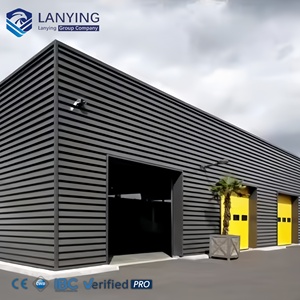 Turnkey Engineering
Prefabricated Steel Structure Logistics Warehouse Building
Heavy-duty portal frame clear-span architecture customized for deep logistics hubs, multi-level fulfillment workshops, and cold stores.
- Primary SteelQ355B High Tensile
- Wind ResistanceUp to 140 km/h
- Clear SpanUp to 48 Meters
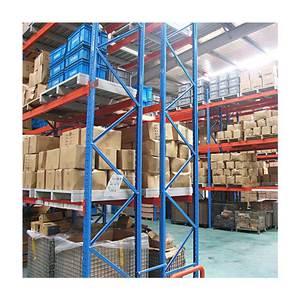 Direct Access 100%
Industrial Heavy Duty Warehouse Pallet Storage Racks
Standard selective pallet systems offering 100% direct picking access, beam adjustment at 50/75mm pitches, and reinforced column profiles.
- Unit Bay Load1,000 to 5,000 kg
- Upright Pitch50mm / 75mm
- StandardsEN 15512 / AS 4084
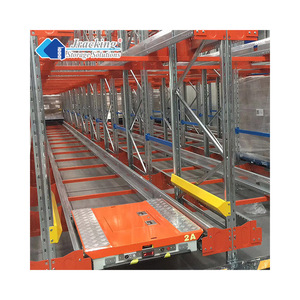 Semi-Automated
ASRS High-Density Radio Shuttle Racking System
Semi-automated deep lane storage platform paired with intelligent battery shuttles, minimizing forklift collision risks and labor hours.
- Pallet Density+70% Over Selective
- Speed RateUp to 1.0 m/s
- Operating Temp-25°C to +45°C
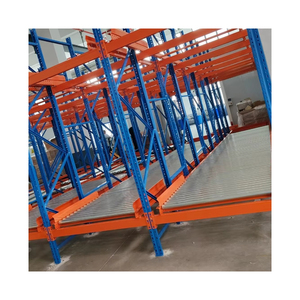 Strict FIFO Control
FIFO Gravity Pallet Flow Rack Dynamic Storage System
Gravity-fed roller bed tracking engineered for zero-energy autonomous stock movement, ensuring strict First-In First-Out pharmaceutical and FMCG rotation.
- Brake RollersIntegrated Speed Control
- Track Incline3.0% to 3.5% Slope
- Max Pallet Mass1,500 kg / Unit
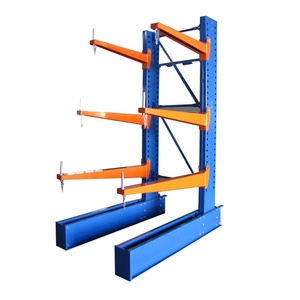 Long Goods Storage
Heavy Duty Cantilever Beam Racking for Long Goods
Obstruction-free frontal arm columns engineered to securely stage structural steel tubing, profiles, lumber packs, and sheet composite stock.
- Arm Capacity500 to 1,800 kg/arm
- ConfigurationSingle / Double Sided
- Corrosion ProofHot-Dip Galvanized / Epoxied
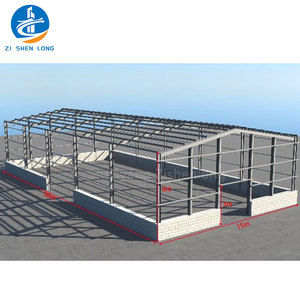 Industrial Building
Metal Frame Prefabricated Warehouse Workshop Building
Rapidly assembled industrial warehouse hangars with insulated composite envelope panels, overhead bridge crane runways, and modular roof purlins.
- Frame TypeSolid Web I-Beam
- CladdingPIR / Rockwool Sandwich
- Fire RatingCompliant Class A / B
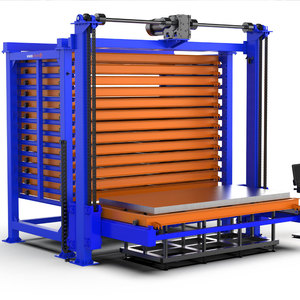 Smart Robotics
Automated High Density Sheet Metal Storage with Robot
Fully automated cassette tower system integrated with vacuum lifting robots for unmanned sheet raw material staging and laser feeder automation.
- Cassette LoadUp to 3,000 kg/drawer
- WMS IntegrationAutomated ERP Interfacing
- Footprint SavingUp to 80% Floor Area
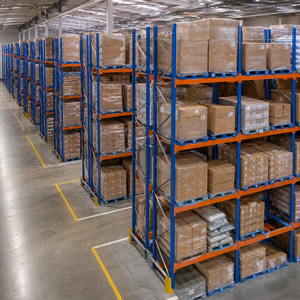 Automotive Grade
Heavy Duty Auto Parts Logistics Warehouse Storage Rack
Specialized multi-tier frame systems tailored for irregularly shaped automobile body components, stamping dies, engines, and tire arrays.
- Payload Scope1,000 to 4,000 kg
- Deck TypesWire Mesh / Ribbed Steel
- ProtectionEnd-of-Aisle Heavy Barriers
Enterprise Infrastructure: Guangzhou Heda Shelves Co., Ltd. Manufacturing Authority
Audited OEM & ODM CapabilitiesOperating as a distinguished global industrial storage system designer, Guangzhou Heda Shelves Co., Ltd. has accumulated over two decades of metallurgical and structural fabrication leadership. Certified under CE Certificate No. 2435-CPR-8605159 and ISO 9001:2015 Quality Management System Certificate No. 18624Q00169R0M (valid through 2027), our automated manufacturing campus manages end-to-end production runs for selective, cantilever, drive-in, radio shuttle, and rack-supported multi-tier mezzanine floors.
Our heavy manufacturing lines ingest premium coil steel certified to international EN 10025-2 standards. By deploying laser-guided roll-forming lines, automated continuous column stamping units, and industrial robotic welding cells, each cold-formed profile delivers tighter deflection tolerances than required by FEM 10.2.02 and Australian AS 4084 guidelines. To date, Heda Shelves has delivered over 10,000 high-bay intralogistics projects worldwide across Tier-1 logistics hubs, automotive assembly lines, temperature-controlled cold chains, and retail regional fulfillment centers.
10-Stage Controlled Industrial Production Process
Total transparency from coil de-reeling to automated powder curing ensures unmatched dimensional repeatability and load predictability.
Raw Steel Inbound
Spectrometric assay & ultrasonic sheet thickness verification on prime Q235B/Q355B coils.
Laser Slitting
CNC cold-shear edge leveling eliminating residual internal material tensile torsion.
Auto Punching
Continuous multi-station die presses creating teardrop or diamond slot pitches within 0.1mm.
Cold Roll Forming
Up to 24 progressive roll stages shaping continuous-flange upright posts without micro-fissures.
Beam Box Interlocking
Double-C section continuous seam locking maximizing torsional moment of inertia.
Robotic Arc Welding
Multi-axis automated cells securing 3-claw/4-claw connector brackets under argon shielding.
Surface Pretreatment
Multi-bath acid pickling, rinse degreasing, and zinc phosphating for optimum resin bonding.
Electrostatic Coating
Corona-charge powder guns spraying exterior polyester resins to 60-90μm dry film thickness.
High-Temp Curing
Continuous 180°C-200°C curing tunnel ensuring polymerization, impact resistance, and gloss.
Export Packing & QC
Pre-dispatch dimensional audits, palletized steel strapping, and biosecurity fumigation packing.
Global Procurement Trends in Warehouse Racking Systems
Strategic Intralogistics Sourcing WhitepaperProcurement directors and supply chain engineers evaluating commercial warehouse racking face a fundamental evolution in logistics infrastructure. Capital expenditure (CapEx) metrics are no longer judged solely on initial steel ton prices. Instead, enterprise procurement teams prioritize Total Cost of Ownership (TCO), space volumetric efficiency, structural adaptability for automated guided vehicles (AGVs), and cross-border standards verification.
| Procurement Dimension | Traditional Storage Purchasing | Strategic Future Logistics Procurement |
|---|---|---|
| Primary Sourcing Driver | Lowest FOB steel price per ton | High-tensile steel yield strength, space density & certified lifecycle load ratings |
| Space Optimization | Wide-aisle selective racking (3.2m to 3.8m aisles) | Very Narrow Aisle (VNA), Radio Shuttle & automated multi-tier mezzanines |
| Material Specifications | Generic commercial carbon sheet | Micro-alloyed cold-formed structural steels (Q235B / Q355B / SS400) |
| Compliance Auditing | Self-declared mill testing | Third-party verified CE certification (EN 15512), AS 4084 & NZS 1170.5 seismic engineering |
| Packaging & Clearance | Loose bundling on untreated lumber | Custom steel stillages and ISPM-15 heat-treated blocking for rapid quarantine clearance |
A primary driver transforming enterprise warehouse tenders is the high volumetric utilization imperative. Industrial real estate costs across key logistics nodes in North America, Western Europe, and Australasia have surged, requiring companies to store more pallets within identical clear-height footprints. Consequently, legacy selective configurations are rapidly giving way to high-density semi-automated solutions like Radio Shuttle and automated gravity flow racks, reducing overall operational transit times while improving worker ergonomics.
Technological & Architectural Racking Development Trends
Engineering InsightsThe engineering design of modern industrial warehouse racking has evolved from static steel frameworks into high-tolerance, dynamically engineered logistics backbones. Facilities planning new distribution centers must accommodate the following four engineering paradigms:
1. Finite Element Analysis (FEA) and Dynamic Seismic Modeling: Modern racking profiles are subjected to advanced computer simulations modeling ground accelerations, beam-connector hinge non-linear stiffness, and high-tier sway drift. Particularly in active seismic regions, base plates are expanded and engineered with ductile anchor configurations that dissipate kinetic energy without catastrophic shear failure.
2. Structural Mezzanines Blended with High-Bay Racking: As multi-tier micro-fulfillment centers become standard for rapid parcel processing, warehouse architects are integrating rack-supported mezzanines directly above ground-level automated sorting conveyors. This vertical consolidation saves massive square footage while utilizing standardized cold-rolled racking frames as primary structural columns.
3. Advanced Surface Treatments for Cold Chain Logistics: Cold storage facilities operating at -25°C to -30°C experience rapid thermal cycling and condensation risks when pallets enter from ambient loading bays. State-of-the-art factories employ specialized zinc-rich primers, high-thickness electrostatic polyester powders, or complete hot-dip galvanizing to prevent micro-cracking and sub-surface oxidation under severe cold and damp conditions.
4. Automation-Tolerant Rail Tolerances: Autonomous Mobile Robots (AMRs), Automated Guided Vehicles (AGVs), and pallet shuttles require rail deviations under 1.5mm along entire continuous runs. Modern racking manufacturers utilize multi-station inline roll-forming machinery to produce continuous rails with minimal camber, bow, or twist, ensuring smooth autonomous transport without wheel slippage or track binding.
Frequently Asked Questions on CE Certified Racking & Global Sourcing
Crucial engineering, regulatory, and logistics answers for warehouse project developers, facility engineers, and supply chain procurement officers.
What specific standards must a factory meet to achieve CE Certification for warehouse racking?
Unlike simple household shelving, structural warehouse racking falls under harmonized industrial equipment benchmarks across Europe and international trading jurisdictions. A valid CE Certification (such as Heda's CE Certificate No. 2435-CPR-8605159) reflects compliance with European Standards EN 15512 (Principles for structural design of adjustable pallet racking), EN 15620 (Tolerances, deformations and clearances), EN 15629 (Specification of storage equipment), and EN 15635 (Application and maintenance of storage equipment).
CE marking confirms that our production facility operates under an audited Factory Production Control (FPC) system, that steel grades are traceably documented via EN 10204 3.1 Mill Test Certificates, and that connector weldments and upright hole punching patterns withstand standardized structural shear, bending, and torsion testing.
How does CE certified racking correspond to Australian AS 4084 and New Zealand seismic standards?
The Australian Standard AS 4084 (Steel storage racking) and the European Standard EN 15512 share common engineering methodologies regarding limit state design, section property calculations, and safety factor margins. For projects across Australia, New Zealand, and Pacific Island nations, our engineering department provides comprehensive calculation packages detailing section modulus, upright moment capacity, and beam connection test data.
For New Zealand installations where seismic resilience is mandatory, calculations are adjusted to site-specific spectral acceleration factors in accordance with NZS 1170.5. We engineer augmented frame bracings, heavy-duty floor base plates, oversized chemical anchors, and double-row column spacers to satisfy the sign-off requirements of local chartered professional engineers (CPEng).
What is the difference between Q235B and Q355B steel in heavy-duty racking fabrication?
Q235B and Q355B are carbon structural steels widely specified in high-grade roll-formed logistics structures:
• Q235B Steel: Offers a minimum yield strength of 235 MPa and a tensile strength of 370–500 MPa. It delivers excellent ductility and cold-bending performance, making it the primary material for standard beam profiles, bracing members, and light-to-medium upright columns.
• Q355B Steel (High Tensile): Has a higher minimum yield point of 355 MPa and tensile strength of 470–630 MPa. It is deployed in heavily loaded upright frames exceeding 8-12 meters clear height, cantilever central columns, and high-density radio shuttle rails where deflection limits are strictly governed under maximum structural payloads.
How are maritime biosecurity, fumigation, and timber packaging regulations handled?
Cross-border customs agencies—notably the Australian Department of Agriculture, Fisheries and Forestry (DAFF) and the New Zealand Ministry for Primary Industries (MPI)—enforce strict biosecurity protocols against invasive pests. Uncertified timber pallets or dunnage can result in immediate container quarantine, port re-exportation, or expensive onshore heat treatment.
To eliminate border delays, Heda Shelves packs structural components directly into customized steel stillages, heavy-duty steel cradles, or uses timber treated and visibly stamped strictly in compliance with ISPM-15 regulations. All export shipments are accompanied by detailed packing manifests, clean bills of lading, and compliant certificates of origin.
What data is required from the warehouse owner to generate a free 3D and CAD layout proposal?
Our engineering team can formulate an optimized layout drawing and load capacity table within 24–48 hours once provided with the following parameters:
1. Architectural building drawing (DWG or clear PDF) indicating interior length, width, column grid layouts, fire exits, and dock door locations.
2. Clear building height to the lowest obstruction (underside of steel trusses, HVAC ducting, or suspended fire sprinkler mains).
3. Pallet parameters: Pallet dimensions (e.g., 1200x1000mm, 1200x800mm, or 1165x1165mm Australian standard), maximum pallet height including merchandise, and maximum gross weight per pallet.
4. Material handling equipment: Forklift model, minimum turning aisle width requirement (AST), and maximum mast lift height.
5. Ambient temperature profile (ambient logistics vs. refrigerated/freezer cold chain storage).
How do factory-direct powder coating lines compare to standard commercial spray finishes?
In-house electrostatic powder coating utilizes a closed-loop multi-stage chemical pretreatment line consisting of degreasing, ultrasonic water rinsing, acid rust-pickling, and continuous zinc phosphating. This chemically etches the bare cold-rolled steel surface, creating an optimal anchor profile for powder adhesion.
High-voltage electrostatic guns subsequently apply thermoset polyester powder evenly to a calibrated thickness of 60 to 90 microns. After passing through a 200°C baking tunnel, the polymer chains cross-link to form an exceptionally tough, chip-resistant finish that resists pallet scraping, humidity, and mild chemical contact far better than manual air-spray enamels.
What are the key safety clearances and flue space requirements for fire sprinkler compliance?
Modern warehouse fire safety (governed by NFPA 13 and EN standards) mandates strict adherence to longitudinal and transverse flue spaces between pallet loads. In back-to-back selective racks, a minimum 75mm to 150mm longitudinal flue space is required so ceiling-level ESFR (Early Suppression Fast Response) sprinklers can penetrate downward through the rack structure during a localized fire.
Our engineering layouts automatically account for structural row spacers, back-to-back pallet overhang clearances, and vertical flue spaces between upright columns, ensuring effortless approval by regional building certifiers and commercial property insurers.
Can international buyers conduct Third-Party Factory Acceptance Testing (FAT) before shipment?
Yes. We welcome third-party inspection firms (such as SGS, BV, TÜV, or client-appointed independent surveyors) to conduct comprehensive pre-shipment inspections at our Guangzhou manufacturing facility. Testing protocols typically evaluate dimensional cross-sections, dry film coating thickness (DFT), cross-hatch paint adhesion, weld seam penetration, and random loading tests on assembled beam-column connectors.
Detailed in-house inspection reports, photographic container loading manifests, and steel mill test certificates are provided with every dispatched production order.
Configure Your Facility With an Engineering Partner
Connect directly with our senior intralogistics structural engineering team to receive an optimized 3D CAD warehouse layout proposal, seismic load calculations, and comprehensive FOB/CIF factory direct pricing.