Standard & Custom Industrial Racking Portfolio
Direct factory production lines for high-density logistics, cantilever pipe management, tire distribution centers, and multi-tier structural storage systems.
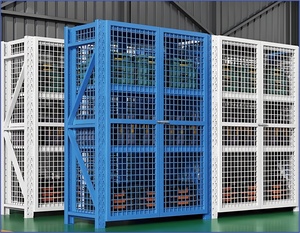
4-Layer Heavy Duty Drive-Through Pallet Rack Powder Coated Steel
- Load Capacity: 1,000–4,000 kg/level
- Steel Grade: Q235B / Q355B Hot-Rolled
- Configuration: FIFO / LIFO Dual Entry
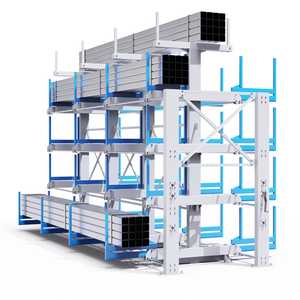
Telescopic Cantilever Rack Custom Made for Heavy Duty Metal Pipe Storage
- Arm Capacity: Up to 3,000 kg/arm
- Extension: 100% Mechanical Retraction
- Access: Overhead Crane Accessible
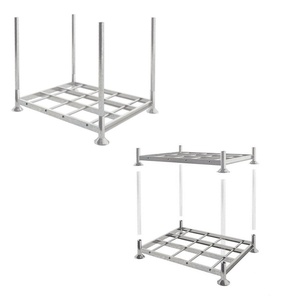
Heavy Duty Steel Pallet Racking Metal Stacking Truck Tire Rack
- Stacking Tier: 4 to 6 High Stacking
- Unit Load: 1,200 kg Per Stacking Unit
- Handling: 4-Way Forklift Access
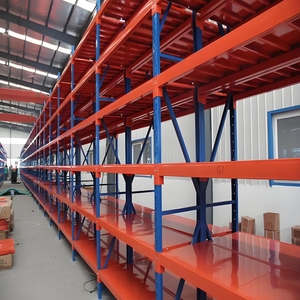
High Capacity Durable Steel Pallet Racks Medium Shelf New EU Standard
- Standard: EN 15512 / FEM 10.2.02
- Beam Pitch: 50mm / 75mm Adjustable
- Safety Factor: 1.5 Design Limit Ratio
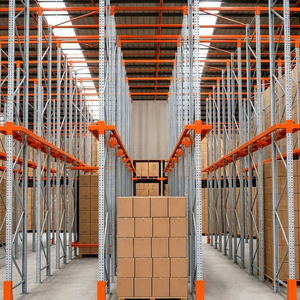
Industrial Heavy Duty Drive in Rack High Density Storage System
- Floor Utilization: Up to 80% Cube Space
- Upright Thickness: 2.0mm–3.0mm Formed
- Cold-Chain: Rated Down to -30°C
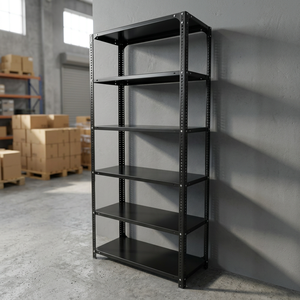
FinePunch Slotted Angle Rack FP-SA-MSPC-001 Industrial Shelving
- Assembly: Bolt-Together Multi-Tier
- Shelf Loading: 150–350 kg/shelf
- Finish: Electrostatic Powder Coat
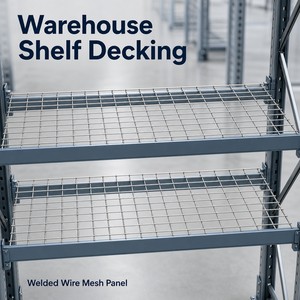
Heavy Duty Galvanized Steel Drop-In Wire Mesh Decking Panel
- Channel Support: 3–5 Reinforced Ribs
- Compliance: NFPA 13 Fire Sprinkler
- Coating: Hot-Dip Galv / Zinc-Plated
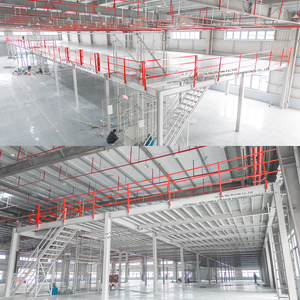
Steel Structure I-Beam Platform Mezzanine Racking for Factory Expansion
- Floor Loading: 300–1,000 kg / m²
- Main Beam: Hot-Rolled Structural I-Beam
- Certification: CE Structural Steelwork
High Bay Pallet Racking: Cold-Formed Steel Dynamics & Seismic Deflection Limits
High bay pallet racking architectures, reaching heights from 12 meters to over 40 meters, transition standard static storage into complex, dynamic civil structures. In automated high-bay warehouses (ASRS) and very narrow aisle (VNA) corridors, racking frameworks not only sustain profound vertical dead loads and live pallet payloads, but must simultaneously counter horizontal acceleration forces generated by high-velocity automated stacker cranes, seismic sway, and building wind loads in clad-rack envelopes.
Our engineering matrix integrates prime high-tensile structural coil steel—predominantly Q355B (yield strength ≥ 355 MPa) and high-performance micro-alloyed variants—manufactured through multi-station continuous roll-forming lines. Perforated upright columns are designed with an omega (Ω) profile cross-section, optimizing radius of gyration and second moment of area ($I_x, I_y$) to counteract torsional-flexural buckling under second-order ($P\text{-}\Delta$ and $P\text{-}\delta$) geometric displacement effects.
AS 4084 & EN 15512 Rigor
Engineered to Australian AS 4084:2023 and European EN 15512:2020 limit state standards, complete with independent PE load test verification.
NZS 1170.5 Seismic Ductility
Dynamic modal analysis accommodating high peak ground acceleration (PGA), heavy-gauge seismic baseplates, and ductile cross-bracing portals.
FEM 9.831 Deflection Control
Strict verticality tolerances (≤ H/1000) and beam deflection constrained to L/300 to eliminate crane mast collision hazards.
Certified Traceability
Factory audits covered under CE Certificate No. 2435-CPR-8605159 and ISO 9001:2015 registration No. 18624Q00169R0M.
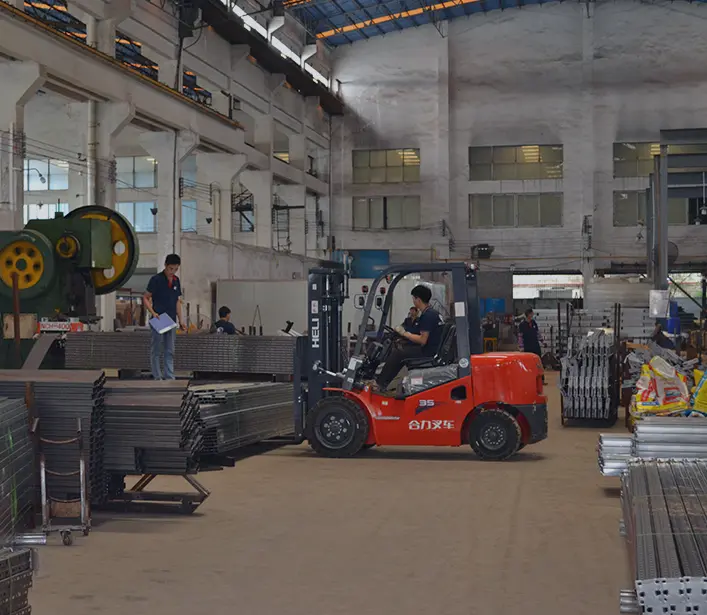
High Bay vs. High-Density Racking Topologies
Evaluating volumetric density, capital expenditure per pallet position, handling equipment compatibility, and mechanical deflection limits across major commercial systems.
| Racking Typology | Max Height (m) | Floor Utilization | Stock Access (FIFO/LIFO) | Equipment Compatibility | Deflection Tolerance | Relative Cost Index |
|---|---|---|---|---|---|---|
| ASRS High Bay Clad-Rack | 40m+ | 85%–92% | 100% Computerized FIFO/LIFO | Automated Stacker Crane | L/300 to L/500 (VDI 2631) | High (Automated) |
| VNA (Very Narrow Aisle) | 18m | 65%–72% | 100% Direct Selective | Turret Truck / Wire Guided | L/200 (EN 15512) | Moderate-Low |
| 4-Way Radio Shuttle High Bay | 24m | 80%–88% | Dual FIFO & LIFO Lanes | Radio Shuttle + Reach Truck | L/250 (AS 4084) | Moderate |
| Drive-In / Drive-Through | 12m | 70%–78% | Strict LIFO (Through: FIFO) | Counterbalanced / Reach | L/200 (Internal Guarded) | Low |
| Pallet Live Gravity Flow | 12m | 75%–82% | Guaranteed FIFO Flow | Standard Forklifts | L/200 (Roller Bed Spec) | Moderate-High |
| Multi-Tier Heavy Mezzanine | 15m (3 Tiers) | 150%–200% Usable Deck | Manual & Conveyor Picking | Forklift, Goods Lift, AMR | L/300 Decking Load Spec | Moderate |
10-Stage Precision Heavy Fabrication Workflow
Operating across 30,000 square meters of CNC punch profiling, cold-roll lines, and multi-stage anti-corrosion pre-treatment baths for global zero-defect delivery.
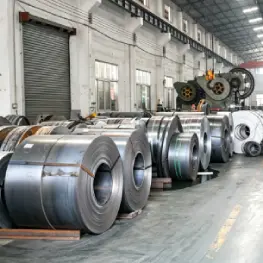
Steel Coil Inspection
Spectrometric testing of prime Baosteel / Shougang coils verifying Q235B/Q355B chemical compositions and elongation limits.
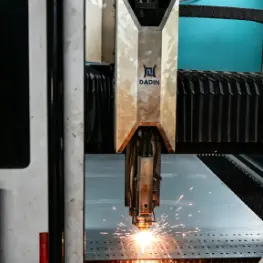
CNC Precision Slitting
Automated rotary slitting knives sizing master coils down to strip tolerances within ±0.1mm camber limits.
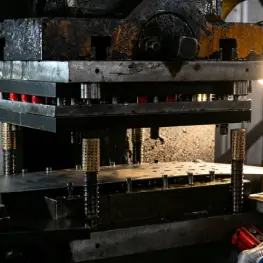
Continuous Upright Punching
Continuous servo-driven hydraulic press punching 50mm/75mm pitch teardrop or diamond slot patterns with micron accuracy.
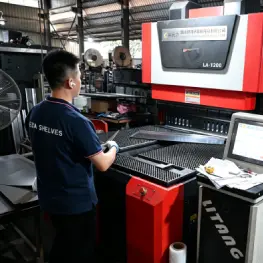
Progressive Cold Bending
Computer-controlled heavy brake press operations forming high-precision box beam connector jaws and column brackets.
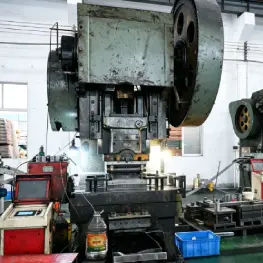
24-Pass Roll Forming
Multi-stand progressive profile rollers generating closed box beams and multi-flange omega uprights free of internal shear stresses.
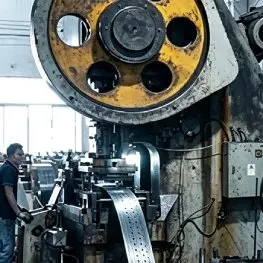
Deburring & Polishing
Mechanical surface chamfering and weld preparation removing sharp edges, flashings, and mechanical stress concentrators.
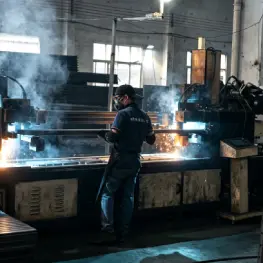
Robotic Shielded Welding
Multi-axis Panasonic GMAW robotic cells depositing uniform throat fillets linking beam bodies to multi-claw end connectors.
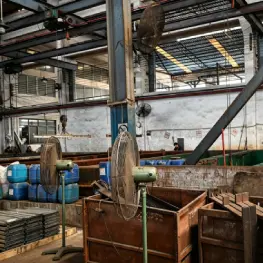
Pickling & Phosphating
7-stage automatic chemical immersion line delivering degreasing, acid rust descaling, and micro-crystalline zinc phosphating.
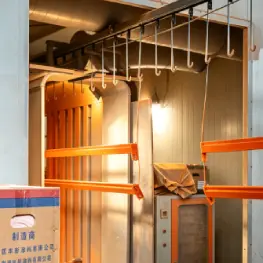
Electrostatic Coating
Swiss Gema automated powder application booth baking cross-linked TGIC thermoset polyester resin at 200°C for superior impact resilience.
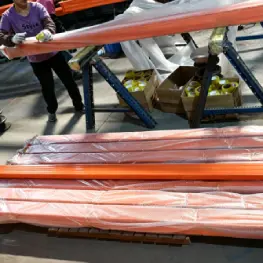
Quality Assurance & Stillage
Cross-hatch adhesion testing, ultrasonic thickness gauging, and heavy-duty steel channel stillage bundling for zero transit warping.
Strategic Procurement Trends for Heavy High Bay Warehousing
Structural transitions dictating international racking tenders, total cost of ownership (TCO), and automated supply chain resiliency.
The Rise of Clad-Rack (Rack-Supported) Civil Structures
Industrial developers are rapidly abandoning independent civil steel building frames in favor of rack-supported buildings. By making the high bay racking structure serve as the load-bearing skeleton for the roof trusses and exterior wall cladding, capital expenditure is slashed by 25%–35%, construction schedules contract by 4 months, and internal space volumetric efficiency reaches theoretical optimums.
Cold-Chain & Ultra-Dense Thermal Optimization
With refrigerated logistics power costs surging worldwide, high bay facilities are turning to sub-zero radio shuttle systems and compact gravity flow lanes. Maximizing vertical cube capacity inside -25°C environments reduces cubic refrigeration power dissipation per pallet by up to 45%. Sourcing demands customized cold-rated steel that resists low-temperature ductile-to-brittle impact fracture.
Biosecurity-Ready Modular Stillage Packaging
Strict import regulations—specifically Australian DAFF and New Zealand MPI controls—have ended casual timber pallet packing. Tier-1 global procurement requires either certified ISPM-15 heat-treated dunnage or completely circular welded steel stillage frames. These custom export frames facilitate swift quayside inspection, eliminate fumigation quarantine demurrage, and directly load onto installation site slabs.
Emerging Technology Trajectories in High Bay Racking
Integration of predictive structural monitoring, advanced metallurgical alloys, and seamless autonomous mobile robotic interfaces.
Embedded IoT Fiber Strain & Impact Sensors
Future high bay installations feature embedded optical fiber Bragg grating (FBG) or digital piezoelectric strain sensors directly into critical upright baseplate connections and mid-frame brace nodes. In real-time, structural health monitoring systems detect dynamic forklift collisions, unauthorized bay overloading, and foundational settling prior to catastrophic frame bucklings.
AMR / AGV Hybrid Interface Architecture
The boundary between traditional pallet racks and robotic goods-to-person systems is dissolving. High bay structures are now engineered with cantilevered pickup-and-delivery (P&D) cantilever brackets, heavy dynamic buffer stations, and ground-level structural clear-spans specifically designed for autonomous mobile robots (AMRs) to navigate unobstructed beneath stored bulk pallets.
Self-Healing Zinc-Aluminum-Magnesium Coatings
Replacing traditional post-weld electro-galvanizing, high bay outdoor cantilever and open clad installations are transitioning to continuous pre-coated Zinc-Aluminum-Magnesium (ZAM) structural sheets. ZAM delivers up to 10 times higher corrosion resistance than standard HDG, utilizing a self-healing cut-edge passivation chemistry that ensures 30-year operational lifespans in aggressive marine and industrial settings.
Engineered Project References Across Demanding Sectors
Heavy structural implementations demonstrating high density, chemical safety segregation, and picking efficiency gains.
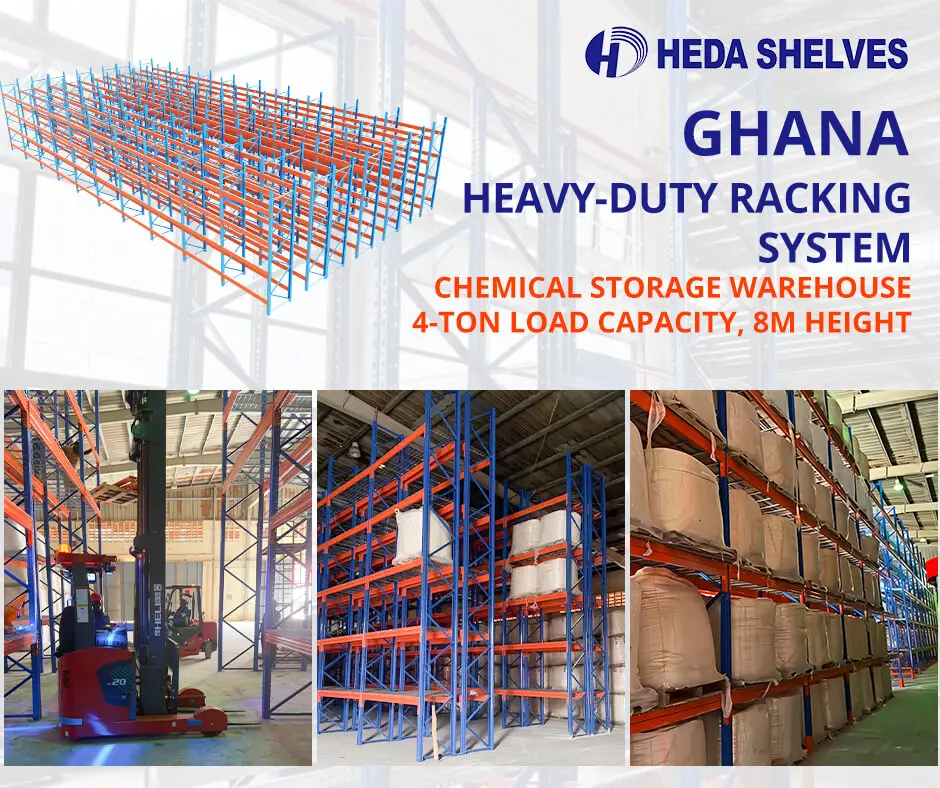
Heavy-Duty Chemical & Hazardous Material Hub
Reinforced beam levels engineered for IBC tote and steel drum liquid containment, equipped with fire-isolated flue passages, heavy drop-in mesh decks, and mechanical anti-collapse backstops.
View Case Study →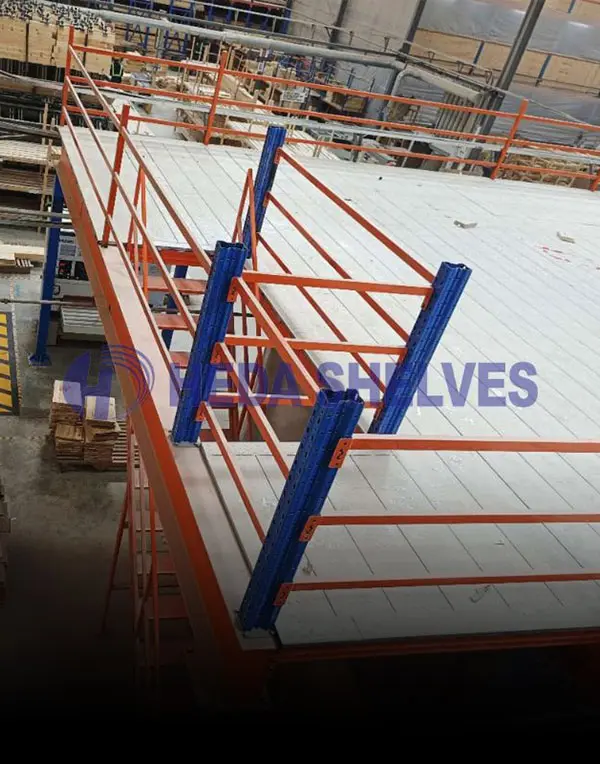
Multi-Tier Rack-Supported Order Fulfillment Floor
A dual-tier integrated structural mezzanine doubling floor space from 4,500m² to 9,000m² without erecting external steelwork, featuring 800 kg/m² mezzanine deck rating and integrated stair towers.
View Case Study →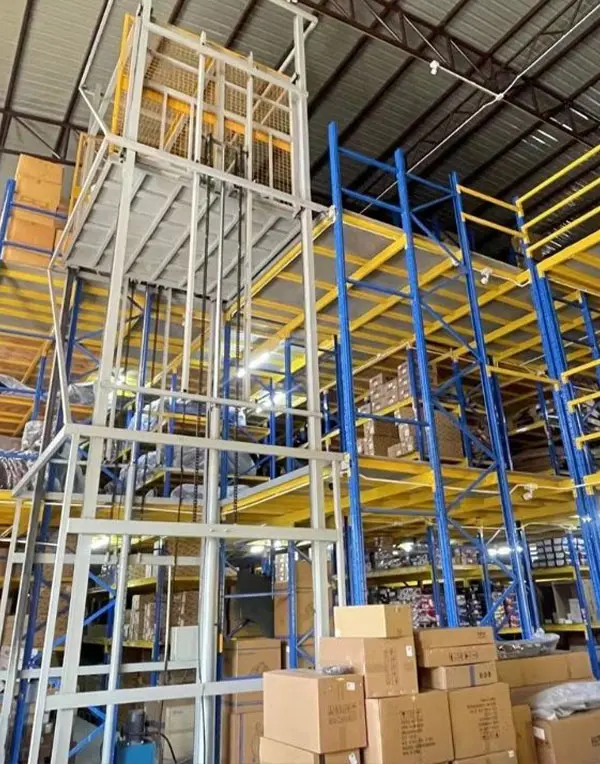
Automotive Parts Logistics & Longspan Distribution
High-density selective pallet racking merged with multi-level longspan picking tiers, organizing over 45,000 distinct automotive SKUs with dedicated tyre cradles and cantilever racks.
View Case Study →High Bay Pallet Racking Technical FAQ
Detailed technical answers addressing engineering standards, seismic compliance, customs clearances, and operational structural tolerances.
How does your factory substantiate AS 4084 and EN 15512 compliance?
We supply full mechanical calculation packages, material test certificates (MTCs conforming to EN 10204 Type 3.1), and finite element analysis (FEA) models. Our designs reference AS 4084:2023 (Steel storage racking) and European EN 15512:2020 limit-state design principles. We provide exact section moduli ($Z_x, Z_y$), moments of inertia ($I_x, I_y$), and physical coupon load testing data for beam-to-column connector semi-rigid rotational stiffness ($C_i$), allowing local registered Professional Engineers (PE or CPEng) to certify local building compliance smoothly.
What specific parameters are used for New Zealand and seismic zone engineering?
For New Zealand and other active seismic regions (such as the Pacific Rim or Western Americas), engineering designs strictly integrate site-specific spectral acceleration parameters in accordance with NZS 1170.5 or ASCE 7. We engineer ductile structural performance through oversized seismic footplates, double-anchor expansion or chemical epoxy anchor setups (Hilti/Fisher), increased cold-formed column wall thicknesses (up to 3.0mm), and horizontal/vertical braced portals that prevent progressive structural rack collapse under horizontal spectral ground accelerations.
Why is Q355B steel chosen over Q235B for high bay upright columns?
While Q235B (yield strength ≥ 235 MPa) is adequate for low-profile standard selective racking up to 6 meters, high bay systems exceeding 12–30 meters carry immense axial compressive forces. Q355B steel features a minimum yield point of 355 MPa and an ultimate tensile strength of 470–630 MPa. Utilizing Q355B allows for lighter section weights while elevating column buckling resistance against axial compression and horizontal live loads, dramatically reducing total dead weight and foundation pad pressure.
What are the verticality and plumbness tolerances for automated ASRS high bays?
Under VDI 2631, FEM 9.831, and FEM 10.2.02 codes for automated stacker cranes, tolerances are substantially tighter than manual forklift racking. High bay upright columns must maintain an out-of-plumb deviation of less than ±10mm across the total vertical span (typically ≤ H/1000 in both cross-aisle and down-aisle directions). Beam elevation levels across a dual-rail bay must remain within ±3mm to ensure robotic optical fork sensors execute automated pallet extraction without positioning timeouts.
How are Australian DAFF and New Zealand MPI biosecurity controls addressed?
Non-compliance with customs biosecurity results in costly port-side container re-export or quarantine fumigation. We package high bay profiles on specialized fabricated steel stillages or strictly certified ISPM-15 compliant, heat-treated (HT) timber skids bearing official IPPC stamps. Every container pack includes stamped packing lists, raw material timber declarations, clean ocean bills of lading, and preferential certificates of origin (under ChAFTA or NZ-China FTA) to clear border control seamlessly without clearance delays.
What anti-corrosion finishes are supplied for sub-zero cold stores or coastal ports?
For standard ambient warehouses, our 7-stage chemical pre-treatment and electrostatic thermoset polyester powder coating provides 60–80 μm dry film thickness (DFT), rated for high abrasion resistance. For high-humidity coastal hubs, open fertilizer sheds, or blast freezers operating down to -30°C, we provide continuous hot-dip galvanized (HDG) components complying with ISO 1461 / ASTM A123 (65–85 μm zinc layer) or high-durability pre-galvanized ZAM steel sheets to completely eradicate atmospheric oxidation.
What is the standard production timeline and sea freight duration?
Manufacturing lead time for a typical 500 to 2,000 pallet position project is approximately 18 to 25 working days. Large high bay projects exceeding 10,000 pallet positions are phased over 35 to 45 days. Direct maritime shipping from Guangzhou/Shenzhen to major Australian ports (Sydney, Melbourne, Brisbane) or New Zealand ports (Auckland, Tauranga) typically takes 14 to 24 days on water, while transit to European or North American Pacific ports ranges between 20 to 32 days.
Can HEDA Shelves supply custom OEM components to integrate with existing racking?
Yes. Our engineering division routinely produces OEM and ODM component profiles compatible with international legacy systems, including 50mm pitch European patterns, 76.2mm (3-inch) American teardrop configurations, and 75mm Australian upright patterns. We manufacture replacement beams, frame expansion spliced columns, row spacers, and customized safety pallet drop-in wire decking built directly to your existing facility CAD specifications.
Request a Complete 3D CAD Warehouse Layout & Structural Calculation Package
Submit your warehouse floor layout, clear headroom, slab capacity, and pallet specification matrix. Our senior storage system structural engineers will compile a complimentary 3D spatial layout and factory direct budget breakdown within 24 hours.