Recommended Heavy-Duty Industrial Racking & Shelving
Custom-engineered structural profiles precision-manufactured from high-tensile Q235B/Q355B cold-rolled steel, designed for maximum load capacity and seismic resilience.
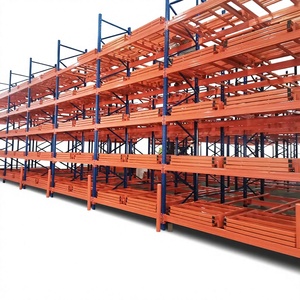
Push-Back Pallet Racking Cold-Rolled Steel Dense Storage
Multi-lane nested cart mechanism eliminating forklift aisle entry. Up to 6 pallets deep.
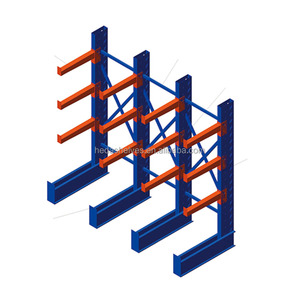
Heavy Duty Cantilever Storage System for Bulk Materials
Designed for timber, structural steel sections, and piping with load capacities exceeding 3,000kg/arm.
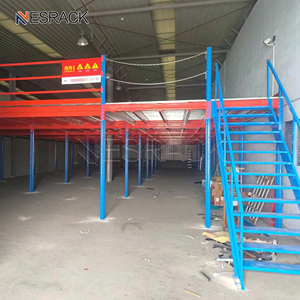
Custom Steel Structure Warehouse Mezzanine Storage Platform
Heavy structural I-beam platforms multiplying operational footprint without facility renovation.
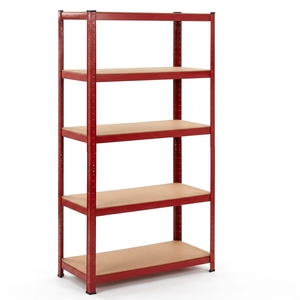
Floor-Standing 5-Layer Galvanized Steel Upright Heavy Duty Rack
Hot-dip galvanized surface treatment ideal for extreme humidity, coastal sheds, and cold store rooms.
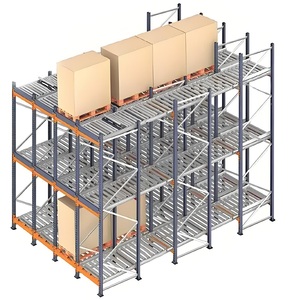
CE Certificated Steel Roller Warehouse Gravity Pallet Flow Rack
Automated internal speed controllers for secure pallet descent in perishable cold-chain fulfillment.
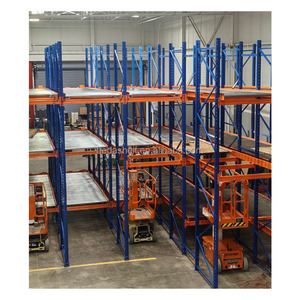
Heavy Duty Steel Gravity Flow Rack Customizable FIFO System
Dedicated loading and picking aisles preventing vehicular conflict and maximizing throughput speed.
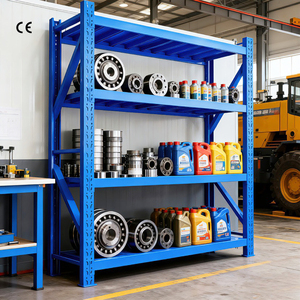
5-Layer Multi-Level Commercial Warehouse Steel Shelving Units
Adjustable step-beam tiers providing rigid support for distribution center manual carton picking.
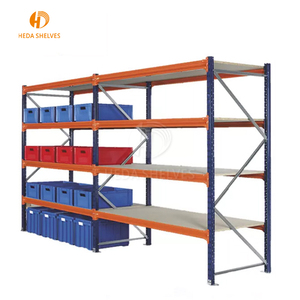
Adjustable Pallet Rack Heavy Duty Warehouse Storage Racking
Universal profile design with 75mm/50mm pitch increments for quick adjustments and fast restocking.
Engineering Competence & Factory Direct Strengths
Direct supply-chain transparency, precision production, and structural assurance from Guangzhou, China.
30,000 m² Integrated Infrastructure
Unlike third-party sourcing agents, our manufacturing plant incorporates 10 automated continuous profile roll-forming lines, laser profiling stations, high-accuracy multi-point punching presses, and robotic MIG welding stations. Our internal production capacity reaches 30,000 tons monthly, ensuring consistent batch metallurgical uniformity.
Global Structural Certifications
All systems undergo FEA stress verification conforming to international mandates. We maintain active compliance documentation including CE Certification No. 2435-CPR-8605159, ISO 9001:2015 Management Certification No. 18624Q00169R0M, full RoHS surface compliance, and design validation referencing Australian standard AS 4084 and European FEM specifications.
Biosecurity & Cross-Border Logistics
We support seamless maritime logistics to North America, Europe, Australia (Sydney, Melbourne, Brisbane), and New Zealand (Auckland, Tauranga). To eradicate international shipping risks, materials are palletized on heavy steel skids or certified ISPM-15 treated wood, strictly bypassing DAFF and MPI biosecurity hold delays.
Industrial Storage Strategic Trends: Future of Material Handling
A technical assessment of modern distribution architecture, automation evolution, and global supply procurement dynamics.
1. Evolution of Modern Logistics: From Static Racks to AS/RS & Autonomous Fleets
The global warehousing landscape is undergoing unprecedented transformation dictated by escalating real estate costs, labor shortages, and demand for rapid delivery cycles. Traditionally, warehouse managers relied on static selective pallet racking, accepting wide aisle dimensions (typically 3.2m to 3.8m) to facilitate counterbalance and reach forklifts. Today, industrial facilities are adopting Very Narrow Aisle (VNA) and dynamic pallet runners to extract volumetric efficiency.
Furthermore, standard static shelving is steadily interfacing with Automated Guided Vehicles (AGVs) and Autonomous Mobile Robots (AMRs). Upright frames now require tighter roll-forming tolerances, micro-millimeter rail levelness, and deflection ratios below 1/200th of the span length under maximum designed payload to ensure autonomous mechanical grippers and sensors function without calibration interruption.
2. Cold-Chain and High-Density Push-Back/Gravity Flow Integration
Temperature-controlled facilities, including commercial chillers (-2°C to 4°C) and deep-freeze logistics (-18°C to -25°C), face massive energy expenditures. Operating empty air within a cold warehouse represents immediate financial loss. As a result, operations are replacing conventional static selective aisles with high-density Push-Back and Gravity Pallet Flow configurations.
By utilizing gravitational flow beds and multi-lane nested trolleys, operators achieve storage density increases between 60% and 80% compared to standard selective layouts. Crucially, industrial engineers must specify low-temperature-grade structural steels to eliminate cold embrittlement, combined with zinc-rich phosphating and specialized cross-linked electrostatic powder formulations to resist thermal cycling degradation and moisture condensation.
3. Structural Steel Mezzanines: Unlocking Footprint Without Real Estate Capital Outlay
Constructing new industrial facilities or relocating operations involves massive capital expenditure, stringent zoning clearances, and lengthy lead times. Multi-tier structural mezzanines and rack-supported platforms provide immediate volumetric mitigation. By transforming underutilized overhead ceiling clearance into multi-level picking areas, distribution operators routinely double or triple usable floor capacity.
Modern engineering trends prioritize modular, bolt-together mezzanine connections over field-welded alternatives. Fully pre-engineered, factory-punched column grids, cold-formed C/Z purlins, and specialized anti-slip galvanized steel decking lower erection timelines on-site by up to 50%, while preserving long-term asset redeployment flexibility.
4. Supply Chain Sourcing Trends: Direct-from-Factory Engineering Procurement
Global procurement teams across North America, Europe, Australia, and the Pacific are migrating away from multi-tier regional resellers toward direct manufacturer engagements. Leading manufacturers provide extensive CAD drafting, Finite Element Analysis (FEA), and tailored project management packages directly from South China production hubs.
Procuring factory-direct delivers substantial unit-cost optimizations, transparent steel origin verification, and tailored structural engineering configured for regional environmental factors—such as seismic ductility in New Zealand (NZS 1170.5) or specialized slab loading criteria in Australia (AS 4084). The transition to direct overseas manufacturer partnerships delivers superior ROI when backed by rigorous QA validation protocols.
Frequently Asked Questions: Global Industrial Racking Procurement
Clear, direct answers regarding compliance, seismic loads, fabrication tolerances, and shipping logistics.
How do Chinese racking manufacturers assure compliance with Australian AS 4084 and European EN 15512 standards?
Can your factory design mezzanine floors and cantilever racking for high seismic zones (e.g., New Zealand)?
What raw material grade is utilized, and how is the powder coating tested against corrosion?
What is the standard production timeline and sea freight lead time to primary destination ports?
How does your packaging prevent shipping abrasion and satisfy quarantine inspections?
Request Your Customized Warehouse Engineering Package
Share your facility dimensions, pallet dimensions (e.g., 1165x1165mm AU standard, 1200x1000mm UK/US standard), and forklift clear height for a complete 3D CAD design layout within 24 hours.