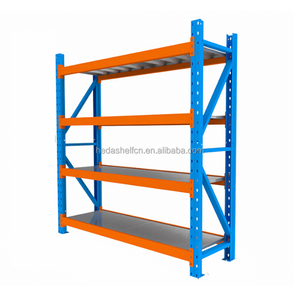
 Boltless Stacking
Metal Boltless Stacking Industrial Warehouse Storage Rack System
- Capacity: 200–800 kg / level
- Toolless slot-in assembly beam lock
- Electrostatic powder-coat finish
Direct-from-manufacturer heavy-duty storage configurations, high-density pallet racks, and industrial longspan shelving systems manufactured from certified high-tensile Q235B and Q355B cold-rolled structural steel.
Boltless Stacking
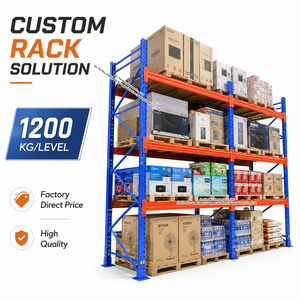 Pallet Racking
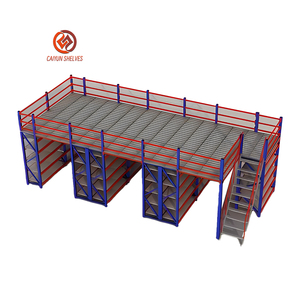 Mezzanine Platform
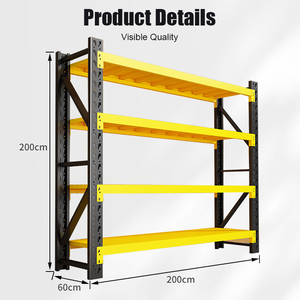 Light-Duty Shelving
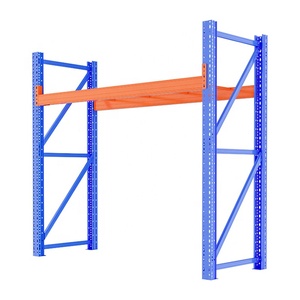 Medium-Duty Rack
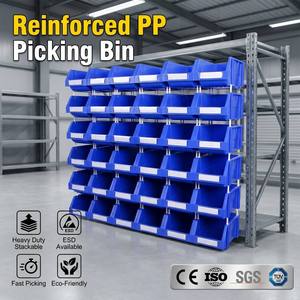 Parts Organizer
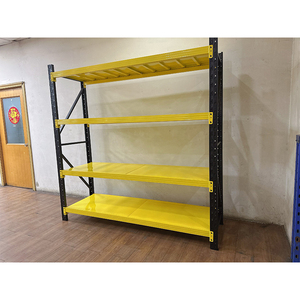 Industrial Heavy
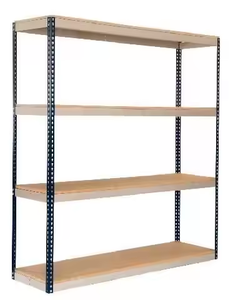 Custom Modular
Founded in 2001, Guangzhou Heda Shelves Co., Ltd. has evolved from a specialized fabrication facility into an international authority in logistics intralogistics engineering. With 25 years of metallurgical excellence, we deliver turn-key warehousing infrastructure designed to withstand high seismic shear loads and demanding throughput cycles.
Unlike generic metal fabricators, our structural calculations conform strictly to Australian Standard AS 4084-2023 (Steel Storage Racking), European Standard EN 15512 / FEM 10.2.02, and the American RMI MH16.1. We maintain verified CE Certification No. 2435-CPR-8605159 and an audited ISO 9001:2015 Quality Management System (No. 18624Q00169R0M), providing engineering packs, FEA stress analyses, and local certifier-ready documentation with every project.
From hot-rolled steel coil chemical testing to CNC multi-axis automatic punching, cold roll profiling, robotic dual-shield welding, automated 8-stage pickling phosphating pre-treatment, and high-adhesion thermosetting electrostatic powder coating. Every ton of steel processed maintains 100% heat-number traceability, guaranteeing yield strengths of $f_y \ge 235 \text{ MPa}$ to $355 \text{ MPa}$ without brittle failure under shock loading.
Cross-border logistics fail when timber treatment and export packaging fall short of strict quarantine requirements. HEDA structures are packed on dedicated structural steel stillages or ISPM-15 certified heat-treated timbers, bypassing DAFF (Australia), MPI (New Zealand), and USDA biosecurity delays. Complete commercial invoices, bills of lading, and Form A/E/ChAFTA Certificates of Origin ensure preferential customs clearance worldwide.
| Engineering Dimension | HEDA Shelves Manufacturing Standard | Tier-1 Western Benchmark (Dexion/SSI) | Low-Tier Asian Workshops |
|---|---|---|---|
| Primary Steel Grade | Certified Q235B / Q355B (Yield stress 235–355 MPa) | EN 10025 S235 / S355 or ASTM A36 | Scrap-blend uncertified re-melt steel |
| Beam Deflection Limit | $\le L/200$ strictly tested under uniform working load | $\le L/200$ (Compliant with FEM / AS 4084) | Exceeds $L/150$, prone to plastic sagging |
| Surface Pre-Treatment | Automated 8-stage acidic pickling & silane phosphating | Multi-stage automated wash & passivation | Manual solvent wipe or bare oil dusting |
| Powder Coating Mil Spec | 60–90 $\mu\text{m}$ pure epoxy-polyester cured at 200°C | 70–90 $\mu\text{m}$ electrostatic polyester | Under 40 $\mu\text{m}$, vulnerable to chipping |
| Seismic Engineering | FEA node modeling with site-specific NZS 1170.5 / UBC | Custom site engineering packs supplied | No seismic calculation; generic base plates |
Global supply chain volatility, hyper-urbanization, escalating real estate rents, and automation mandates are transforming how enterprise procurement executives source racking systems. Here are the three driving paradigm shifts shaping 2025–2030 facility acquisitions.
Historical procurement focused almost exclusively on initial purchase price per kilogram of steel. Modern supply chain engineering analyzes Total Cost of Ownership (TCO) across a 15-to-20-year operational horizon. This includes beam deflection fatigue thresholds, upright column impact absorption, and floor anchor shearing tolerances under cyclical forklift movements.
As labour costs climb and order cycle times compress, standard selective racking is increasingly being superseded by 4-way radio shuttle systems and Automated Storage and Retrieval Systems (ASRS). Racking tolerances must now transition from manual forklift allowances ($\pm 5\text{ mm}$) to optical-sensor millimetric precision ($\pm 1.5\text{ mm}$) across total vertical plumbness.
Global insurers and municipal certifiers enforce strict geological adherence. In high-seismic zones such as New Zealand, Japan, Chile, and the US West Coast, standard anchor bolts fail municipal code reviews. Warehouse operators now mandate site-specific response spectrum analysis ($S_a$ acceleration parameters) with oversized ductile base plates.
The structural racking sector is experiencing technological convergence: advanced metallurgy meets computational structural mechanics. Explore the innovations transforming steel profiles into high-efficiency storage machines.
By leveraging titanium-niobium micro-alloyed hot-rolled strips (Q355B and high-yield cold-rolled derivatives), structural engineers optimize cross-sectional geometry. Continuous cold-roll forming machines shape complex multi-ribbed upright omega profiles, yielding exceptional torsional stiffness. This breakthrough decreases total steel deadweight by 14% to 18% while simultaneously elevating uniform distributed load (UDL) ratings and reducing sea freight container usage.
Next-generation logistics hubs are pilot-testing smart racks embedded with low-power strain gauges, piezoelectric impact sensors, and RFID tags along critical frame uprights. When a heavy reach truck strikes an upright foot or an accidental pallet overload occurs, the sensor instantly transmits node-level stress variations to the warehouse WMS/ERP dashboard, preventing progressive collapse before failure occurs.
Industrial leasing constraints have made horizontal building extensions economically prohibitive. The technological frontier lies in rack-supported and structural steel multi-tier mezzanines. By utilizing heavy-duty upright frames as primary structural columns supporting cold-formed C/Z purlins, steel gratings, and timber decking, operators convert single-level warehouses into triple-level omni-channel fulfilment engines without pouring new foundation footings.
Decarbonization is no longer optional for Fortune 500 supply chains. Traditional toxic liquid solvents and chromate conversions are obsolete. Current manufacturing excellence integrates TGIC-free polyester powders, low-temperature curing chemistries (reducing kiln thermal consumption by 22%), and heavy-coat continuous zinc-aluminum-magnesium (ZAM) alloys that outlast traditional hot-dip galvanizing by 300% in corrosive fertilizer and marine salt environments.
Direct answers to technical, commercial, engineering, and compliance questions asked by procurement directors, civil certifiers, and project contractors.
Compliance begins at the metallurgical level. We utilize steel with mill test certificates confirming yield and tensile ratings. Our structural engineers design each system using advanced Finite Element Analysis (FEA) software that calculates upright frame axial buckling, beam vertical deflection ($\le L/200$), and beam-end connector moment-rotation stiffness ($K_b$).
For Australian and New Zealand installations, calculations reference AS 4084-2023 principles and NZS 1170.5 seismic provisions. For European projects, we supply static calculation packs under EN 15512 / FEM 10.2.02. Load signage plates, stamped CAD layouts, and complete engineering documentation packs are delivered with every order for swift verification by your local professional engineer (PE) or certifier.
To produce an exact, safety-certified warehouse layout within 24 hours, our engineering department requires six key data points:
Racking profiles are long, dense, and heavy, presenting serious risks of abrasion if improperly stowed. We fabricate bespoke structural steel stillages and high-strength cradles matching the interior profiles of 40ft High Cube containers. Upright frames are separated by high-density polyethylene (HDPE) buffers and corrugated sleeves to eliminate paint rub.
Box beams are grouped in banded bundles with specialized protective corner angles. Beams, frames, and hardware are strategically balanced to ensure container center-of-gravity compliance, maximizing weight capacity (up to 26–28 metric tons per container, depending on destination port road limits) without crushing bottom items.
Biosecurity authorities such as the Australian Department of Agriculture, Fisheries and Forestry (DAFF) and New Zealand's Ministry for Primary Industries (MPI) will hold, fumigate, or re-export entire containers if untreated raw timber or insect larvae are discovered.
We resolve this risk at the source. All export racking shipments utilize full-steel packaging frames or strictly ISPM-15 certified heat-treated and debarked timber bearing verifiable HT IPPC stamps. Containers undergo pre-loading clean-out inspection to ensure complete absence of organic debris, bark, soil, or seeds, guaranteeing rapid clearance through Western border gates.
The choice depends entirely on your warehouse operating environment:
Electrostatic Powder Coating (60–90 $\mu\text{m}$): Ideal for 90% of dry ambient warehouses, standard retail distribution, e-commerce, and general parts storage. It offers superior visual appeal, custom RAL color branding, high impact resistance against minor pallet scuffs, and cost-effective longevity.
Hot-Dip Galvanizing (ISO 1461, 65–100 $\mu\text{m}$): Imperative for outdoor yards, semi-open garden sheds, marine coastal storage, chemical plants with acidic vapors, and deep freeze cold-storage warehouses (-30°C) with frequent condensation cycles. Molten zinc metallurgically alloys with the substrate, preventing rust even if scratched through to the steel.
Yes. A substantial portion of our 30,000-ton monthly capacity serves OEM and ODM clients worldwide. We produce custom upright pitch profiles (e.g., 50mm, 75mm, 76.2mm / 3-inch teardrop profiles compatible with the North American market), customized hook connectors, specific beam step profiles, and private-labeled branding stickers, load capacity signage, and installation packaging. Complete confidentiality and exclusive mold protections are contractually protected.
Standard production lead time ranges from 15 to 25 business days depending on project scale, profile complexity, and required finish. Direct sea transit times from our facilities via Guangzhou / Shenzhen / Nansha ports are typically:
Warehouse fire protection standards (such as NFPA 13 and FM Global data sheets) mandate strict "Transverse" and "Longitudinal" flue spaces. Our CAD engineers calculate double-deep and back-to-back rack rows with calibrated row spacers (typically 200mm to 300mm), guaranteeing a continuous 75–150mm clear vertical exhaust chimney. This design allows heat to rapidly activate ceiling sprinkler heads and permits water penetration down through wire mesh decking to extinguish deep-seated rack fires.
Send our structural engineering department your warehouse floor drawings and SKU dimensions. Receive a fully optimized 3D CAD layout, seismic load calculation table, and competitive direct factory pricing within 24 hours.