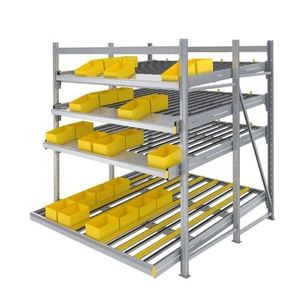
Factory Direct Catalog
High-Performance Dynamic Storage & Carton Flow Lineup
Engineered for seamless manual picking, SKU consolidation, and high-density material staging. Discover our premier carton flow racks alongside complementary multi-tier warehouse systems manufactured in our Guangzhou production base.
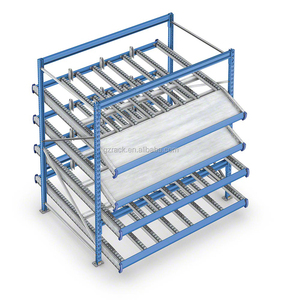
Guangzhou Factory Custom Carton Flow Rack
Product Specs & RFQ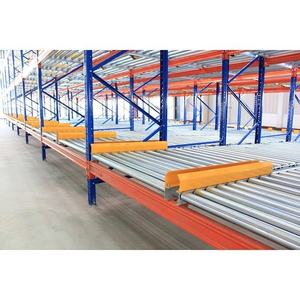
Factory Supply High Quality Steel Industrial Warehouse Storage 4-Layer Gravity Flow Carton Rack With Shelves
Product Specs & RFQ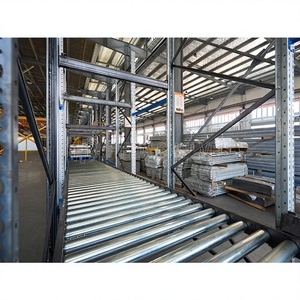
Hot Sale Gravity Flow Roller Racking Systems Customized Heavy Duty Carton Flow Racks
Product Specs & RFQ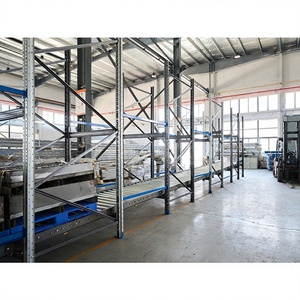
Heda Gravity Carton Flow Racking Selective Warehouse Roller Racking System
Product Specs & RFQ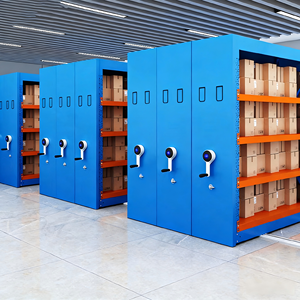
Custom Adjustable Mobile Shelving Unit-Industrial-grade Steel Electric Powered High Load Capacity for School & Garage Storage
Product Specs & RFQ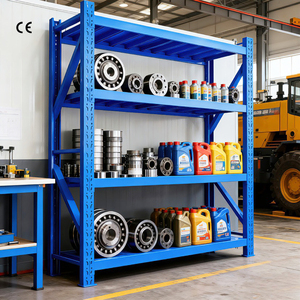
5-Layer Iron Multi-Level Steel Rack Racking System Commercial Industrial Warehouse Storage Shelving Units
Product Specs & RFQ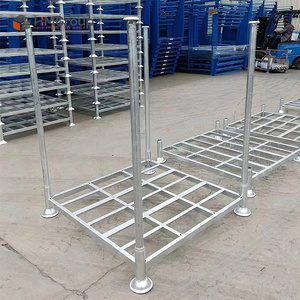
Heavy Duty Industrial Galvanized Metal Steel Storage Stacking Pipe Pallet Stillages Racks
Product Specs & RFQIndustry White Paper Insight
Future Technological Trends in Carton Flow Racking Architectures
Carton flow racking is rapidly evolving from isolated passive gravity beds into highly integrated cyber-physical nodes within high-velocity automated distribution centers.
Pick-to-Light (PTL) & AMR Synchronization
Modern e-fulfillment distribution hubs are marrying carton flow faceplates with Pick-to-Light (PTL) and Put-to-Light pick bars. Front pick faces are optimized with infrared bin sensors and integrated wireless gateways, feeding location coordinates directly to Autonomous Mobile Robots (AMRs) that travel along order fulfillment loops.
Thermoplastic Polyurethane & Hybrid Rollers
Transitioning beyond standard polypropylene wheels, future-ready systems deploy thermoplastic polyurethane (TPU) and high-density polyacetal rollers featuring precision stainless steel dual-ball bearings. This drastically mitigates rolling friction variance across severe cold chain conditions (-30°C to +40°C) and completely prevents carton skidding.
Modular Universal Retrofit Drop-In Beds
The demand for rigidity combined with quick adaptability has catalyzed the shift toward universal clip-in carton flow tracks. Rather than dedicated fixed shelves, dynamic shelf brackets now drop seamlessly into standard teardrop, diamond, or hex upright slots without specialized fasteners, reducing layout reconfiguration times from days to hours.
Strategic Sourcing Analysis
Global Sourcing Matrix: Future Trends in Carton Flow Racks
How supply chain directors, procurement executives, and system integrators are optimizing CapEx, total cost of ownership (TCO), and supply continuity through 2026 and beyond.
Standardized Dynamic Load Ratings
Procurement directors are shifting tender requirements from static structural capacity to dynamic impact load ratings. Racking specifications now mandate cyclic drop tests for roller track assemblies to ensure rollers withstand repeated manual carton impacts over decades without axial failure or bracket fatigue.
End-to-End TCO & Zero-Tool Reconfiguration
With SKU proliferation continually shifting packaging footprints, enterprise buyers prioritize tool-free pitch adjustment mechanisms. Systems that support dynamic lane divider relocations in 25mm increments significantly reduce downstream facility maintenance labor and downtime costs.
Direct Mill Factory Partnership Over Intermediaries
Procuring directly from source manufacturers like HEDA Shelves eliminates multi-tier trading margins, provides direct access to structural engineering data sheets (including AS 4084, FEM 10.2.02, and ANSI MH16.1 compliance), and accelerates custom prototyping cycles from months to under 10 days.
Factory Heritage & Technical Authority
Engineered Manufacturing by Guangzhou Heda Shelves Co., Ltd.
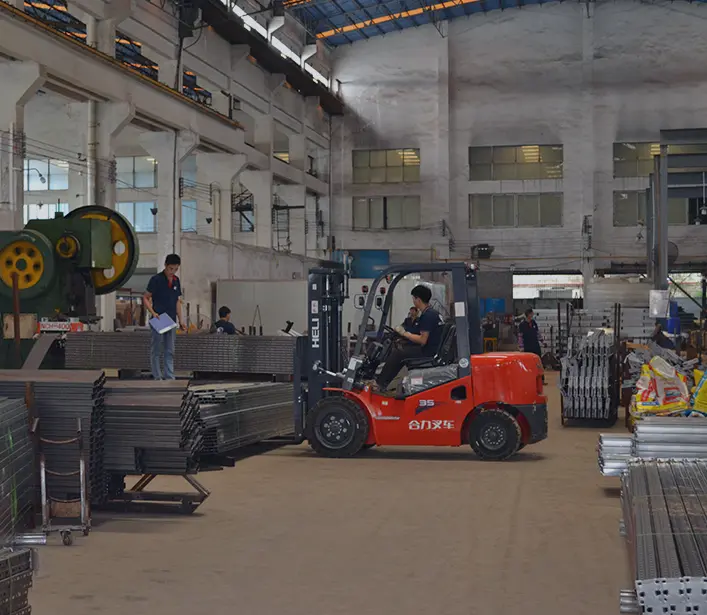
Founded in 2001, Guangzhou Heda Shelves Co., Ltd. has grown into one of Asia's premier engineering manufacturers of intelligent warehousing, pallet racking, industrial shelving, and dynamic carton flow systems. Operating across a sophisticated 30,000 m² state-of-the-art production complex, our team of over 300 technical engineers, precision CNC toolmakers, and fabrication specialists ensures every dynamic rack exceeds rigid international criteria.
- End-to-End In-House Fabrication: High-precision automated uncoiling, cold-roll forming, automated column multi-punching, CNC laser profiling, and multi-stage pickling and phosphating lines.
- Certified Global Standards: Rigorously compliant with ISO 9001:2015 Quality Management Systems (Cert No. 18624Q00169R0M), CE Factory Production Control (Cert No. 2435-CPR-8605159), and RoHS environmental standards.
- Free Tailored Engineering Packs: Comprehensive warehouse layout engineering, 3D CAD renders, stress-deflection calculations, and dynamic slope simulation delivered within 24 hours.
- Export-Optimized Logistics: Custom steel stillages, ISPM-15 compliant packaging, and direct intermodal shipping handling DAFF biosecurity and customs clearance worldwide.
Procurement Guidance
Frequently Asked Questions by Industrial Buyers
Key technical and contractual answers designed to clarify engineering parameters, freight logistics, and custom configurations for global procurement officers.
How do you calculate the optimal pitch/slope for carton flow racks?
The standard incline angle ranges between 2.5% and 5% (approximately 1.5° to 3°). The precise slope is engineered based on carton material, bottom surface rigidity, total carton weight (from 1 kg to over 50 kg), and ambient temperature. For plastic returnable transit totes (RTTs), a lower incline is calibrated compared to fibrous corrugated boxes which require slightly higher pitch or roller density to overcome contact deflection.
Can carton flow roller tracks be retrofitted onto existing selective pallet racks?
Yes. Our engineering department manufactures universal universal hanger brackets and intermediate support beams engineered to clamp or slot directly onto your existing upright columns (such as teardrop, box beam, or slotted structural frames). This allows warehouse operations to turn lower static pallet levels into ultra-high-density carton flow pick lanes without purchasing entire new racking structures.
What materials are used for roller tracks and frames to prevent deformation?
HEDA Shelves uses high-yield cold-rolled steel (Q235B grade) for all structural side channels and cross-ties, treated with anti-static electrostatic thermoset powder coatings or hot-dip galvanizing. Rollers are injection molded from premium high-impact ABS, high-density polyethylene (HDPE), or POM, revolving around solid cold-drawn steel axles for minimum rolling resistance and zero axle bowing under sustained dynamic loads.
How does HEDA handle international export freight, container packing, and biosecurity?
All uprights and beam assemblies are bundled into custom rigid steel stillages or crated using ISPM-15 heat-treated certified timber pallets. Small parts, lane guides, and roller components are boxed and moisture-barrier wrapped. We supply full commercial documentation including Form E, Certificates of Origin (under bilateral trade agreements), mill test certificates, and complete packing lists to facilitate zero-delay customs clearance at global ports.
Transform Your Warehouse Throughput With Engineered Flow Racks
Consult directly with our senior racking design engineers. Receive fully calculated 2D/3D CAD layouts, dynamic lane simulations, and a direct mill-level quotation within 24 hours.
Contact Us