Featured Industrial & Wide Pallet Storage Systems
Engineered for wide aisle forklift accessibility, ultra-heavy duty bulk handling, and automated warehouse architectures. Standardized Q235B/Q355B high-grade steel configurations.
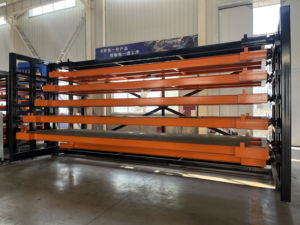
Multi-Layer Steel Heavy Duty Industrial Pipe Storage Rack Corrosion Protection 3000mm Height for Long Material Warehouse Storage
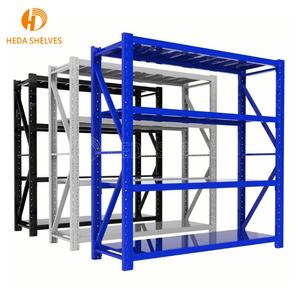
Wholesale Heavy-Duty Industrial Shelves Steel Multi-Layer Thickened Medium-Duty Rack for Warehouse Storage Light-Duty
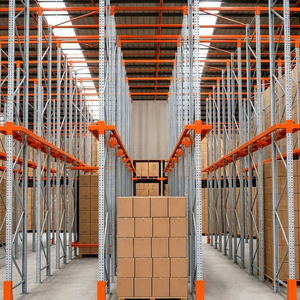
Industrial Heavy Duty Drive in Rack High Density Storage System for Warehouse
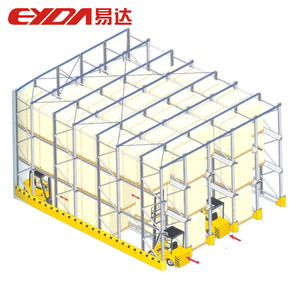
Heavy Duty 5 Layer Drive in Pallet Storage Racking System Drive-Thru Warehouse Pallet Rack LIFO FIFO Method Adjustable Shelves
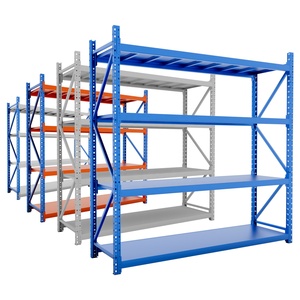
Factory Direct 4-Layer 800kg Medium Heavy Duty Pallet Racking System Steel Adjustable Longspan Warehouse Storage Pallet Racks
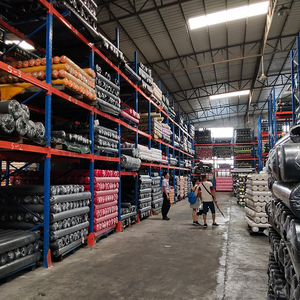
Highly Customizable Free Design Storage Rack For Various Heavy Duty Storing 1000KG 2000KG 3000KG Pounds Tons
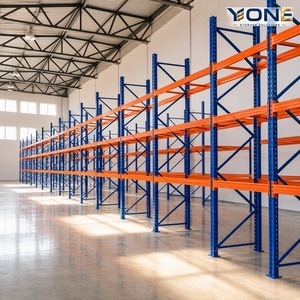
Steel Storage Rack Heavy Duty Pallet Racking Q235B Steel Selective Racking For Racks Industriales Warehouse Storage
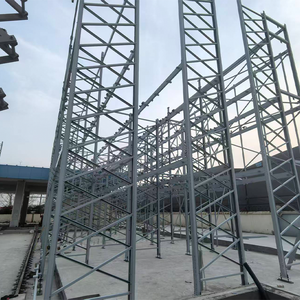
Mine Bulk Materials Anti-pressure Piling Heavy Duty 5 Layer Corrosion Protection Metal Warehouse Rack 1000-4000kg Load Capacity
Guangzhou Heda Shelves Co., Ltd. – 25 Years of Engineering Excellence
Established in 2001, Heda Shelves operates state-of-the-art cold-roll forming, automated robot welding, and continuous electrostatic powder coating facilities delivering world-class warehouse logistics infrastructure.
Full Compliance Verification
Certified with CE Certification No. 2435-CPR-8605159, ISO 9001:2015 Management System No. 18624Q00169R0M, and RoHS hazardous substance restrictions. Fully cross-referenced with AS 4084-2023, FEM 10.2.02, and ANSI MH16.1 storage rack design codes.
Free 3D Layout & Static FEA
Our in-house design office provides precision 3D CAD modeling, section modulus analyses, slab puncturing checks, and finite element calculations (FEA) tailored to your building column grid, clear ceiling heights, and material handling fleet.
Marine & Mining Grade Finishes
Equipped with automated pickling-phosphating chemical pre-treatment and electrostatic thermoset polyester powder coating. Optional ASTM A123 hot-dip galvanizing for harsh outdoor mining, cold storage freezers, and maritime coastal humidity.
Biosecurity & Export Mastery
Strict adherence to Australian DAFF, New Zealand MPI, and USDA biosecurity protocols. We use certified steel stillages or ISPM-15 heat-treated dunnage, comprehensive loading documentation, and ChAFTA/preferential tariff certificates of origin.
Structural Mechanics, Deflection Limits & Material Science in Wide Pallet Racking
Wide pallet racking (commonly referred to as wide aisle selective pallet racking) serves as the backbone of modern global supply chain logistics. Operating with standard aisle widths ranging between 3.0 meters and 3.8 meters, this system accommodates standard counterbalanced forklifts, reach trucks, and articulated trucks while guaranteeing 100% immediate selectivity to every single pallet position without requiring specialized floor guidance rails.
1. Mechanical Metallurgy: Certified Q235B vs. Q355B Steel
At Guangzhou Heda Shelves Co., Ltd., material selection is treated with uncompromising rigor. Standard light-to-medium systems employ cold-rolled Q235B carbon structural steel, offering a nominal yield strength of 235 MPa, high ductility, and superior weldability. For high-bay installations exceeding 8 meters or individual beam level loads exceeding 3,000 kg, we utilize hot-rolled, high-strength low-alloy Q355B steel (yield strength 355 MPa, tensile strength up to 630 MPa). This higher yield strength permits optimized wall thicknesses while resisting plastic deformation under accidental truck impacts.
2. Beam Deflection Criteria & Structural Safety Factors
In accordance with AS 4084-2023 (Steel Storage Racking) and FEM 10.2.02 European specifications, the vertical deflection limit of any load-bearing horizontal pallet beam under maximum uniformly distributed load (UDL) must not exceed L/200, where L is the clear span between upright frames. For automated shuttle systems and fragile stock picking, Heda Shelves engineers to an even tighter standard of L/250 or L/300 to prevent pallet binding and irregular mast clearance.
| Structural Component | Standard Material Specification | Key Engineering Formula / Criterion | Safety Factor Applied |
|---|---|---|---|
| Upright Columns | Q235B / Q355B Cold-Formed Omega Profile | Euler-Johnson Column Buckling Curve ($\lambda = kL/r$) | 1.65 to 1.95 (Working Stress) |
| Boxed Beams (Twin-C) | Interlocking Seam-Welded C-Profiles | $M_{max} = \frac{qL^2}{8}$; Deflection $\delta \le \frac{L}{200}$ | 1.50 over Elastic Limit |
| Beam Connectors | Forged / Stamped Multi-Claw Alloy | Rotational Joint Stiffness ($C_d$) per AS 4084 Annex D | 3.00 against Disengagement |
| Heavy Footplates | 10mm - 16mm High-Tensile Plate | Concrete Bearing Stress ($\sigma_{c} \le 0.45 f'_{c}$) | 2.00 over Ultimate Punching |
3. Seismic Dynamics & Flue Space Optimization
When designing racking for high-seismic zones such as New Zealand (NZS 1170.5), Japan, the Pacific Rim, or the West Coast of the Americas, dynamic response spectrum analysis is integrated into the CAD design. We analyze torsional moment distribution, ductile frame displacement, and anchor bolt pull-out loads. Furthermore, longitudinal and transversal flue spaces are maintained at a minimum of 75mm to 150mm to satisfy NFPA 13 sprinkler penetration standards, ensuring insurance and fire-authority sign-off across international jurisdictions.
Future Procurement Trends in Warehouse Pallet Racking
Key macroeconomic, regulatory, and technological shifts reshaping how procurement officers, logistics directors, and warehouse builders source racking from China.
1. Direct-from-Mill Turnkey Contracting
Procurement is transitioning away from multi-tier regional brokers toward direct manufacturer agreements. Leading enterprise buyers demand factory-direct engineering packages, eliminating markups of 25-40% while obtaining verified mill test certificates (MTC 3.1) directly from the manufacturing origin.
2. Carbon Border & Circular LCA Demands
With the European CBAM (Carbon Border Adjustment Mechanism) and global ESG scrutiny expanding, corporate buyers now require environmental product declarations (EPD) and Life Cycle Assessments (LCA) verifying scrap-recycled steel ratios and low-VOC powder coating lines.
3. Volatility Hedging via Modular Kits
To safeguard against steel price fluctuations and global freight container volatility, tier-1 3PL operations increasingly specify standardized modular upright pitches (50mm / 75mm) that allow interchangeable components across multiple geographical facilities.
4. Digital Twin & BIM Procurement
Procurement specifications now strictly mandate Revit and IFC BIM files during the bidding stage. Facilities incorporate digital twin racking models into warehouse management software (WMS) before the steel arrives on site, accelerating deployment timelines by up to 35%.
Technological Frontiers in Industrial Racking Systems
How robotic automation, micro-alloying, and smart structural health monitoring are transforming traditional static pallet racks into high-performance asset infrastructure.
Hybrid AMR & Forklift Co-Existence
Wide aisle layouts are increasingly customized to support hybrid human-driven forklifts alongside Autonomous Mobile Robots (AMRs) and automated reach trucks. This requires higher dimensional tolerances (±1.0mm profile trueness), recessed bottom beam elevations, and specialized low-profile floor anchorage.
Structural Health Telemetry (IoT Sensors)
Critical high-bay installations are moving towards wireless strain-gauge sensors and optical tilt detectors attached to bottom upright sections. These sensors alert safety engineers in real-time when accidental forklift impacts exceed plastic deformation thresholds, ensuring prompt corrective maintenance.
High-Yield Down-Gauging Metallurgy
Advances in cold-roll roll profiling enable the utilization of ultra-high yield micro-alloyed steels. By engineering multi-rib stiffeners along the upright column web and flange, structural capacity is preserved while total structural self-weight is cut by 12-18%, driving down ocean freight expenditure.
Frequently Asked Technical Questions (FAQ)
In-depth technical answers addressing engineering verification, international building code compliance, shipping logistics, and site installation.
How do you ensure pallet racking complies with AS 4084-2023 in Australia?
What is the difference between Q235B and Q355B steel in racking?
How do you package racking to satisfy strict biosecurity inspection?
What clear aisle width is mandatory for wide pallet racking systems?
Can your engineering team calculate site-specific seismic parameters?
What pre-treatment process ensures the powder coating will not chip?
What documents are provided with export shipments to claim FTA tariffs?
How do you manage site installation guidance and erection tolerances?
Request Your Custom Wide Pallet Racking Solution
Send your warehouse architectural drawings (DWG/PDF), clear height under sprinklers, pallet specifications, and forklift models. Our structural engineering team will deliver a comprehensive 3D CAD layout, load capacity calculation sheet, and direct mill quotation within 24 hours.
Send an Inquiry