Featured Industrial Adjustable Racking Systems
Factory-direct structural steel storage solutions tailored for high-density logistics hubs, cold chain facilities, and automated picking operations worldwide.
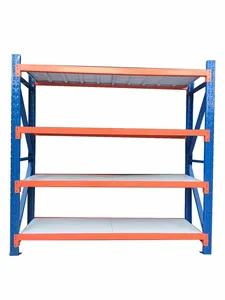
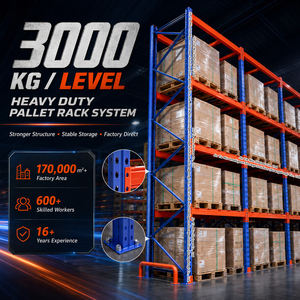
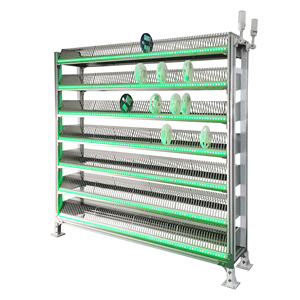
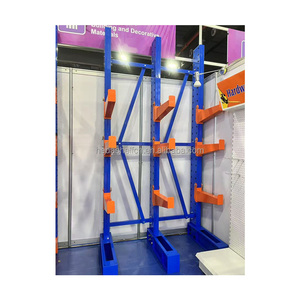
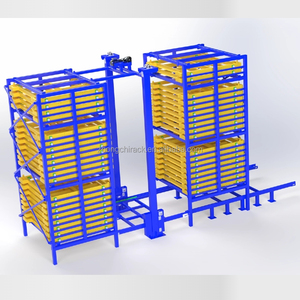
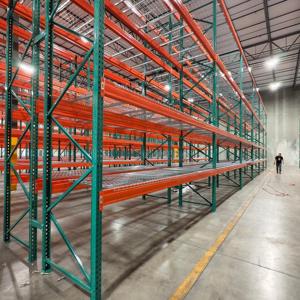
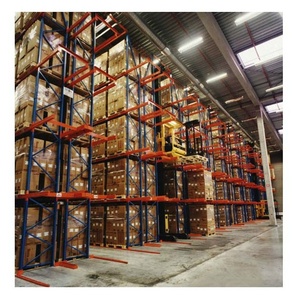
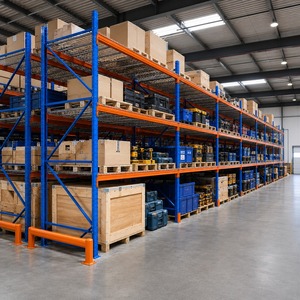
The Engineering Mechanics & Metallurgical Foundations of Industrial Adjustable Racking Systems
Modern warehouse logistics have progressed far beyond passive static storage. Contemporary distribution centers operate under relentless operational throughput, where seismic forces, high dynamic forklift strikes, variable thermal envelopes, and severe asymmetric pallet loading place unprecedented demands on steel storage structures. Sourcing adjustable pallet racking directly from a certified Chinese OEM requires a rigorous comprehension of structural deflection parameters, column roll-forming physics, and structural connection dynamics.
1. Material Science: Metallurgical Integrity of Cold-Formed Steel Uprights
At Guangzhou Heda Shelves Co., Ltd., the structural foundation of our adjustable racking begins with premium-grade Baosteel certified cold-rolled structural carbon steel (primarily Q235B and high-yield Q355B). Unlike hot-rolled structural sections, thin-walled cold-formed steel sections exhibit significant cold-work hardening throughout the corners and profile bends during the continuous roll-forming sequence. This cold-work phase transformation elevates the yield point ($f_y$) beyond 355 MPa, delivering superior strength-to-weight ratios essential for multi-tier and high-bay installations exceeding 14 meters in clear height.
The chemical composition of our structural steel is strictly audited for low carbon equivalents ($CEV \le 0.38$), preventing brittle fracture under heavy dynamic loads or deep-chilled environments (down to -30°C in food-grade cold stores). Upright columns undergo precision continuous CNC punching on automated lines to achieve 50mm or 75mm beam adjustment pitches without introducing residual shear stresses or micro-cracks along the web perforations.
The load-carrying capacity of an adjustable racking structure is not governed solely by the section modulus of the upright, but by the rotational stiffness ($K_b$) of the beam end connector. Heda Shelves utilizes multi-claw (3-tooth, 4-tooth, and 5-tooth) robotic-welded connector clips with integrated mechanical spring-steel safety locks. This configuration transfers bending moments through mechanical interlock and friction clamping, mitigating torsional buckling and lateral frame drift during rapid forklift placement.
2. Global Design Code Benchmarking: AS 4084, EN 15512, and ANSI MH16.1
International engineering compliance is not universal; seismic vulnerability factors, base anchor shear protocols, and allowable beam deflection limits differ substantially across regional target markets. Sourcing through our engineering facility ensures full compliance documentation tailored to the importing country's governing structural standards:
| Design Criterion | Australia & NZ (AS 4084:2023) | North America (ANSI MH16.1 / RMI) | Europe & UK (EN 15512:2020) |
|---|---|---|---|
| Governing Steel Standard | AS/NZS 4600 (Cold-formed steel) | AISI S100-16 / ASTM A1011 | EN 1993-1-3 (Eurocode 3) |
| Allowable Beam Deflection | Span / 200 (Under Full Design Load) | Span / 180 (Clear Aisle Deflection) | Span / 200 (Limit State Serviceability) |
| Seismic Qualification | NZS 1170.5 / AS 1170.4 dynamic response | ASCE 7 / IBC Spectral Acceleration ($S_s, S_1$) | EN 16681 (Seismic storage racking) |
| Safety Pin Dislodgement Shear | Minimum 5.0 kN upward resistance | Minimum 1,000 lbs (4.45 kN) retention | Minimum 5.0 kN positive lock test |
| Flue Space & Sprinkler Clearances | 75mm longitudinal flue minimum | 6-inch (152mm) pallet-to-pallet flue | National fire authority NFPA / CEA 4001 |
3. Protective Finishes & Micro-Environment Durability
Corrosion mitigation directly dictates structural longevity. Heda Shelves deploys an industrial 10-step surface preparation regimen culminating in automated electrostatic thermosetting polyester powder coating (average dry film thickness: 60–80 μm). Prior to powder deposition, steel components pass through hot alkaline degreasing, phosphoric acid pickling, and zirconium-based nanotech conversion coating to seal the crystalline substrate against atmospheric oxidation. For coastal sites in Queensland, New Zealand, or the Pacific Islands, as well as corrosive fertilizer or chemical plants, we engineer fully hot-dip galvanized racking compliant with ISO 1461, yielding a zinc coating weight exceeding $450\text{ g/m}^2$ for 25+ years of maintenance-free service.
10-Stage Precision Production Workflow
From raw mill coil verification to robotic laser profiling and dual-stage curing, every structural beam and upright frame is fabricated in-house within our 30,000 m² Guangzhou production facility.
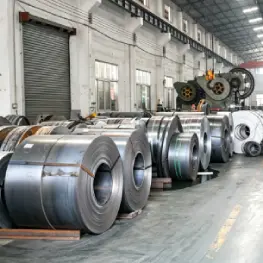
Raw Steel Inspection
Spectrometric tensile verification and carbon equivalence grading on certified Q235B/Q355B coils.
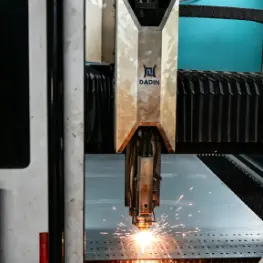
High-Speed Slitting
Automated uncoiling and precision slitting to tight strip width tolerances of ±0.1mm.
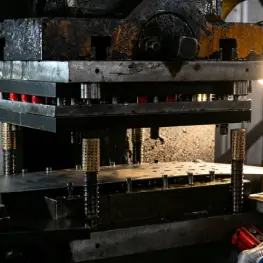
Automated CNC Punching
High-tonnage continuous hydraulic punching producing precise 50/75mm pitch pitch lines without stress raisers.
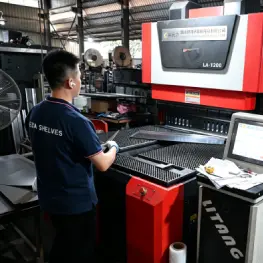
Cold Bending & Forming
Multi-axis press braking ensuring uniform geometric dimensional profiles on custom bracketry.
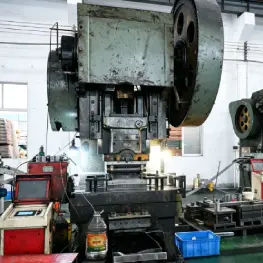
Profile Roll-Forming
18-to-24 pass roll mills yielding stiff omega upright columns with reinforced re-entrant return lips.
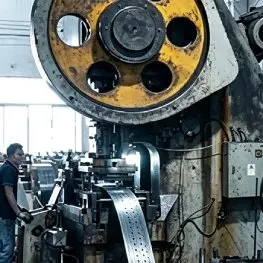
Deburring & Polishing
Mechanical surface chamfering and corner grinding to eliminate sharp edges prior to welding.
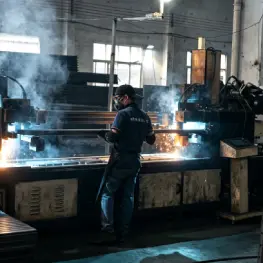
Robotic MIG Welding
Automated multi-axis robotic welders generating continuous high-penetration fillet welds on beam end connectors.
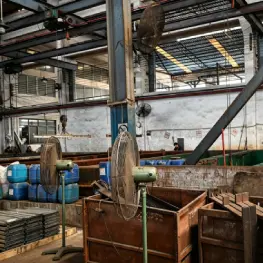
Chemical Pre-Treatment
Four-stage immersion pickling, degreasing, and phosphating removing all mill scale and ensuring coat adhesion.
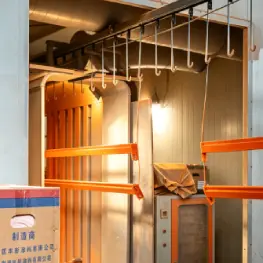
Electrostatic Coating
Nordson automated spray booths and high-temperature curing ovens producing an abrasion-resistant polymer skin.
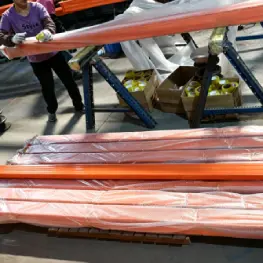
Final QA & Packaging
Destructive deflection verification, barcoding, and heavy-duty steel framed packing for global shipping.
Global Sourcing & Technological Trends in Adjustable Racking
Strategic supply chain analysis for warehouse operations directors, procurement leaders, and logistics system integrators seeking resilient, future-proof storage capital assets.
Hybrid Automation Synergy (AGV / AMR Integration)
Procurement is rapidly shifting away from conventional, forklift-only selective layouts toward hybrid racking ready for Autonomous Mobile Robots (AMRs) and automated four-way pallet shuttles. Beam clearances now mandate tighter deflection thresholds ($L/300$) to guarantee optical sensor alignment for autonomous shuttles, while base plates must withstand higher point loadings without local concrete spalling.
Micro-Alloy High-Tensile Steel Optimization
With global maritime container freight representing a core landed cost driver, logistics engineers are prioritizing Q355B and ultra-high-strength steel grades. These advanced alloys reduce component self-weight by up to 18% while sustaining identical or increased pallet load capacity. This mass optimization enables importers to maximize container payload weight limits, directly lowering landed logistics costs per pallet position.
ESG, Low-Carbon Steel & EPD Auditing
Enterprise procurement mandates across Europe, Australia, and the Americas now require Environmental Product Declarations (EPD) and Scope 1-3 carbon tracking. Chinese manufacturers utilizing electric arc furnace (EAF) recycled scrap steel and closed-loop non-effluent chemical pre-treatment systems are gaining preferential tier-1 vendor status during commercial tender evaluations.
Seismic Resilience & Dynamic Finite Element Analysis
Severe seismic events across Oceania (NZS 1170.5) and the Americas have made generic, off-the-shelf racking obsolete. Buyers now mandate project-specific 3D FEA (Finite Element Analysis) simulating non-linear post-buckling behavior, floor anchor dynamic pull-out forces, and ductile dissipation base plates designed to absorb earthquake energy without total structural collapse.
Modular Rack-Supported Platforms & Mezzanines
As industrial real estate leasing rates climb globally, operators are doubling usable cubic capacity through rack-supported multi-tier platforms. These hybrid systems employ heavy-duty adjustable uprights as the primary vertical load-bearing structural columns for elevated flooring, eliminating the high CapEx of independent structural I-beam platforms.
Digital Structural Health Monitoring (SHM)
Next-generation adjustable racking systems are increasingly pre-fitted with digital impact-sensing brackets. These telemetry devices alert warehouse maintenance teams in real-time when an upright sustains a critical forklift strike exceeding allowable shear tolerances, transitioning facilities from passive annual audits to proactive, continuous structural safety assurance.
Industrial Project Installations Delivered Worldwide
From corrosive chemical warehousing to dense multi-level automotive parts distribution, review how Heda Shelves solves complex heavy-load storage challenges.
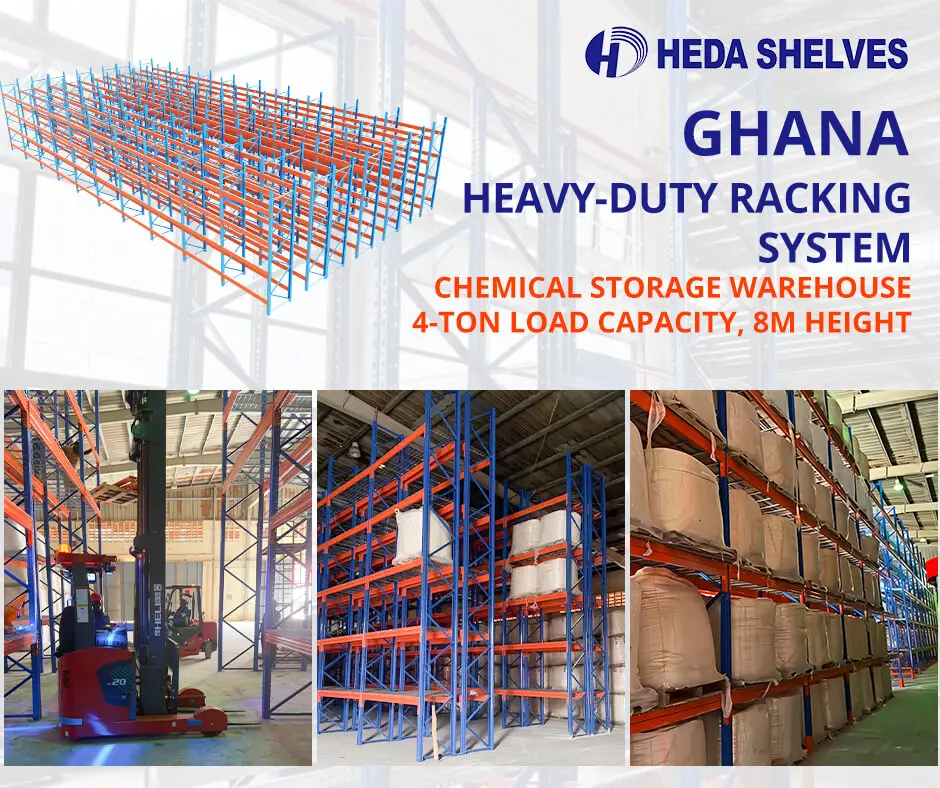
Heavy-Duty Racking for Chemical & IBC Storage
Engineered with galvanized catch basins, heavy-duty column impact guards, and custom pallet barrel cradles designed to support dense 2,500kg liquid IBC totes under strict fire segregation regulations.
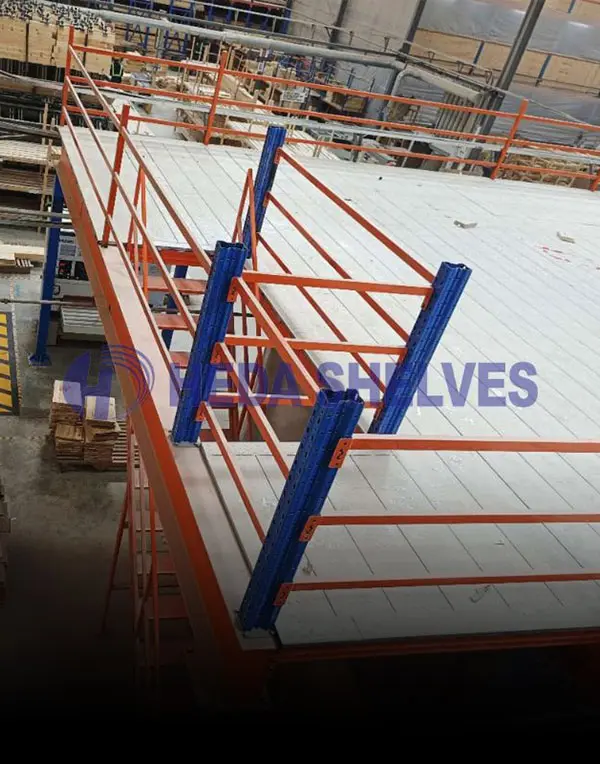
Rack-Supported Mezzanine for Manual E-Commerce Picking
Doubled usable footprint for a retail distribution hub by integrating selective pallet storage on the ground floor with an elevated 3-tier steel mesh picking platform capable of 600kg/m² live floor loads.
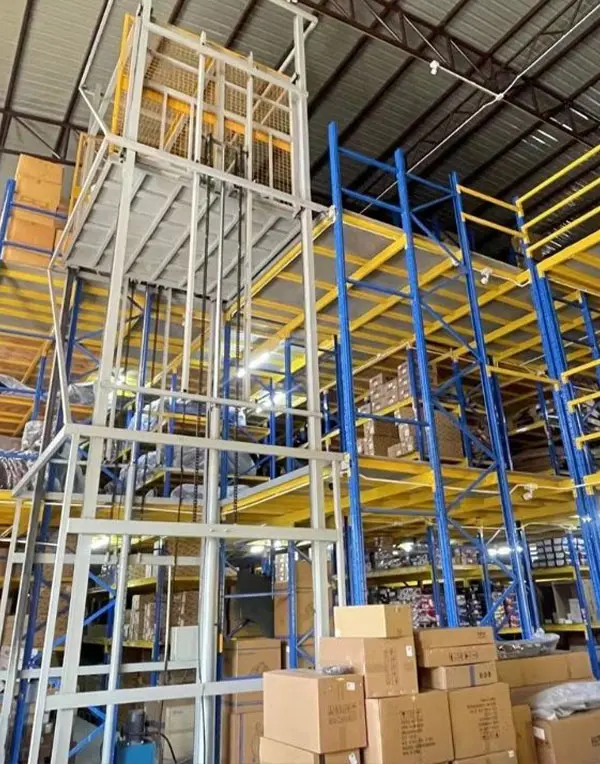
Multi-Tier Auto Spares Logistics Center
Fabricated for an international automotive OEM incorporating adjustable long-span shelving, high-density tire cantilevers, and heavy pallet bays servicing over 25,000 unique fast-moving SKU picking faces.
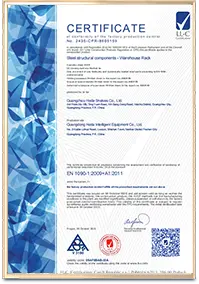
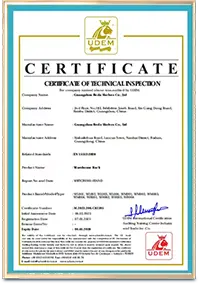
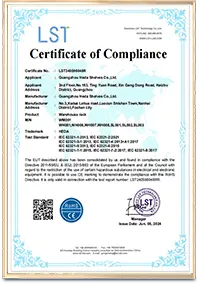
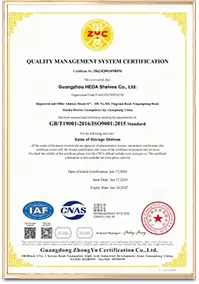
Audited Quality Certifications & Inspection Reports
All structural loading calculations, weld penetrations, and material mill test certificates (MTC) are backed by international accredited bodies for smooth local building approvals.
Frequently Asked Sourcing & Technical Questions
Detailed answers addressing structural certification, custom pitch configurations, sea container packing logistics, and international biosecurity compliance.
How does Heda ensure racking compliance with local building codes like AS 4084, ANSI MH16.1, or EN 15512?
We provide comprehensive engineering data packs prepared by qualified structural engineers. These dossiers contain section property calculations, finite element moment resistance curves, base plate anchor pull-out specs, and structural deflection tables. For Australian and NZ sites, our designs explicitly incorporate AS 4084 and NZS 1170.5 seismic factors, enabling your registered local engineer (CPEng or RPEQ) to sign off on building consent without redesign delays.
What is the practical difference between Q235B and Q355B steel in racking fabrication?
Q235B possesses a nominal yield strength of 235 MPa and excels in standard ambient warehouse selective racking up to 8 meters tall. Q355B is a low-alloy, high-tensile steel with a yield strength of 355 MPa, delivering 50% greater load-bearing capacity per unit mass. We utilize Q355B for high-bay uprights (10–15+ meters), heavily loaded drive-in support cantilevers, and dynamic shuttle lanes, cutting dead-weight steel consumption and optimizing shipping container payload.
How does Heda comply with Australian DAFF and NZ MPI biosecurity import requirements?
To prevent expensive quarantine delays, cargo fumigation holds, or dockside re-export orders, we ship racking components bundled on dedicated welded steel stillages rather than untreated raw timber. When timber dunnage is required, we exclusively use ISPM-15 certified, heat-treated (HT), and officially stamped timber accompanied by valid phytosanitary declarations and clean container cleanliness checklists.
Can you manufacture custom beam lengths and pitch punchings to match existing third-party racks?
Yes. As a direct OEM factory with in-house CNC tool and die manufacturing, we produce uprights compatible with popular international hole profiles, including teardrop patterns (North America), 50mm metric European pitch, 75mm British/Australian styles, and custom butterfly profiles. We routinely manufacture drop-in replacement beams and frame extensions for ongoing warehouse facility expansions.
What surface finishes do you recommend for sub-zero freezer cold storage (-25°C to -30°C)?
For cold stores, standard commercial powder coatings can turn brittle and chip upon forklift contact. We engineer specialized low-temperature polyurethane-epoxy hybrid powder formulations that maintain impact flexibility under deep thermal contraction. For high-humidity chiller rooms or rapid-thaw fruit packaging facilities, we supply full continuous hot-dip galvanizing per ISO 1461, eliminating flaking and zinc delamination.
How are maritime shipping container loads configured to prevent freight transit damage?
Beams and uprights are stacked face-to-face separated by corrugated cardboard cushioning sheets, wrapped in multi-layer heavy-gauge polyethylene stretch film, and secured with heavy-duty polyester strapping to structural steel transport stillages. Each bundle features welded lifting eyes to facilitate rapid, damage-free side un-stuffing with counterbalance forklifts at the destination warehouse.
What project parameters are required to generate a complimentary 3D CAD warehouse layout?
Our engineering team generates fully rendered 3D models and layout DWG plans within 24–48 hours upon receipt of six core data points: 1) Architectural floor plan showing columns, dock bays, and clear roof eaves height; 2) Pallet dimensions (e.g., 1200x1000mm or 1165x1165mm AU); 3) Maximum unit load weight including pallet dunnage; 4) Forklift mast lift height and minimum turning aisle width; 5) In-rack fire sprinkler requirements; and 6) Target SKU capacity.
What are your typical factory production lead times and ocean shipping durations?
Standard factory fabrication for full container orders (1 to 5 x 40'HQ) is typically completed within 15–20 business days. Transit time from our regional sea ports (Guangzhou / Shenzhen) averages 12–16 days to Australian East Coast ports (Sydney, Melbourne, Brisbane), 18–22 days to Auckland/Tauranga (New Zealand), and 16–28 days to major West Coast North American and European deep-water ports.
Optimize Your Warehouse Floor Space with Free 3D CAD Engineering
Connect directly with our Guangzhou factory engineering department. Submit your warehouse dimensions or floor plan today to receive a fully calculated load capacity schedule, 3D CAD layout schematic, and factory-direct commercial quotation.