High-Performance Warehouse Storage & Cantilever Solutions
Precision-machined roll-formed profiles and structural hot-rolled Q235B/Q355B steel storage frameworks manufactured to handle heavy industrial long loads, pallets, and high-density inventory.
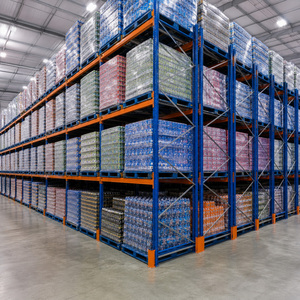
- Steel Grade: Certified Q235B / Q355B
- Capacity: 1,000kg – 5,000kg / beam level
- Finish: Electrostatic Epoxy-Polyester
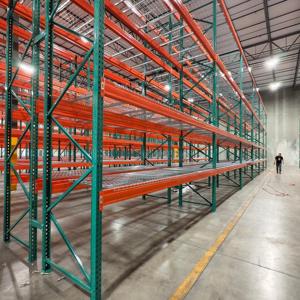
- Design: North American Teardrop Profile
- Pitch: 2-inch vertical adjustability
- Safety: Patented automatic beam locks
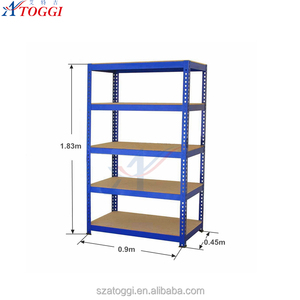
- Configuration: 5-Tier modular footprint
- Dimensions: 900 × 450 × 1830 mm
- Utility: Rapid tool-free interlocking clip
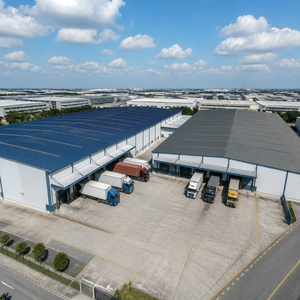
- Engineering: Integrated Rack-Clad Building
- Operating Height: Up to 40 meters
- Seismic rating: Engineered to NZS 1170.5
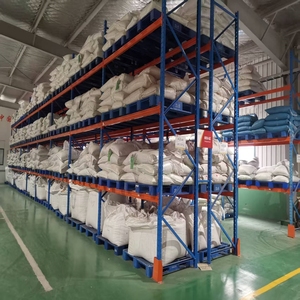
- Environment: Cryogenic down to -35°C
- Corrosion: Special thermal powder coats
- Integrity: Impact-deflecting post guards
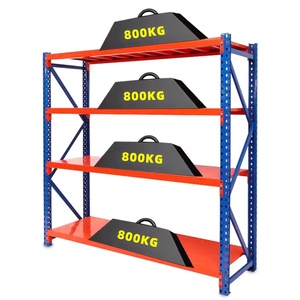
- Standard: NFPA 13 sprinkler water-flow
- Mesh Wire: 4.0mm to 6.0mm drawn steel
- Channels: U-channel and flared waterfall
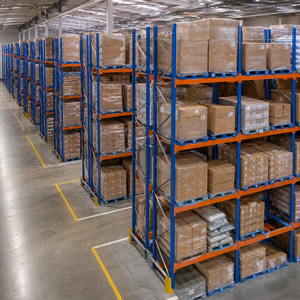
- Payload: 1,000kg – 4,000kg load rating
- Application: Stamping dies, tire & body panels
- Customization: Divider bars & cradle beams
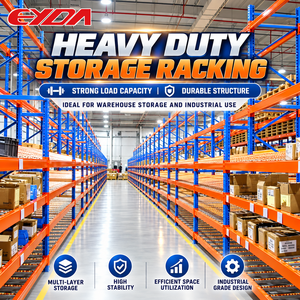
- System: Aluminum roller tracks on incline
- Rotation: Strict First-In First-Out picking
- Efficiency: 40% reduction in travel time
Structural Engineering Fundamentals of Heavy-Duty Cantilever Racking
In modern industrial intralogistics, storing non-standard, linear, and extraordinarily heavy inventory—such as extruded aluminum sections, structural steel I-beams, PVC/PE piping, architectural timber bundles, bar stock, and sheet steel—represents a significant structural challenge. Traditional selective pallet racking systems rely on front vertical columns that obstruct continuous horizontal storage faces. Cantilever rack storage systems eliminate the front column entirely, distributing overturning bending moments through rigid vertical columns anchor-bolted into heavy-duty foundations.
Core Structural Formula: In high-capacity cantilever design, overturning moment is expressed as M = P × L, where P represents concentrated or distributed arm load and L is the effective cantilever arm length from the column neutral axis. Guangzhou Heda Shelves applies finite element analysis (FEA) to ensure that joint rigidity, base anchorage, and column web shearing conform strictly to FEM 10.2.02 and Australian AS 4084:2023 design standards.
1. Roll-Formed vs. Hot-Rolled Structural I-Beam Architecture
A primary decision for warehouse engineering directors sourcing from China is choosing between cold roll-formed sheet steel profiles and heavy hot-rolled structural steel I-beams (such as IPE, HEA, or HEB profiles). Cold roll-formed cantilever racks utilize high-yield gauge steel (Q235B) punched with vertical keyhole or teardrop patterns. These provide versatile adjustability for medium-duty distribution centres, hardware retailers, and furniture warehouses handling loads up to 1,000 kg per arm.
Conversely, extra heavy-duty industrial applications require structural I-beam cantilever systems fabricated from Q355B (equivalent to ASTM A572 Grade 50 or AS/NZS 3679 Grade 300). The solid flanges and webs of hot-rolled structural steel resist severe forklift impacts, torque deflections, and torsional buckling far better than roll-formed sections. At HEDA Shelves, structural cantilever columns and bases are robotically welded with heavy full-penetration fillet welds, delivering ultimate capacities exceeding 4,000 kg per arm level and column tower capacities exceeding 24,000 kg per side.
2. Structural Cantilever Technical Specification Matrix
The following performance matrix outlines the engineering parameters manufactured by Guangzhou Heda Shelves Co., Ltd., contrasting heavy-duty structural cantilever with standard roll-formed configurations:
| Engineering Parameter | Heavy-Duty Structural Cantilever (HEDA HD-C355) | Roll-Formed Cantilever (HEDA RF-C235) | Standard Selective Racking (For Reference) |
|---|---|---|---|
| Primary Steel Grade | Hot-Rolled Structural Q355B / Q235B (ASTM A572 Gr 50) | Cold-Formed Strip Steel Q235B (Yield ≥ 235 MPa) | Roll-Formed High Tensile Strip Q235B / Q355B |
| Column Profiles | IPE 180 to IPE 400 or Welded Box H-Sections | Upright C-Profiles (200×80mm to 300×90mm) | Omega Section 80/90/100/120mm Open Columns |
| Arm Load Range (UDL) | 1,000 kg to 4,500 kg per Arm | 250 kg to 1,000 kg per Arm | 1,000 kg to 4,500 kg per Pair of Beams |
| Standard Column Heights | 3,000 mm up to 12,000 mm Free-Standing | 2,000 mm to 6,000 mm | 2,000 mm to 16,000 mm High-Bay |
| Deflection Limit Ratio | ≤ L/250 to L/300 under full design load | ≤ L/180 to L/200 under full design load | ≤ L/200 Beam Deflection Limit |
| Forklift Impact Resistance | Very High (Solid Web & Heavy Flanges) | Moderate (Requires Post Protectors) | Moderate (Prone to Corner Buckling) |
| Finish Specifications | ISO 1461 Hot-Dip Galvanized or 80μm Epoxy Powder | 60–80μm Thermoset Polyester Powder Coating | Standard Electrostatic Powder Coating |
| Design Codes Referenced | AS 4084-2023, FEM 10.2.02, AISC 360, EN 15512 | AS 4084, RMI MH16.1, EN 15620 | AS 4084, RMI, SEMA, FEM |
3. Arm Inclination, Pivot Engineering & Deflection Dynamics
A frequent failure mode in substandard cantilever procurement is load slippage caused by arm deflection. As load weight approaches maximum structural capacity, every cantilever arm naturally deflects downward. High-precision manufacturing requires arms to be engineered with an initial positive upward inclination angle (typically between 1.5° to 2.5°). Under maximum uniform distributed load (UDL), the arm deflection levels out horizontally, preventing stored pipes, timber, or steel bars from rolling outward into working aisles.
Furthermore, HEDA Shelves designs articulated pivot connections with grade 8.8 or 10.9 high-tensile structural bolts. When a forklift operator accidentally strikes an arm during vertical elevation, the articulated arm pivots upward and absorbs impact energy rather than tearing the welded column lugs or buckling the column face. This engineering feature reduces operational maintenance costs and avoids catastrophic upright failure.
Why Tier-1 Importers Partner With Guangzhou Heda Shelves
Operating from our 30,000 m² heavy-equipment industrial base in Guangdong, HEDA Shelves engineers safe, certified, high-yield storage systems for global logistics operations.
Verified CE & ISO 9001:2015
Every structural batch is backed by official CE Certification (No. 2435-CPR-8605159) and ISO 9001:2015 Quality Management Systems (No. 18624Q00169R0M). We supply raw material 3.1 mill test certificates guaranteeing chemical composition and yield strength.
Free 3D CAD & Structural BIM
Our in-house team of 30+ structural engineers provides complete 3D warehouse layouts, clear height optimization, and structural calculations compatible with local municipal and engineering permit requirements within 24–48 hours.
30,000 Metric Tons Monthly Throughput
Equipped with automated continuous roll-forming lines, multi-station CNC punching presses, robotic arc-welding stations, and full-immersion 10-stage pre-treatment powder coating systems, we support large infrastructure projects without production bottlenecks.
Seismic Design: NZS 1170.5 & ASCE 7
We engineer customized base plates, high-grade floor anchoring systems, and diagonal cross-bracing frameworks specifically calculated for active seismic zones throughout New Zealand, the Pacific Rim, the Americas, and Southern Europe.
Biosecurity Export Packaging
All ocean shipments are packed using customized heavy steel stillages or ISPM-15 heat-treated, certified timber. This eliminates inspection quarantine risks with Australian DAFF, New Zealand MPI, and US CBP customs border controls.
OEM & White-Label Distributor Services
We serve as the silent manufacturing partner for top-tier racking brands and storage integrators across Australasia, Europe, and North America. Custom color matching (RAL systems), embossed logos, and tailored installation manuals are standard.
Emerging Trends Reshaping Cantilever Storage & Warehouse Racking
Global supply chain pressures, warehouse real estate costs, and labor automation are driving fundamental advancements in heavy cantilever technology.
Automated Cantilever AS/RS & Stacker Cranes
Traditional manual forklift operation in long-goods yards is shifting toward automated storage and retrieval systems (AS/RS). Automated stacker cranes and cassette-shuttle systems now pick 6-meter steel bundles and bar stock up to 25 meters high in narrow aisles, tripling volumetric storage density while reducing handling damage.
IoT Deflection & Overload Sensor Integration
Industrial smart racks now incorporate digital strain gauges and acoustic emission sensors along cantilever base joints and lower upright sections. These transmit real-time deflection and impact warnings via telemetry to warehouse management systems (WMS) before structural fatigue leads to critical failure.
High-Durability Duplex & Outdoor Galvanization
Surging land prices are pushing timber and steel distributors into open-air external yards. Procurement is moving from basic wet paints toward full hot-dip galvanizing according to EN ISO 1461, or duplex coatings (hot-dip galvanization followed by architectural UV powder topcoats), providing 30+ years of rust protection in harsh coastal and industrial environments.
Decarbonized EPD-Certified Green Steel
Global EPC contractors and institutional developers increasingly demand Environmental Product Declarations (EPD) for all structural steel elements. Guangzhou Heda Shelves is introducing certified low-carbon recycled scrap electric arc furnace (EAF) steel sourcing to assist global clients in meeting Scope 3 carbon compliance targets.
Cantilever Racking Global Procurement FAQ
Direct, engineer-vetted answers to technical, commercial, and structural questions encountered by logistics developers and purchasing directors.
How do structural cantilever racks differ from roll-formed cantilever racks in terms of safety and ROI? +
Structural cantilever racks are manufactured from heavy hot-rolled I-beams (such as IPE or HEB profiles) using Q355B structural steel, while roll-formed cantilever is shaped from thinner gauge sheet steel (Q235B). Structural cantilever offers substantially higher moment-resisting capacities, higher resilience against accidental forklift impacts, and longer service lifespans in tough operating environments. For facilities handling steel stock, heavy timber, structural tubing, or casting dies, structural cantilever delivers lower total cost of ownership (TCO) because it rarely requires upright column replacement due to handling strikes.
What critical data must be provided to receive an accurate, code-compliant cantilever layout? +
To design an optimized structural scheme, our engineering team requires: (1) Stored material dimensions (length, width, height, and unit weight per bundle); (2) Maximum load weight per arm level and per column tower; (3) Rigidity/flexibility of the stored product (to determine the spacing distance between column centers to prevent sag between arms); (4) Floor clear height below fire sprinklers; (5) Forklift model, mast collapsed/extended height, and minimum turning radius (or guidance track requirements for 4-directional/side-loader reach trucks); and (6) Warehouse slab concrete thickness, compressive strength (e.g., 25–35 MPa), and seismic site classification.
Can HEDA Shelves design and certify cantilever racking to Australian AS 4084 and New Zealand NZS 1170.5? +
Yes. Guangzhou Heda Shelves Co., Ltd. regularly engineers and delivers storage projects designed in strict accordance with Australian Standard AS 4084 (Steel storage racking) and New Zealand NZS 1170.5 (Structural design actions - Earthquake actions). We provide full structural calculations, section properties, and load charts so that your local independent structural engineer (CPEng) or certifier can review and issue site-specific Producer Statements (PS1/PS4) for municipal council consents.
How is outdoor cantilever racking protected against wind loads, rain, and corrosive atmospheres? +
For external open-yard installations, we implement two primary structural solutions: (1) Hot-Dip Galvanizing: Uprights, arms, and bases are submerged in molten zinc baths at 450°C conforming to ISO 1461, yielding an ultra-durable zinc-iron alloy coating of 80 to 100 microns that withstands marine and industrial weathering for decades. (2) Roof Canopy & Cladding Integration: We design cantilever columns with engineered roof extension arms, purlins, and gutter brackets. Our structural engineers calculate additional local wind loads (as per AS/NZS 1170.2 or Eurocode 1) to size the foundation baseplates and cross-bracing bays accordingly.
What aisle widths are required for forklifts operating in cantilever storage layouts? +
Aisle widths depend directly on the handling equipment: (1) Standard Counterbalance Forklifts: The aisle must accommodate the total length of the stored material plus the truck turning radius, usually requiring wide aisles of 5.5 to 7.0 meters. (2) Reach Trucks: Suitable for medium lengths with aisle requirements of roughly 3.5 to 4.5 meters. (3) Multi-Directional Forklifts or Specialized Side-Loaders: The most space-efficient setup; these trucks travel sideways down dedicated guided aisles, requiring aisle widths of only load depth + 600 mm to 900 mm (typically 2.2 to 2.8 meters). HEDA supplies guide rails that bolt directly to the cantilever bases for guided wire or roller steering.
How does HEDA Shelves manage export packaging to pass strict biosecurity customs inspections? +
We ensure zero port demurrage and zero quarantine re-treatment penalties by packing cantilever components on custom-fabricated heavy steel stillages or using ISPM-15 compliant heat-treated and debarked timber bearers stamped with clear IPPC marks. Each container is loaded with precise weight distribution to comply with axle load limits in destination countries, with full commercial invoices, ocean bills of lading, packing lists, and certified Certificates of Origin (COO) to facilitate duty reductions under bilateral FTAs (e.g., ChAFTA).
What is the typical production and delivery lead time for overseas containerized shipments? +
For standard powder-coated roll-formed and structural cantilever projects (1 to 5 full container loads), our manufacturing lead time is typically 20 to 25 business days from drawing sign-off. Hot-dip galvanized orders require an additional 7 to 10 days for professional zinc immersion. Ocean transit from Guangzhou or Shenzhen ports to major global destinations runs approximately 12–18 days to Australia/New Zealand, 15–22 days to the US West Coast, and 25–35 days to European base ports.
Request an Engineer-Certified 3D Racking Layout & Project Quotation
Send your warehouse dimensions, clear operating heights, stored load profiles, and forklift parameters. Our senior structural engineers will prepare an optimized 3D layout and competitive factory-direct pricing within 24 hours.