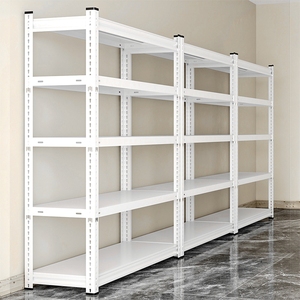
Factory-Engineered Systems
Featured Industrial Storage & Pallet Racking Product Portfolio
Manufactured from high-yield structural steel in accordance with international racking standards. Every profile is certified for dimensional tolerance, deflection limit safety, and chemical surface protection.
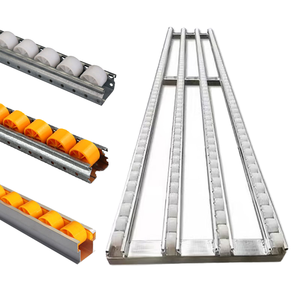
Industrial Roller Track Pallet Flow Rack System
Technical Specs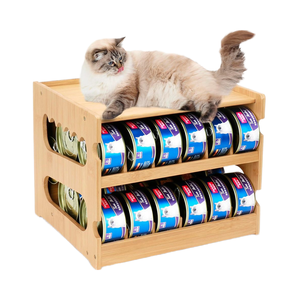
PLITTPETTS Bamboo 2-Tier Standing Pantry Organizer
Technical Specs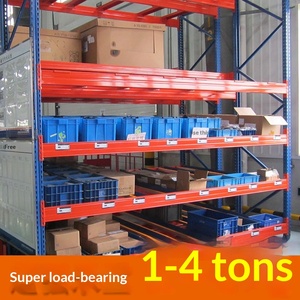
Heavy-Duty Structural Steel Gravity Pallet Rack
Technical Specs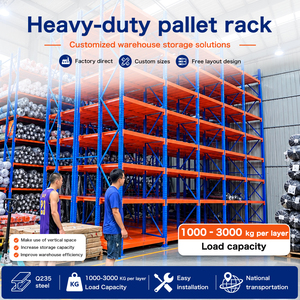
Steel Pallet Racking System Heavy Duty Warehouse Rack
Technical Specs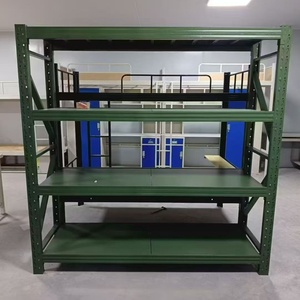
Heavy Duty Longspan Shelving Boltless Steel Rack
Technical Specs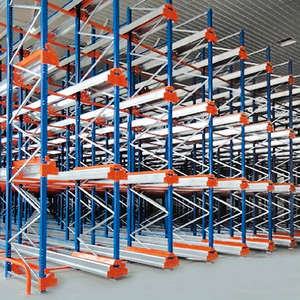
Reinforced Cold-Storage Radio Shuttle Racking
Technical Specs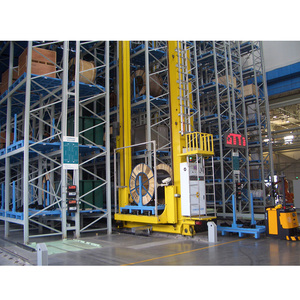
Heavy Duty ASRS Automated Pallet Racking System
Technical SpecsExecutive Summary: The Geopolitical & Technical Landscape of China Pallet Racking Exports
In modern industrial logistics, conventional pallet racking—commonly designated across engineering disciplines as selective pallet racking—remains the baseline infrastructure for over 72% of global distribution centers, automated sorting hubs, and high-throughput cold storage facilities. Despite the rapid emergence of high-density automated shuttle systems and dynamic live-storage lanes, selective conventional racking retains unparalleled structural flexibility, ensuring 100% direct accessibility to every single pallet position without requiring specialized material handling fleets.
China has solidified its position as the world's primary manufacturing nucleus for industrial steel storage racks, processing over 55% of global roll-formed structural profiles. However, enterprise procurement directors, EPC contractors, and global supply chain executives face substantial disparities among Chinese exporters. Navigating cross-border procurement requires deep technical validation: verifying raw material metallurgy (Q235B vs. Q355B low-alloy high-strength steel), assessing compliance with regional building and safety codes (such as Australia's AS 4084-2023, Europe's EN 15512 / FEM 10.2.02, and North America's ANSI MH16.1), evaluating automated robotic welding tolerances, and ensuring strict adherence to destination biosecurity import protocols.
This industry whitepaper deconstructs the operational architecture of China's premier conventional pallet racking manufacturers, providing supply chain decision-makers with a comprehensive, data-driven procurement framework spanning mechanical design, manufacturing QA/QC workflows, seismic engineering, and long-term total cost of ownership (TCO).
2001+
Manufacturing Pedigree
30,000m²
Production Plant Floor
30,000T
Monthly Fabrication Capacity
10,000+
Global Completed Installations
Mechanical Engineering
Structural Anatomy & Engineering Tolerances of Conventional Racking
Structural integrity is dictated by finite element analysis (FEA), cold-formed profile geometries, locking pin shear resistances, and anchor baseplate engineering under both static and dynamic seismic loads.
Omega Upright Columns
Fabricated through multi-stage cold roll forming mills utilizing premium coils of hot-rolled structural steel (Q235B and Q355B). Profiles feature continuous multi-bend omega shapes (80mm, 90mm, 100mm, and 120mm widths) engineered with precise return flanges to dramatically increase the section modulus ($Z_x, Z_y$) and prevent torsional-flexural buckling under axial compression.
Interlocking Box Beams
Constructed by seam-welding twin C-profiles in an opposing configuration with continuous automated robotic MIG lines. Beams terminate in 3-claw or 4-claw high-strength end connectors equipped with spring-actuated safety locking pins capable of resisting upward fork dislodgement forces exceeding 10 kN (in strict compliance with AS 4084 / EN 15512 safety thresholds).
Seismic Frame Bracing & Baseplates
Triangulated K-bracing and horizontal C-channel bracing members distribute asymmetric impact loads across the frame assembly. Heavy-duty footplates (up to 12mm thickness) are anchored into reinforced C25/C30 industrial concrete slabs using mechanical wedge or chemical capsule anchors calculated against slab edge distances and concrete cone breakout limits.
| Structural Parameter | Export Tier 1 Standard (e.g. HEDA Shelves) | Generic Commodity Exporters | Engineering Impact / Failure Mode |
|---|---|---|---|
| Primary Steel Substrate | Certified Q235B / Q355B with MTC EN 10204 3.1 | Uncertified secondary melt scrap steel | Brittle fracture under cold-store loads; uneven yield points |
| Beam Deflection Limit | Strict $L/200$ to $L/250$ (Max $10\text{mm}$ per span) | $L/150$ or unrated elastic threshold | Pallet binding, premature beam sag, connector stress fatigue |
| Upright Punching Tolerance | Continuous automated CNC ($\pm 0.1\text{mm}$ pitch) | Manual mechanical stamping dies ($\pm 0.8\text{mm}$) | Misaligned crossbeams, racking plumb drift, assembly jam |
| Pre-Treatment Technology | 8-Stage automatic spray/dip pickling & phosphating | Manual solvent wipe or zero chemical prep | Powder coating delamination, sub-film rust in 12–18 months |
| Coating Thickness & Adhesion | 60–90 $\mu\text{m}$ pure epoxy/polyester; Cross-cut Class 0 | 30–45 $\mu\text{m}$ mixed scrap resin powder | Rapid chipping on fork contact, corrosive pitting |
| Seismic Validation | NZS 1170.5 & AS 4084.1 Ductility calculations | None; reliance on static dead-weight tables | Catastrophic progressive structural collapse during seismic tremor |
Zero-Defect Quality Control
Inside the Factory: 10-Step Precision Fabrication Workflow
Every structural element leaving our Guangzhou manufacturing base undergoes a 10-stage quality verification pipeline to ensure seamless jobsite assembly and multi-decade structural integrity.
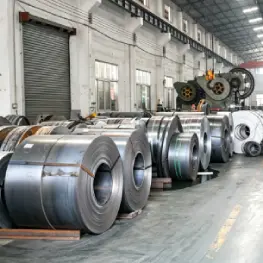
Step 01
Spectrometric Coil QC
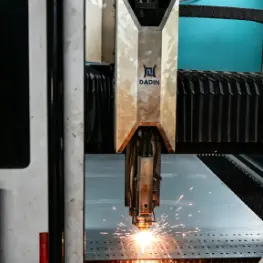
Step 02
Precision Slitting & Blanking
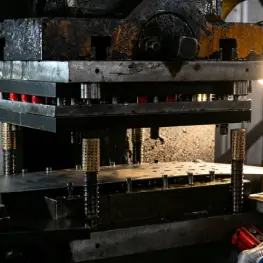
Step 03
Automated CNC Punching
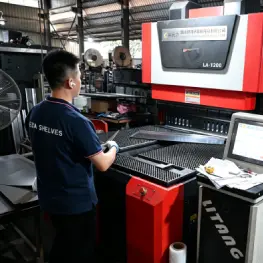
Step 04
Multi-Pass Cold Bending
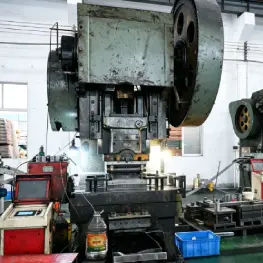
Step 05
Continuous Roll Forming
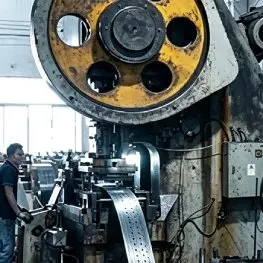
Step 06
Seam Grinding & Deburring
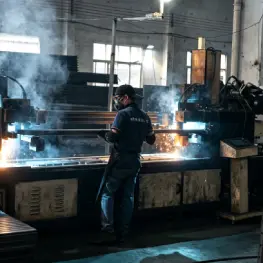
Step 07
Robotic MIG Connector Weld
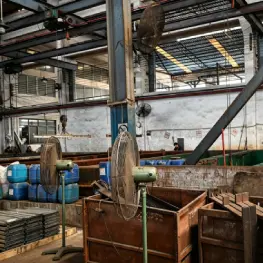
Step 08
Acid Pickling & Phosphating
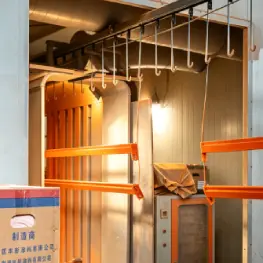
Step 09
Electrostatic Powder Curing
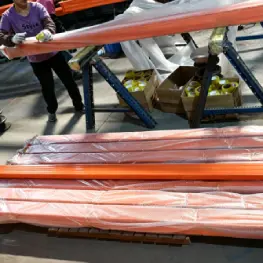
Step 10
Laser Dimension QA & Pack
Strategic Sourcing Insights
Future Procurement Trends in Conventional Pallet Racking (2025–2030)
Procurement criteria are transitioning rapidly from basic cost-per-pallet calculations to total lifecycle resiliency, environmental compliance, and automation readiness.
1. Decarbonization & Scope 3 Supply Chain Mandates
Global supply chain operators across North America, Europe, and Australasia are under increasing regulatory pressure (such as the EU Carbon Border Adjustment Mechanism - CBAM) to audit the embodied carbon of their logistics real estate. Leading Chinese racking manufacturers are responding by shifting raw material procurement toward Electric Arc Furnace (EAF) "Green Steel" mills, utilizing renewable electricity in powder curing ovens, and publishing environmental product declarations (EPD) verifying life-cycle carbon footprints per ton of fabricated racking.
2. AMR/AGV Hybridization & Floor-Level Navigation Tolerances
While autonomous mobile robots (AMRs) and reach-AGVs are being deployed at exponential rates, full AS/RS retrofits are frequently cost-prohibitive. As a result, warehouse planners are specifying hybrid conventional selective racking featuring widened bottom baseplates, laser-aligned visual fiducial guide markers along rack uprights, recessed aisle-entry floor deflectors, and ultra-flat floor tolerance alignment (defined by DIN 18202 Table 3). This enables high-density reach trucks and automated pallet movers to co-exist within standard selective aisles without risk of mast impact.
3. Dynamic Structural Modeling & Performance-Based Seismic Codes
Seismic incidents in the Pacific Rim (New Zealand, Japan, Chile, US West Coast) have led to substantial revisions in national standards, such as the updated AS 4084:2023 and NZS 1170.5. Future procurement demands non-linear pushover analysis and dynamic shake-table test data for beam-to-column connections. Chinese exporters who rely solely on generic static load tables are being systematically disqualified in favor of engineering-led factories that supply project-specific FEA calculation packs certified by locally registered professional structural engineers (CPEng / PE).
Factory Pedigree
Why Global Importers Partner with Guangzhou Heda Shelves Co., Ltd.
Established in 2001, Guangzhou Heda Shelves combines 25 years of specialized storage manufacturing with rigorous European and Australasian certification credentials.
Engineering Authority & International Certification
Heda Shelves operates an expansive 30,000 square meter intelligent fabrication complex powered by automated roll forming lines, continuous robotic welding clusters, and multi-tank electrostatic coating lines. Our engineering department of 300+ technical specialists provides bespoke 3D CAD/BIM architectural integration, seismic stress analysis, and load-signage verification for projects across 130+ nations.
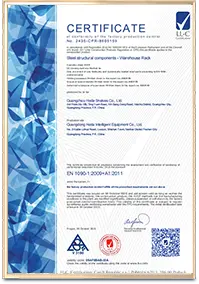
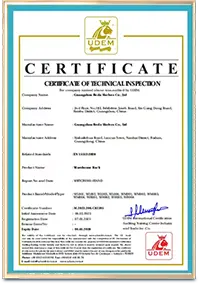
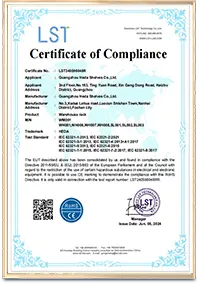
- CE Certification No. 2435-CPR-8605159 (Structural Steel Execution Class)
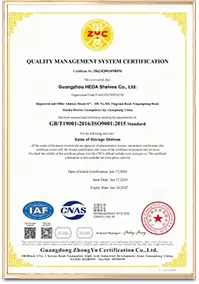
- ISO 9001:2015 Quality Management System No. 18624Q00169R0M
- Strict Compliance Reference to AS 4084, FEM 10.2.02, & RMI MH16.1
- Biosecurity Dunnage & Steel Stillages Engineered for DAFF & MPI Inspection
Procurement Due Diligence
Frequently Asked Questions for Sourcing Pallet Racking from China
Detailed answers addressing load calculations, seismic parameters, customs duty optimization, and port delivery logistics.
What specific engineering data must be provided to obtain an accurate structural quote and CAD layout?
To generate a structurally verified proposal compliant with international safety codes, our engineering department requires six baseline parameters: (1) Architectural warehouse layout showing clear heights, column grids, service doors, and sprinkler head clearances; (2) Pallet dimensions (depth, width, and overall load height including pallet dunnage); (3) Maximum static load per pallet position (including uniform distribution allowance); (4) Material handling equipment specifications (forklift type, collapsed mast height, maximum reach height, and minimum turning radius for right-angle stacking aisle calculations); (5) Jobsite environmental metrics (ambient temperature, cold-store parameters down to sub-zero levels, or corrosive humidity); and (6) Regional seismic zone accelerations (e.g., $S_s, S_1$ coefficients in the US or $Z$-factors in NZ).
How does HEDA Shelves address regional compliance for AS 4084 in Australia and NZS 1170.5 in New Zealand?
Unlike trading brokers who supply unrated profiles, HEDA designs and manufactures components strictly referencing AS 4084-2023 principles. For every export project to Australia and New Zealand, we supply complete section modulus documentation, moment connection test curves, and theoretical deflection load tables. For seismic zones across Auckland, Wellington, or Christchurch, our engineers integrate heavy-gauge baseplates, enlarged M16/M20 chemical capsule anchoring, structural row spacers, and customized horizontal and diagonal spine bracing. This enables your local certified engineer (RPEQ / CPEng) to audit and sign off the installation without redesign delays.
What are the key differences between Q235B and Q355B steel in conventional pallet racking?
Q235B steel exhibits a minimum yield strength of 235 MPa and is the standard industry substrate for horizontal box beams and light-to-medium upright applications due to its excellent ductility and roll-forming consistency. Q355B is a low-alloy, high-strength structural steel with a yield strength of 355 MPa (approximately 51% higher load capacity). We engineer tall upright frames (over 8 meters), heavy-duty lower tiers, and seismic-critical installations utilizing Q355B steel, significantly reducing component weight while maintaining higher safety factors against compressive buckling.
How do you handle biosecurity and customs clearance protocols (e.g., DAFF Australia, MPI New Zealand)?
Biosecurity non-compliance can lead to catastrophic quarantine delays, fumigation surcharges, or re-export orders. HEDA Shelves packages high-volume racking shipments either entirely on welded heavy-gauge steel stillages (eliminating timber completely) or utilizes exclusively heat-treated timber dunnage debarked and heat-stamped in strict conformance with ISPM-15 standards. Every container shipment includes full Bill of Lading documentation, Commercial Invoices, Packing Lists with container weight distribution calculations, and Certificates of Origin allowing buyers to capitalize on tariff reductions under the China-Australia Free Trade Agreement (ChAFTA) or New Zealand-China FTA.
What is the standard production lead time and shipping duration to major international ocean ports?
Standard manufacturing cycles for custom-engineered selective pallet racking (typically 5 to 20 TEU 40' High-Cube containers) range between 18 and 28 calendar days from approved CAD drawings. Ocean transit from major southern China ports (Guangzhou / Nansha / Shenzhen) averages: 12–16 days to Sydney/Melbourne/Brisbane; 16–22 days to Auckland/Tauranga; 18–24 days to Los Angeles/Long Beach; and 28–35 days to Felixstowe/Rotterdam/Hamburg. We coordinate container stuffing plans using specialized 3D packing software to maximize cubic payload, ensuring frames and beams arrive undamaged without transit chafing.
Optimize Your Warehouse Storage Density & Engineering Safety
Share your warehouse floor plan and pallet specifications. Our senior structural design team will deliver a comprehensive 3D CAD layout, load capacity calculation sheet, and direct factory-gate quotation within 24 hours.
Contact Us